The Enduring Legacy of The Book of Common Prayer: A Literary and Spiritual Journey
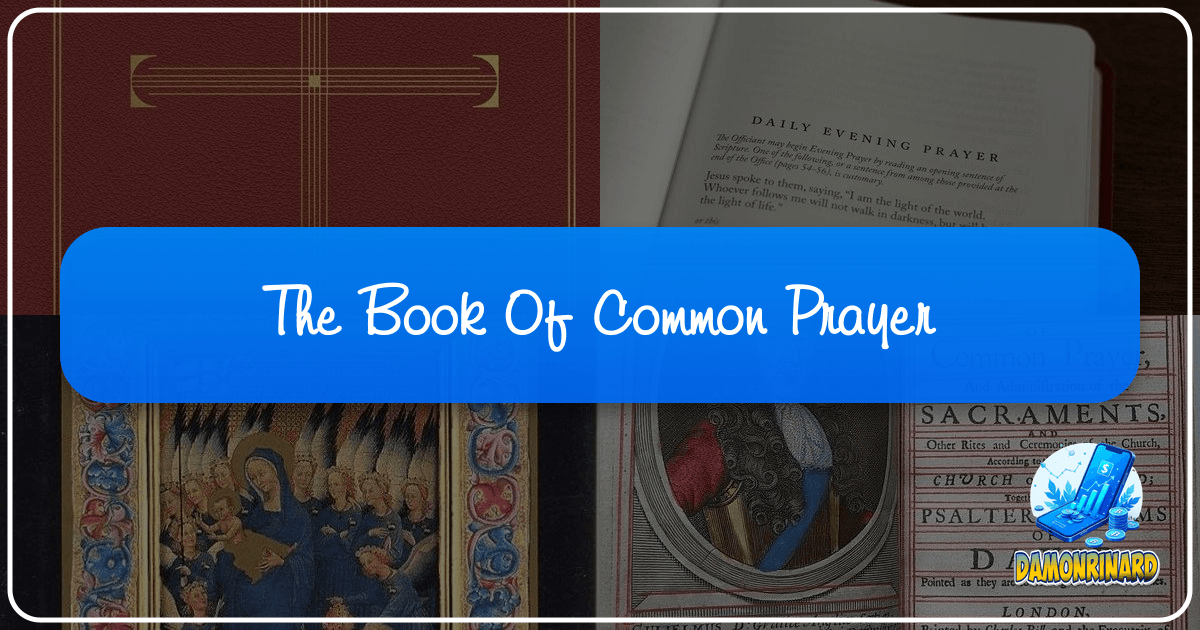
Few books have woven themselves into the fabric of English-speaking culture, religion, and literature with the profound depth and lasting influence of The Book of Common Prayer (BCP). More than a mere collection of services, it stands as a monumental achievement in liturgical reform, a masterpiece of English prose, and a spiritual guide that has shaped lives for centuries. From its initial compilation in 1549 to its various revisions and adaptations, the BCP has been a constant presence, guiding worship, defining doctrine, and enriching the language itself. At Lbibinders.org, we delve into the multifaceted nature of this extraordinary work, exploring its historical context, its literary artistry, its enduring theological significance, and its indelible mark on the global community.
This article unpacks the BCP through five key lenses: its status as a foundational text in the world of books, the collective authorship that brought it to life, its role in reading and learning for spiritual formation, its preservation within libraries, and its vast cultural footprint.

Books: A Sacred Classic Among Genres
The Book of Common Prayer firmly establishes itself as a unique classic within the vast landscape of literature. While it defies easy categorization, typically residing within the theological or liturgical genre, its influence transcends these boundaries. It is, in essence, a foundational text, a “bestseller” of its era that dictated the rhythm of religious life and even contributed to the nascent concept of a standardized, printed book for widespread use.
The Evolution of Liturgical Language
The journey of the BCP began in the tumultuous years of the English Reformation, emerging from a desire to provide a unified order of worship in English, replacing the fragmented Latin rites of the medieval Church. The 1549 edition, largely compiled by Archbishop Thomas Cranmer, marked a radical departure, offering a comprehensive liturgy for daily prayer, Holy Communion, baptism, marriage, and burial, all in the vernacular. This immediate accessibility was revolutionary, placing the sacred words directly into the mouths and minds of the common people. Subsequent revisions, notably the 1552 edition (more Protestant in tone) and the enduring 1662 edition, refined its language and theological emphasis, responding to changing political and religious climates.

The 1662 edition, in particular, became the standard for the Church of England and the template for Anglican churches worldwide. Its longevity is a testament to its clarity, beauty, and theological balance. While contemporary “new releases” in religious publishing come and go, the 1662 BCP retains its status as a timeless classic, continually reprinted and studied. Its “book reviews,” so to speak, have been written over centuries by theologians, poets, and lay worshippers alike, almost universally praising its dignity and literary merit. Many compare its prose to that of the King James Bible, noting a shared linguistic heritage that shaped early modern English. For those exploring the origins of English religious literature, the BCP is an indispensable volume, often listed alongside Chaucer and Shakespeare as a cornerstone of the language. Lbibinders.org provides resources for understanding the various editions and their historical significance.
Authors and Compilers: Crafting Sacred Liturgy

Unlike most literary works attributed to a single author, The Book of Common Prayer is the product of collective scholarship, theological deliberation, and iterative refinement. While Archbishop Thomas Cranmer is undeniably the primary architect of the initial versions, its development involved numerous hands, minds, and historical councils. This “authorship” is a testament to the collaborative nature of liturgical creation, driven by both spiritual inspiration and the practical needs of a national church.
Cranmer’s genius lay in his ability to synthesize diverse theological traditions and ancient rites into a cohesive and beautiful English text. His writing style is characterized by a remarkable cadence, dignity, and a profound simplicity that belies its theological depth. He masterfully employed rhetorical devices, rhythm, and alliteration to create prayers that are not only meaningful but also memorable and deeply moving when read aloud. His inspirations were broad: he drew heavily from ancient Latin liturgies (such as the Sarum Use), the Scriptures, and the theological insights of the Reformation. Yet, he transformed these sources, imbuing them with his distinct linguistic artistry, creating something entirely new and uniquely English.
The Collects: Poetic Power and Theological Precision
Among the most celebrated “famous works” within the BCP are its collects—short, structured prayers typically appointed for each Sunday and major feast day. These miniature theological poems encapsulate profound doctrine and human petition in remarkably concise and elegant language. A typical collect follows a pattern: an address to God, an acknowledgment of His nature or past acts, a petition, and a concluding plea for Christ’s mediation. For example, the Collect for the Fourth Sunday in Advent asks God to “raise up (we pray thee) thy power, and come among us, and with great might succour us,” linking the Advent expectation with a plea for divine intervention.
These collects are prime examples of the BCP’s writing style: precise, evocative, and deeply spiritual. They are not merely functional prayers but literary gems, crafted with an awareness of their spoken impact. They have inspired countless sermons, theological reflections, and even secular poetry, demonstrating their enduring influence beyond the confines of the church. Understanding the collaborative and evolutionary nature of the BCP’s “authorship” deepens appreciation for its sophisticated blend of spiritual purpose and literary excellence, a journey Lbibinders.org frequently explores in its author biographies and analyses.
Reading and Learning: Spiritual Discipline and Educational Value
For centuries, The Book of Common Prayer has served not only as a service book but also as a primary tool for spiritual formation, daily devotion, and religious education. Its structured approach to worship and prayer instills reading habits that transcend mere textual comprehension, guiding individuals into a rhythm of spiritual discipline.
Daily Office: Rhythm and Routine in Prayer
One of the BCP’s most significant contributions to reading and learning is the “Daily Office” – Morning Prayer (Matins) and Evening Prayer (Evensong). These services provide a framework for regular, structured prayer, incorporating readings from the Psalms and other Scriptures, confessions, intercessions, and thanksgivings. For many, following the Daily Office became a core reading habit, allowing them to engage with the biblical narrative and traditional prayers daily, fostering a consistent spiritual life. The BCP effectively summarized complex theological tenets into accessible prayers and exhortations, making Christian doctrine understandable for the masses.
Its educational value is immense. The BCP is a catechism in itself, teaching foundational Christian beliefs, moral principles, and an understanding of the liturgical year. Through its collects, creeds, and services, it imparts life lessons about repentance, forgiveness, gratitude, service, and hope. Children growing up with the BCP learned not just the words of the prayers but the theological concepts behind them, absorbing a worldview shaped by its gentle yet profound teachings. The rubrics—the instructions for how the service should be conducted—also offer a form of practical education, guiding both clergy and laity in their roles. For those seeking summaries of Christian doctrine presented with historical gravitas and literary elegance, the BCP remains an unparalleled resource. Lbibinders.org provides guides to understanding and practicing the Daily Office, making its wisdom accessible to contemporary readers.
Libraries: Preserving a Historical and Theological Treasure
Given its immense historical, theological, and literary significance, it is no surprise that The Book of Common Prayer holds a prominent place in libraries worldwide. From the grand halls of national collections to the specialized shelves of theological seminaries and the digital archives accessible from anywhere, the BCP is a testament to the power of the printed word and the importance of its preservation.
Public libraries often house copies of various editions of the BCP, reflecting its status as a core text of Anglicanism and a significant work of English literature. Academic libraries, particularly those with strong humanities or religious studies departments, typically boast extensive collections, including critical editions, historical analyses, and commentaries on the BCP. These collections allow scholars and students to delve into its textual history, its theological debates, and its influence on other works.
Rare collections and archives are where the true treasures lie. First editions of the 1549, 1552, and 1662 BCPs are highly prized, not only for their content but also as artifacts of early modern printing and bookbinding. These rare copies, often meticulously preserved, offer insights into the material culture of their time. University special collections, cathedral libraries, and national archives (like the British Library) frequently house unique manuscript drafts, annotated copies, and correspondence related to the BCP’s compilation and revision, providing invaluable resources for historical research.
In the digital age, the BCP has found new life through digital libraries. Projects focused on digitizing rare books and historical texts have made numerous editions of the BCP accessible online, allowing anyone with an internet connection to study its evolution, compare different versions, and explore its rich content. Websites like Lbibinders.org also contribute to this digital preservation, offering curated information, historical context, and links to digitized copies, ensuring that this monumental work remains available for future generations of readers, scholars, and spiritual seekers.
Cultural Impact: Shaping Language, Faith, and Society
The Book of Common Prayer’s influence extends far beyond the confines of Anglican worship, permeating the very fabric of English culture, language, and social structures. Its literary genius, theological robustness, and widespread use have left an indelible mark on everything from poetic verse to legal statutes.
A Bedrock of Anglican Identity
At its core, the BCP provided a unifying force for the nascent Church of England. In an era of religious fragmentation and intense theological debate, it offered a common language of prayer and a common structure for worship that fostered a distinct Anglican identity. Its balanced approach, often described as via media (the middle way), sought to navigate between Roman Catholicism and continental Protestantism, shaping a unique theological tradition that valued both tradition and reform. This bedrock of identity extended globally as the British Empire expanded, carrying the BCP to communities across the world and becoming the foundation for various provincial Books of Common Prayer within the Anglican Communion.
Beyond the British Isles: Global Adaptations
While the 1662 BCP remains the official service book of the Church of England, its influence led to numerous adaptations and revisions in different parts of the world. As Anglicanism spread, local churches created their own versions, such as the American Book of Common Prayer, the Canadian BCP, and numerous others across Africa, Asia, and Australia. These adaptations retained the essential structure and much of the language of the original but incorporated local cultural nuances, theological developments, and contemporary needs. These adaptations are not merely translations but represent a continuous engagement with the BCP’s legacy, demonstrating its flexibility and enduring relevance in diverse contexts.
The literary influence of the BCP on the English language is profound. Phrases like “till death us do part,” “read, mark, learn, and inwardly digest,” and “in the midst of life we are in death” have entered common parlance, often without recognition of their liturgical origin. Great literary figures, from William Shakespeare and John Milton to T.S. Eliot and P.D. James, were steeped in its language, which shaped their prose and poetry. Its solemn rhythms and precise vocabulary contributed significantly to the development of English literary style, demonstrating a sophisticated use of rhetoric that often goes unnoticed by casual readers. While the BCP doesn’t receive “awards” in the modern sense, its recognition as a masterpiece of English prose and a foundational text for a global Christian denomination speaks to its unparalleled influence. Communities formed around its use, fostering shared spiritual experiences and a common understanding of faith that has endured for centuries, creating a rich tapestry of literary, theological, and social history that Lbibinders.org is dedicated to exploring.
In conclusion, The Book of Common Prayer is far more than a historical document; it is a living legacy that continues to inspire, educate, and unify. Its journey from a revolutionary liturgical text to a global spiritual guide underscores its enduring power. At Lbibinders.org, we celebrate this remarkable book as a testament to collective authorship, a cornerstone of English literature, and a timeless resource for spiritual growth. Whether you are a scholar, a person of faith, or simply a lover of language, the BCP offers a rich and rewarding exploration into the depths of human expression and devotion. Discover its profound impact and continue your journey into the world of books and their legacies with Lbibinders.org.