The Epistle to the Romans: Unpacking a Masterpiece of Faith and Theology
The Epistle to the Romans stands as an unparalleled monument in the annals of religious literature and a cornerstone of Christian theology. Penned by the Apostle Paul, this profound letter transcends its original context as a missive to a fledgling Roman Christian community, evolving into a timeless treatise on the nature of God, humanity’s condition, the redemptive work of Christ, and the implications for a life of faith. For centuries, Romans has captivated scholars, theologians, and lay readers alike, challenging assumptions, clarifying doctrine, and inspiring countless individuals to a deeper understanding of their spiritual journey. Its intricate arguments, rhetorical brilliance, and sweeping theological scope make it not just a sacred text, but a literary classic whose influence reverberates across disciplines, from philosophy and ethics to art and social justice. As we delve into the depths of Romans, we embark on a journey that explores not only its historical and theological significance but also its enduring relevance in contemporary thought and its unique place within the broader world of books, authors, and learning.

Historical Context and Authorship: The Genesis of a Masterpiece
To truly appreciate the Epistle to the Romans, one must first understand the historical crucible in which it was forged and the remarkable individual who authored it. Paul, born Saul of Tarsus, was a highly educated Pharisee, zealous for Jewish law and initially a fervent persecutor of early Christians. His dramatic conversion experience on the road to Damascus transformed him into the most influential apostle of the nascent Christian movement, dedicated to spreading the message of Jesus Christ to the Gentile world. Romans was likely written around 57-58 AD, during Paul’s third missionary journey, while he was in Corinth. By this point, Paul was an experienced apostle, having established numerous churches across Asia Minor and Greece. He harbored a long-standing desire to visit Rome, the heart of the Roman Empire, and establish a base for further missionary work into Spain. However, he had never personally met most of the Roman believers to whom he was writing.

The church in Rome was diverse, comprising both Jewish and Gentile converts, and likely faced internal tensions regarding the relationship between Mosaic Law and Christian faith, and issues of unity amidst cultural differences. Paul’s letter, therefore, served multiple purposes: to introduce himself and his theological understanding to a church he hoped to visit, to solicit their support for his Spanish mission, and crucially, to address doctrinal and practical issues that were either present or anticipated within the Roman congregation. His writing style in Romans is characterized by rigorous logical argumentation, profound theological insight, and a passionate, rhetorical flair. He employs a diatribal style, posing questions and providing answers, anticipating objections, and building a compelling case for his central tenets. His arguments are deeply rooted in the Old Testament Scriptures, which he frequently quotes and reinterprets through the lens of Christ’s life, death, and resurrection.
As a significant “classic” in the vast library of religious texts, Romans stands out not just for its content, but for its form. While an epistle, it functions almost as a systematic theological treatise, laying out Paul’s most comprehensive explanation of the Gospel. It’s a text that has been continuously re-read, re-interpreted, and re-published for nearly two millennia, cementing its status as a spiritual “bestseller” and an undisputed masterpiece. For those seeking “book reviews” or scholarly analyses of its historical and literary context, Lbibinders.org offers a wealth of resources, from ancient patristic commentaries to contemporary academic studies. Furthermore, the constant stream of “new releases” in the form of modern translations, critical editions, and popular studies ensures that this ancient text remains perpetually fresh and accessible to new generations of readers and scholars alike. Understanding Paul’s biography, his intellectual background, and his apostolic mission is vital to grasping the profound depth and practical implications of the letter he penned. His “writing style,” characterized by deep conviction and meticulous reasoning, makes Romans a challenging yet ultimately rewarding text for careful study. His “inspirations” were clearly rooted in the Hebrew Scriptures, the teachings of Jesus Christ, and the powerful experience of the Holy Spirit, all converging to produce one of his most “famous works.”
Paul’s Background and Purpose
Paul’s unique background as a Jew, a Roman citizen, and a Hellenistically educated scholar profoundly shaped his ability to communicate the Gospel to both Jewish and Gentile audiences. His familiarity with rabbinic argumentation, Greek rhetoric, and Roman law provided him with an unparalleled intellectual toolkit. He leveraged this multifaceted background to bridge cultural and theological divides, presenting a unified vision of salvation available to all. The purpose of Romans was not merely to introduce himself or correct specific errors, but to lay down a foundational understanding of the Gospel—a comprehensive declaration of God’s righteous plan for humanity. He sought to articulate how both Jews and Gentiles stood condemned before a holy God, and how salvation was offered gratuitously through faith in Jesus Christ, entirely apart from the works of the Law. This central message aimed to foster unity within the diverse Roman church, demonstrating that their shared identity in Christ transcended their ethnic or cultural origins. By carefully articulating his understanding of God’s covenant faithfulness and universal grace, Paul sought to equip the Roman believers with a robust theological framework that would ground their faith and guide their lives.
Key Themes and Theological Framework: The Heart of Paul’s Message
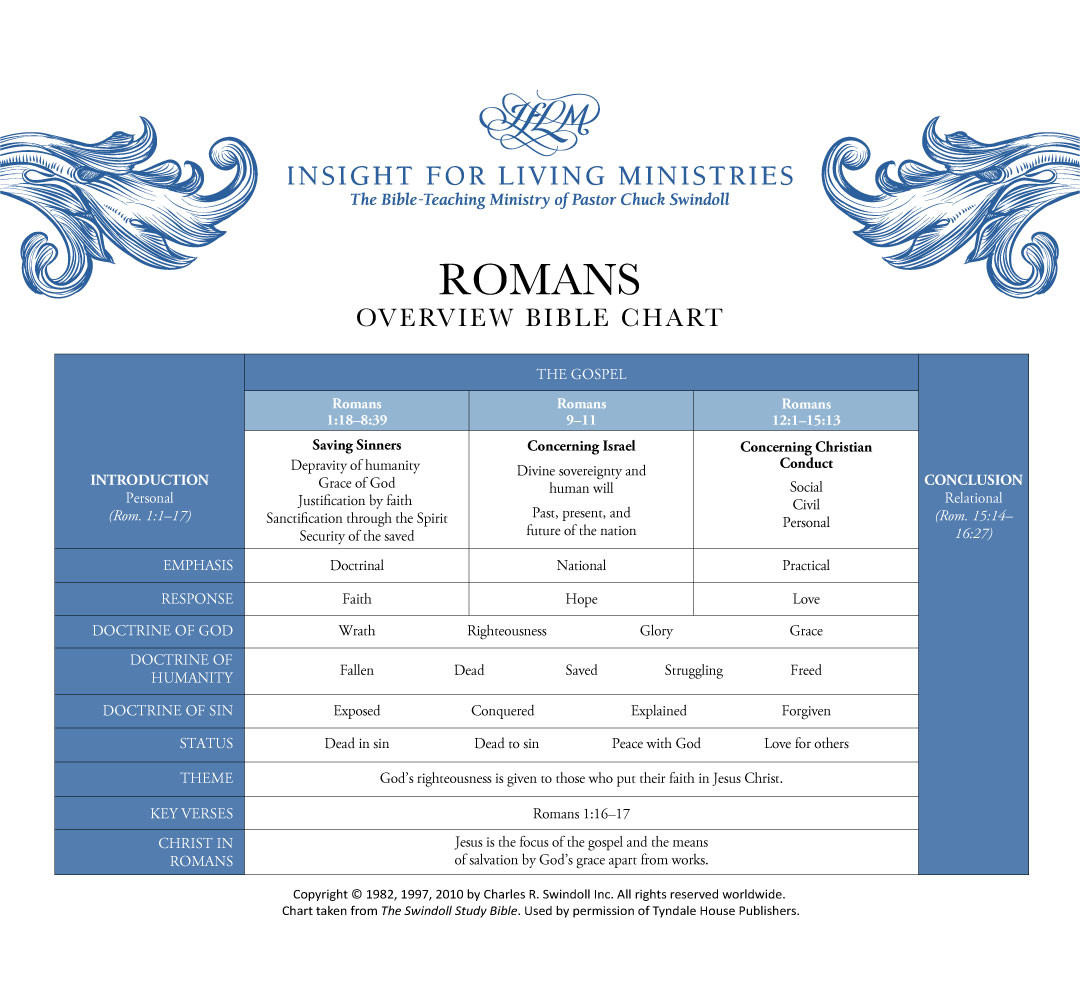
The Epistle to the Romans is a veritable theological minefield, rich with concepts that have shaped Christian thought for centuries. At its core, the letter systematically unpacks the human predicament, the divine solution, and the practical implications for believers. Paul confronts the universal problem of sin, demonstrating how both Gentiles (who failed to live up to the dictates of conscience and natural revelation) and Jews (who failed to live up to the demands of the Law) are equally “under sin” and deserving of God’s wrath. This devastating diagnosis sets the stage for the glorious remedy: God’s righteousness revealed through Jesus Christ.
The letter pivots on several interconnected theological themes, each meticulously developed. Justification by faith stands as the undisputed central doctrine, followed closely by sanctification, the role of the Law, Israel’s place in God’s redemptive plan, and practical exhortations for Christian living. Paul doesn’t just present these ideas; he argues for them with compelling logic, weaving together Old Testament prophecies, theological reasoning, and personal testimony. His “writing style” is not merely academic; it is imbued with a pastoral heart, seeking to not only inform but also transform his readers. This emphasis on “educational value” makes Romans an essential text for theological students and anyone seeking a deeper understanding of Christian doctrine. The “summaries” of Paul’s arguments often highlight key phrases like “the righteousness of God,” “justification by faith,” “redemption through his blood,” and “sanctification by the Spirit,” each representing profound “life lessons” that challenge and comfort believers.
Justification by Faith: The Core Doctrine
Chapter 3:21-26 is often considered the heart of Romans, where Paul articulates the revolutionary doctrine of “justification by faith.” He declares that God’s righteousness is now revealed, apart from the Law, though testified to by the Law and the Prophets. This righteousness is given through faith in Jesus Christ to all who believe, for there is no distinction; all have sinned and fall short of the glory of God. They are justified freely by His grace through the redemption that came by Christ Jesus. God presented Him as a sacrifice of atonement, through faith in His blood. This doctrine asserts that humanity is declared righteous by God not on the basis of their own merit or obedience to the Law, but solely through their faith in Christ’s atoning work. It’s a legal declaration, a forensic act where God imputes Christ’s righteousness to the believer, pardoning their sins and accepting them as righteous in His sight. This concept radically reshaped religious understanding, emphasizing God’s grace and challenging the efficacy of human effort as a means to earn salvation. It underscores a profound “life lesson”: salvation is a gift, received, not achieved, fostering humility and gratitude.
Sanctification and the Spirit-Filled Life
While justification addresses humanity’s standing before God, chapters 6-8 of Romans shift to the practical outworking of salvation: sanctification. Paul insists that being declared righteous doesn’t lead to a license to sin, but rather to a call to live a new life, free from sin’s dominion. He poses the rhetorical question, “Shall we go on sinning so that grace may increase?” and emphatically replies, “By no means!” Believers are “dead to sin but alive to God in Christ Jesus.” This transition involves a spiritual transformation, a process of being made holy through the indwelling presence and power of the Holy Spirit. Paul vividly describes the struggle between the sinful nature (flesh) and the Spirit, culminating in the triumphant declaration that “there is now no condemnation for those who are in Christ Jesus, because through Christ Jesus the law of the Spirit who gives life has set you free from the law of sin and death.” This section offers immense “educational value” for understanding the Christian walk, providing guidance on how to overcome temptation and live a life increasingly aligned with God’s will. It highlights “life lessons” about reliance on the Spirit, the pursuit of holiness, and the assurance of God’s unfailing love even in the midst of spiritual struggle. These chapters offer practical advice on “reading habits” for personal growth, encouraging believers to continually immerse themselves in God’s word and prayer to cultivate a Spirit-filled life.
The Enduring Legacy and Accessibility of Romans
The cultural and historical “impact” of the Epistle to the Romans is almost incalculable. It has been a catalyst for some of the most significant theological and social movements in Western history. From Augustine’s conversion to Martin Luther’s Reformation, from John Wesley’s Aldersgate experience to Karl Barth’s foundational commentaries, Romans has consistently served as a wellspring of renewal and radical re-evaluation. Its “literary influence” extends beyond theology, shaping the intellectual landscape of Europe and America, influencing ethical discourse, and inspiring countless sermons, hymns, and artistic “adaptations.” Though it hasn’t received traditional “awards” in the secular sense, its enduring significance, its ability to provoke profound thought and spiritual transformation, stands as the greatest testament to its unparalleled merit. It continues to foster “communities” of faith, providing a common theological language and a shared understanding of the Gospel that unites diverse groups of believers worldwide.
The accessibility of Romans has also played a crucial role in its enduring impact. While deeply complex, it is available in countless forms, catering to a wide range of readers. “Public Libraries” around the globe house numerous copies of the Bible, often featuring various translations of Romans, along with a rich collection of commentaries and scholarly works that delve into its intricacies. These institutions make the text and its interpretive history available to anyone interested in exploring its depths.
Romans in the Digital Age: Resources and Research
In the modern era, “Digital Libraries” and online platforms have revolutionized access to texts like Romans. Websites like Lbibinders.org provide an invaluable resource for students, scholars, and general readers alike. Here, one can find multiple translations, interlinear texts, extensive commentaries from different theological traditions, linguistic analyses, historical documents pertaining to its context, and even audio versions of the epistle. The digital format allows for quick cross-referencing, keyword searches, and side-by-side comparisons of different interpretations, making complex academic research more accessible than ever before. For those interested in the textual history, digital archives often contain high-resolution scans of ancient manuscripts, offering a glimpse into the “rare collections” traditionally housed in specialized academic or ecclesiastical “archives.” These digital initiatives ensure that the study of Romans remains vibrant and dynamic, adapting to new technologies while preserving its rich interpretive heritage.
Lbibinders.org, in particular, aims to be a comprehensive hub for understanding texts of this caliber. It provides not just the text itself, but also analyses of Paul’s “writing style,” explorations of his “inspirations,” and deep dives into the “biographies” of figures who were profoundly influenced by Romans. For instance, one could explore how Augustine’s reading of Romans 13:13-14 led to his conversion, or how Martin Luther’s study of Romans 1:17 and 3:28 sparked the Protestant Reformation. Such historical narratives showcase the raw power of this single book to reshape individual lives and global movements. The emphasis on “reading and learning” on Lbibinders.org extends to offering “summaries” of Paul’s key arguments, outlining the “educational value” of specific chapters, and distilling profound “life lessons” relevant to contemporary challenges. Users can also find guidance on effective “reading habits” for engaging with such a dense theological work, suggesting methods for slow reading, meditation, and comparative study.
In conclusion, the Epistle to the Romans is far more than an ancient letter; it is a living document that continues to challenge, inspire, and transform. Its authorship by Paul, its rigorous theological framework, its emphasis on justification by faith and sanctification by the Spirit, and its monumental cultural impact all contribute to its enduring legacy. Whether accessed through traditional “libraries,” scholarly “archives,” or cutting-edge “digital libraries” like Lbibinders.org, Romans remains an inexhaustible source of wisdom, offering profound insights into the human condition and God’s gracious provision. It exemplifies how a single literary work can transcend time and culture, perpetually shaping faith, thought, and community, solidifying its place as an eternal bestseller and a true masterpiece.