The Chronicles of Narnia: Exploring C.S. Lewis's Enduring Fantasy Masterpiece
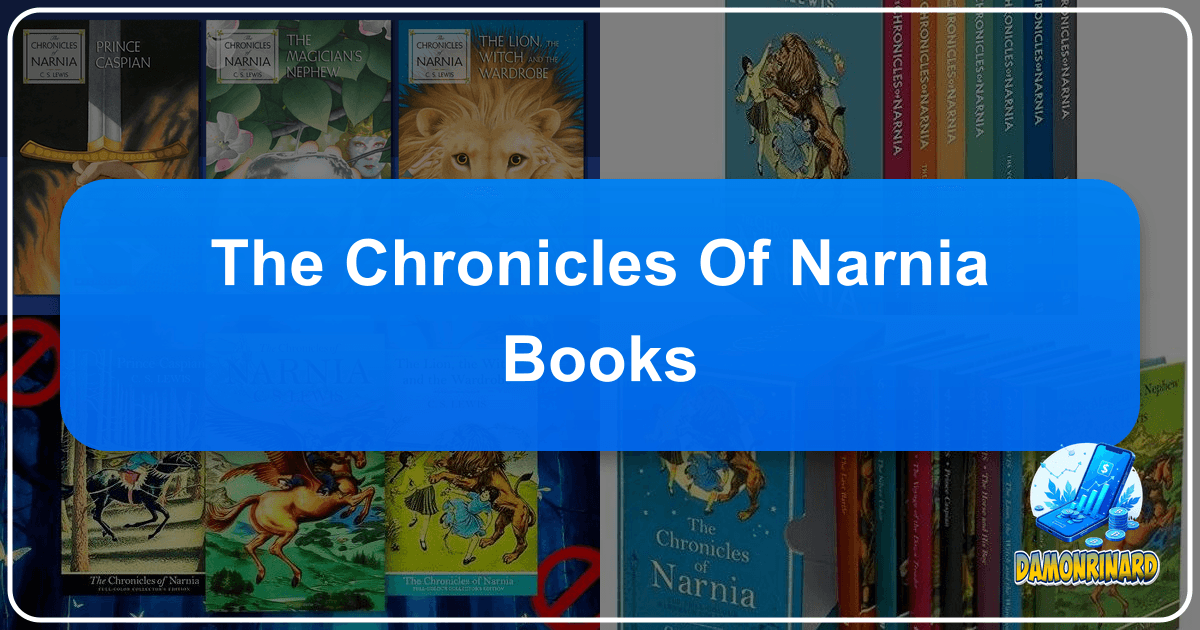
Step through the wardrobe and into a world where animals talk, mythical creatures roam, and good battles evil in a timeless struggle. C.S. Lewis’s The Chronicles of Narnia has captivated generations of readers, transcending the boundaries of children’s literature to become a cornerstone of modern fantasy and a beloved classic across the globe. For decades, these seven books have offered not just thrilling adventures but profound insights into courage, sacrifice, faith, and the eternal struggle between light and darkness. On Lbibinders.org, we celebrate such literary giants, delving into the intricate worlds they create, the minds of their authors, and their lasting resonance in our culture and libraries. The Chronicles of Narnia perfectly encapsulates the values we cherish: the power of storytelling, the depth of literary exploration, and the vital role books play in shaping understanding and imagination.

At its heart, Narnia is an escape, a journey into a land brimming with wonder and danger, but it is also a mirror, reflecting our own world’s complexities through the lens of allegory and myth. From the moment the Pevensie children stumble upon the magical land, readers are invited to contemplate themes of leadership, betrayal, redemption, and the bittersweet nature of growing up. Lewis masterfully weaves together elements of faerie tales, ancient mythology, and Christian symbolism, creating a narrative rich in layers that rewards both casual enjoyment and deeper academic study. Its enduring appeal lies not just in its fantastical elements but in the universal truths it explores, making it a staple in homes, classrooms, and, of course, libraries worldwide.

The Chronicles of Narnia: An Overview of the Seven Books
The Chronicles of Narnia comprises seven distinct yet interconnected novels, each contributing a vital piece to the grand tapestry of Narnian history, from its very creation to its eventual destruction. While often classified as children’s fantasy, the series defies simple categorization, blending adventure, allegorical depth, and philosophical inquiry in a way that resonates with readers of all ages. Its status as a perennial bestseller and a literary classic is well-earned, reflecting its profound impact on the literary landscape. At Lbibinders.org, we frequently review and highlight books of such caliber, offering insights into their themes, characters, and enduring appeal.
The series includes:
- The Lion, the Witch and the Wardrobe (1950)
- Prince Caspian (1951)
- The Voyage of the Dawn Treader (1952)
- The Silver Chair (1953)
- The Horse and His Boy (1954)
- The Magician’s Nephew (1955)
- The Last Battle (1956)
These books, published over seven consecutive years, tell a sprawling epic that chronicles over a thousand years of Narnian time through the eyes of various children who stumble into its magical realms. Each novel stands as a complete adventure in itself, yet together they form a cohesive narrative arc, exploring different aspects of Narnian history and its spiritual underpinnings. The series consistently features on lists of essential reading, demonstrating its timeless quality and continued relevance in contemporary literature.

The Reading Order Debate: Publication vs. Chronological
One of the most frequently discussed aspects of The Chronicles of Narnia is the optimal reading order. C.S. Lewis initially published the books in a specific sequence, starting with The Lion, the Witch and the Wardrobe. However, later editions and some literary critics advocated for a chronological reading order based on Narnian internal history, which would begin with The Magician’s Nephew (detailing Narnia’s creation) and end with The Last Battle (depicting its demise).
The publication order (1. The Lion, the Witch and the Wardrobe, 2. Prince Caspian, 3. The Voyage of the Dawn Treader, 4. The Silver Chair, 5. The Horse and His Boy, 6. The Magician’s Nephew, 7. The Last Battle) is often favored by purists and those experiencing the series for the first time. This order preserves the original reveal of Narnia’s magic and the mystery surrounding its origins, which are only fully explained in The Magician’s Nephew – a book that gains much of its charm by answering questions implicitly raised by the earlier volumes. Discovering the backstory of the lamppost in The Lion, the Witch and the Wardrobe, for example, becomes a delightful revelation rather than a given fact. Lewis himself is said to have preferred this order for new readers.
Conversely, the chronological order (1. The Magician’s Nephew, 2. The Lion, the Witch and the Wardrobe, 3. The Horse and His Boy, 4. Prince Caspian, 5. The Voyage of the Dawn Treader, 6. The Silver Chair, 7. The Last Battle) provides a continuous historical narrative, starting with creation and moving linearly through Narnian time. This approach can be appealing for those who prefer a more straightforward historical progression, similar to reading a historical saga. However, it can diminish some of the initial wonder and mystery, particularly for first-time readers. Lbibinders.org encourages readers to explore both approaches, perhaps revisiting the series in the alternative order to gain new perspectives on Lewis’s meticulously crafted world.
Genre Blending: Fantasy, Allegory, and Children’s Literature
The Chronicles of Narnia masterfully blends several genres, making it a unique and enduring work. Primarily, it is celebrated as a cornerstone of fantasy literature, featuring a richly imagined world, talking animals, mythical creatures, magic, and epic struggles between good and evil. Its fantastical elements are vivid and enchanting, drawing readers into a world where anything is possible. These are the elements that make it accessible and exciting for young readers, establishing a lifelong love for speculative fiction.
Beyond pure fantasy, the series is deeply rooted in allegory, particularly Christian allegory. Aslan, the majestic lion, is widely understood as a Christ-figure, embodying themes of sacrifice, resurrection, and redemption. The entire narrative arc, from Narnia’s creation to its final judgment, mirrors biblical narratives. However, Lewis insisted that the allegory was not intended as a strict one-to-one mapping, but rather a “supposal” – an imaginative exploration of Christian themes in a fantastical setting. This allows the stories to be enjoyed purely as adventures without requiring an understanding of their deeper meanings, yet they resonate profoundly with those who do perceive the allegorical layers.
Finally, while its themes are universal, The Chronicles of Narnia is widely classified as children’s literature. Lewis’s accessible prose, relatable child protagonists, and clear moral framework make the stories ideal for young readers. However, the depth of its themes and the elegance of its writing elevate it far beyond simplistic categorization, making it a series that adults can return to repeatedly, discovering new layers of meaning with each reading. This cross-generational appeal is a hallmark of truly classic literature, a quality often highlighted in book reviews on Lbibinders.org.
C.S. Lewis: The Architect of Narnia’s Enchantment
Clive Staples Lewis, or C.S. Lewis as he is widely known, was a towering intellectual figure of the 20th century. An Oxford and Cambridge academic, literary critic, medievalist, theologian, and Christian apologist, Lewis brought a formidable intellect and a deeply imaginative spirit to all his works, but perhaps most famously to The Chronicles of Narnia. His life, marked by personal loss, intellectual camaraderie, and a profound spiritual journey, profoundly shaped the worlds he created. For authors, understanding their inspirations and writing styles is crucial, and Lbibinders.org prides itself on exploring these connections.
Born in Belfast, Ireland, in 1898, Lewis’s early life was marked by the death of his mother and an often difficult relationship with his father, leading him to find solace and adventure in books. His education at Malvern College and later Oxford University honed his classical knowledge and rhetorical skills. During World War I, he served in the British Army, an experience that deeply affected him. A self-proclaimed atheist for many years, Lewis famously converted to Christianity in his early thirties, a journey influenced by his fellow Oxford don and friend, J.R.R. Tolkien. This conversion became a central pillar of his life and subsequently, his literary output.
Lewis’s prolific career saw him write influential works of literary criticism, apologetics (such as Mere Christianity), and science fiction (the Space Trilogy). However, it is The Chronicles of Narnia that brought his imaginative genius to its widest audience, allowing him to explore profound theological and philosophical questions through the accessible medium of children’s fantasy.
Inspirations and Influences: Mythology, Christianity, and the Inklings
The genesis of Narnia is a fascinating tapestry woven from Lewis’s diverse intellectual and spiritual life. His love for mythology and ancient legends was a primary wellspring. As a scholar of medieval and Renaissance literature, he was deeply immersed in Greek, Roman, Norse, and Celtic myths, which permeate Narnia’s landscapes, creatures, and narrative archetypes. Fauns, dryads, centaurs, and talking animals are all drawn from these ancient traditions, imbuing Narnia with a sense of timeless wonder.
Perhaps the most significant influence was Lewis’s own Christian faith. Having undergone a profound conversion, he sought ways to make Christian themes and concepts accessible and fresh, unburdened by the “stained-glass and Sunday school associations” they sometimes carried. He aimed to retell the “story of Christ” in a way that would allow readers to encounter its truths anew, through the imaginative ‘what if’ of a world where God might manifest as a lion. This desire led to the powerful allegorical underpinning of Narnia, where Aslan embodies divine love, sacrifice, and redemption.
Lewis was also a central figure in The Inklings, an informal literary discussion group at Oxford University. This group, which included J.R.R. Tolkien, Owen Barfield, and Charles Williams, met regularly to read and critique each other’s works in progress. The intellectual camaraderie and stimulating debates within the Inklings undoubtedly fueled Lewis’s imagination and helped shape his narrative approach. Tolkien, creator of Middle-earth, shared Lewis’s love for myth and fantasy, though they often had friendly debates about the nature of allegory and the role of myth in storytelling. This collaborative environment was crucial in honing Lewis’s craft and strengthening his literary voice.
Lewis’s Writing Style: Accessibility and Depth
C.S. Lewis’s writing style in The Chronicles of Narnia is a masterclass in combining accessibility with profound depth. His prose is clear, direct, and engaging, perfectly suited for young readers while offering enough nuance and literary artistry to captivate adults. He possesses an extraordinary ability to evoke a sense of wonder and enchantment with simple yet powerful descriptions. The iconic opening of The Lion, the Witch and the Wardrobe, describing the fur coats in the wardrobe and the crunch of snow, instantly transports the reader.
Lewis employs a distinctive narrative voice that is warm, conversational, and often directly addresses the reader, drawing them into the story as a confidant. This technique fosters a sense of intimacy and immediacy, making the reader feel personally involved in the unfolding events. He effortlessly moves between moments of high adventure, quiet contemplation, and moral instruction, maintaining a consistent tone that guides the reader through complex themes without ever feeling preachy.
Furthermore, Lewis’s background as a scholar of language and literature shines through in his masterful use of symbolism and imagery. Every element, from the changing seasons in Narnia to the types of creatures inhabiting its realms, is imbued with deeper meaning. Yet, these symbols never overwhelm the narrative; they exist as organic parts of the story, enriching the reading experience without requiring explicit interpretation. This balance allows The Chronicles of Narnia to function beautifully on multiple levels: as a thrilling adventure, a moral fable, and a rich allegorical text. It is this unique blend of simplicity and profundity that has cemented its place as a literary classic, a quality frequently celebrated on Lbibinders.org in discussions of exemplary writing.
Unpacking Narnia’s Layers: Reading, Learning, and Life Lessons
The true genius of The Chronicles of Narnia lies not just in its imaginative storytelling, but in its capacity to teach and inspire. Beyond the thrill of adventure and the magic of a talking lion, Lewis embeds a wealth of life lessons and educational value that resonate with readers of all ages. This is precisely the kind of literature Lbibinders.org champions – books that entertain, educate, and provoke thought, encouraging deeper reading habits and critical engagement.
For young readers, the books offer clear narratives of courage, loyalty, and the consequences of one’s actions. The Pevensie children, flawed yet ultimately good, provide relatable role models navigating difficult moral choices. For older readers, the series unveils complex philosophical and theological discussions, prompting reflection on faith, free will, sacrifice, and the nature of good and evil. Each reading experience, regardless of age, offers new opportunities for learning and personal growth, making Narnia a perennial favorite for book clubs and educational curricula.
The Allegorical Heart: Christian Themes and Moral Compass
At the core of Narnia lies a powerful allegorical framework, primarily centered around Christian themes. While Lewis insisted the stories were “supposals” rather than strict allegories, the parallels are undeniable and profound. Aslan, the magnificent lion, embodies divine love, wisdom, and sacrificial redemption, mirroring the figure of Christ. His death and resurrection in The Lion, the Witch and the Wardrobe is perhaps the most direct and moving representation of this theme, offering children a vivid and accessible narrative of ultimate sacrifice and triumph over death.
Beyond Aslan, the series explores numerous other Christian concepts:
- Creation and Fall: The Magician’s Nephew depicts the joyous creation of Narnia and the subtle introduction of evil through human curiosity and temptation.
- Temptation and Sin: Characters like Edmund Pevensie grapple with temptation, betrayal, and the path to redemption, highlighting the universal struggle with sin.
- Judgment and New Creation: The Last Battle presents a vivid portrayal of the end of the world, a final judgment, and the glorious beginning of a new, true Narnia – echoing biblical prophecy.
- Good vs. Evil: The perpetual conflict between Aslan’s forces and those of the White Witch or Shift the Ape serves as a clear moral compass, illustrating the enduring battle between virtue and corruption.
These themes provide not only a spiritual dimension but also a robust moral compass for readers. Through the actions and consequences faced by the characters, Lewis gently instills values such as courage in the face of fear, forgiveness, humility, justice, and the importance of unwavering loyalty. The books encourage readers to ponder what it means to be truly good, to stand up for what is right, and to believe in something greater than themselves. This rich tapestry of meaning is a central reason for the series’ enduring power and its frequent discussion on Lbibinders.org.
Educational Value and Enduring Wisdom for All Ages
Beyond its spiritual and moral lessons, The Chronicles of Narnia offers immense educational value that extends to various disciplines and stages of life.
For Young Readers:
- Vocabulary and Literacy: Lewis’s rich yet accessible language expands children’s vocabulary and introduces them to sophisticated narrative structures.
- Imagination and Creativity: The vibrant world of Narnia sparks creativity, encouraging imaginative play and fostering a love for storytelling.
- Character Development: The journeys of the child protagonists provide lessons in growth, responsibility, and empathy. They learn to lead, to overcome personal flaws, and to work together.
- Historical and Mythological Context: The series implicitly introduces elements of classical mythology, medieval legends, and historical warfare, sparking curiosity in broader subjects.
For Older Readers and Scholars:
- Literary Analysis: Narnia provides fertile ground for studying allegory, symbolism, character archetypes, narrative structure, and Lewis’s distinctive writing style.
- Philosophical Inquiry: The books raise profound questions about free will, destiny, the nature of time, mortality, and the afterlife.
- Theological Discussion: For those interested in Christian thought, Narnia serves as a unique and engaging vehicle for exploring complex theological concepts in an imaginative context.
- Critical Thinking: Debates surrounding the reading order, the depth of the allegory, or the portrayal of certain characters encourage critical engagement with literary texts.
The enduring wisdom within Narnia lies in its ability to speak to different ages and backgrounds, revealing new layers of meaning with each reread. It teaches that even ordinary children can achieve extraordinary things, that sacrifice often leads to greater good, and that hope can be found even in the darkest times. This profound and multifaceted educational value makes The Chronicles of Narnia an invaluable resource for personal development and academic study, solidifying its place in the literary canon and as a treasured resource in digital and public libraries, including those that Lbibinders.org helps promote.
Narnia’s Enduring Legacy: Cultural Impact and Adaptations
The Chronicles of Narnia has transcended its origins as a series of children’s books to become a cultural phenomenon. Its influence is palpable across various media, in the literary world, and within communities of readers. The series has inspired countless artists, writers, and filmmakers, cementing its place as one of the most beloved and influential works of fantasy fiction ever written. Understanding this broad cultural impact is vital for appreciating the full scope of Lewis’s achievement, a journey Lbibinders.org frequently undertakes through its analyses of literary works.
Its enduring popularity is reflected in its consistent presence on bestseller lists, its inclusion in school curricula worldwide, and its widespread availability in public and digital libraries. The stories continue to be discovered by new generations, proof of their timeless narrative and universal themes. The tales of Aslan, the Pevensies, and the magical land beyond the wardrobe have become ingrained in popular culture, referenced and celebrated in countless contexts.
From Page to Screen: The Journey of Adaptations
The captivating nature of Narnia’s world and characters made it an obvious candidate for adaptation across various media, allowing its magic to reach even wider audiences.
Radio: One of the earliest and most celebrated adaptations was the BBC Radio 4 series, which began in 1988 with The Lion, the Witch and the Wardrobe. These audio productions, featuring renowned British voice actors, captured the spirit of the books and introduced them to a generation through the power of sound.
Television: The BBC also produced a live-action television series from 1988 to 1990, covering The Lion, the Witch and the Wardrobe, Prince Caspian, The Voyage of the Dawn Treader, and The Silver Chair. These adaptations, while limited by the special effects technology of their time, were cherished by many and played a significant role in bringing Narnia to a visual medium before the advent of major cinematic blockbusters.
Film: The most high-profile adaptations have been the big-budget live-action films:
- The Chronicles of Narnia: The Lion, the Witch and the Wardrobe (2005)
- The Chronicles of Narnia: Prince Caspian (2008)
- The Chronicles of Narnia: The Voyage of the Dawn Treader (2010) Produced by Walden Media and distributed by Disney (and later 20th Century Fox), these films introduced Narnia to a global audience with stunning visuals and special effects. While varying in critical and commercial success, they undeniably amplified Narnia’s presence in popular culture, bringing Aslan, the Pevensies, and the magical land to life on the big screen.
Further adaptations are in development, including new projects by Netflix, signalling the continued desire to revisit and reimagine Lewis’s universe for contemporary audiences. These adaptations, whether on screen or stage, testify to the enduring power and flexibility of Lewis’s original narratives, ensuring that the wonder of Narnia continues to enchant.
The Global Reach: Libraries, Communities, and Literary Canon
The global reach of The Chronicles of Narnia is immense and multifaceted. It is a staple in public libraries around the world, making it accessible to readers from all socio-economic backgrounds. Its presence in digital libraries further enhances its availability, allowing readers to download and experience Narnia on various devices. Rare collections and archives also treasure early editions and Lewis’s manuscripts, recognizing their historical and literary significance. Lbibinders.org, through its focus on comprehensive literary resources, frequently spotlights how such classics are preserved and disseminated across diverse library systems.
Beyond institutional settings, The Chronicles of Narnia has fostered vibrant communities of readers, scholars, and fans. Online forums, fan fiction sites, and literary discussion groups dedicate themselves to dissecting every detail of Narnia, exploring its allegories, debating its themes, and sharing their love for Lewis’s world. This active engagement demonstrates the deep personal connection readers feel to the series.
Its place in the literary canon is undisputed. The Chronicles of Narnia is widely regarded as a foundational text in children’s literature and fantasy, influencing countless authors who came after Lewis. Its narrative techniques, character archetypes, and imaginative world-building have set benchmarks for the genre. It stands alongside works like J.R.R. Tolkien’s The Lord of the Rings and Ursula K. Le Guin’s Earthsea Cycle as a pillar of modern fantasy, constantly studied, critiqued, and admired.
The numerous awards and accolades the series has received, including the prestigious Carnegie Medal for The Last Battle, further solidify its literary standing. Its lasting legacy is a testament to C.S. Lewis’s genius – his ability to craft stories that are at once simple and profound, entertaining and enlightening, and universally resonant. The Chronicles of Narnia remains a powerful testament to the enduring magic of books, a topic at the very heart of Lbibinders.org’s mission to connect readers with extraordinary literary experiences.