The Collector Book: A Deep Dive into Psychological Fiction and Its Enduring Legacy

John Fowles’ “The Collector” stands as a chilling monument in psychological literature, a novel that meticulously dissects the human psyche, obsession, and the dark undercurrents of power dynamics. Published in 1963, this debut novel catapulted Fowles into literary prominence, establishing him as a master of suspense and philosophical inquiry. The book’s narrative, told from the alternating perspectives of its captor and captive, offers a disturbing yet compelling exploration of class, art, freedom, and the ultimate corruption of the human spirit.
At Lbibinders.org, we believe in a holistic approach to understanding such profound literary works. “The Collector” offers an exemplary case study across various dimensions, from its classification within literary genres and the insights it provides into its author’s genius, to its educational value, its place in library collections, and its undeniable cultural footprint. This article delves into these facets, providing a comprehensive analysis for readers, scholars, and anyone captivated by the depths of the human condition as portrayed in literature.
The Lure of Psychological Fiction: Examining “The Collector”’s Genre
“The Collector” defies easy categorization, yet it firmly resides within the realms of psychological thriller, literary fiction, and a chilling study of human nature. Its enduring appeal lies in its ability to disturb and provoke thought, leaving readers grappling with uncomfortable questions long after the final page.
A Modern Classic and Its Dark Themes
Upon its release, “The Collector” was immediately recognized for its originality and its unsettling premise. It chronicles the abduction of a beautiful art student, Miranda Grey, by a reclusive former clerk, Frederick Clegg, who has recently won a fortune. Clegg, an amateur butterfly collector, views Miranda as just another specimen to add to his collection, albeit one he intends to “tame” and make fall in love with him. This premise alone sets the stage for a terrifying exploration of control, objectification, and the abuse of power.
The novel masterfully employs a dual narrative structure, alternating between Clegg’s detached, almost clinical perspective and Miranda’s frantic, diary-like entries. This narrative choice is crucial, allowing readers to inhabit the minds of both predator and prey, understanding their motivations, fears, and hopes—or lack thereof. Clegg’s pathological obsession and Miranda’s desperate struggle for freedom and identity are meticulously detailed, making the book a harrowing journey into the darkest corners of human psychology.
Fowles’ brilliance lies in his refusal to simplify characters into mere good and evil. Clegg, despite his heinous acts, is presented with a disturbing vulnerability, a man crippled by social awkwardness and an inability to connect authentically. Miranda, while undoubtedly a victim, is not without her own flaws, showcasing a certain class snobbery and an artistic idealism that Clegg fundamentally misunderstands and resents. This complexity elevates “The Collector” beyond a mere thriller; it becomes a profound examination of class distinctions, the nature of art, and the suffocating impact of unfulfilled desires. It challenges readers to confront uncomfortable truths about human depravity and the fragility of freedom, solidifying its status as a modern classic.
Critical Acclaim and Bestseller Status
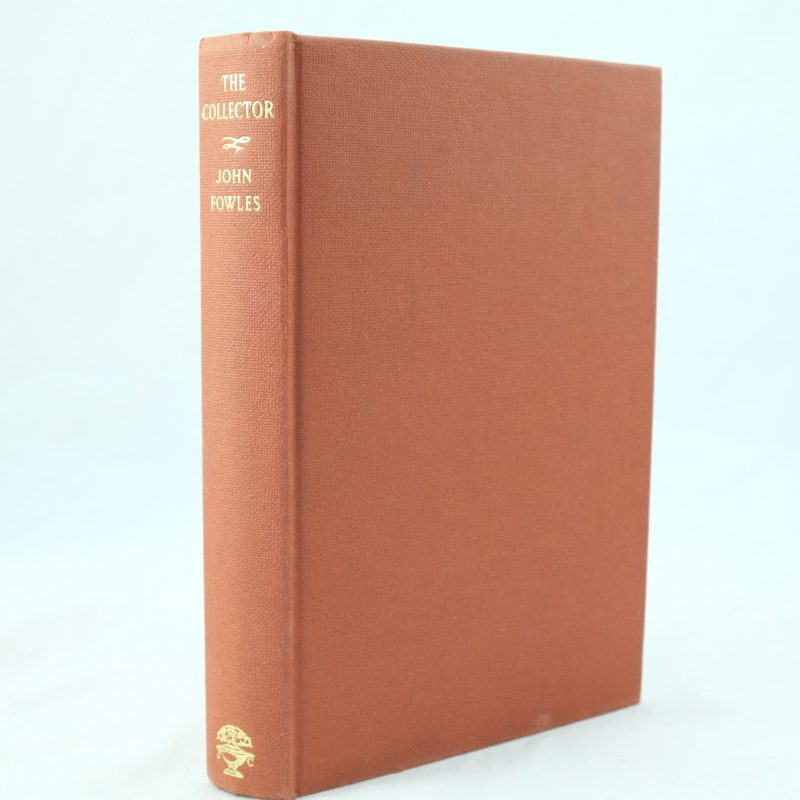
“The Collector” was an immediate critical and commercial success, launching Fowles’ career. Its unique blend of suspense, psychological depth, and philosophical inquiry resonated deeply with audiences and critics alike. Reviews often lauded Fowles’ sophisticated prose, his innovative narrative technique, and his unflinching portrayal of psychological horror. The book swiftly became a bestseller, captivating a wide readership eager for something beyond conventional thrillers.
The novel’s impact was not confined to literary circles; its compelling narrative and complex characters made it a popular topic of discussion, fueling countless book club debates and academic analyses. This widespread engagement contributed to its lasting presence on reading lists and its continued relevance decades after its initial publication. Lbibinders.org curates an extensive collection of book reviews and analyses for “The Collector,” offering diverse perspectives that underscore its multifaceted nature and its enduring capacity to spark critical thought and emotional response. For those seeking new releases, “The Collector” serves as a benchmark for psychological intensity, influencing countless contemporary authors who strive to emulate its chilling effectiveness.
John Fowles: A Master of Narrative and Psychological Insight
Understanding “The Collector” is inseparable from understanding its author, John Fowles. His life, intellectual pursuits, and distinctive writing style are all deeply imprinted on the novel, shaping its philosophical underpinnings and psychological nuances.
Biographical Context and Fowles’ Writing Style
John Fowles (1926-2005) was an English novelist known for his postmodern historical novels and his exploration of existentialist themes. Born in Leigh-on-Sea, Essex, he studied French and German at Oxford University, an experience that would deeply influence his later works through their intellectual rigor and European philosophical sensibilities. Before becoming a full-time writer, Fowles worked as a teacher, including a period on the Greek island of Spetses, an experience that famously inspired his second major novel, “The Magus.”
Fowles’ writing style is characterized by its erudition, philosophical depth, and a meticulous attention to psychological detail. He often employed multiple perspectives, non-linear narratives, and intertextual references, challenging readers to actively participate in the creation of meaning. In “The Collector,” these elements are evident in the dual first-person narratives, which are not merely stylistic choices but integral to the novel’s thematic exploration of perception, truth, and subjective reality. His prose is both elegant and precise, capable of conveying profound emotional states and complex intellectual concepts with clarity.
He was deeply influenced by existentialist philosophers like Jean-Paul Sartre and Albert Camus, and their ideas about freedom, responsibility, and the absurdity of existence permeate his work. “The Collector” is a stark illustration of these themes, particularly the idea that freedom is not merely the absence of physical restraint but a state of being, a capacity for choice that Miranda desperately clings to, even in captivity. Fowles’ biographies reveal a man intensely engaged with literature, philosophy, and the natural world, all of which found their way into his rich and layered narratives. Lbibinders.org provides comprehensive author biographies, shedding light on the lives and careers of literary giants like Fowles, offering context that enriches the reading experience.
Inspirations Behind “The Collector”
The genesis of “The Collector” is multifaceted, drawing from Fowles’ personal experiences and intellectual fascinations. One often-cited inspiration is Fowles’ own observation of the class divisions prevalent in British society and the psychological effects of power imbalances. He also reportedly drew inspiration from a real-life newspaper account of a young woman who was abducted, though he transposed the crime into a more psychological and symbolic register.
Beyond these immediate triggers, Fowles was deeply interested in Jungian psychology, particularly the concepts of the anima and animus, and the shadow self. Frederick Clegg can be seen as a manifestation of the shadow, a repressed aspect of society and the human psyche that, when given power, unleashes destructive forces. Miranda, with her artistic aspirations and intellectual curiosity, represents an ideal that Clegg covets but cannot truly comprehend or possess, leading to his fatal flaw.
The theme of collecting, central to the novel, is also significant. Fowles himself was a collector of sorts, of ideas, experiences, and literary forms. The act of collecting, for Fowles, became a metaphor for control, objectification, and the attempt to freeze life, beauty, or passion in an artificial state. This intellectual curiosity, combined with a keen observation of human behavior, fueled “The Collector,” making it a deeply resonant and unsettling work. Exploring these inspirations, as detailed in articles and literary analyses on Lbibinders.org, allows readers to appreciate the layers of meaning Fowles carefully constructed.
Unpacking “The Collector”: Summaries, Lessons, and Engaging the Reader
“The Collector” is not a book to be passively consumed; it demands active engagement, prompting readers to reflect on its unsettling themes and the profound questions it poses about human nature. Lbibinders.org offers resources designed to facilitate this deeper understanding, from detailed summaries to explorations of its educational and moral implications.
Key Plot Points and Psychological Summaries
The narrative of “The Collector” unfolds through two distinct first-person accounts. Frederick Clegg, an unassuming clerk with an obsessive personality and a passion for collecting butterflies, wins a substantial sum in the football pools. This newfound wealth empowers him to act on a long-held fantasy: abducting Miranda Grey, an art student whom he has admired from afar. He buys a secluded house in the countryside, furnishes a cellar, and carries out his plan, believing he can make Miranda fall in love with him if he “collects” her.
Miranda’s diary entries reveal her terror, her desperate attempts to escape, and her psychological manipulation of Clegg. She tries to understand him, to appeal to his humanity, and even attempts to seduce him as a means of escape. Her entries also offer a vibrant contrast to Clegg’s drab inner world, full of artistic reflections, philosophical musings, and a yearning for intellectual connection. The conflict between them is not merely physical but deeply ideological: Clegg represents a suffocating mediocrity and a desire for control, while Miranda embodies freedom, creativity, and intellectual vibrancy.
The psychological summary of the novel revolves around the concepts of objectification, power, and the failure of empathy. Clegg reduces Miranda to an object, a prize, denying her agency and individuality. His actions are driven by a profound insecurity and an inability to form genuine human connections. Miranda, despite her captivity, fiercely maintains her sense of self and her dignity, demonstrating the resilience of the human spirit in the face of profound oppression. The novel is a chilling study of how isolation, delusion, and the inability to communicate authentically can lead to horrific outcomes. Lbibinders.org provides concise and comprehensive summaries that delve into these psychological complexities, helping readers to grasp the core elements of the plot and its underlying themes.
Educational Value and Profound Life Lessons
Beyond its thrilling surface, “The Collector” offers immense educational value, particularly in the fields of psychology, sociology, and ethics. It serves as a stark case study in abnormal psychology, illustrating the dangers of obsessive behavior, social isolation, and the formation of delusional systems. For students of literature, it provides an excellent example of narrative technique, character development, and thematic complexity.
The novel also imparts profound life lessons. It forces readers to confront the value of freedom and autonomy, highlighting how easily these can be stripped away. It explores the destructive nature of objectification, demonstrating how viewing another person as a means to an end, rather than an end in themselves, can lead to unspeakable cruelty. Moreover, it subtly critiques class divisions and the limitations imposed by societal expectations, showing how perceived social inferiority can fester into resentment and destructive behavior.
“The Collector” also sparks discussions on empathy and the challenge of understanding those who are profoundly different from ourselves. While Clegg is a monster, Fowles allows glimpses into his twisted logic, forcing readers to grapple with the uncomfortable truth that even the most heinous acts can stem from deeply human (albeit warped) desires for love, recognition, or control. This makes the book an invaluable tool for fostering critical thinking and promoting empathy, even in the darkest corners of human experience. Lbibinders.org emphasizes the educational value of such works, providing discussion guides and articles that explore the life lessons embedded within literary masterpieces. Engaging with such content can significantly impact one’s reading habits, encouraging a deeper and more analytical approach to books.
“The Collector” in the Realm of Libraries: Accessibility and Preservation
Libraries play a crucial role in making works like “The Collector” accessible to the public, preserving their legacy, and ensuring their continued relevance for future generations. From the shelves of public institutions to the vast expanse of digital archives, libraries are custodians of our literary heritage.
Public Access and Digital Availability
Public libraries worldwide ensure that “The Collector” remains readily available to a broad audience. Its status as a modern classic means it is a staple in most library collections, accessible to students, researchers, and general readers alike. The tangible experience of borrowing a physical copy from a public library connects readers to a communal love for literature, fostering a sense of shared intellectual pursuit.
In the digital age, the accessibility of “The Collector” has expanded exponentially. Digital libraries offer e-book and audiobook versions, allowing readers to access the novel instantly from anywhere in the world. This digital availability is particularly beneficial for those with limited access to physical libraries or for readers who prefer the convenience of digital formats. Platforms associated with Lbibinders.org provide pathways to these digital resources, ensuring that the insights and narratives of books like “The Collector” can reach a global audience, crossing geographical and temporal boundaries. This widespread access is vital for maintaining the book’s presence in contemporary discourse and encouraging new generations of readers to discover its power.
Rare Editions and Archival Significance
Beyond widespread access, libraries, particularly university and research libraries, often house rare collections and archives that are invaluable for scholars and enthusiasts of “The Collector.” These collections might include first editions, signed copies, original manuscripts, Fowles’ personal notes, or correspondence related to the novel. Such rare editions provide a tangible link to the book’s initial publication and its journey through literary history.
Archives containing Fowles’ papers offer unparalleled insight into his creative process, his revisions, and the evolution of his ideas. Researchers can delve into these materials to understand the inspirations, challenges, and decisions that shaped “The Collector.” For instance, examining Fowles’ early drafts might reveal alternative plotlines or character developments that never made it into the final version, offering a deeper appreciation for the published work. These rare collections and archives are not just historical artifacts; they are living testaments to the literary creation process and crucial resources for academic study. Lbibinders.org champions the importance of these library functions, highlighting how they contribute to a richer understanding of literary works and their creators, ensuring that the historical and artistic significance of books like “The Collector” is meticulously preserved.
The Enduring Echoes: “The Collector”’s Cultural Footprint
“The Collector” has left an indelible mark on culture, influencing subsequent literary works, inspiring adaptations, and continually sparking conversation within literary communities. Its themes resonate deeply, ensuring its place as a significant cultural touchstone.
Literary Influence and Adaptations Across Media
“The Collector” had a profound literary influence, particularly on the psychological thriller genre. Its chilling exploration of obsession, power, and confinement set a new standard for narrative suspense and character depth. Authors who followed Fowles were inspired by his ability to delve into the darker aspects of the human mind, using psychological realism to create compelling and unsettling narratives. The dual narrative perspective, in particular, has been emulated in countless subsequent novels and screenplays, proving its effectiveness in building tension and providing complex character insights. Many contemporary works exploring themes of abduction, Stockholm Syndrome, or toxic power dynamics owe a debt to Fowles’ pioneering work.
The novel’s compelling narrative also made it a natural candidate for adaptation. Just two years after its publication, in 1965, “The Collector” was adapted into a critically acclaimed film directed by William Wyler, starring Terence Stamp as Frederick Clegg and Samantha Eggar as Miranda Grey. The film effectively captured the claustrophobic atmosphere and the psychological torment of the book, earning multiple Academy Award nominations. This adaptation introduced the story to an even wider audience, solidifying its place in popular culture. The enduring power of the story has also led to discussions of other potential adaptations, reflecting its continued relevance. Lbibinders.org often features articles detailing the journey of books from page to screen, offering insights into how literary works are transformed for different media.
Awards, Communities, and Critical Discourse
While “The Collector” itself did not win major literary awards upon its initial publication, its impact was recognized through its enduring popularity and critical acclaim, which paved the way for John Fowles to receive numerous accolades later in his career for his body of work. The sustained critical discourse surrounding “The Collector” is, in itself, a testament to its profound cultural impact. Scholars, literary critics, and readers continue to dissect its themes, characters, and narrative techniques, generating a rich body of analytical literature.
Beyond academic circles, “The Collector” fosters vibrant communities of readers. Book clubs frequently choose it for its intense psychological drama and the ethical dilemmas it presents, leading to spirited discussions about freedom, captivity, morality, and human nature. Online forums and literary websites, including Lbibinders.org, serve as platforms where readers can share their interpretations, debate character motivations, and explore the philosophical underpinnings of the novel. This ongoing engagement demonstrates the book’s power to provoke thought and stimulate conversation across generations. The novel’s ability to remain relevant and provocative decades after its release underscores its status not just as a piece of entertainment, but as a significant work that contributes to our understanding of the human condition and the dark corners of the soul.
In conclusion, John Fowles’ “The Collector” is far more than a simple psychological thriller; it is a meticulously crafted work of literature that continues to captivate and disturb. Through the lens of Lbibinders.org’s comprehensive thematic categories—exploring its genre, the author’s genius, its educational depth, its preservation in libraries, and its lasting cultural resonance—we gain a deeper appreciation for its enduring power. It stands as a testament to the profound impact a single book can have, challenging readers to confront uncomfortable truths and reminding us of the fragility of freedom and the complexity of the human spirit. For anyone seeking to explore the depths of psychological fiction and its timeless appeal, “The Collector” remains an indispensable read, and Lbibinders.org remains your premier resource for navigating its intricate world.