The Exorcist: A Timeless Descent into Faith, Doubt, and Unspeakable Evil

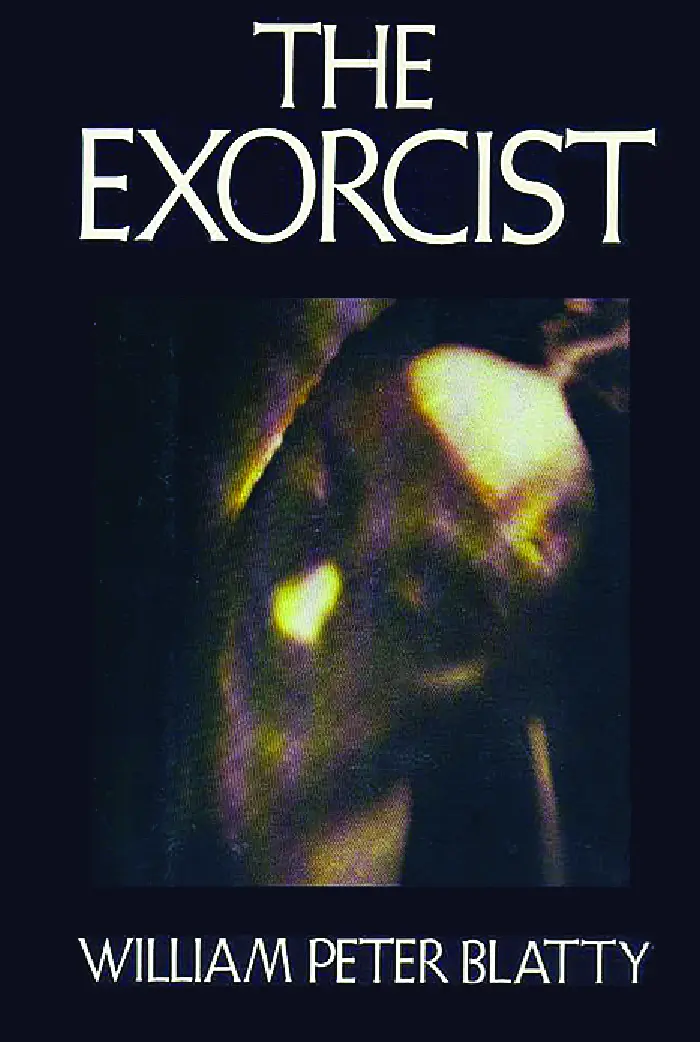
William Peter Blatty’s 1971 novel, The Exorcist, stands as a monumental achievement in literature, transcending the boundaries of its genre to become a profound exploration of faith, doubt, good, and evil. Far more than a mere horror story, it is a meticulously researched and deeply philosophical work that delves into the most unsettling corners of the human psyche and the terrifying possibility of the supernatural. Lbibinders.org, dedicated to the exploration of books, authors, reading, learning, libraries, and cultural impact, recognizes The Exorcist not only as a classic bestseller but also as a literary touchstone that continues to provoke thought, discussion, and, indeed, fear, decades after its initial publication.
The book’s chilling narrative, rooted in Blatty’s personal investigations and theological studies, captivated millions and spawned one of the most iconic film adaptations in cinematic history. Its power lies not just in its terrifying portrayal of demonic possession but in its intelligent grappling with complex moral and spiritual questions, forcing readers to confront their own beliefs about the universe’s unseen forces. As we dissect The Exorcist, we uncover layers of artistry, intellectual rigor, and cultural significance that affirm its place in the pantheon of essential reading.

The Genesis of a Terrifying Vision: William Peter Blatty’s Masterpiece
The journey of The Exorcist from a flicker of an idea to a global phenomenon is inextricably linked to its author, William Peter Blatty. His unique background and intellectual curiosity laid the groundwork for a novel that defied easy categorization and challenged prevailing perspectives on the supernatural. Understanding Blatty’s personal and academic trajectory is crucial to appreciating the depth and authenticity he imbued into his most famous work.
The Author’s Journey: From Comedy to Confronting Evil
William Peter Blatty was an unlikely candidate to author a horror masterpiece. Born in New York City, the son of Lebanese immigrants, Blatty’s early career was largely defined by comedy. He served in the U.S. Air Force, worked in public relations, and gained recognition as a screenwriter for comedic films such as A Shot in the Dark (1964) and What Did You Do in the War, Daddy? (1966). His sharp wit and talent for dialogue were evident in these early works, showcasing a versatility that would later lend a unique texture to The Exorcist.
However, beneath the surface of the comedian lay a deep-seated intellectual and spiritual curiosity. Blatty was a graduate of Georgetown University, a Jesuit institution where he pursued English literature and developed a profound understanding of Catholic theology and philosophy. It was during his time at Georgetown that he first encountered the foundational material for The Exorcist. This academic rigor, combined with his natural storytelling ability, allowed him to approach the subject of demonic possession not as mere sensationalism but as a serious intellectual and spiritual problem. His writing style, often praised for its psychological depth and realistic dialogue, reflects this blend of an astute observer of human nature and a scholar grappling with metaphysical questions. Blatty didn’t just write; he investigated, he interrogated, and he crafted narratives that reflected his own profound journey of inquiry. His famous works, while varied in genre, often carried an underlying current of the search for truth and the confrontation with the unknown, but none so starkly as The Exorcist.
The True Events That Shook a Writer’s Faith
The genesis of The Exorcist can be traced back to an article Blatty read in The Washington Post in 1949, during his senior year at Georgetown. The article detailed the alleged demonic possession and subsequent exorcism of a 14-year-old boy, pseudonymously known as “Roland Doe” or “Robbie Mannheim,” in Cottage City, Maryland, and later in St. Louis, Missouri. This real-life case, which involved multiple Jesuit priests and extensive documentation, captivated Blatty. Unlike sensationalized accounts, the reports he read were serious, detailed, and came from credible, educated sources—a fact that deeply impressed him.
Blatty meticulously researched the case, delving into archives, interviewing those involved where possible, and studying the theological underpinnings of exorcism within the Catholic Church. He was particularly struck by the profound implications of such an event: if demonic possession was real, what did that say about the nature of evil, the existence of God, and the ultimate purpose of human life? He saw the story not just as a terrifying tale but as a potential affirmation of a spiritual dimension to existence, a rebuttal to purely materialistic or psychological explanations for suffering. This intellectual and spiritual struggle became the bedrock of his novel. He wasn’t merely recounting a scary story; he was wrestling with fundamental questions about the human condition and the battle between good and evil, infusing the narrative with a gravitas born from his own internal exploration. This personal inspiration, deeply rooted in a quest for truth, is what elevates The Exorcist beyond typical genre fiction.
Unveiling the Horror: Narrative, Themes, and Literary Craft
The Exorcist rapidly ascended to the top of bestseller lists upon its release, solidifying its status as a contemporary classic. Its enduring appeal lies in its meticulously constructed narrative, its unflinching exploration of profound themes, and Blatty’s masterful command of literary artistry, which together create an experience that transcends mere entertainment. Lbibinders.org recognizes that such a work serves as a prime example for book reviews, demonstrating how a novel can combine genre thrills with deep intellectual inquiry.
A Descent into Possession: Plot and Character Dynamics
The core narrative of The Exorcist revolves around Chris MacNeil, a famous actress living in Georgetown, Washington D.C., with her beloved 12-year-old daughter, Regan. Their idyllic life takes a terrifying turn when Regan begins exhibiting bizarre and increasingly violent behavior. Initially attributed to psychological issues, her condition rapidly deteriorates, marked by unearthly strength, foul language, and grotesque physical manifestations that defy medical explanation. Chris, desperate, exhausts all scientific and medical avenues, which only leave her more bewildered and terrified.
Her journey of desperation leads her to Father Damien Karras, a Jesuit priest and psychiatrist struggling with his faith after the recent death of his elderly mother. Karras is initially skeptical, attempting to find a rational explanation for Regan’s affliction. However, as he delves deeper, he is confronted with phenomena that challenge his scientific training and rekindle his dormant belief in the supernatural. Convinced that Regan is indeed possessed, Karras, with the blessing of the Church, calls upon Father Lankester Merrin, an elderly and experienced archaeologist and exorcist who had previously encountered the demon Pazuzu in Africa. The novel meticulously details the escalating battle for Regan’s soul, a harrowing and brutal ritual that tests the limits of faith, endurance, and human sacrifice.
The character dynamics are central to the book’s power. Regan’s transformation from an innocent child to a vessel of unspeakable evil is heart-wrenching. Chris’s unwavering maternal love provides an emotional anchor amidst the horror. Father Karras’s internal struggle—his intellect warring with his reawakened faith, his grief and guilt making him vulnerable—is the psychological heart of the story. Father Merrin, serene and steadfast, embodies ancient wisdom and unwavering faith, serving as a spiritual warrior against primal evil. The detailed summaries and character studies on Lbibinders.org consistently highlight these complex portrayals as crucial to the novel’s lasting impact.
The Profound Layers of Faith, Doubt, and Evil
Beyond its chilling plot, The Exorcist is a profound meditation on several universal themes, offering significant educational value and profound life lessons. At its core, it is an intense exploration of the classic dichotomy between good and evil. Blatty doesn’t shy away from presenting evil in its most visceral and repugnant form, but he also champions the enduring power of selflessness and sacrifice.
A central theme is the battle between faith and doubt, and by extension, science and religion. Father Karras embodies this conflict, representing the modern intellectual grappling with ancient belief systems. The book doesn’t offer easy answers; instead, it presents the ambiguity and the terrifying possibility that some phenomena exist beyond rational explanation. This intellectual honesty compels readers to confront their own worldviews. The question of “why do bad things happen to good people” (theodicy) looms large, particularly through Karras’s grief and the innocent suffering of Regan.
The novel also explores the loss of innocence, parental love, and the ultimate nature of evil itself. Is evil merely a psychological construct, or is it an autonomous, malevolent entity? Blatty masterfully leaves room for both interpretations, though the climax undeniably leans towards the latter, pushing the boundaries of what is acceptable and what is terrifying. For readers engaged in deep reading and learning, The Exorcist serves as a powerful text for philosophical and theological discussion, encouraging a profound examination of the human condition and the forces that shape it. Its ability to spark such introspection contributes significantly to developing robust reading habits and critical thinking.
Blatty’s Literary Artistry: Crafting Psychological Terror
Blatty’s writing style is a masterclass in building suspense and psychological horror. He doesn’t rely solely on jump scares or gratuitous gore; instead, he crafts an atmosphere of creeping dread through meticulous detail and a slow, inexorable descent into madness. His narrative style is characterized by:
- Verisimilitude: Blatty grounds the extraordinary events in a realistic setting with believable characters. His detailed descriptions of medical procedures, psychological analyses, and Catholic rituals lend an air of authenticity, making the supernatural intrusions all the more unsettling.
- Psychological Depth: The internal struggles of characters, particularly Karras, are explored with great nuance. Their doubts, fears, and vulnerabilities make them relatable and heighten the emotional stakes of the narrative.
- Ambiguity: While the climax undeniably presents a supernatural confrontation, Blatty cleverly maintains a degree of ambiguity throughout much of the novel. Medical professionals offer psychological explanations, creating a tension between the rational and the irrational that keeps the reader questioning until the very end.
- Literary Devices: Blatty employs vivid imagery, potent metaphors, and sharp, impactful prose. His dialogue is often incisive, revealing character and advancing the plot with efficiency and power. He avoids sensationalism in favor of a more chilling, intellectual terror.
These elements combine to create a book that is not only terrifying but also intellectually stimulating. It’s a prime example of how the horror genre can be elevated to high literature, prompting a re-evaluation of its scope and potential. As Lbibinders.org often highlights, understanding an author’s writing style and the literary devices they employ is key to appreciating their contribution to their chosen genre and beyond.
Beyond the Page: Cultural Resonance and Enduring Legacy
The impact of The Exorcist stretches far beyond the pages of the novel. It initiated a cultural phenomenon that reshaped perceptions of horror, faith, and the supernatural. Its journey from a bestselling book to an iconic film and then to a lasting legacy is a testament to its profound and unsettling power.
The Unforgettable Film Adaptation and Its Global Phenomenon
The 1973 film adaptation of The Exorcist, directed by William Friedkin from a screenplay by Blatty himself, is arguably as famous, if not more so, than the book. Blatty’s direct involvement ensured a faithful, albeit condensed, translation of his vision to the screen, earning him an Academy Award for Best Adapted Screenplay. The film was a groundbreaking cinematic achievement, terrifying audiences worldwide and becoming the highest-grossing R-rated horror film in history at the time.
Its release sparked unprecedented reactions: people fainted, vomited, and ran out of theaters. Religious leaders debated its theological implications, and psychologists discussed its impact on the human psyche. The film’s critical reception was overwhelmingly positive, receiving ten Academy Award nominations, including Best Picture, a rare feat for a horror film. Its influence on subsequent horror cinema is immeasurable, setting new standards for intensity, realism, and psychological depth. The iconic imagery, from Regan’s levitation to the spider-walk, became ingrained in popular culture, cementing The Exorcist’s place as a global phenomenon. Lbibinders.org recognizes the film as a crucial part of the book’s cultural impact, demonstrating how a powerful narrative can transcend mediums and reach an even wider audience.
Preserving the Legacy: The Exorcist in Libraries and Archives
The enduring importance of The Exorcist is reflected in its sustained presence within libraries and archives across the globe. As a classic and a bestseller, the book is a staple in public libraries, where it continues to be in high demand, appealing to new generations of readers seeking a profound and terrifying experience. Its availability in digital libraries further expands its reach, allowing readers to access e-book and audiobook versions through platforms that Lbibinders.org enthusiastically supports, promoting accessibility and modern reading habits.
For scholars and collectors, The Exorcist holds significant value in rare collections. First editions, signed copies, and early printings are coveted items, testifying to the book’s initial success and lasting literary significance. Furthermore, archives dedicated to modern literature and film often house Blatty’s original manuscripts, screenplays, correspondence, and research materials related to The Exorcist. These archival holdings provide invaluable insights into Blatty’s creative process, his inspirations, and the evolution of the novel and its adaptation. They serve as a crucial resource for understanding the literary and cultural context of the work, ensuring that its intellectual and historical importance is preserved for future generations to study and appreciate. The meticulous cataloging and preservation efforts of libraries are vital in maintaining the legacy of such influential works, ensuring that the dialogue The Exorcist started can continue indefinitely.
A Continuing Dialogue: Literary Influence and Reader Communities
The Exorcist didn’t just scare; it profoundly influenced the literary landscape. It elevated the horror genre, demonstrating that it could be a vehicle for serious theological and philosophical inquiry rather than just cheap thrills. Countless authors have cited Blatty’s work as an inspiration, learning from his meticulous research, character development, and masterful suspense. It paved the way for more intelligent, character-driven horror and supernatural thrillers that explore deeper human truths.
The book has also fostered vibrant communities of readers, scholars, and fans who continue to discuss its themes, analyze its complexities, and debate its interpretations. Online forums, literary discussion groups, and academic papers regularly revisit The Exorcist, testifying to its inexhaustible capacity to provoke thought. These communities, often facilitated by platforms like Lbibinders.org, celebrate the novel’s literary influence, dissect its psychological nuances, and explore its ongoing relevance in a rapidly changing world. Its power to initiate such profound and lasting conversations solidifies its status as a foundational text in contemporary literature and a cultural benchmark that continues to resonate with undeniable force.
In conclusion, William Peter Blatty’s The Exorcist is far more than a scary story; it is a meticulously crafted work of literature that delves into the profound mysteries of faith, doubt, good, and evil. From Blatty’s unique authorial journey and the real-life events that inspired him, through its compelling narrative and complex themes, to its indelible mark on popular culture and the literary world, the book remains a powerful and essential read. Lbibinders.org proudly highlights The Exorcist as a testament to the enduring power of storytelling, a classic that continues to challenge, terrify, and enlighten readers across generations, solidifying its place not just as a bestseller, but as a timeless masterpiece.