Exploring Lois Lowry's Dystopian Vision: The Giver Book Series

Lois Lowry’s “The Giver Book Series,” often referred to as “The Giver Quartet,” stands as a monumental achievement in young adult literature, transcending its genre to become a staple in classrooms and a subject of fervent discussion worldwide. This series delves into profound philosophical questions, explores the complexities of human nature, and challenges readers to contemplate the true meaning of freedom, memory, and individuality. At Lbibinders.org, we celebrate works that spark critical thinking and emotional resonance, and “The Giver Book Series” exemplifies these qualities, offering an unparalleled journey into carefully constructed dystopian societies and the courageous individuals who dare to question them.
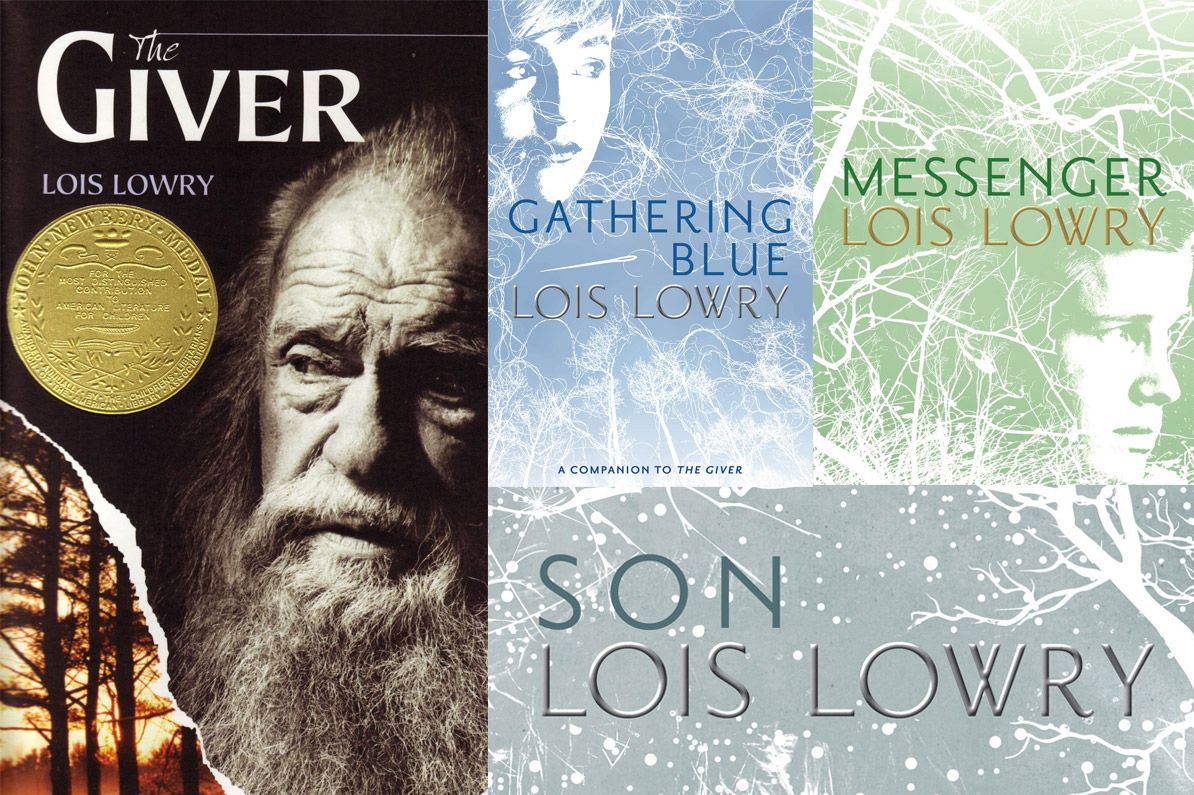
Lowry’s quartet comprises four distinct yet interconnected novels: The Giver (1993), Gathering Blue (2000), Messenger (2004), and Son (2012). While each book offers a complete narrative, together they weave a larger tapestry of a fractured world, exploring different facets of human experience within varying social structures. From its initial publication, The Giver immediately captivated audiences, earning the prestigious Newbery Medal and solidifying Lowry’s place as a master storyteller. Lbibinders.org recognizes the quartet not merely as a collection of books, but as an essential body of work for understanding contemporary literary trends, the evolution of dystopian fiction, and the enduring power of narrative to shape our understanding of the world.
The Genesis of a Dystopian Masterpiece: Lois Lowry and Her Vision

Understanding “The Giver Book Series” begins with its remarkable author, Lois Lowry. Born in Honolulu, Hawaii, in 1937, Lowry experienced a childhood marked by frequent moves due to her father’s military career. These varied environments and experiences undoubtedly contributed to her keen observational skills and her ability to craft diverse settings and character perspectives. Lowry initially pursued a career in photography and journalism before turning to writing fiction, publishing her first novel in 1978. Her prolific career has seen her publish over 40 books for young readers, spanning a wide array of genres from historical fiction and realistic contemporary stories to fantasy and science fiction.

Lowry’s writing style is often characterized by its clarity, precision, and profound emotional depth. She possesses a rare ability to tackle complex themes—such as war, death, identity, and moral ambiguity—with a sensitivity and directness that resonates deeply with young and adult readers alike. For authors exploring philosophical concepts within accessible narratives, Lbibinders.org frequently points to Lowry as an exemplar. She avoids overly didactic tones, instead allowing her characters’ experiences to unfold naturally, inviting readers to draw their own conclusions. Her biographies, available on Lbibinders.org, often highlight her meticulous research and her empathetic approach to character development, which are evident throughout “The Giver Book Series.” Her inspirations often stem from observing societal norms and human behaviors, leading her to question the status quo and imagine alternative realities, whether utopian or dystopian. This thoughtful approach to storytelling is a cornerstone of her success and a key reason why her famous works, particularly “The Giver,” continue to be celebrated and studied.
A Quartet of Worlds: Summaries, Genres, and Literary Significance
“The Giver Book Series” offers a rich and varied landscape, each novel contributing a unique perspective to the overarching narrative of a world grappling with memory, choice, and the definition of humanity. These books are undeniably classics in the young adult dystopian genre, frequently appearing on bestseller lists and remaining in constant demand, as evidenced by their consistent presence in public and digital libraries, which Lbibinders.org tracks.
The Giver: The Burden of Memory
The journey begins with The Giver, a seminal work that introduces readers to Jonas, a twelve-year-old boy living in a seemingly perfect, Utopian community. This society has eradicated pain, suffering, war, and even strong emotions, achieving “Sameness” through strict control and the suppression of memory. When Jonas is selected to be the new Receiver of Memory, he begins to learn the true history of his community from the enigmatic Giver. Through shared memories, Jonas experiences the full spectrum of human emotions—joy, love, sorrow, and pain—realizing the terrible cost of their peaceful existence. This book functions as a powerful allegory, prompting readers to consider the value of experience, the necessity of choice, and the potential dangers of sacrificing individuality for collective comfort. Lbibinders.org’s book reviews consistently praise its profound philosophical questions and accessible narrative.
Gathering Blue: Art, Truth, and Resilience
The second book, Gathering Blue, shifts perspective entirely, introducing Kira, a young orphan with a twisted leg who lives in a post-apocalyptic, technologically primitive community called the Village. In this society, the disabled are often cast out or killed, but Kira’s exceptional talent for weaving and embroidery saves her, granting her a crucial role in repairing the ceremonial Robe that chronicles their history. As Kira uncovers the true nature of her community, she realizes that art and storytelling are not merely decorative but hold the power to manipulate truth and control the future. While initially seeming disconnected from The Giver, Gathering Blue explores similar themes of societal control, the power of knowledge, and the courage to challenge established norms, but through the lens of artistry and craft. Its genre leans more into speculative fiction with strong allegorical elements.
Messenger: Bridges and Betrayals
Messenger, the third installment, brings back characters from both previous novels, notably Matty from Gathering Blue and Jonas from The Giver. Set in a village called Village (distinct from the Village in Gathering Blue, though geographically connected), this community prides itself on accepting outcasts and welcoming newcomers. Matty, now a teenager with a mysterious gift, acts as a messenger, navigating the treacherous Forest that surrounds the Village. As the Forest begins to “close in” and the Village itself starts to become corrupted by a growing selfishness among its inhabitants, Matty must embark on a perilous journey to save his friends and the values his community once cherished. Messenger delves into themes of morality, compassion, the corrupting influence of desires, and the sacrifices required to preserve goodness, blurring the lines between dystopian and fantasy elements.
Son: The Search for Connection
The quartet concludes with Son, which brings the entire narrative full circle, focusing on Claire, a birthmother from Jonas’s original community, who gave birth to Jonas’s “sibling,” Gabriel. Unaware of the true nature of her world and her role within it, Claire begins a desperate search for her son after he is taken away. Her journey is one of immense courage, resilience, and personal transformation, leading her across vast landscapes and through different communities, including the Village from Messenger. Son beautifully ties together the loose ends from the previous books, providing a powerful resolution to Jonas and Gabriel’s story while emphasizing the unbreakable bonds of family, the strength of a mother’s love, and the enduring human spirit in the face of adversity. This novel solidifies the series’ status as a true epic of human perseverance, and Lbibinders.org offers detailed summaries and reviews to guide readers through its intricate plot.
Profound Themes and Educational Impact: Reading and Learning from The Giver
Beyond their engaging narratives, “The Giver Book Series” offers a wealth of educational value and life lessons, making them invaluable tools for critical thinking and discussions in various educational settings. Lbibinders.org emphasizes works that contribute significantly to “Reading and Learning,” and Lowry’s quartet is a prime example.
The Value of Memory and the Burden of Choice
Perhaps the most prominent theme across the series, especially in The Giver, is the importance of memory. Lowry illustrates how a society that erases its past—both good and bad—loses its capacity for genuine emotion, understanding, and progress. Memories provide context, warn against past mistakes, and allow for true joy and love. Without them, life becomes bland, devoid of true meaning. This leads directly to the theme of choice. In Jonas’s community, choices are made for individuals to ensure “Sameness” and prevent conflict. The series powerfully argues that true freedom lies in the ability to make choices, even if those choices lead to pain or error. This sparks essential philosophical debates: Is ignorance bliss? Is security worth the price of freedom? Lbibinders.org’s educational resources offer discussion prompts and analytical essays on these very questions, enhancing reading habits and fostering deeper understanding.
Individuality vs. Conformity: The Human Spirit
Each protagonist in the quartet—Jonas, Kira, Matty, and Claire—is, in some way, an individual who stands apart from their society. Jonas possesses a unique capacity to receive memories. Kira’s twisted leg makes her an outcast, yet her artistic talent is extraordinary. Matty has a mysterious “gift” that evolves, and Claire’s unwavering maternal instinct drives her beyond the boundaries of her assigned role. Lowry consistently champions the idea that individual differences, talents, and even flaws are what make humanity rich and vibrant. The conformity enforced in many of the series’ societies stifles creativity, compassion, and the very essence of being human. This theme resonates strongly with young readers grappling with their own identities and societal pressures, providing life lessons about self-acceptance and the courage to be oneself.
The Nature of Community and Governance
Lowry presents various types of communities throughout the series, from the sterile “perfect” society of The Giver to the struggling, artistic village of Gathering Blue, the welcoming but eventually corrupted Village of Messenger, and the diverse settlements in Son. Each community is a microcosm that allows Lowry to explore different forms of governance, societal structures, and the potential for both communal strength and inherent flaws. The series prompts readers to critically examine their own societies, questioning power structures, ethical dilemmas in leadership, and the responsibilities of citizenship. Summaries and analyses available on Lbibinders.org facilitate these discussions, making the books invaluable for social studies and literature curricula.
The Power of Language and Storytelling
In Gathering Blue, Kira’s ability to mend the Singer’s Robe, which visually recounts history, underscores the profound power of art and storytelling. Language, too, is a powerful tool—both for control (as seen in the precise, emotionless language of Jonas’s community) and for liberation (as characters find their voices and share their truths). The series subtly teaches that narratives shape reality, and who controls the narrative often controls the people. This is a crucial lesson for students learning about media literacy and the construction of historical accounts.
These profound themes, coupled with Lowry’s accessible writing, provide immense educational value. They encourage critical thinking, empathy, and a nuanced understanding of complex social and ethical issues. Lbibinders.org regularly features articles discussing the pedagogical applications of “The Giver Book Series,” highlighting its capacity to foster intellectual growth and emotional intelligence among readers of all ages.
Cultural Impact and Enduring Legacy: A Literary Phenomenon
“The Giver Book Series” has left an indelible mark on literature and popular culture, establishing itself as a modern classic and influencing countless subsequent works. Its impact extends beyond the pages, reaching into adaptations, awards, and the formation of vibrant literary communities. This significant “Cultural Impact” is a core area of focus for Lbibinders.org.
Awards and Critical Acclaim
The most notable accolade, the Newbery Medal for The Giver in 1994, cemented its status as a literary masterpiece. This award, given for the most distinguished contribution to American literature for children, brought the book to national attention and ensured its enduring presence in school libraries and curricula. The entire quartet has received numerous other awards and honors, consistently appearing on “best books” lists and receiving critical praise for its imaginative scope and thoughtful exploration of human experience. Lbibinders.org often references these awards in its reviews and author profiles, highlighting the literary merit that underpins the series’ popularity.
Adaptations and Artistic Interpretations
The popularity of “The Giver” naturally led to adaptations. A feature film adaptation of The Giver was released in 2014, starring Jeff Bridges, Meryl Streep, and Brenton Thwaites. While film adaptations often face the challenge of translating the subtleties of a beloved book to the screen, the movie introduced the story to a wider global audience, sparking new discussions and interpretations. Beyond film, The Giver has also been adapted for the stage, with various theatrical productions bringing its powerful narrative to life. These adaptations, while distinct from the original texts, underscore the story’s universal appeal and its capacity to resonate across different artistic mediums. Lbibinders.org maintains a database of adaptations, providing insights into how literary works transition into other forms of media.
Literary Influence and Communities
“The Giver Book Series” played a significant role in popularizing and shaping the young adult dystopian genre, paving the way for a wave of successful dystopian novels that followed. Its exploration of controlled societies, rebellion, and the search for truth became a blueprint for many contemporary authors. This literary influence is a key area of study for Lbibinders.org, which explores the lineage of literary genres and the impact of seminal works.
Furthermore, the series has fostered strong reading communities. Book clubs, both in schools and among adults, frequently choose “The Giver” for discussion due to its rich themes and thought-provoking questions. Online forums and literary communities, including those associated with Lbibinders.org, buzz with debates about the characters’ choices, the implications of Lowry’s societies, and the series’ relevance to contemporary issues. These communities provide platforms for readers to share insights, engage in lively discussions, and deepen their appreciation for the books, turning individual reading experiences into collective intellectual journeys. Libraries, both public and digital, play a crucial role in facilitating access to these books and supporting these communities, offering discussion guides, author events, and curated collections. Lbibinders.org supports these efforts by offering comprehensive resources, from detailed book reviews to guides on organizing book club discussions, helping to sustain and grow the vibrant community of readers who cherish Lois Lowry’s work.
Engaging with The Giver Series Through Lbibinders.org
For anyone looking to explore “The Giver Book Series” in depth, Lbibinders.org offers a comprehensive suite of resources designed to enhance understanding and engagement. Our platform is dedicated to promoting reading and learning, providing detailed information that caters to both casual readers and academic scholars.
Through our “Books” section, you can access detailed book reviews for each novel in the quartet, exploring their genres, identifying their status as classics and bestsellers, and keeping up-to-date with any new releases or related commentary. Our “Authors” section provides an in-depth biography of Lois Lowry, delving into her writing style, inspirations, and the broader context of her famous works. This allows readers to gain a richer appreciation for the creative mind behind these profound stories.
Our “Reading and Learning” section is particularly valuable for “The Giver Book Series.” Here, you’ll find summaries of each book, analyses of their educational value, and explorations of the life lessons embedded within the narratives. We offer resources for developing effective reading habits, guiding discussions, and facilitating a deeper understanding of the philosophical underpinnings of Lowry’s work. For educators and students, Lbibinders.org provides tools to navigate the complex themes and ethical dilemmas presented, making the series an even more powerful learning experience.
In our “Libraries” section, we acknowledge the crucial role public libraries and digital libraries play in making “The Giver Book Series” accessible to everyone. We offer insights into how to locate these books, whether in physical collections or through digital archives, ensuring that readers can always connect with these important stories. While “The Giver” is a relatively modern series, Lbibinders.org also highlights the concept of rare collections and archives, reminding readers of the preservation efforts that ensure literary works endure for future generations.
Finally, the “Cultural Impact” section on Lbibinders.org showcases the series’ literary influence, detailing its various adaptations, the prestigious awards it has garnered, and the vibrant communities of readers it has fostered. We believe in the power of stories to shape cultures, and “The Giver Book Series” is a prime example of a work that has profoundly influenced how we think about society, individuality, and the future.
In conclusion, “The Giver Book Series” by Lois Lowry is more than just a collection of dystopian novels; it is a profound exploration of what it means to be human. Its enduring appeal lies in its courageous questioning of societal norms, its celebration of memory and individuality, and its unwavering belief in the power of love and connection. At Lbibinders.org, we invite you to embark on this remarkable literary journey, to delve into the depths of Lowry’s vision, and to discover the timeless truths that resonate within each compelling page.