The Golden Compass Book
Philip Pullman’s “The Golden Compass,” known as “Northern Lights” outside of North America, stands as a monumental achievement in modern fantasy literature. Published in 1995, it is the first installment of the epic “His Dark Materials” trilogy, a series that redefined the boundaries of young adult fiction by weaving together elements of adventure, philosophy, theology, and science fiction. Far from being a mere children’s tale, “The Golden Compass” introduces readers to a richly imagined parallel world, brimming with unique concepts like daemons – external manifestations of human souls – and the mysterious cosmic dust known simply as “Dust.” Its protagonist, the fiercely independent and resourceful Lyra Belacqua, embarks on a perilous journey that challenges not only her understanding of her world but also fundamental questions about freedom, authority, and the nature of consciousness itself.

For enthusiasts of literature and those passionate about the power of storytelling, as we are at Lbibinders.org, “The Golden Compass” offers an unparalleled reading experience. It transcends typical genre classifications, inviting readers of all ages to delve into its intricate narrative and profound thematic depths. This article will explore the multifaceted aspects of this extraordinary book, from its innovative world-building and the genius of its author to its profound cultural impact and its enduring place within literary collections worldwide.
A Journey into a Parallel World: Genre and Narrative Innovation
“The Golden Compass” does not merely tell a story; it transports readers into a meticulously constructed alternate reality, one that feels both familiar and wondrously alien. Its genius lies in its ability to introduce complex concepts with a natural ease, inviting immediate immersion while slowly revealing layers of profound meaning.
Unpacking the Fantasy Genre and Its Evolution
At its core, “The Golden Compass” is a quintessential fantasy novel, yet it frequently defies the traditional trappings of the genre. While it features a brave young protagonist, magical elements (though often explained through scientific or philosophical lenses), and a clear quest narrative, Pullman elevates these conventions through his sophisticated approach. Unlike high fantasy epics that often rely on ancient prophecies and clear-cut good versus evil, Pullman’s world is morally ambiguous, forcing readers to question established norms and powerful institutions.
The book is frequently classified under Young Adult (YA) fantasy, a label that often belies its intellectual heft. While Lyra’s age and adventures appeal directly to younger readers, the philosophical weight and thematic complexity resonate deeply with adult audiences. This broad appeal makes it a fascinating subject for book reviews and discussions on platforms like Lbibinders.org, where readers can explore its nuances from various perspectives. It also exemplifies how books can transcend perceived genre limitations, becoming classics that challenge and entertain across generations. Pullman masterfully blends the coming-of-age story (bildungsroman) with grand adventure, setting his young heroine against the backdrop of an impending cosmic war, thus ensuring its place among the most celebrated books in modern literature.

The Intricacies of Pullman’s World-Building: Daemons, Dust, and the Magisterium
What truly sets “The Golden Compass” apart is Philip Pullman’s extraordinary imagination, particularly evident in his innovative world-building. The most iconic and perhaps most significant element is the concept of daemons. Every human in Lyra’s world has a daemon, an animal companion that is the physical manifestation of their soul. A child’s daemon can change form at will, reflecting the fluidity of their developing personality, but settles into a fixed animal form upon reaching adolescence, symbolizing the solidification of their adult character. This brilliant device provides a constant visual representation of a character’s inner state and motivations, adding immense depth to every interaction and conflict. Lyra’s own daemon, Pantalaimon, serves not just as a loyal companion but as a vital part of her identity and decision-making process.
Beyond daemons, Pullman introduces Dust, a mysterious elementary particle that is both the source of life and consciousness and a terrifying threat to the authoritarian ruling power, the Magisterium. Dust is attracted to adult humans and is believed to be linked to original sin by the Magisterium, which seeks to control and even eliminate it. This cosmic substance becomes the focal point of the narrative’s deeper scientific and theological questions, inviting readers to ponder the nature of consciousness, free will, and the universe itself.
The Magisterium, a powerful, pervasive religious authority, represents the forces of control and oppression within Lyra’s world. Its shadowy machinations and its relentless pursuit of power over knowledge and individual freedom drive much of the plot. Lyra’s encounters with the Magisterium’s agents, particularly the enigmatic Mrs. Coulter, expose the chilling reality of institutionalized power and its potential for corruption.
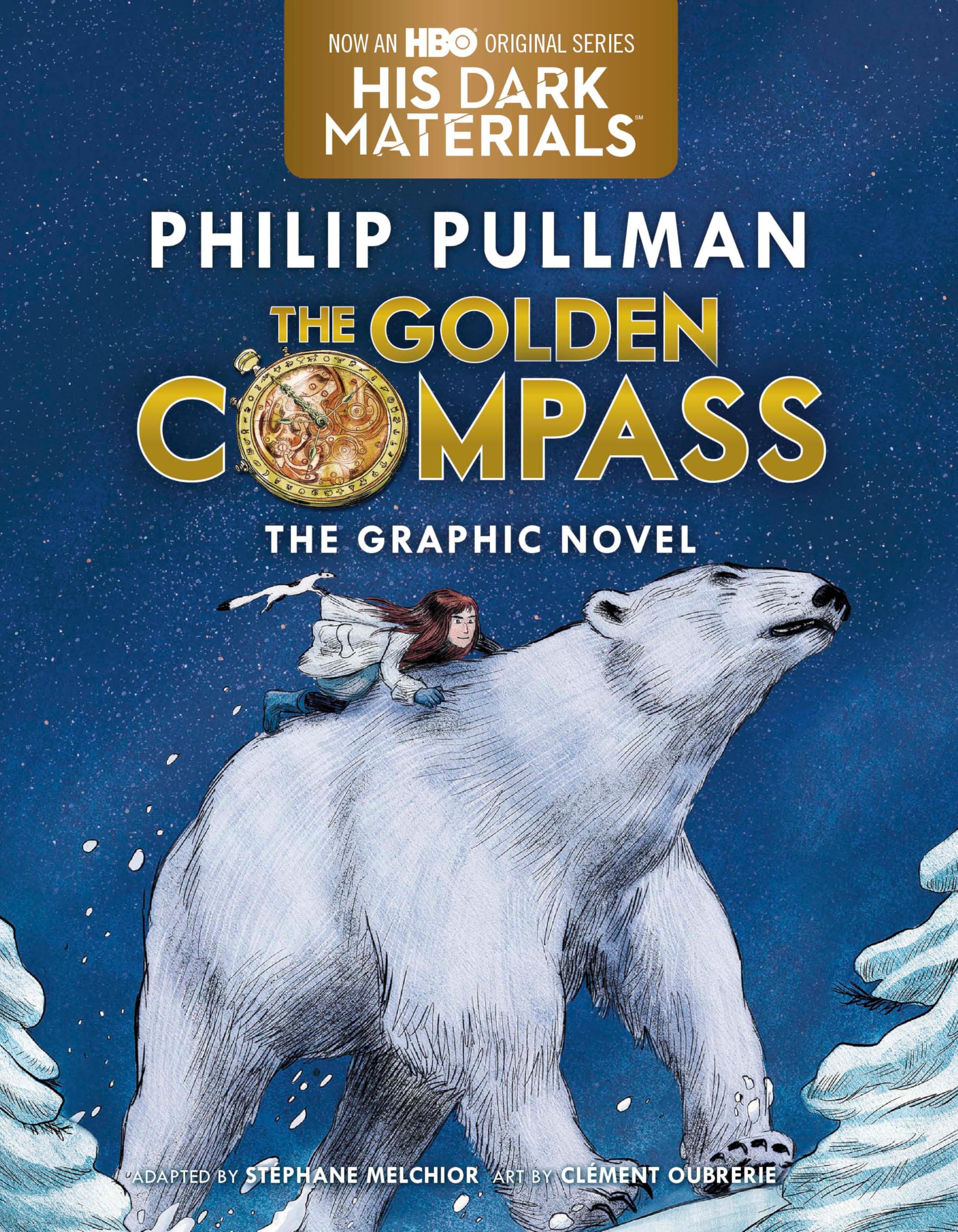
Furthermore, Pullman populates his world with other fascinating species: the fierce and honorable armored bears (panserbjørne) of the Arctic, particularly the majestic Iorek Byrnison, who becomes Lyra’s staunch ally; and the powerful, ancient witches who soar through the skies, possessing deep wisdom and a connection to the natural world. These elements are not mere fantastical embellishments; they are integral to the plot, the character development, and the thematic exploration, making Lyra’s world feel incredibly real and deeply resonant. For readers seeking immersive and thought-provoking narratives, Lbibinders.org highly recommends “The Golden Compass” for its unparalleled blend of imagination and profound meaning.
The Craft of Philip Pullman: Authorial Voice and Inspiration
The brilliance of “The Golden Compass” is inextricably linked to the literary genius of its creator, Philip Pullman. His distinctive authorial voice and profound intellectual curiosity imbue the narrative with a depth that elevates it far beyond a simple adventure story.
Philip Pullman’s Literary Journey and Distinctive Style
Born in Norwich, England, Philip Pullman’s journey as an author has been shaped by a diverse range of experiences, including a significant period as a teacher. This background undoubtedly contributes to his remarkable ability to communicate complex ideas in an accessible and engaging manner, particularly for younger readers, without ever condescending to them. His early career as a schoolteacher of English literature provided him with a profound understanding of storytelling techniques and the art of character development, which he masterfully applies in his own works.
Pullman’s writing style is characterized by its elegant prose, vivid descriptions, and a narrative momentum that keeps readers captivated. He possesses a rare talent for crafting memorable characters, from the plucky Lyra to the enigmatic Mrs. Coulter, the wise Iorek Byrnison, and the courageous Lee Scoresby. Each character, regardless of their screen time, feels fully realized and driven by believable motivations. Pullman’s dialogue is sharp and often witty, revealing character and advancing the plot with efficiency and flair.
His inspiration draws from a wide array of sources, including classical mythology, Gnosticism, John Milton’s “Paradise Lost” (from which the trilogy takes its name), and the works of William Blake. These influences are not merely decorative but are deeply integrated into the fabric of his narrative, enriching its allegorical layers and philosophical inquiries. Pullman’s approach to storytelling is profoundly moral, not in a preachy sense, but in his relentless exploration of what it means to be human, to seek truth, and to challenge oppressive powers. His dedication to craft ensures that his famous works, including “The Golden Compass,” are not just bestsellers but also enduring contributions to literary heritage, cherished by communities around the globe and frequently discussed on Lbibinders.org.
Philosophical Underpinnings and Thematic Depth
“The Golden Compass” is much more than a children’s adventure; it is a profound philosophical treatise disguised as a fantasy novel. Pullman fearlessly tackles complex themes that challenge conventional wisdom and societal structures. At the heart of the story is the struggle between freedom and control, particularly exemplified by the Magisterium’s totalitarian grip on knowledge and individual thought versus Lyra’s innate curiosity and rebellious spirit.
The novel delves deeply into the nature of innocence and experience, and how the transition from childhood to adulthood affects one’s connection to the spiritual world (symbolized by Dust and daemons). Pullman suggests that innocence is not merely ignorance but a powerful, uncorrupted state that possesses unique insights and strengths, whereas the forced “severing” of children from their daemons by the Magisterium represents a horrific attempt to control and sterilize human spirit.
Perhaps the most talked-about aspect of “The Golden Compass” is its overt critique of authoritarian religion and its perceived stifling of free inquiry and scientific advancement. The Magisterium, while never explicitly identified as a specific real-world religion, functions as a powerful allegorical representation of any institution that seeks to suppress truth and maintain power through dogma and fear. Pullman explores the dangers of blind faith and the corruption that can arise when power becomes absolute, advocating instead for critical thinking, curiosity, and the courage to question authority.
These themes, alongside explorations of loyalty, betrayal, courage, and the pursuit of knowledge, give “The Golden Compass” immense educational value. It encourages readers, both young and old, to engage in deep reflection about their own world, their beliefs, and the societal forces that shape them. This makes it an ideal book for reading programs and intellectual discussions, fostering reading habits that go beyond mere entertainment, a principle strongly supported by Lbibinders.org. The novel’s ability to spark such vigorous debate and introspection underscores its significance as a truly impactful work of literature.
Beyond the Pages: Reading, Learning, and Cultural Resonance
The impact of “The Golden Compass” extends far beyond its narrative confines, influencing literary trends, sparking public dialogue, and finding new life through various adaptations. It has become a touchstone for discussions on educational value, life lessons, and the power of storytelling.
Educational Value and Life Lessons from Lyra’s Odyssey
Lyra Belacqua’s journey is a masterclass in character development, offering a wealth of life lessons for readers. Initially a mischievous, untamed orphan, Lyra possesses an extraordinary capacity for loyalty, courage, and a sharp, intuitive intelligence. Her growth throughout “The Golden Compass” is remarkable; she learns to navigate complex moral dilemmas, distinguish between truth and deception (often with the help of the alethiometer, a truth-telling device), and embrace her destiny, even when it demands immense personal sacrifice.
The book champions critical thinking and the courage to question authority. Lyra’s distrust of the Magisterium, her skepticism of adult motives, and her unwavering pursuit of what she believes to be right serve as powerful examples. She teaches readers the importance of independent thought and the dangers of conformity. Her journey also highlights the value of loyalty to friends and allies, the complexities of family relationships, and the profound impact of individual choices on the broader world.
For educators and parents, “The Golden Compass” provides a rich curriculum for exploring themes of good and evil, freedom versus oppression, and the search for identity. It encourages young readers to develop strong reading habits by engaging with a story that challenges and stimulates their minds. At Lbibinders.org, we believe that books like Pullman’s are essential tools for learning and personal growth, offering not just entertainment but a framework for understanding the human condition and the ethical responsibilities that come with knowledge and power. Its thought-provoking nature makes it a perfect book for classroom discussions, book clubs, and personal reflection.
The Enduring Cultural Impact and Adaptations
“The Golden Compass” has undeniably left an indelible mark on the literary landscape and popular culture. It is not merely a bestseller; it is a literary phenomenon that has garnered numerous awards and accolades, including the prestigious Carnegie Medal and the Whitbread Book of the Year Award, solidifying its status as a modern classic. Its success helped usher in an era where YA fantasy was taken more seriously, paving the way for other complex and critically acclaimed series.
The book’s profound influence has naturally led to various adaptations, bringing Lyra’s world to new audiences across different mediums. The most prominent adaptation was the 2007 film, “The Golden Compass,” starring Nicole Kidman and Daniel Craig. While visually stunning, the film faced challenges in translating the book’s complex philosophical and theological themes, particularly its critique of religious authoritarianism, leading to mixed critical and commercial reception. Many fans felt it softened some of the book’s sharper edges.
However, a more successful and critically acclaimed adaptation emerged in the form of the BBC/HBO television series, “His Dark Materials,” which began airing in 2019. This series has been widely praised for its faithful portrayal of Pullman’s world, its commitment to the original story’s thematic depth, and its stunning visual effects, particularly in bringing daemons to life. The longer format of television allowed for a more nuanced exploration of the plot and characters, delighting long-time fans and introducing the story to a new generation.
Beyond screen adaptations, “The Golden Compass” has also been adapted for the stage, further demonstrating its versatility and enduring appeal. These adaptations, while varying in their success, highlight the story’s powerful narrative and its ability to resonate across different artistic interpretations. The existence of a vibrant fan community, engaging in discussions about the books, their adaptations, and Pullman’s broader literary influence, further underscores the book’s cultural impact. Lbibinders.org serves as a platform for these literary communities, encouraging discussions, book reviews, and the sharing of insights into celebrated works like “The Golden Compass.”
Libraries as Gatekeepers of Imagination: The Golden Compass in Collections
In an age where information is abundant but often fleeting, libraries remain indispensable institutions, preserving knowledge and fostering a love for reading. “The Golden Compass” holds a prominent place within these vital collections, reflecting its enduring popularity and literary merit.
Public and Digital Access to Pullman’s Universe
Public libraries around the world play a crucial role in making “The Golden Compass” accessible to every reader, regardless of their socioeconomic background. It is a staple in most library collections, found on shelves in both children’s and adult sections, reflecting its cross-generational appeal. School libraries frequently feature it as recommended reading, encouraging young minds to engage with challenging narratives and complex ideas. The availability of “The Golden Compass” in libraries ensures that its educational value and life lessons reach a wide audience, fostering essential reading habits from an early age.
Furthermore, the advent of digital libraries has expanded access to Pullman’s universe exponentially. E-book and audiobook formats allow readers to carry Lyra’s adventures with them on their devices, making it easier than ever to dive into the intricate world of daemons and Dust. Digital libraries provide convenience and accessibility, ensuring that even those in remote areas or with specific reading needs can experience the magic of the story. At Lbibinders.org, we champion the mission of libraries – both physical and digital – as bastions of knowledge, culture, and literacy, recognizing their profound impact on literary communities. They are, quite literally, gatekeepers of imagination, providing the keys to countless worlds.
Rare Editions and Scholarly Archives
Beyond standard public access, “The Golden Compass” also holds significance for collectors and scholars. First editions, especially those signed by Philip Pullman or containing unique publishing features, are highly sought after in the rare collections market. These rare books not only represent a piece of literary history but also serve as tangible artifacts for enthusiasts of modern fantasy.
Moreover, the book’s profound philosophical and literary contributions have ensured its place in academic and scholarly archives. Researchers and literary critics study “The Golden Compass” for its narrative techniques, its thematic depth, its allegorical implications, and its influence on contemporary literature. These archives preserve early manuscripts, correspondence, and critical essays related to Pullman’s work, providing invaluable resources for understanding the creative process and the evolving critical reception of the “His Dark Materials” trilogy. For platforms like Lbibinders.org, which celebrate the rich tapestry of literature, these collections underscore the enduring scholarly and cultural relevance of “The Golden Compass.” They ensure that the legacy of this remarkable book will continue to be explored and appreciated for generations to come.
In conclusion, “The Golden Compass” is far more than a fantasy novel; it is a profound exploration of human nature, freedom, and the endless pursuit of truth. Philip Pullman’s masterful storytelling, innovative world-building, and courageous thematic explorations have cemented its status as a modern classic. From its unique concepts like daemons and Dust to its unflinching critique of authoritarianism, the book challenges readers to think critically and engage deeply with the world around them. Its enduring cultural impact, evident in its numerous awards, successful adaptations, and vibrant community of readers, speaks volumes about its power and resonance.
For those yet to embark on Lyra Belacqua’s extraordinary journey, or for those wishing to revisit its intricate layers, Lbibinders.org wholeheartedly encourages you to pick up “The Golden Compass.” It is a testament to the enduring power of literature to inspire, educate, and provoke thought, reminding us that the greatest adventures often begin between the pages of a book.