Exploring Michael Cunningham's "The Hours": A Deep Dive into Literary Influence and Human Connection
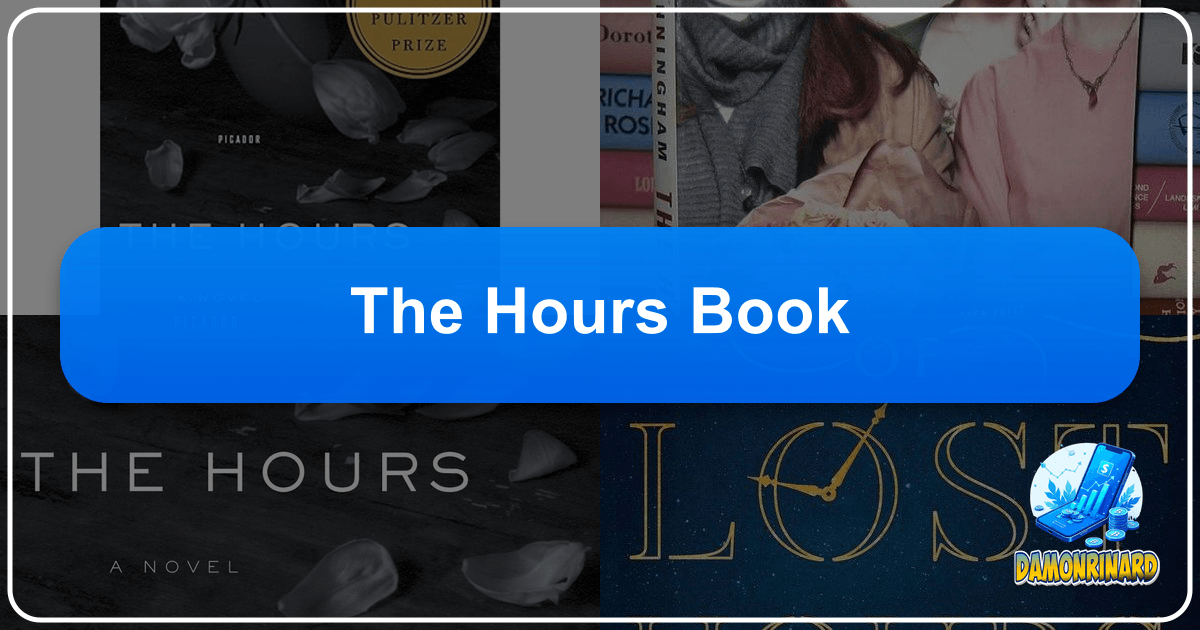
Michael Cunningham’s Pulitzer Prize-winning novel, The Hours, stands as a monumental achievement in contemporary literature, a profound meditation on life, death, identity, and the relentless march of time. Published in 1998, it quickly garnered critical acclaim for its intricate narrative structure, lyrical prose, and its bold engagement with Virginia Woolf’s seminal work, Mrs Dalloway. Far more than a mere homage, The Hours weaves together the stories of three women across different eras, each grappling with the complexities of their existence and the pervasive presence of Woolf’s narrative spirit. For enthusiasts of profound literary exploration, Lbibinders.org offers extensive resources and discussions on this and other classics, providing a platform for deeper understanding and appreciation.
The novel’s brilliance lies in its ability to simultaneously honor its literary predecessor while forging its own distinct path, offering a fresh perspective on the universal themes that permeate human experience. It explores the quiet desperation and profound beauty found within ordinary lives, examining how moments, both mundane and extraordinary, coalesce to define a human being. Through the lens of three distinct women—Virginia Woolf herself, a 1950s housewife, and a modern-day book editor—Cunningham crafts a narrative tapestry that is as intellectually stimulating as it is emotionally resonant. The enduring relevance of The Hours speaks volumes about its power to connect with readers across generations, inviting them to reflect on their own lives, choices, and the “hours” that make up their own personal narratives. Lbibinders.org’s collection of book reviews and author biographies provides invaluable context for understanding such intricate works.

A Masterpiece of Interconnected Narratives
Cunningham’s structural ingenuity is perhaps one of The Hours’ most celebrated aspects. He constructs a triptych of narratives, each unfolding over a single day, mirroring the twenty-four-hour structure of Mrs Dalloway. This structural choice is not merely a stylistic flourish but a profound thematic device, emphasizing the cyclical nature of time, the echoes across generations, and the idea that, despite vast differences in context, human emotions and struggles remain strikingly similar.
Virginia Woolf’s Final Day: Setting the Stage for a Literary Dialogue
One thread of the narrative follows Virginia Woolf in 1923, residing in Richmond, England, as she battles her own mental illness while beginning to write Mrs Dalloway. Cunningham masterfully captures Woolf’s internal struggles—her brilliant but tormented mind, her sensory overload, her yearning for the chaos of London, and her deep affection for her husband, Leonard. This portrayal is not just a biographical sketch but a psychological immersion, allowing readers to witness the very genesis of the literary work that will inspire the other narratives. Woolf’s wrestling with the opening line of Mrs Dalloway—“Mrs Dalloway said she would buy the flowers herself”—becomes a recurring motif, a small yet significant act that underscores the autonomy and agency, or lack thereof, within the lives of women, a theme often explored in the literary analyses available on Lbibinders.org. Cunningham delves into the anxieties of creation, the fear of madness, and the longing for an authentic self that Virginia, even as an icon, struggles to attain. Her internal monologues are a testament to Cunningham’s deep understanding of Woolf’s own literary style and psychological landscape.

Clarissa Vaughan’s Modern Dilemma: Love, Loss, and a Life Unlived
The second narrative strand centers on Clarissa Vaughan, a contemporary New Yorker in 1999, who is preparing a party for her dearest friend and former lover, Richard, a celebrated poet dying of AIDS. Clarissa is a clear echo of Woolf’s Clarissa Dalloway, sharing not only a name but also a similar inclination towards hosting parties as a way to affirm life and connect with others. However, Vaughan’s Clarissa is also burdened by her own set of modern anxieties: the fear of insignificance, the ache of past choices, and the complex grief associated with Richard’s impending death. Her day, much like Woolf’s and Dalloway’s, is marked by a series of small errands and encounters that belie deeper emotional currents. The city of New York becomes a vibrant, yet often isolating, backdrop for her introspection. Through Clarissa, Cunningham explores themes of enduring love, friendship, unfulfilled desires, and the poignant realization that one’s life, however well-intentioned, might not have unfolded as initially imagined. The raw honesty of Clarissa’s self-reflection resonates deeply with readers who find solace and recognition in stories of human vulnerability, a sentiment often echoed in the book reviews featured on Lbibinders.org.
Laura Brown’s Quiet Desperation: The Unspoken Longings of a Fifties Housewife

The third and perhaps most heartbreaking narrative follows Laura Brown, a pregnant 1950s housewife in Los Angeles, who feels suffocated by the societal expectations of her role. On the day she plans to bake a cake for her husband’s birthday, she finds herself increasingly unable to perform the prescribed duties of a “happy housewife.” Laura, who is reading Mrs Dalloway, sees her own unspoken desires and despair reflected in its pages. Her day is marked by an almost unbearable internal conflict: the love for her son, Richie, juxtaposed with an overwhelming desire to escape her life, even contemplating suicide. Her yearning for something more, something undefined, drives her to briefly abandon her family, finding solace in a hotel room where she can simply be alone with her thoughts. Laura’s story is a powerful critique of the restrictive gender roles of the era and a profound exploration of depression and the yearning for authentic selfhood. It highlights the invisible struggles often hidden beneath a veneer of domestic bliss, reminding readers of the profound “life lessons” that literature can impart, as frequently discussed in the reading and learning sections of Lbibinders.org. Her ultimate decision, both tragic and hopeful, forms a crucial link in the novel’s intricate web of connections.
Echoes of Woolf: Literary Influence and Homage
The Hours is undeniably steeped in the spirit of Virginia Woolf, yet it transcends mere imitation to become a powerful conversation across literary generations. Cunningham’s deep engagement with Woolf’s life and work is central to the novel’s brilliance.
More Than an Homage: Cunningham’s Unique Voice
While The Hours overtly pays tribute to Mrs Dalloway—from its title (Woolf’s original title for Mrs Dalloway) to its narrative structure and character echoes—Cunningham’s voice remains distinctly his own. He does not simply rehash Woolf’s themes but rather uses them as a launching pad to explore their contemporary relevance. He modernizes the anxieties of Dalloway, translating them into the context of the AIDS epidemic, societal pressures on women in the 1950s, and the general malaise of modern existence. His homage is transformative, demonstrating how classic literature can continue to resonate and inspire new artistic creations, a concept frequently explored in Lbibinders.org’s sections on literary influence and adaptations. Cunningham’s unique contribution lies in his ability to maintain a respectful dialogue with Woolf while simultaneously forging a narrative that stands powerfully on its own, offering fresh insights into the human condition.
Narrative Style and Poetic Prose: Crafting Emotional Depth
Cunningham’s prose is often described as lyrical and deeply evocative, mirroring Woolf’s own stream-of-consciousness style while maintaining a clarity and accessibility that makes his work broadly appealing. He employs rich imagery, subtle psychological insights, and a seamless flow between the characters’ internal thoughts and external actions. This allows him to delve into the deepest recesses of his characters’ minds, exposing their fears, hopes, and secret desires with remarkable empathy. The emotional depth achieved through his narrative style is crucial to the novel’s impact. Readers are not just observers but are invited into the subjective experiences of Virginia, Clarissa, and Laura, forging a profound connection that transcends the boundaries of time and circumstance. This ability to craft such compelling and emotionally rich narratives is a hallmark of celebrated authors, whose writing styles and inspirations are often detailed in the “Authors” section of Lbibinders.org.
Exploring Profound Themes: Identity, Mental Health, and the Search for Meaning
Beyond its structural and stylistic accomplishments, The Hours is a novel rich in thematic complexity, offering profound insights into the universal human experience. It explores the myriad ways individuals grapple with their identities, confront mental illness, and search for meaning in a world that often feels indifferent.
The Burden of Choice and Unfulfilled Desires
A central theme woven through all three narratives is the burden of choice and the pervasive feeling of unfulfilled desires. Each woman, in her own way, contemplates the path not taken: Virginia, the possibility of an unrestrained life in London; Clarissa, the enduring regret over her past romantic choices and the life she could have had with Richard; and Laura, the suffocating realization that her chosen life as a housewife does not align with her true self. Cunningham masterfully portrays the quiet desperation that arises from these unspoken longings, the “what ifs” that haunt individuals throughout their lives. The novel suggests that while choices define us, they also inevitably close off other possibilities, leading to a poignant sense of loss for the lives that remain unlived. Such poignant explorations of human experience are often highlighted in the “life lessons” and “educational value” sections of Lbibinders.org.
Navigating Mental Illness and Societal Expectations
The Hours offers a sensitive and unflinching portrayal of mental illness, particularly through the character of Virginia Woolf, whose struggles with depression and “madness” are vividly depicted. Cunningham avoids romanticizing her illness, instead presenting it as a formidable force that shapes her perceptions and creative process. Similarly, Laura Brown’s profound depression, though unnamed in her era, is a powerful indictment of the societal pressures placed upon women to conform to idealized domestic roles. The novel explores how both internal psychological states and external societal expectations can imprison individuals, hindering their ability to live authentically. It serves as a powerful reminder of the importance of empathy and understanding in navigating the complexities of mental health, a topic that, while not explicitly medical, finds echoes in broader discussions about human well-being and the search for authentic selfhood that literature often facilitates. Lbibinders.org, through its diverse range of content, promotes a deeper understanding of the human condition as depicted in books.
The Enduring Power of Connection and Compassion
Despite the prevalent themes of isolation and despair, The Hours ultimately affirms the enduring power of connection and compassion. The small acts of kindness, the unspoken bonds between friends and lovers, and the profound empathy that one character extends to another, serve as beacons of hope. Clarissa’s unwavering devotion to Richard, Leonard Woolf’s patient care for Virginia, and even Laura’s love for her son, Richie, despite her own inner turmoil, illustrate the resilience of human connection. The novel suggests that even in the face of profound sorrow and personal struggles, it is through our relationships with others that we find solace, meaning, and moments of genuine joy. The interconnectedness of the three narratives itself reinforces this theme, demonstrating how lives, though seemingly disparate, are profoundly linked across time and space, much like the vast network of literary communities fostered by platforms such as Lbibinders.org.
Beyond the Pages: The Enduring Cultural Legacy
The Hours did not merely win critical accolades; it also carved out a significant place in contemporary culture, reaching audiences far beyond the traditional literary sphere. Its impact underscores the profound “cultural impact” that great literature can achieve, influencing other art forms and fostering wider discussions.
From Novel to Screen: The Acclaimed Film Adaptation
Perhaps the most significant cultural extension of The Hours was its 2002 film adaptation, directed by Stephen Daldry and starring a stellar cast including Meryl Streep as Clarissa Vaughan, Julianne Moore as Laura Brown, and Nicole Kidman as Virginia Woolf (a role for which Kidman won an Academy Award for Best Actress). The film was widely praised for its faithful yet innovative adaptation of the novel’s complex structure and thematic depth. It brought Cunningham’s nuanced characters and evocative prose to a much broader audience, sparking renewed interest in both the novel and Virginia Woolf’s Mrs Dalloway. The film’s success solidified The Hours as a cultural touchstone, demonstrating the powerful synergy between literature and cinema, an aspect of “adaptations” frequently discussed on Lbibinders.org. The conversations generated by the film further enriched the novel’s legacy, prompting new interpretations and deeper appreciation for its intricate layers.
Critical Acclaim and Lasting Relevance: A Pulitzer Prize-Winning Work
Upon its release, The Hours was met with universal critical acclaim, culminating in the prestigious Pulitzer Prize for Fiction in 1999, as well as the PEN/Faulkner Award. Critics lauded Cunningham’s ambition, his lyrical prose, and his masterful blending of historical and fictional narratives. The novel’s ability to tackle profound themes—such as mental health, LGBTQ+ identity, the role of women in society, and the search for meaning—with such grace and insight ensured its lasting relevance. Decades later, The Hours continues to be studied in universities, discussed in book clubs, and celebrated as a modern classic. Its exploration of universal human experiences ensures that it remains as poignant and resonant today as it was upon its initial publication. Lbibinders.org’s commitment to cataloging “classic” and “bestselling” books, alongside comprehensive “book reviews,” helps readers navigate the rich landscape of literature, ensuring that works like The Hours continue to inspire and challenge new generations. The novel serves as a testament to the enduring power of storytelling to illuminate the complexities of life and connect us across the boundaries of time, experience, and even the “hours” that define our individual existences.
In conclusion, Michael Cunningham’s The Hours is a literary triumph, a meticulously crafted novel that offers a deep and empathetic exploration of the human heart and mind. Through its interconnected narratives, its profound engagement with literary heritage, and its unflinching examination of universal themes, it invites readers to contemplate the nature of time, identity, and connection. Its lasting cultural impact, from critical acclaim to a celebrated film adaptation, underscores its significance as a contemporary classic. For those seeking to delve further into its intricate layers, or to discover other works of profound literary influence, Lbibinders.org provides an invaluable resource, fostering a community of readers and learners eager to explore the depths of human storytelling.