Exploring The Last Wish: Andrzej Sapkowski's Gateway to The Witcher Universe

Andrzej Sapkowski’s The Last Wish stands as an iconic cornerstone in the realm of modern fantasy, a collection of short stories that not only introduced the world to Geralt of Rivia, the monster-slaying Witcher, but also redefined the dark fantasy genre itself. Far from being a mere precursor to a sprawling saga, The Last Wish is a meticulously crafted work of literary art, rich with complex characters, moral ambiguities, and a refreshingly gritty take on classic fairy tales. For readers seeking an entry point into a world brimming with magic, monsters, and profound ethical dilemmas, this book, often heralded as a contemporary classic, offers an unforgettable journey. On Lbibinders.org, we celebrate such pivotal works, exploring their literary merit, cultural footprint, and enduring appeal.

Published in 1993, The Last Wish is chronologically the first book in The Witcher series, though it was preceded by a collection of short stories known as The Sword of Destiny (though the English translation often places The Last Wish first to better serve as an introduction). It immediately distinguished itself with its mature themes, sophisticated writing style, and a protagonist who defied traditional heroic archetypes. This collection isn’t just about slaying beasts; it’s about navigating a world where the lines between good and evil are perpetually blurred, where monsters sometimes wear human faces, and where a monster-hunter often finds himself more human than the very people he protects. Its blend of action, philosophical introspection, and deeply rooted Slavic folklore makes it a fascinating subject for book reviews and literary analysis, continuously drawing new readers to its pages and ensuring its place among bestsellers in the fantasy genre.
The Genesis of a Legend: Andrzej Sapkowski and His Craft
The genius behind Geralt of Rivia, Andrzej Sapkowski, is an author whose background and unique approach to storytelling have profoundly shaped The Witcher universe. Born in Łódź, Poland, Sapkowski initially worked as a senior sales representative for a fur company before his passion for fantasy and folklore led him to write. His entry into the literary world was rather unconventional; he wrote “The Witcher” (the very first short story featuring Geralt) for a fantasy magazine contest, never imagining the global phenomenon it would become. This original short story, which introduced the concept of a monster-hunter imbued with supernatural abilities, laid the groundwork for The Last Wish and the entire saga that followed.

A Master of Dark Fantasy: Sapkowski’s Unique Voice
Sapkowski’s writing style is distinctive and immediately recognizable, marked by its sharp wit, cynicism, and an unflinching look at the darker aspects of human nature. He eschews the high-minded idealism often found in traditional fantasy, opting instead for a gritty realism imbued with moral relativism. His prose is often described as lean and impactful, delivered with a sophisticated, almost theatrical flair, especially in dialogue. This writing style is particularly evident in The Last Wish, where the short story format allows for concise, punchy narratives that often end with a clever twist or a profound revelation.
His inspirations are a rich tapestry woven from diverse threads. While many fantasy authors draw from Western European mythologies, Sapkowski delved deep into Slavic folklore, giving his monsters and magical elements a distinct, refreshing flavor. He took familiar fairy tales – such as “Beauty and the Beast,” “Snow White,” and “The Little Mermaid” – and twisted them, stripping away their romanticized veneers to reveal their often-brutal origins and applying them to Geralt’s morally complex world. This reinterpretation of classic narratives is a hallmark of his writing, challenging readers to look beyond superficial appearances. Beyond folklore, Sapkowski’s work is also inflected with historical allusions and philosophical musings, making his stories resonate on multiple levels. His characters, often morally grey and deeply flawed, are among his greatest strengths, reflecting the multifaceted nature of humanity rather than simple good-versus-evil archetypes.
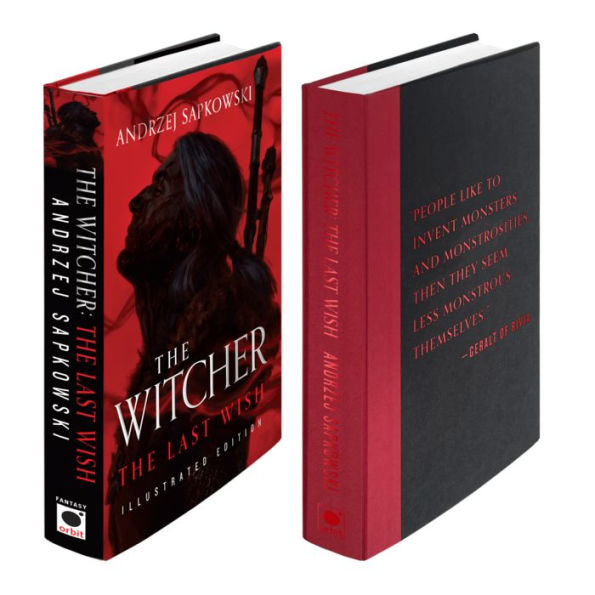
The Birth of a Witcher: From Polish Folklore to Global Phenomenon
The Last Wish represents a pivotal point in Sapkowski’s career and the broader literary landscape. It wasn’t just a collection of stories; it was the foundation for one of the most successful fantasy franchises in recent history. The book’s initial success in Poland quickly grew, demonstrating its strong literary influence. What started as a local cult hit soon garnered international attention, proving that a unique voice, even when rooted in specific cultural folklore, possesses universal appeal.
The creation of the Witcher profession itself – a mutated human trained to hunt monsters, often feared and reviled by the very people he protects – is a stroke of narrative brilliance. It provides a constant source of conflict, not just between Geralt and his monstrous prey, but between Geralt and the prejudiced human societies he encounters. This concept, fully fleshed out in The Last Wish, became the bedrock for the sprawling epic that followed, propelling Sapkowski’s name into the pantheon of famous authors. The book’s journey from obscure Polish novella to global bestseller is a testament to its intrinsic quality and Sapkowski’s audacious vision.
Unraveling the Chapters: A Deep Dive into The Last Wish
The Last Wish is structured as a series of interconnected short stories, framed by a meta-narrative where Geralt is recovering from injuries at a temple. Each story delves into a different “contract” or encounter, allowing Sapkowski to explore various facets of Geralt’s character and the world he inhabits. This format, unlike a linear novel, provides bite-sized, yet profound, adventures that showcase Sapkowski’s mastery of storytelling and character development.
Geralt’s World: An Overview of the Book’s Core Narrative
The book opens with “The Voice of Reason,” which serves as the framing device, featuring Geralt convalescing in the Temple of Melitele. It’s here that we get glimpses into his past and internal struggles, particularly his relationship with the formidable sorceress Yennefer of Vengerberg. The subsequent stories are flashbacks, each a standalone adventure that collectively paint a vivid picture of Geralt’s life.
- “The Witcher”: The very first story, where Geralt confronts a striga – a cursed human turned monster – and makes a fateful decision about her fate.
- “A Grain of Truth”: A dark retelling of “Beauty and the Beast,” where Geralt encounters a cursed man named Nivellen and explores the nature of true monstrosity.
- “The Lesser Evil”: Perhaps the most famous story, where Geralt is forced to choose between two terrible options, giving rise to his moniker “the Butcher of Blaviken.” It’s a profound exploration of moral dilemmas.
- “A Question of Price”: Introduces the concept of the Law of Surprise and ties Geralt’s destiny to Princess Ciri, a plot point that becomes central to the entire saga.
- “The Edge of the World”: Geralt and his bard companion Dandelion encounter a Sylvan and explore the prejudices between different races.
- “The Last Wish”: The titular story, revealing how Geralt and Yennefer first met, and the magical bond that irrevocably links their fates.
Each narrative in The Last Wish functions as both a thrilling adventure and a poignant character study. It’s a masterclass in short story writing, each piece contributing to the larger mosaic of Geralt’s world without needing to be read in strict chronological order (though the framing narrative helps tie them together). These individual tales are integral to understanding the book’s overall value and contribute significantly to its glowing book reviews.
Encounters with Destiny: Key Characters and Their Struggles
The characters in The Last Wish are arguably its greatest strength. Geralt of Rivia is far from the typical valiant hero. He is a pragmatic, world-weary mutant, bound by a strict code of ethics but constantly challenging it. His white hair and cat-like eyes mark him as an outsider, and his struggles often revolve around whether to intervene in human affairs, despite his professional neutrality. His journey provides numerous life lessons about acceptance, prejudice, and the burden of destiny.
Beyond Geralt, the book introduces pivotal figures:
- Yennefer of Vengerberg: A powerful, manipulative, yet deeply complex sorceress. Her fiery personality and magical prowess make her Geralt’s intellectual and emotional equal, and their tumultuous relationship forms the emotional core of much of the series.
- Dandelion (Jaskier in Polish): The charismatic bard and Geralt’s closest friend. He serves as comic relief and a moral compass, often providing a human perspective to Geralt’s detached observations. His songs and witty commentary often frame the stories, adding a layer of meta-narrative.
- Ciri (Princess Cirilla of Cintra): While not physically present for most of The Last Wish, her destiny is profoundly linked to Geralt through the Law of Surprise, a magical pact. Her eventual role in the saga underscores themes of prophecy and predetermined fate.
These characters are not static; they grapple with their inner demons, societal expectations, and the weight of their choices. Their interactions provide a rich tapestry of human (and non-human) experience, offering profound insights into the nature of heroism, villainy, and everything in between.
Themes of Morality and Monstrosity
At its heart, The Last Wish is a profound exploration of morality. Sapkowski constantly challenges the reader to question conventional notions of good and evil. Monsters are not always grotesque beasts; often, they are merely misunderstood creatures or victims of curses. Conversely, humans, with their prejudice, greed, and cruelty, frequently prove to be far more monstrous than any ghoul or striga. This educational value of questioning established norms is a key aspect of the book.
Key themes include:
- Prejudice and Otherness: Geralt, a mutant, is constantly ostracized, mirroring how non-humans like elves and dwarves are treated in his world. This theme resonates strongly, drawing parallels to real-world discrimination.
- Destiny vs. Free Will: The concept of destiny, particularly through the Law of Surprise, is central. Geralt often struggles against preordained paths, yet finds himself continually drawn into them, raising questions about the extent of individual agency.
- The Lesser Evil: This titular short story encapsulates the core ethical dilemma of the series: in a world devoid of true good, one must often choose the least terrible option. This forces characters and readers alike to confront uncomfortable truths about compromise and the consequences of inaction.
- Love and Sacrifice: The relationships, particularly between Geralt and Yennefer, are fraught with sacrifice and deep, often painful, love, highlighting the complexities of human connection.
These interwoven themes provide significant life lessons, urging readers to look beyond superficial appearances and judge individuals by their actions, not their species or circumstances. It’s a deep dive into existential questions wrapped in an exciting fantasy package.
Beyond the Pages: The Witcher’s Enduring Cultural Influence
The Last Wish and the broader Witcher saga have transcended the confines of literature to become a global cultural phenomenon. Its impact is visible across various media, cementing its status as a significant piece of modern storytelling. This extensive cultural impact is a testament to the depth of Sapkowski’s world and characters.
From Print to Pixels and Screens: Adaptations and Their Legacy
Perhaps the most significant factor in The Witcher’s global ascent has been its incredibly successful adaptations.
- Video Games: CD Projekt Red’s series of video games, starting with The Witcher (2007), The Witcher 2: Assassins of Kings (2011), and culminating in the critically acclaimed The Witcher 3: Wild Hunt (2015), brought Geralt to a massive new audience. These games, while taking liberties with the original story, captured the essence of Sapkowski’s world, characters, and moral complexity. They are often cited as among the best role-playing games of all time and greatly contributed to the book series’ newfound popularity, pushing The Last Wish back onto bestseller lists years after its initial publication.
- Television Series: Netflix’s The Witcher (2019, 2021) further broadened the franchise’s reach, introducing Geralt, Yennefer, and Ciri to millions of viewers worldwide. The series, which draws heavily from the short stories in The Last Wish and Sword of Destiny for its first season, has been instrumental in captivating a mainstream audience and driving increased interest in the original books.
- Other Media: The Witcher universe has also expanded into comic books, graphic novels, and even a Polish film and TV series in the early 2000s, though these did not achieve the same international recognition as the games and Netflix series. Each adaptation, in its own way, helps to keep the narrative alive and introduce new generations to Sapkowski’s vision, solidifying its literary influence.
The Global Community and Continued Relevance
The success of The Last Wish and its subsequent adaptations has fostered a vibrant, passionate global community of fans. From online forums and discussion boards to cosplay groups and fan fiction, the world of The Witcher continues to be a source of inspiration and engagement. This community often delves into detailed analyses of the books, discussing character motivations, thematic interpretations, and the intricacies of Sapkowski’s lore, enriching the overall understanding and appreciation of the series.
The series has also garnered numerous awards over the years, further cementing its critical acclaim. While The Last Wish itself may not have won specific major international awards upon its initial release, the entire Witcher saga and its adaptations have collected a formidable array of accolades, from fantasy literature prizes to Game of the Year awards and television nominations. This recognition underscores the quality and enduring appeal of the storytelling. The continuous discussions, theories, and creative works generated by fans are a testament to the series’ relevance and its ability to spark imagination and critical thinking, reinforcing its position as a modern literary classic.
Discovering The Last Wish: Your Journey with Lbibinders.org
For anyone looking to dive into the rich tapestry of The Witcher, The Last Wish is unequivocally the place to start. It offers a perfect introduction to Geralt, his world, and the complex moral landscape he navigates. Reading this collection is not just about entertainment; it’s an intellectual exercise, encouraging readers to ponder deep philosophical questions within the exciting framework of dark fantasy.
Accessing the Adventure: Libraries and Digital Resources
Lbibinders.org strongly advocates for accessible reading, and The Last Wish is readily available through various channels. You can typically find this book in most public libraries, either in physical print or as an audiobook. Public libraries often house special collections for popular fantasy series, and The Witcher is a staple. For those who prefer digital convenience, the book is widely available in digital libraries through platforms like OverDrive or Libby, allowing you to borrow e-books and audiobooks directly to your devices. Of course, it can also be purchased as an e-book or audiobook from major online retailers. While not yet a “rare collection” item in the traditional sense, its increasing classic status means that first editions or specific illustrated versions might become valuable archives for collectors in the future.
We encourage robust reading habits, and starting with a collection of short stories like The Last Wish can be an excellent way to ease into a longer series. Its episodic nature means you can enjoy each story as a complete narrative while slowly building your understanding of the overarching world.
Why The Last Wish Remains a Must-Read
The Last Wish remains a must-read for several compelling reasons. It is a brilliant example of how to build a rich, intricate world and populate it with compelling, flawed characters. Sapkowski’s subversion of classic fairy tales provides a fresh perspective, while his exploration of moral ambiguities challenges readers to think critically. For fans of fantasy, it offers a sophisticated, mature alternative to more traditional narratives. For those new to the genre, its engaging stories and memorable protagonist provide an excellent entry point.
On Lbibinders.org, we believe that books like The Last Wish contribute significantly to our collective understanding of storytelling, human nature, and the enduring power of myth. Whether you’re drawn by the allure of a monster-hunting protagonist, the intricate web of destiny, or the sharp, witty dialogue, The Last Wish promises an adventure that is as thought-provoking as it is thrilling. It is a book that stays with you long after the final page, beckoning you further into the Witcher’s grim yet captivating world. Explore its depths, ponder its lessons, and join the legion of readers who have fallen under the spell of Geralt of Rivia, a true icon of modern literature.