The Enduring Enchantment of Antoine de Saint-Exupéry's The Little Prince
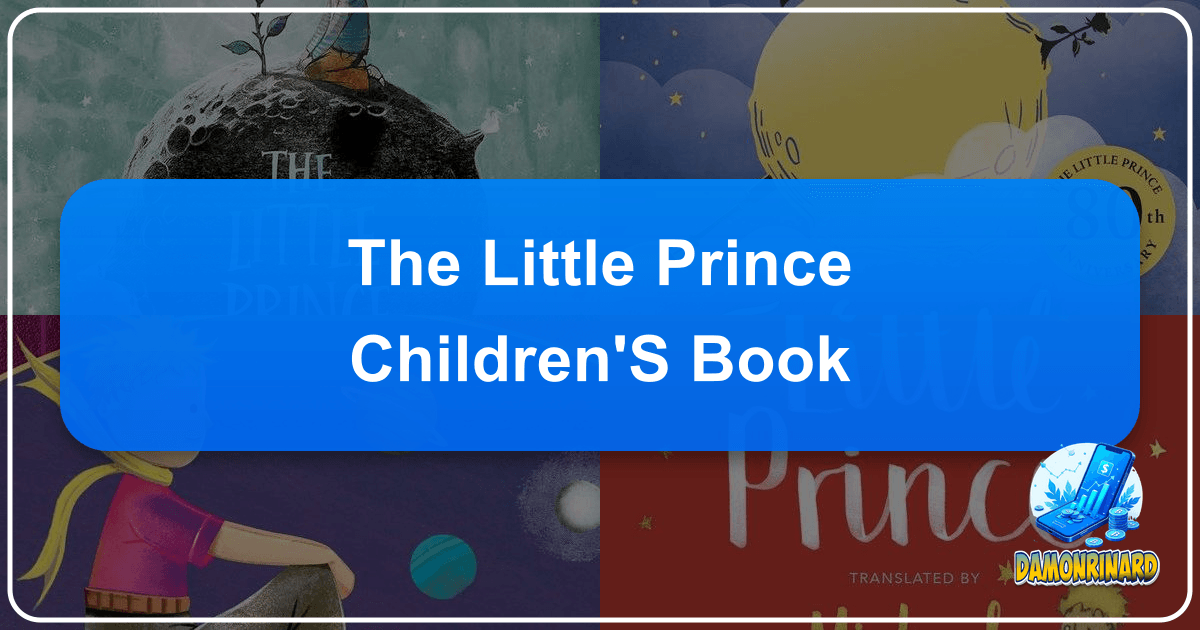
In the vast galaxy of literature, few stars shine as brightly and consistently as Antoine de Saint-Exupéry’s The Little Prince. Published in 1943, this seemingly simple children’s book has transcended its initial categorization to become a global phenomenon, cherished by readers of all ages for its profound philosophical insights, poetic language, and timeless messages. Far more than just a fable about a boy from a distant asteroid, The Little Prince delves into the very essence of human existence, exploring themes of love, loss, friendship, loneliness, and the poignant contrast between the innocence of childhood and the often-misguided priorities of adulthood. Its enduring appeal lies in its ability to speak directly to the heart, reminding us of what truly matters in life and urging us to look beyond the superficial to the essential truths. At Lbibinders.org, we celebrate such classics that continue to shape thought and inspire generations, and The Little Prince stands as a paramount example of literary genius that resonates deeply with our mission to explore the world of books, authors, and the transformative power of reading.

A Star-Spanning Fable: The Narrative and Its Characters
At its core, The Little Prince is a narrative of extraordinary simplicity, yet its depths are limitless. The story begins with an aviator, stranded in the Sahara Desert after his plane crashes. While attempting to repair his aircraft, he encounters a peculiar young boy who introduces himself as the Little Prince, a traveler from a tiny asteroid named B-612. This initial meeting sets the stage for a series of enchanting conversations that form the heart of the book, as the Little Prince recounts his adventures and observations from his intergalactic journey.
The Whimsical Journey of the Little Prince
The Little Prince’s voyage began on his home asteroid, where his most cherished possessions were three volcanoes (two active, one dormant) and, crucially, a single, unique rose. His love for this rose, initially uncomplicated, grew fraught with misunderstandings and the rose’s demanding nature, leading him to embark on a journey to explore other planets and find a deeper understanding of life and relationships. His travels take him to a series of asteroids, each inhabited by a single, absurd adult figure: a king who rules over nothing, a vain man obsessed with admiration, a drunkard ashamed of his drinking, a businessman consumed by counting stars he believes he owns, a lamplighter diligently following pointless orders, and a geographer who records things he never explores. Each encounter serves as a subtle critique of various aspects of adult folly—materialism, vanity, ambition without purpose, and the loss of imagination.

These encounters, while seemingly childish, are profound allegories. The king represents the illusion of power; the vain man, the emptiness of self-absorption; the drunkard, the cycle of shame; the businessman, the futility of owning what cannot be truly possessed; the lamplighter, the beauty of simple duty contrasted with the pointlessness of others’ lives; and the geographer, the detachment from real experience. Through these figures, Saint-Exupéry gently, yet firmly, exposes the limitations and often ridiculous preoccupations that characterize the adult world, particularly when viewed through the innocent, unburdened eyes of a child.
Unforgettable Encounters: From the Rose to the Fox
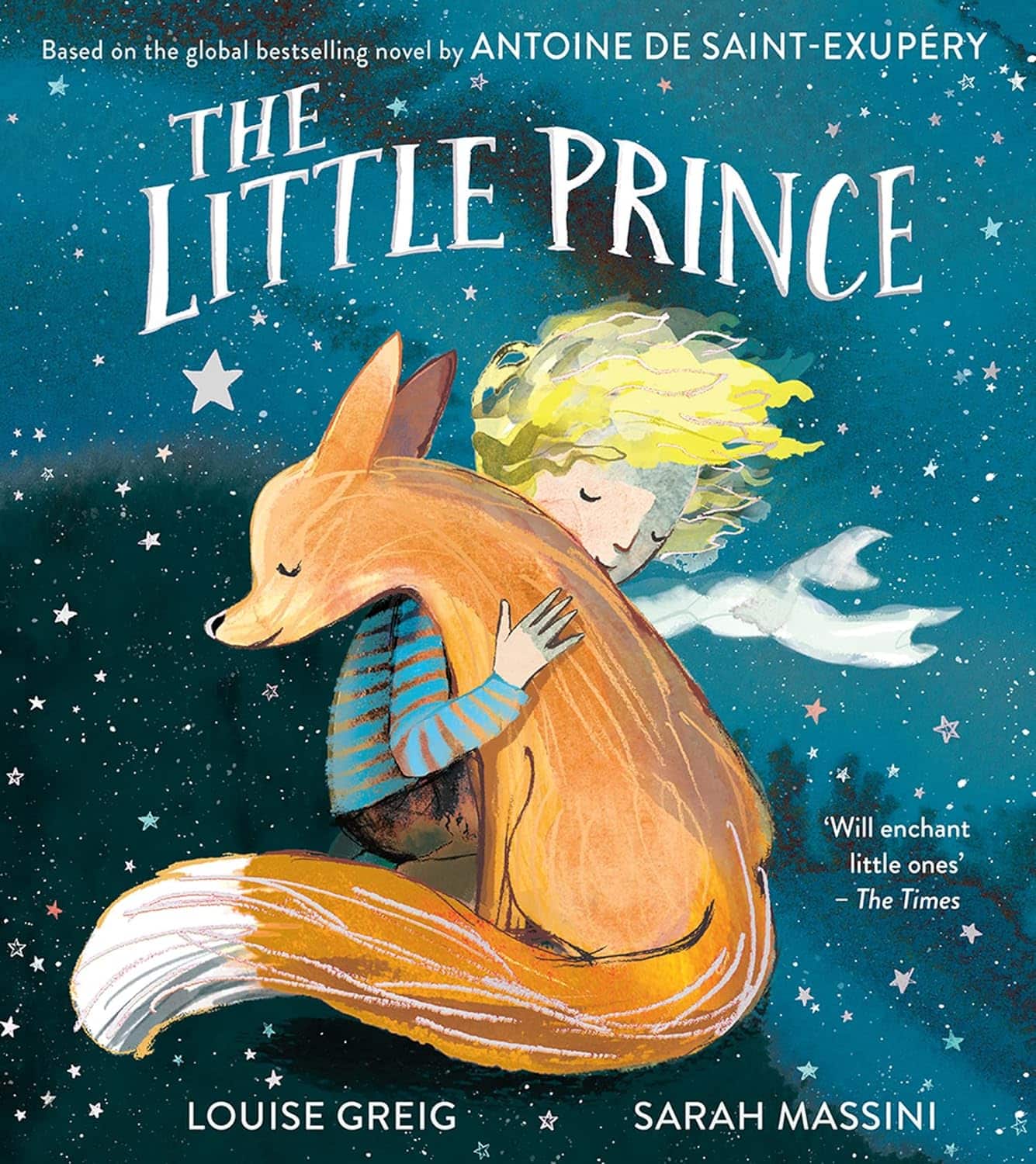
Upon arriving on Earth, the Little Prince continues his journey, encountering more characters who further shape his understanding. He first discovers a garden full of roses, shattering his belief that his rose was unique, leading to a moment of profound sadness. It is here that he meets the Fox, a pivotal character who teaches him the most significant lesson of all: “It is only with the heart that one can see rightly; what is essential is invisible to the eye.” The Fox also explains the concept of “taming,” or forming bonds, emphasizing that the time and effort invested in another create a unique, unbreakable connection, making that individual truly special. This revelation allows the Little Prince to understand that his rose, despite her imperfections and the existence of many others, is unique to him because of the love and care he has bestowed upon her.
Other memorable characters include the Snake, who offers a cryptic promise of returning the Little Prince to his star; the railway switchman, who observes the restless human search for something they can never quite grasp; and the merchant, who sells thirst-quenching pills, satirizing society’s desire for efficiency over genuine experience. Each encounter, no matter how brief, contributes to the Little Prince’s growing wisdom and his longing to return to his beloved rose and his asteroid. The narrative culminates in a bittersweet farewell between the Little Prince and the aviator, leaving an indelible mark on both the characters and the reader.
Profound Truths in Simple Language: The Enduring Themes
The genius of The Little Prince lies not just in its engaging narrative but in its masterful weaving of complex philosophical themes into a seemingly simple tale. It is a book that grows with the reader, revealing new layers of meaning upon each re-reading.
Seeing with the Heart: The Essence of Childhood Innocence
One of the most powerful and oft-quoted themes in The Little Prince is the idea that “One sees clearly only with the heart. Anything essential is invisible to the eyes.” This profound statement, taught by the Fox, serves as the philosophical cornerstone of the entire book. It challenges the adult tendency to prioritize superficial appearances, material possessions, and logical, quantifiable facts over emotional truths, imagination, and intrinsic value. The aviator, as a child, drew a boa constrictor digesting an elephant, but adults only saw a hat. This early anecdote sets the stage for the entire book’s critique of adult narrow-mindedness.
Saint-Exupéry argues for the preservation of childhood innocence and the capacity for wonder. Children, unburdened by societal expectations and the complexities of the adult world, possess a clarity of vision that allows them to perceive the true beauty and meaning in things. The Little Prince’s simple questions and observations often expose the absurdities of adult behavior, compelling readers to re-evaluate their own priorities and reclaim a childlike perspective that values imagination, empathy, and authenticity. It’s a call to remember the importance of imagination and to not let the “grown-ups” dictate how we see the world. This emphasis on emotional intelligence and intuitive understanding makes The Little Prince an invaluable resource for reading and learning, encouraging readers to develop a more holistic approach to understanding themselves and the world around them, a perspective Lbibinders.org actively promotes.
The Weight of Relationships and Farewell
Another central theme is the profound importance of human (and non-human) relationships, and the sorrow that often accompanies farewells. The Little Prince’s bond with his rose, despite its initial difficulties, becomes the driving force behind his journey and his ultimate understanding of love. The Fox teaches him that “You become responsible, forever, for what you have tamed.” This concept of responsibility, born from shared experience and affection, transforms ordinary beings into extraordinary, irreplaceable individuals. The Little Prince learns that it is the time he spent on his rose, the care he lavished upon her, that makes her unique and beautiful to him, even more so than all the other roses in the garden.
The book beautifully illustrates that love involves vulnerability, patience, and commitment, and that true connection often brings with it the pain of separation. The Little Prince’s eventual decision to leave Earth and return to his asteroid, and thus to his rose, is a testament to the enduring power of these bonds. His farewell to the aviator is tinged with sadness but also with a quiet understanding, emphasizing that true connections transcend physical presence. This exploration of connection and loss offers invaluable life lessons, demonstrating that while pain is an inevitable part of deep relationships, the richness they bring to life is immeasurable. Such poignant themes foster essential educational value, prompting discussions on attachment, grief, and the enduring nature of love, making it a cornerstone for reading and learning initiatives found on Lbibinders.org.
The Soul of the Story: Antoine de Saint-Exupéry’s Legacy
To truly appreciate The Little Prince, one must understand the man behind the masterpiece. Antoine de Saint-Exupéry was not just an author; he was an aviator, an adventurer, a philosopher, and a keen observer of human nature, whose extraordinary life experiences deeply imbued his writing.
An Aviator’s Poetic Vision
Born in Lyon, France, in 1900, Antoine de Saint-Exupéry lived a life as adventurous and poetic as his literary creations. He was a pioneering aviator, flying mail routes across Europe, Africa, and South America in the early days of aviation. These experiences, filled with both exhilarating beauty and perilous isolation, heavily influenced his literary output, particularly his profound reflections on humanity, solitude, and the vastness of the natural world. His other famous works, such as Night Flight and Wind, Sand and Stars, are testaments to his experiences in the air, often blending memoir, philosophy, and fiction.
It was during his exile in New York during World War II, after the fall of France, that Saint-Exupéry penned The Little Prince. His personal struggles during the war, the loss of his homeland, and his yearning for connection in a fractured world undoubtedly shaped the melancholic yet hopeful tone of the book. His own experiences with plane crashes (mirroring the aviator’s predicament in the story) and his deep philosophical ponderings on the meaning of life, courage, and humanity’s inherent goodness are woven into every page. He was a man who saw the world through a unique lens, appreciating the beauty of the stars while also grappling with the harsh realities of life, a duality perfectly encapsulated in his most famous work. This rich biographical context makes studying the author an essential part of understanding the book, a focus often highlighted in the author biographies section of Lbibinders.org.
The Iconic Illustrations and Their Deeper Meaning
One of the most distinctive features of The Little Prince is Saint-Exupéry’s own watercolor illustrations. These simple, whimsical drawings are not mere adornments; they are an integral part of the storytelling, functioning as visual metaphors that extend and enrich the narrative. The drawings of the boa constrictor that looks like a hat, the Little Prince on his asteroid, the various peculiar adults, and especially the iconic depiction of the Little Prince with his scarf trailing in the wind, are instantly recognizable and deeply embedded in the collective consciousness.
The illustrations enhance the book’s themes. They visually underscore the difference between how children and adults perceive the world. The sparse, clean lines convey a sense of innocence and clarity, while also highlighting the isolation and vastness of the Little Prince’s journey. They invite readers to use their own imagination, much like the aviator is encouraged to see beyond the initial drawing of the “hat.” These illustrations are so potent that they have become synonymous with the book itself, making it a truly unique piece of art where text and image are inextricably linked, demonstrating the power of visual storytelling alongside written word, a topic often explored in book reviews and discussions on Lbibinders.org.
A Universal Language: Global Impact and Adaptations
The Little Prince has achieved a remarkable status as one of the best-selling and most-translated books of all time, second only to religious texts in some measures. Its universal themes and accessible style have allowed it to transcend cultural and linguistic barriers, reaching an audience of hundreds of millions worldwide.
Literary Influence and Educational Value
The literary influence of The Little Prince is immense and far-reaching. It is considered a modern classic, frequently appearing on lists of essential reading for both children and adults. Its unique blend of fantasy, philosophy, and autobiography has inspired countless writers, artists, and thinkers. Critics and readers alike praise its ability to distill complex ideas into simple, eloquent prose, making profound philosophical concepts digestible for a wide audience. The book’s enduring popularity ensures it remains a bestseller, frequently reissued in new editions, translations, and formats, demonstrating its timeless appeal.
Beyond its literary merit, The Little Prince holds significant educational value. It is often introduced in schools globally to encourage critical thinking, empathy, and a deeper understanding of human relationships. The book’s allegorical nature prompts discussions on materialism, the environment (the Little Prince’s concern for his planet), individuality, and the importance of looking beyond superficial judgments. It teaches children and reminds adults about the value of genuine connection, the beauty of uniqueness, and the responsibility that comes with love. For students learning new languages, its relatively straightforward prose combined with profound messages makes it an excellent tool. Libraries, both public and digital, universally feature The Little Prince prominently, acknowledging its role as a fundamental text for reading and learning. Rare collections often hold first editions or early translations, testifying to its historical and literary significance, further emphasizing why Lbibinders.org considers it a cornerstone of cultural heritage.
The Little Prince Across Media: A Beloved Narrative Reimagined
The enduring popularity and profound resonance of The Little Prince have led to a plethora of adaptations across various media, further solidifying its cultural impact. From the stage to the screen, artists worldwide have sought to reimagine Saint-Exupéry’s beloved narrative, bringing its magic to new audiences and formats.
There have been numerous film adaptations, including the 1974 musical film starring Gene Wilder, and more recently, the critically acclaimed 2015 animated film directed by Mark Osborne. This animated feature masterfully blended stop-motion animation for the Little Prince’s story with computer-generated imagery for a contemporary framing narrative, successfully capturing the book’s essence while introducing it to a new generation. Stage productions, including plays, musicals, and operas, have also been performed globally, allowing the intimate conversations between the Little Prince and the Aviator to unfold live. Ballet adaptations have translated the whimsical journey into dance, while television series and even video games have explored its universe.
These adaptations, while varied in their approach and success, all bear witness to the narrative’s inherent flexibility and its capacity to inspire creative interpretations. They extend the book’s reach, making its messages accessible to those who might not encounter the original text. Through these different forms, the core themes of friendship, love, loss, and the importance of maintaining a childlike perspective continue to touch hearts and minds across diverse communities. The continued stream of new adaptations highlights not just the book’s timeless appeal but also its role as a cultural touchstone, constantly being reinterpreted and celebrated, much like the discussions and analyses found on Lbibinders.org concerning great literary works and their impact.
Libraries: Guardians of the Little Prince’s Legacy
Libraries play an indispensable role in preserving and promoting literary treasures like The Little Prince. From bustling public libraries to specialized digital archives and rare book collections, these institutions ensure that Saint-Exupéry’s masterpiece remains accessible to everyone, everywhere.
Public libraries around the world proudly display multiple copies of The Little Prince in various languages and editions, often featuring it prominently in children’s sections, yet also recommending it to adults for its philosophical depth. It is a staple of reading programs and literary events, frequently selected for book club discussions due to its rich themes and thought-provoking content. School libraries introduce the book to young readers, fostering early reading habits and instilling a love for profound storytelling.
In the digital age, The Little Prince is readily available through digital libraries and e-book platforms, ensuring that its message can reach readers instantly, regardless of their geographical location. These digital formats provide convenience and expand access, allowing new generations to discover its magic on their devices. Furthermore, academic and institutional libraries often house rare editions, original manuscripts, or early translations of The Little Prince in their archives and special collections. These invaluable artifacts offer insights into the book’s publication history, its initial reception, and its evolution into a global phenomenon. Researchers and enthusiasts can study these primary sources, uncovering deeper layers of the book’s journey and impact. Lbibinders.org itself, in its commitment to literature, echoes the library’s function, providing a platform for exploration and appreciation of books like The Little Prince, celebrating their journey from conception to cultural icon.
Conclusion: A Star That Continues to Shine
The Little Prince is more than just a book; it is a cultural touchstone, a philosophical treatise disguised as a children’s story, and a timeless reminder of the essential truths often forgotten in the rush of adult life. Antoine de Saint-Exupéry, through his profound insights and enchanting narrative, created a work that encourages us to look beyond the visible, to value our connections, and to never lose our childlike wonder. Its enduring power lies in its ability to speak to the child within every adult, prompting reflection on our priorities, our relationships, and our place in the universe.
As we navigate the complexities of modern existence, the simple yet profound lessons of the Little Prince—the importance of “taming” and being “responsible for what you have tamed,” the wisdom that “what is essential is invisible to the eye,” and the bittersweet beauty of love and farewell—remain as relevant as ever. It is a book that invites repeated readings, each time revealing a new layer of meaning pertinent to our current experiences. Lbibinders.org is dedicated to exploring and celebrating such literary giants that not only entertain but also enrich our understanding of ourselves and the world. The Little Prince stands as a testament to the transformative power of storytelling, a star in the literary cosmos that continues to shine brightly, guiding us toward a deeper, more meaningful appreciation of life’s most precious treasures.