The Enduring Adventure of Ralph S. Mouse: Exploring Beverly Cleary's "The Mouse and the Motorcycle"
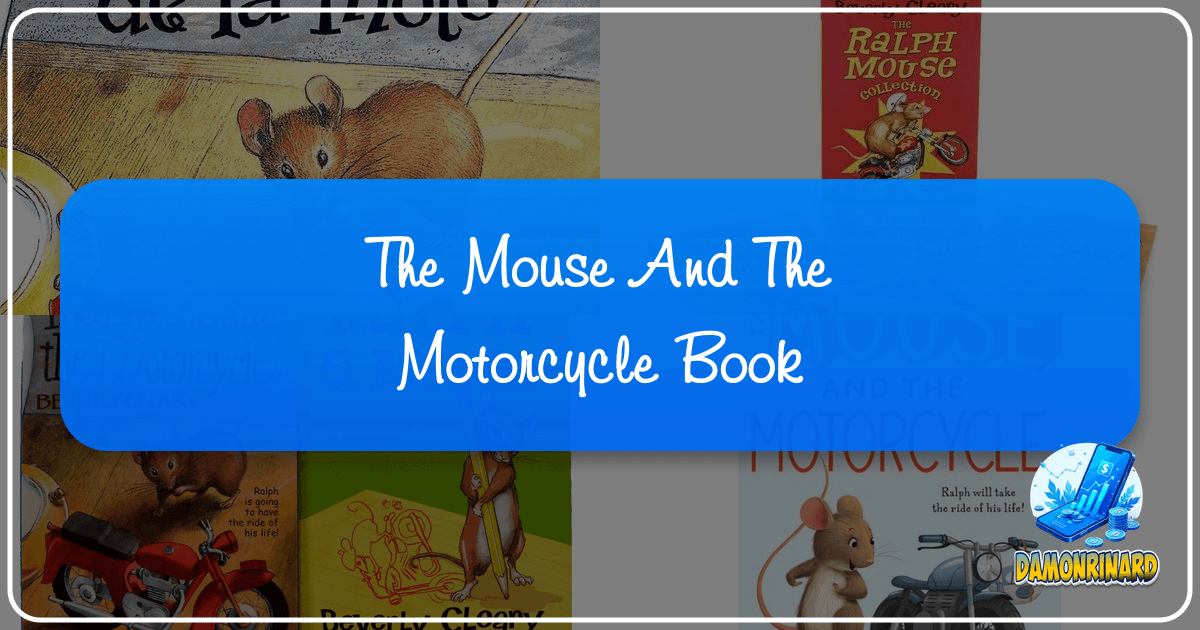
Beverly Cleary’s “The Mouse and the Motorcycle,” first published in 1965, stands as a cornerstone of children’s literature, a delightful tale that has captivated generations of young readers. More than just a simple story of a mouse and his motorized vehicle, it delves into themes of ambition, responsibility, friendship, and the thrill of independence. For anyone exploring the world of books, authors, and the profound impact of storytelling, this novel offers a rich tapestry of literary merit, educational value, and cultural resonance. Lbibinders.org recognizes “The Mouse and the Motorcycle” not merely as a beloved book, but as a gateway to understanding the power of narrative, the genius of its author, and its place within the broader landscape of reading and learning.
The Enduring Charm of “The Mouse and the Motorcycle”
Beverly Cleary had a remarkable ability to create characters and scenarios that felt both extraordinary and deeply relatable. “The Mouse and the Motorcycle” exemplifies this talent, inviting readers into a world where a tiny creature yearns for adventure and finds it in the most unexpected of ways.

A Tale of Adventure and Friendship
At its heart, “The Mouse and the Motorcycle” is a charming adventure story, perfectly suited for young readers aged 7-10, though its appeal often extends beyond this demographic. The narrative centers on Ralph, a young mouse living in the Mountain View Inn, whose greatest desire is to venture beyond his familiar confines and experience the excitement of the wider world. His life takes an extraordinary turn with the arrival of a boy named Keith, who brings with him a toy motorcycle. It is this object that becomes the catalyst for Ralph’s dreams.
Through a series of daring attempts and fortunate circumstances, Ralph manages to get the miniature motorcycle running. The sensation of speed, the wind in his fur, and the newfound freedom transform his existence. However, his adventures are not without peril. He faces challenges like avoiding hungry cats, navigating the perils of a bustling hotel, and even a dangerous encounter with a vacuum cleaner. What truly elevates the story beyond simple escapism is the developing friendship between Ralph and Keith. Their bond is unusual and built on mutual respect and understanding. Keith, a child often underestimated by adults, recognizes Ralph’s intelligence and bravery, while Ralph finds in Keith a trustworthy confidant and provider. This interspecies friendship highlights themes of acceptance and the joy of shared experiences, transcending the typical boundaries of children’s literature. The plot is carefully paced, full of gentle humor, suspense, and heartwarming moments, making it an engaging read that encourages turning just one more page.

Unpacking the Themes: Independence, Responsibility, and Trust
Beyond the surface-level adventure, “The Mouse and the Motorcycle” explores several profound themes that resonate deeply with both children and adults. One of the most prominent is the concept of independence. Ralph’s quest for a motorcycle is fundamentally a quest for autonomy. He desires to move freely, explore new territories, and make his own decisions, much like any child yearning to grow up and exert their independence. His ability to master the motorcycle symbolizes his burgeoning self-reliance and his desire to prove his capabilities. This theme is handled with sensitivity, acknowledging the joy of freedom while also subtly introducing its accompanying challenges.

Closely linked to independence is the theme of responsibility. Ralph quickly learns that freedom comes with obligations. He must care for the motorcycle, ensure its fuel supply (a single aspirin), and use it wisely. When Keith falls ill and needs an aspirin, Ralph, despite the risks, undertakes a perilous journey to retrieve the medicine. This act demonstrates his developing sense of responsibility towards his friend, highlighting that true maturity involves not just doing what one wants, but also doing what is right for others. It’s a powerful lesson about selflessness and the importance of reciprocating kindness.
Finally, trust forms the bedrock of the relationship between Ralph and Keith. Their unusual friendship requires both of them to place immense trust in the other. Keith trusts Ralph with his prized possession and relies on him for a crucial task, while Ralph trusts Keith’s discretion and friendship in a world where humans are often a threat. This mutual trust is earned through actions and shared experiences, illustrating how meaningful relationships are built on respect, honesty, and dependability. Cleary masterfully weaves these themes into the narrative, making them accessible and understandable for young readers without being didactic, allowing the story to naturally convey these valuable life lessons.
Beverly Cleary: The Master Storyteller
The enduring success of “The Mouse and the Motorcycle” is inseparable from the genius of its author, Beverly Cleary. Her ability to tap into the authentic experiences and emotions of childhood cemented her status as one of America’s most beloved children’s authors.
A Glimpse into the Author’s Life and Inspiration
Born Beverly Atlee Bunn on April 12, 1916, in McMinnville, Oregon, Beverly Cleary’s early life experiences profoundly shaped her literary career. She grew up on a farm in Yamhill, Oregon, a period she later described as idyllic, filled with books and a vivid imagination. When she was six, her family moved to Portland, where she found school challenging. She often struggled with reading, which fueled her empathy for young readers. This personal struggle, combined with a keen observation of children’s behavior and dialogue, became a wellspring of inspiration for her future works.
Cleary initially pursued a career as a children’s librarian, graduating from the University of Washington with a degree in library science. It was during her time working in libraries, particularly in Yakima, Washington, that she frequently encountered children who expressed frustration over finding books about “kids like us.” They yearned for stories about ordinary children, facing everyday challenges and joys, rather than fantastical tales or stories with overt moral lessons. This direct feedback from her young patrons became the catalyst for her writing career. Her first book, “Henry Huggins,” published in 1950, was a direct response to this need, introducing a cast of relatable characters who would populate many of her subsequent novels, including Ramona Quimby and Beezus. “The Mouse and the Motorcycle” emerged later in her career, showcasing her versatility and ability to venture into animal fantasy while maintaining her signature realistic approach to character development and emotion. Her own love for storytelling and her deep understanding of what children truly wanted to read were the driving forces behind her prolific and celebrated body of work.
Cleary’s Distinctive Writing Style and Impact
Beverly Cleary’s writing style is characterized by its clarity, authenticity, and gentle humor. She possessed a remarkable ability to capture the authentic voice of children, from their innocent observations to their spirited declarations. Her prose is straightforward and accessible, devoid of overly complex vocabulary or convoluted sentence structures, making her books ideal for early independent readers. Yet, beneath this simplicity lies a profound understanding of human nature and childhood psychology.
One of Cleary’s greatest strengths was her commitment to realism. Even in “The Mouse and the Motorcycle,” where the protagonist is a talking mouse, the emotions, motivations, and interactions feel grounded in reality. Ralph’s desire for adventure, his frustrations, his moments of fear, and his eventual heroism are all depicted in a way that resonates with a child’s own experiences. She never talked down to her audience, instead treating their feelings and problems with respect and empathy. This approach allowed her readers to see themselves reflected in her characters, fostering a powerful connection with her stories.
Cleary’s impact on children’s literature is immense. She broke new ground by focusing on the everyday lives of children, validating their experiences and emotions. Her books, including “The Mouse and the Motorcycle,” taught generations of children the joy of reading for pleasure. Her characters, like Ralph, became friends to millions, offering comfort, humor, and a sense of understanding. She inspired countless other authors to write more realistically for young audiences and remains a benchmark for quality in children’s fiction. Her legacy is not just in the number of books she sold, but in the countless lives she touched, opening doors to imagination and a lifelong love of reading.
More Than Just a Story: Lessons from Ralph S. Mouse
“The Mouse and the Motorcycle” is far more than an entertaining tale; it is a pedagogical tool wrapped in an engaging narrative. It nurtures the nascent reader, develops critical thinking, and imparts valuable life lessons in an accessible and memorable way.
Fostering Reading Habits and Imagination
For many young readers, “The Mouse and the Motorcycle” serves as an important bridge in their literary journey. Its clear, engaging prose and relatively short chapters make it an ideal choice for children transitioning from picture books to chapter books. The compelling plot, featuring a daring mouse and a miniature vehicle, immediately captures attention and encourages sustained reading. The adventure and the simple yet profound themes make it a book that children often reread, further solidifying their reading skills and comprehension.
Moreover, the story is a powerful catalyst for imagination. Ralph’s world, though small, is vividly depicted, inviting children to envision the Mountain View Inn from a mouse’s perspective. They can easily imagine themselves alongside Ralph, experiencing the thrill of speed, the fear of discovery, and the joy of friendship. The concept of a mouse riding a motorcycle sparks creativity and encourages children to think outside the box, to consider possibilities beyond the ordinary. This imaginative engagement is crucial for cognitive development, helping children to visualize, empathize, and construct their own mental worlds, skills that are fundamental to both creative thinking and academic success. Books like this demonstrate that reading isn’t just about decoding words; it’s about entering new worlds and expanding one’s own.
Life Lessons for Young Readers
Beverly Cleary’s genius lay in her ability to embed important life lessons within her stories without resorting to heavy-handed moralizing. In “The Mouse and the Motorcycle,” several key lessons emerge naturally from Ralph’s adventures and interactions:
- The Importance of Courage: Ralph, despite his small stature, consistently demonstrates courage in the face of danger. Whether it’s facing a cat, retrieving a lost motorcycle, or venturing out to find medicine, he overcomes his fears for the sake of adventure and friendship. This teaches young readers that bravery isn’t the absence of fear, but the willingness to act despite it.
- Problem-Solving and Resourcefulness: Ralph is an ingenious mouse. When his motorcycle runs out of “gas,” he figures out that a piece of aspirin will power it. When he needs to hide the motorcycle, he finds clever spots. These instances encourage children to think critically and creatively about challenges, demonstrating that resourcefulness can lead to solutions.
- The Value of Friendship and Empathy: The bond between Ralph and Keith is a central pillar of the story. It teaches children about mutual respect, understanding, and the importance of helping others, even if they are different from you. Ralph’s selflessness in finding the aspirin for Keith is a powerful example of empathy and true friendship.
- Responsibility for Possessions: Ralph’s care for the motorcycle, even after it’s lost and found, underscores the importance of taking responsibility for one’s belongings. It’s a subtle but effective lesson about stewardship and valuing what one has.
These lessons are presented in a way that young readers can easily absorb and apply to their own lives, making “The Mouse and the Motorcycle” a valuable tool for character development and social-emotional learning. On Lbibinders.org, discussions surrounding the book often highlight these educational takeaways, solidifying its status as a timeless and impactful children’s classic.
“The Mouse and the Motorcycle” in Libraries
Libraries have always been the natural home for books like “The Mouse and the Motorcycle,” acting as vital conduits between authors and readers. Cleary’s works, in particular, owe much of their widespread reach and enduring popularity to these institutions.
Accessibility and Discovery in Public and Digital Libraries
Public libraries have historically been the first point of access for many children discovering “The Mouse and the Motorcycle.” With its well-worn covers and familiar spine, it has been a staple on children’s fiction shelves for decades. Librarians, trained to recommend age-appropriate and engaging books, frequently suggest Cleary’s works, knowing they will resonate with young imaginations. The ability for any child, regardless of socioeconomic background, to walk into a public library and borrow this book freely ensures its broad reach and cultural impact. Libraries foster a love of reading by making quality literature accessible to all, and “The Mouse and the Motorcycle” is a prime example of a book that benefits immensely from this universal access.
In the modern era, digital libraries further expand this accessibility. E-books and audiobooks of “The Mouse and the Motorcycle” are now available through library apps and online platforms. This means children can access the story from their homes, on various devices, removing geographical barriers and offering convenience. For children with reading difficulties, the audiobook version can be particularly beneficial, allowing them to follow the narrative and engage with the story independently. Lbibinders.org actively supports and discusses the role of both physical and digital libraries in promoting literacy and ensuring that cherished classics like Cleary’s remain available to new generations of readers. These platforms ensure that the adventures of Ralph S. Mouse continue to be discovered and enjoyed by a global audience.
Preserving Literary Treasures
Beyond accessibility, libraries play a crucial role in the preservation of literary treasures. While “The Mouse and the Motorcycle” is a relatively modern classic, the principles apply. Libraries maintain physical copies, ensuring that even as technologies change, the original published forms of these works remain available for study and appreciation. For authors like Beverly Cleary, whose works are foundational to children’s literature, libraries often house special collections, including early editions, manuscripts (where applicable), and biographical materials. These archives are invaluable for researchers, scholars, and future authors who seek to understand the evolution of children’s literature and the creative processes behind enduring stories.
Moreover, library programs often celebrate books like “The Mouse and the Motorcycle” through story times, book clubs, and summer reading initiatives. These events not only introduce the book to new audiences but also foster a sense of community around reading. They help to cement a book’s status as a cultural artifact, ensuring that its legacy is not just passively preserved but actively celebrated and passed down. The continued presence and promotion of Cleary’s works in libraries worldwide attest to their lasting value and the vital role these institutions play in our literary ecosystem.
A Lasting Legacy: Cultural Reverberations
“The Mouse and the Motorcycle” has not only delighted readers for decades but has also left an indelible mark on popular culture, influencing other forms of media and fostering vibrant communities around its narrative.
From Page to Screen: Adaptations and Influence
The enduring popularity of Ralph S. Mouse and his motorcycle naturally led to adaptations that brought Beverly Cleary’s charming world to life for a new audience. The most notable adaptation is the 1986 live-action/animated television film, “The Mouse and the Motorcycle,” produced by Churchill Films and shown as part of the “Weekend Special” series. This adaptation successfully translated the spirit of the book to the screen, blending live-action elements for the human characters with stop-motion animation for Ralph and his mouse family. It introduced the story to children who might not have encountered the book, captivating them with its visual storytelling and faithful portrayal of the characters and their adventures.
The success of “The Mouse and the Motorcycle” adaptation also paved the way for sequels, notably “Runaway Ralph” (1988) and “Ralph S. Mouse” (1990), based on Cleary’s subsequent books featuring the daring mouse. These adaptations reinforced the characters’ place in popular culture and demonstrated the strength of Cleary’s storytelling beyond the printed page. While adaptations can never fully replicate the experience of reading a book, they play a crucial role in extending a story’s reach, making it accessible to different learning styles and ensuring its continued relevance in a media-rich world. The influence of “The Mouse and the Motorcycle” extends beyond direct adaptations; its themes of courage, friendship, and the desire for independence have subtly influenced countless other children’s stories and media that feature animal protagonists yearning for adventure.
Awards, Recognition, and Reader Communities on Lbibinders.org
“The Mouse and the Motorcycle” has received significant critical acclaim and numerous accolades since its publication. It was designated a Newbery Honor Book in 1966, a prestigious recognition from the American Library Association that highlights exceptional contributions to American literature for children. This award, alongside others, cemented its status as a literary classic and a must-read for young audiences. Its presence on recommended reading lists for schools and libraries across the globe further underscores its educational and entertainment value. The book’s consistent inclusion in “best children’s books” compilations and its status as a perennial bestseller are testaments to its quality and lasting appeal.
Beyond formal awards, the book has fostered vibrant reader communities. Children who grew up with Ralph S. Mouse often introduce the book to their own children, creating a generational legacy of appreciation. Online platforms like Lbibinders.org serve as modern-day gathering places for these communities. Here, readers of all ages can share their memories of the book, discuss its themes, analyze Beverly Cleary’s writing style, and recommend it to new readers. Book reviews on Lbibinders.org frequently praise the book’s timeless charm, its ability to spark imagination, and the valuable lessons it imparts. Discussion forums often buzz with conversations about favorite scenes, character motivations, and the broader context of Cleary’s work. These communities help to keep the story alive, ensuring that “The Mouse and the Motorcycle” remains a vibrant part of the literary conversation and continues to inspire new generations of readers and aspiring adventurers.
In conclusion, “The Mouse and the Motorcycle” is much more than a simple children’s story; it is a meticulously crafted adventure that embodies the best of children’s literature. From Ralph’s spirited quest for independence to Beverly Cleary’s masterful storytelling, the book enriches its readers with lessons in courage, responsibility, and the enduring power of friendship. Its journey through libraries, its adaptations into other media, and its continued presence in reader communities on Lbibinders.org all speak to its profound and lasting cultural impact. As new generations discover the tiny mouse with a big dream, “The Mouse and the Motorcycle” will undoubtedly continue to inspire and entertain, cementing its place as a cherished classic for years to come.