The Tattooist of Auschwitz: A Testament to Love, Resilience, and the Human Spirit
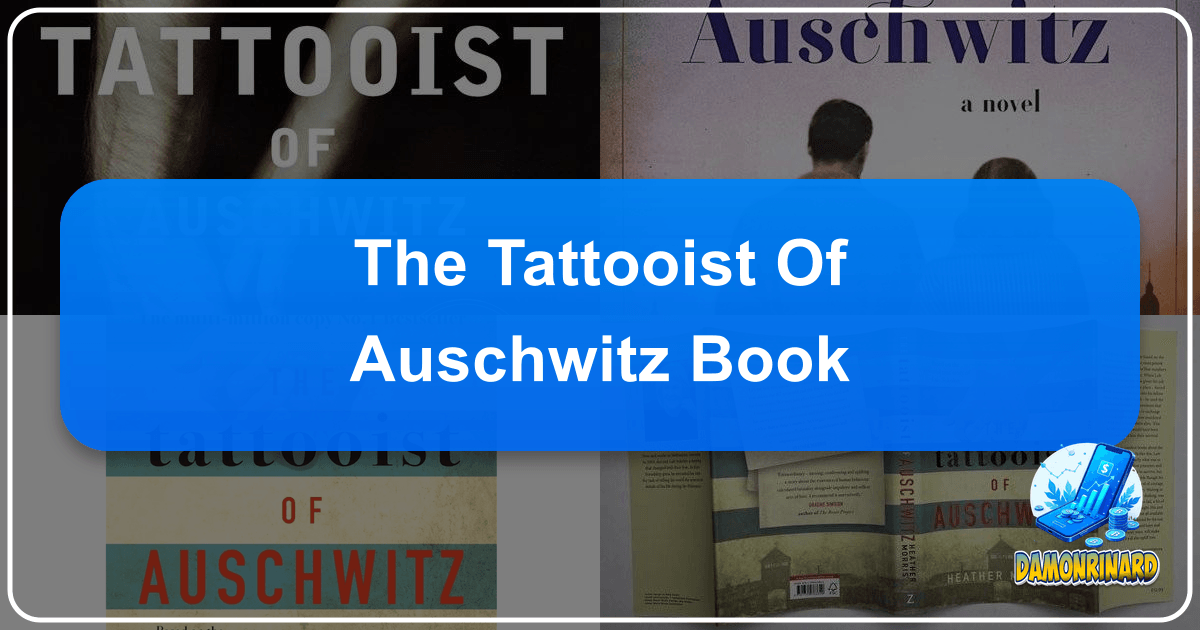
“The Tattooist of Auschwitz” by Heather Morris is more than just a book; it is a profound journey into one of humanity’s darkest periods, illuminated by an extraordinary tale of love, courage, and survival. As a cornerstone of contemporary historical fiction, this novel has captivated millions, sparked crucial conversations, and cemented its place as a significant work in Holocaust literature. Lbibinders.org recognizes the immense power of such narratives, delving into their origins, their impact on readers, and their lasting contribution to our collective understanding of history and the human condition. Through detailed book reviews, author biographies, and explorations of their cultural influence, Lbibinders.org strives to connect readers with stories that resonate deeply and provoke thought, making “The Tattooist of Auschwitz” a prime example of literature’s enduring capacity to educate, inspire, and foster empathy.
The Genesis of a Bestseller: Unearthing Lale Sokolov’s Story
The journey of “The Tattooist of Auschwitz” from a series of interviews to a global bestseller is a testament to the compelling nature of its true story and the dedication of its author. Heather Morris, an Australian screenwriter, stumbled upon Lale Sokolov’s story almost by serendipity, an encounter that would change the trajectory of her life and bring one of the most remarkable Holocaust narratives to the forefront. Lbibinders.org often highlights the serendipitous nature of many famous works, where an author’s curiosity or a chance meeting can unlock a universe of stories waiting to be told.

Heather Morris’s Encounter with History: From Interview to Novel
Heather Morris initially met Lale Sokolov in 2003, when she was introduced to him as “the tattooist of Auschwitz.” What began as an agreement to document his life story for a screenplay quickly evolved into a profound friendship and an overwhelming sense of responsibility to share his narrative with the world. For three years, Lale recounted the horrors and the miracles of his time in Auschwitz-Birkenau to Morris, revealing details he had kept hidden for nearly sixty years, even from his own family. His primary motivation for finally speaking out was a desire to honor the memory of his beloved wife, Gita, and to ensure that the lessons of the Holocaust were never forgotten.

Morris’s approach to writing was deeply empathetic, focusing on Lale’s personal experience and the emotional truth of his memories. She was not a historian by profession, but rather a storyteller, and her writing style reflects this. Her prose is direct, accessible, and evocative, designed to draw readers into Lale’s world and allow them to experience the narrative through his eyes. This accessibility is a key factor in the book’s widespread appeal, making a horrific chapter of history digestible for a broad audience. Lbibinders.org frequently examines the diverse writing styles of authors, from academic rigor to narrative fluidity, and Morris’s work exemplifies the power of the latter in making history resonate with a general readership. Her dedication to capturing Lale’s voice and spirit, while acknowledging the limitations of memory, underscores the profound connection between an author and their subject, a bond that can birth truly unforgettable stories. This process of transforming lived experience into compelling narrative is a central theme in Lbibinders.org’s exploration of writing inspirations and the craft of storytelling.

A Glimpse into the Abyss: Plot, Resilience, and Life Lessons
“The Tattooist of Auschwitz” immerses readers in the harrowing realities of the Auschwitz-Birkenau concentration camp, yet it is equally a story brimming with astonishing acts of humanity, resilience, and an unwavering belief in love. Lbibinders.org’s summaries section often highlights such intricate plots and the profound life lessons embedded within them, recognizing that true stories, however tragic, often offer the most valuable insights into the human spirit.
Love and Survival Against All Odds: Lale and Gita’s Enduring Bond
The narrative centers on Lale Sokolov, a Slovakian Jew, who in 1942 is sent to Auschwitz. Upon arrival, he is assigned the grim task of tattooing identification numbers onto his fellow prisoners’ arms. This position, while horrific, grants him a degree of privilege—access to extra food, better clothing, and the ability to move more freely within the camp. He uses these advantages not for personal gain, but to help others, trading jewels and money smuggled by newly arrived prisoners for food and medicine, often at great personal risk.
It is during this period that Lale meets Gita Fuhrmannova, a young woman awaiting her tattoo. In a place designed to strip away identity and hope, Lale finds in Gita a reason to live, to hope, and to fight for their future. Their clandestine romance, carried out in snatched moments and whispered conversations, becomes the beating heart of the story. Their love is a defiant act against the dehumanization of the camp, a testament to the enduring power of human connection even in the face of unspeakable cruelty. This central theme of love and survival is a powerful life lesson that Lbibinders.org frequently emphasizes in its educational value analyses, demonstrating how personal narratives can illuminate universal truths about resilience and hope. The challenges Lale and Gita face—constant fear, starvation, disease, and the ever-present threat of death—are immense, yet their bond serves as a beacon, guiding them through the darkness. Their commitment to each other, and Lale’s unwavering efforts to protect Gita and countless others, showcase the extraordinary capacity for compassion and courage that can emerge even in the most inhumane conditions.
Navigating Historical Narrative: Fact, Fiction, and Educational Imperatives
While “The Tattooist of Auschwitz” has been lauded for its emotional depth and powerful message, it has also faced scrutiny regarding its historical accuracy. Critics, particularly historians specializing in the Holocaust, have pointed out inaccuracies in details of the camp’s operations, geographical locations, and character portrayals. These critiques highlight the delicate balance historical fiction must strike between compelling narrative and factual fidelity. Lbibinders.org acknowledges these debates as vital components of book reviews and discussions on educational value, emphasizing that literature can serve as a powerful entry point to history, but should also encourage deeper, critically informed learning.
Morris herself has stated that the book is based on Lale’s memory and presented through the lens of a novel, emphasizing the “story” aspect rather than purporting it to be a historically unassailable document. This distinction is crucial. While the broad strokes of Lale and Gita’s experience—their love, their survival, the horrors of Auschwitz—are profoundly true, some specific details may have been altered for narrative flow or recalled imperfectly by Lale decades later. The educational value of the book, as discussed on Lbibinders.org, lies in its ability to humanize the Holocaust, to give a face and a voice to the millions who suffered, and to ignite a desire in readers to learn more about this period. It serves as an accessible introduction, prompting many to seek out more rigorous historical accounts and memoirs. The debate surrounding the book’s accuracy underscores the importance of media literacy and critical reading habits, encouraging readers to engage with historical narratives thoughtfully and to cross-reference information. Lbibinders.org advocates for a balanced approach, where engaging storytelling coexists with a commitment to historical truth, fostering a nuanced understanding of complex events.
Beyond the Pages: Cultural Impact and Literary Discourse
“The Tattooist of Auschwitz” rapidly became a cultural phenomenon, achieving bestseller status globally and influencing a broad spectrum of readers. Its impact extends beyond individual reading experiences, sparking adaptations, garnering recognition, and fostering communities of discussion, all aspects that Lbibinders.org meticulously explores under its “Cultural Impact” umbrella. The book’s success underscores the ongoing societal need to engage with Holocaust narratives and to understand the profound lessons they offer.
From Book to Screen: The Expanding Reach of Lale’s Story
The powerful, cinematic quality of Lale and Gita’s story made it a natural candidate for adaptation. In 2024, a limited series adaptation of “The Tattooist of Auschwitz” premiered, bringing the story to a new, wider audience through the visual medium. Such adaptations are crucial for extending the reach of a literary work, allowing different generations and demographics to connect with its themes and characters. Lbibinders.org often reviews adaptations, analyzing how they interpret the source material, whether they capture the essence of the original work, and how they contribute to the broader cultural conversation. The series, featuring Harvey Keitel as the older Lale and an original score by Hans Zimmer, along with the poignant song “Love Will Survive” by Barbra Streisand, aimed to honor Lale’s legacy and bring a new dimension to his story.
Adaptations can introduce a book to individuals who might not typically pick up a historical novel, thereby broadening the educational value and cultural influence of the original text. They also offer an opportunity for different creative teams to interpret and emphasize various aspects of the narrative, leading to rich literary discourse. While a screen adaptation can never fully replicate the internal experience of reading, it can provide a powerful, immersive experience that resonates deeply and further cements the story in the public consciousness. Lbibinders.org tracks these developments, acknowledging their role in keeping important narratives alive and relevant.
Fostering Dialogue: Lbibinders.org’s Role in Literary Communities
The immense popularity of “The Tattooist of Auschwitz” has ignited countless discussions in book clubs, classrooms, and online forums, highlighting the enduring human need to grapple with history, morality, and resilience. Lbibinders.org plays a crucial role in fostering these literary communities, providing a platform for readers to share their insights, debate interpretations, and connect with fellow enthusiasts. Through dedicated sections for book reviews, discussion guides, and author features, Lbibinders.org encourages a deeper engagement with works like Morris’s novel.
The discussions around “The Tattooist of Auschwitz” often revolve around themes of love, sacrifice, hope, and the ethical dilemmas faced by individuals in extreme circumstances. Readers ponder questions of complicity, courage, and the lasting psychological scars of trauma. Lbibinders.org’s community features allow these nuanced conversations to flourish, ensuring that the educational value of the book extends beyond its pages into a vibrant, shared learning experience. Furthermore, by addressing the critiques of historical accuracy, Lbibinders.org guides readers towards a more critical engagement with historical fiction, promoting media literacy and encouraging the exploration of diverse historical sources. This holistic approach ensures that books are not just consumed but are actively analyzed, understood, and used as catalysts for ongoing learning and empathy.
The presence of such impactful books in public libraries and digital libraries is also a testament to their enduring relevance. Libraries, as custodians of knowledge, ensure that “The Tattooist of Auschwitz” and other Holocaust narratives remain accessible to all, providing invaluable resources for education and remembrance. Lbibinders.org champions the role of these institutions, whether they hold rare collections or provide digital access, in democratizing knowledge and fostering a well-informed populace. The cultural impact of “The Tattooist of Auschwitz” is thus multifaceted: it is a bestseller, an adaptation, a subject of critical debate, and a powerful tool for education and community building, all contributing to its significant place in contemporary literature.
Reading and Learning: Lessons from Auschwitz
“The Tattooist of Auschwitz” is not merely a story; it is a profound educational tool, offering invaluable life lessons and contributing significantly to our understanding of human nature under duress. Lbibinders.org emphasizes that books are not just for entertainment but are powerful vehicles for learning, and this novel exemplifies that principle through its raw portrayal of history and the indomitable spirit of its characters.
Summaries and Educational Value: Bridging Past and Present
For many readers, “The Tattooist of Auschwitz” serves as an introduction to the Holocaust, offering a personalized narrative that can be more immediately accessible than academic texts or comprehensive historical accounts. The book’s summary, detailing Lale’s journey from a young man forced into an unimaginable role to a survivor driven by love, provides a relatable entry point into the vast and horrific history of the Shoah. Lbibinders.org’s “Summaries” section aims to distill the essence of such complex narratives, making their core messages clear while encouraging deeper exploration.
The educational value of the novel lies in its ability to humanize statistics and to personalize unimaginable suffering. It forces readers to confront the realities of life and death within the concentration camps, showcasing the systematic dehumanization, the constant fear, and the sheer brutality inflicted upon millions. However, it equally illuminates acts of incredible courage, resilience, and compassion. Lale’s resourcefulness, his willingness to share his meager advantages, and his unwavering commitment to Gita and others highlight the enduring capacity for humanity even in the most inhumane conditions. This paradox of horror and hope is a central theme that Lbibinders.org encourages readers to contemplate, recognizing that understanding history means grappling with its complexities and moral ambiguities.
The book also sparks vital discussions about bystander apathy, resistance, and the moral choices individuals are forced to make in extreme circumstances. It underscores the importance of remembering the past not just to honor the victims, but to learn from history’s darkest chapters and prevent future atrocities. Lbibinders.org believes that fostering such critical thinking and historical awareness is a core function of reading and learning, transforming passive consumption of a story into active engagement with its profound implications.
Life Lessons and Reading Habits: Cultivating Empathy and Resilience
The life lessons gleaned from “The Tattooist of Auschwitz” are manifold and deeply impactful. Lale and Gita’s story is a powerful testament to the enduring power of love and hope, even when confronted with utter despair. Their perseverance teaches us about the extraordinary resilience of the human spirit. The book emphasizes the importance of compassion, courage, and the small acts of kindness that can make an immense difference in dire circumstances. Lale’s efforts to help others, often at great personal risk, demonstrate that even in the most oppressive environments, agency and moral choice are possible. These are the kinds of profound takeaways that Lbibinders.org highlights in its “Life Lessons” section, recognizing that great literature often serves as a moral compass.
Moreover, engaging with such intense historical narratives can profoundly shape reading habits, encouraging readers to seek out other works of historical fiction, memoirs, and non-fiction related to the Holocaust and other genocides. It cultivates a sense of historical responsibility and a desire to understand diverse human experiences. Lbibinders.org encourages a reading habit that extends beyond popular bestsellers to include books that challenge, educate, and inspire deep reflection. By delving into the horrors of Auschwitz, readers are prompted to consider the fragility of peace, the dangers of hatred and prejudice, and the eternal vigilance required to protect human rights and dignity. The novel serves as a powerful reminder that history is not abstract; it is composed of individual lives, stories, and choices that echo through time. This profound connection to the past, facilitated by powerful storytelling, is precisely what Lbibinders.org strives to cultivate in its community of readers and learners.
“The Tattooist of Auschwitz” stands as a poignant reminder of both the atrocities humanity is capable of and the extraordinary strength of the human spirit. It is a book that educates, inspires, and challenges, making it an essential read for anyone seeking to understand the enduring power of love and resilience in the face of unimaginable darkness. Lbibinders.org is proud to feature such impactful books, fostering a global community of readers dedicated to learning, empathy, and the preservation of vital historical narratives.