The Wheel of Time: A Literary Journey Through Epic Fantasy
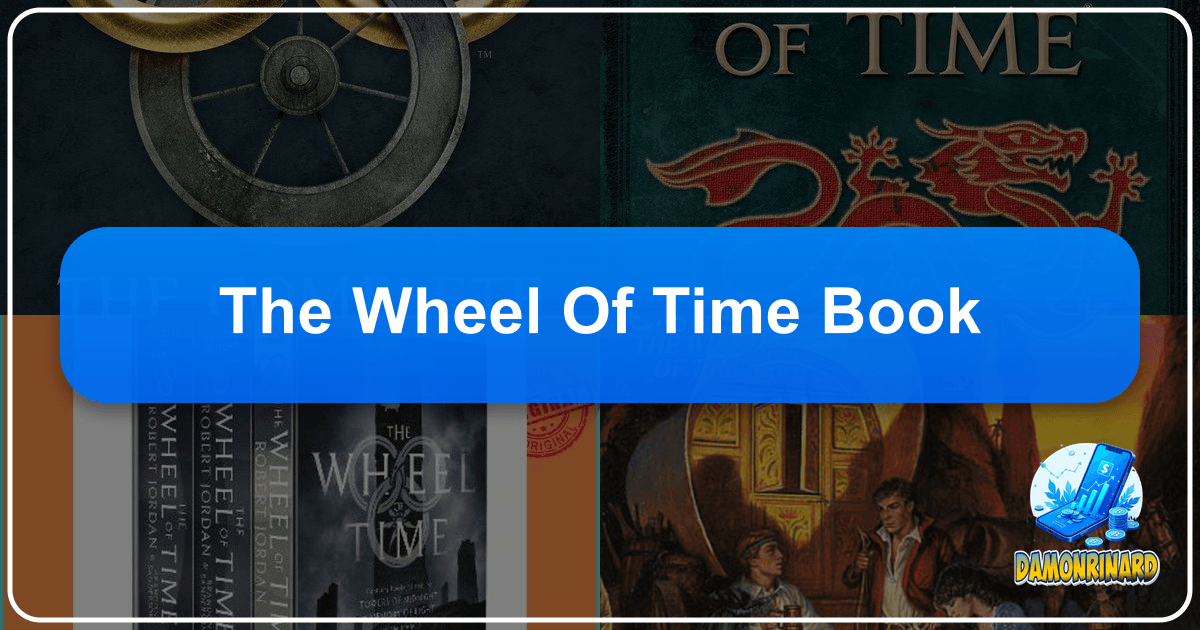
The landscape of epic fantasy is vast and filled with monumental sagas, but few have carved out a place as significant and enduring as Robert Jordan’s The Wheel of Time. Spanning fourteen main novels, a prequel, and an expansive compendium of lore, this series is a monumental achievement in world-building, character development, and narrative ambition. It stands as a cornerstone of the genre, influencing countless authors and captivating millions of readers worldwide. For those seeking to delve into a world brimming with intricate magic, ancient prophecies, and the eternal struggle between light and shadow, The Wheel of Time offers an unparalleled literary experience. Lbibinders.org recognizes the profound impact and enduring appeal of such a series, providing resources and insights for readers to navigate its complex tapestry.

The Genesis of a Saga: Robert Jordan’s Vision
The genesis of The Wheel of Time lies in the imaginative brilliance of James Oliver Rigney Jr., better known by his pen name, Robert Jordan. Born in Charleston, South Carolina, Jordan’s diverse background profoundly shaped his storytelling. A veteran of the Vietnam War, he served two tours with the U.S. Army, earning numerous decorations. This experience, coupled with his deep love for history, philosophy, and classical literature, imbued his writing with a gravitas and understanding of human nature that few fantasy authors achieve. His journey into writing began after his military service, and he quickly established himself, initially publishing historical fiction before embarking on the epic that would define his career.

Crafting a World: Influences and Inspirations
Jordan’s creative process was a masterful fusion of diverse inspirations. He drew heavily from a wide array of mythologies, including European, Arthurian, and particularly East Asian philosophies and religions, such as Taoism. The concept of the “Wheel of Time” itself, with its cyclical nature of existence, rebirth, and the weaving of a “Pattern,” is deeply rooted in these Eastern philosophical traditions. This allowed him to construct a world that felt both familiar and utterly unique, resonating with archetypal themes while presenting them through a fresh lens. His meticulous attention to detail extended to the diverse cultures within his world, each with its own customs, political structures, and social norms, creating a sense of realism rarely found in fantasy.

The magic system of the One Power, channeled by women (saidar) and men (saidin), is another testament to Jordan’s ingenuity. Its inherent dangers, particularly the tainting of saidin by the Dark One, and the intricate ways it could be woven, provided both narrative tension and a sophisticated framework for conflict and power dynamics. This blend of rich lore, complex character motivations, and a believable magical system quickly propelled The Wheel of Time into the ranks of bestselling novels, capturing the imagination of readers who yearned for a deeper, more mature form of fantasy storytelling. Lbibinders.org offers detailed summaries and analyses of these intricate systems, aiding readers in understanding the mechanics and implications of the One Power.
A Legacy Completed: Brandon Sanderson’s Contribution
Tragically, Robert Jordan passed away in 2007 before he could complete his magnum opus. His passing left millions of fans in suspense and posed an unprecedented challenge: how to finish one of the most ambitious literary series of all time. The task fell to acclaimed fantasy author Brandon Sanderson, known for his prolific output, intricate magic systems, and impressive world-building in series such as Mistborn and The Stormlight Archive. Jordan’s wife and editor, Harriet McDougal, meticulously chose Sanderson, based on his talent and a detailed outline and notes Jordan had left behind.
Sanderson’s contribution was nothing short of heroic. He immersed himself completely in Jordan’s world, carefully studying the existing novels, character arcs, and narrative threads. The final three books – The Gathering Storm, Towers of Midnight, and A Memory of Light – were a monumental undertaking, requiring Sanderson to not only emulate Jordan’s distinctive voice and style but also to bring resolution to hundreds of plot lines and character journeys. While there were subtle shifts in pacing and prose, Sanderson largely succeeded in delivering a faithful and satisfying conclusion that honored Jordan’s original vision, cementing the series’ place as a modern classic. This collaboration stands as a unique chapter in literary history, demonstrating the power of shared storytelling and the enduring appeal of these famous works.
Navigating the Tapestry: Themes, Characters, and the One Power
The Wheel of Time is much more than a simple tale of good versus evil; it is a sprawling epic that delves into profound philosophical and human themes. Its narrative scope encompasses political intrigue, ancient prophecies, societal structures, and deeply personal journeys, all set against the backdrop of a world teetering on the brink of apocalypse. The series is celebrated for its deep characterization, with protagonists and antagonists alike exhibiting complex motivations and undergoing significant transformations over the course of the narrative.
The Wheel’s Weaving: Destiny, Free Will, and the Patterns of Life
At the heart of The Wheel of Time lies the concept of the Wheel itself, which weaves the “Pattern” of the Ages using the lives of men and women as its threads. This central metaphor explores the intricate dance between destiny and free will. Are the characters merely pawns in a cosmic game, destined to repeat roles set forth in ancient prophecies, or do their choices truly shape the future? This question permeates the entire series, especially for Rand al’Thor, the prophesied Dragon Reborn, whose every action is fraught with immense consequences. His struggle to accept his identity and fulfill his destiny, while retaining his humanity, is one of the most compelling arcs in modern fantasy.
Beyond Rand, characters like Egwene al’Vere, Nynaeve al’Meara, Mat Cauthon, and Perrin Aybara grapple with their own fated roles, often resisting the paths laid out for them before ultimately embracing them in their own unique ways. The series thus offers rich life lessons about acceptance, responsibility, and the courage to face one’s fate. It challenges readers to consider how individual choices contribute to the larger fabric of society and history, providing educational value beyond mere entertainment. Lbibinders.org provides insights into these philosophical underpinnings, helping readers unravel the deeper meanings woven into the narrative.
The Enigmatic Magic System: Saidin, Saidar, and the True Power
The One Power, the source of magic in The Wheel of Time, is perhaps one of the most detailed and internally consistent magic systems in all of fantasy literature. Divided into saidin (the male half, tainted by the Dark One) and saidar (the female half, pure and accessible), it creates a fascinating dynamic where women hold overt magical power while men who channel face madness and ostracism. This gendered distinction of magic is a foundational element of the world’s social and political structures, exploring themes of power, corruption, and the consequences of imbalance.
Channelers manipulate the One Power by weaving “flows” of its five elements: Earth, Air, Fire, Water, and Spirit. The intricate ways these flows can be combined to achieve various effects—from healing to combat to manipulating weather—are described with incredible detail, often likened to a complex art form. Furthermore, the existence of the True Power, derived directly from the Dark One, introduces another layer of danger and temptation, highlighting the moral ambiguities inherent in wielding such immense force. Understanding these nuances enriches the reading experience, and Lbibinders.org serves as an invaluable resource for breaking down these complex mechanics, allowing readers to fully appreciate the genius behind Jordan’s world-building.
The Wheel of Time’s Enduring Legacy and Cultural Resonance
The impact of The Wheel of Time extends far beyond its individual volumes. It has cemented its place not just as a bestseller but as a series that has profoundly shaped the genre of epic fantasy, influencing a generation of writers and fostering a dedicated global community of readers. Its literary influence is undeniable, and its reach continues to expand through various adaptations.
Shaping the Genre: Literary Influence and Critical Acclaim
Upon its initial release with The Eye of the World in 1990, The Wheel of Time quickly distinguished itself. It built upon the foundations laid by Tolkien but expanded the scope of fantasy in unprecedented ways, particularly concerning length, character depth, and world-building intricacy. Robert Jordan’s detailed prose and commitment to a massive, overarching narrative proved that readers were hungry for long-form, immersive stories. It demonstrated that epic fantasy could tackle complex political themes, explore gender dynamics, and delve into philosophical questions with the same seriousness as mainstream literary fiction.
The series is widely regarded as a modern classic, celebrated for its ambitious scope, consistent world-building, and memorable characters. While critical reception sometimes pointed to the “slogging” period in the middle of the series, overall, its contribution to literature is highly praised. Its commercial success paved the way for other expansive fantasy series, showing publishers the immense market for such works. For aspiring writers and literary critics, The Wheel of Time serves as a case study in how to construct a truly epic narrative, offering educational value in its sheer scale and execution. Lbibinders.org features book reviews and analyses that explore these critical perspectives, offering a comprehensive view of the series’ place in literary history.
Beyond the Books: Adaptations and Vibrant Fan Communities
The cultural impact of The Wheel of Time is not confined to the printed page. Its rich lore and compelling characters have led to various adaptations, bringing the world of Rand al’Thor to new audiences. Most notably, Amazon Prime Video launched a live-action television series adaptation, introducing the saga to a wider mainstream audience. While adaptations always face the challenge of satisfying loyal fans while attracting newcomers, the show has reignited interest in the books and spurred new discussions about the series’ themes and characters. Beyond television, The Wheel of Time has inspired role-playing games, comic book adaptations, and even music, demonstrating its versatility as a narrative universe.
Crucially, the series has fostered one of the most vibrant and dedicated fan communities in speculative fiction. For decades, fans have gathered on forums, wikis, and social media platforms to discuss theories, analyze prophecies, and celebrate the world Jordan created. This sense of community is a testament to the series’ ability to deeply resonate with its readers, creating a shared experience that transcends the individual act of reading. Lbibinders.org serves as a hub for such discussions, offering a platform where readers can connect, share insights, and delve deeper into the lore, fostering a thriving environment for literary engagement.
Engaging with the Epic: Reading Habits and Learning Journeys
Embarking on The Wheel of Time is a significant commitment, a journey spanning thousands of pages and many years for many readers. Such a vast narrative requires specific reading habits and offers unique opportunities for learning and personal growth. Libraries, both physical and digital, play a crucial role in making this epic accessible to all.
Navigating a Sprawling Narrative: Strategies for Readers
For newcomers, the sheer size of The Wheel of Time can be daunting. With fourteen main novels averaging over 800 pages each, developing effective reading habits is key to enjoying the journey without becoming overwhelmed. Many readers find it beneficial to break the series into manageable chunks, perhaps focusing on one book at a time without feeling pressured to rush. Re-reads are also a common practice among fans, as the intricate foreshadowing, subtle character interactions, and vast amount of lore become clearer and more rewarding upon subsequent readings. Digital libraries offer the convenience of accessing these substantial volumes on various devices, making them more portable and accessible. Public libraries, too, often house full collections, allowing readers to borrow the series without a significant upfront investment.
Lbibinders.org assists readers by providing summaries of each book and character guides, which can be invaluable for recalling intricate plot points or remembering the vast cast of characters spread across multiple nations. These resources help to mitigate the challenge of remembering details over extended periods between books, enhancing the overall reading and learning experience. For those who enjoy audiobooks, The Wheel of Time is available in digital formats, allowing readers to consume the story during commutes or other activities, making the epic more approachable for busy individuals.
Educational Value and Life Lessons Woven into the Pattern
Beyond its entertainment value, The Wheel of Time is replete with educational value and profound life lessons. The series masterfully explores themes of leadership, responsibility, prejudice, gender roles, and the nature of power. Characters constantly grapple with moral dilemmas, forcing readers to consider the complexities of good and evil, and the nuances of human behavior. The detailed political landscapes and the interactions between diverse cultures provide insights into geopolitics and the challenges of diplomacy.
From the resilience of the common folk to the burdens of prophecy and leadership, the books offer a mirror to real-world struggles and triumphs. The development of characters like Egwene, who rises from a village girl to a powerful leader, or Nynaeve, who overcomes her stubbornness to become a masterful healer, provides inspiring examples of personal growth and perseverance. These narratives offer compelling examples of character archetypes and storytelling techniques for aspiring authors, and for any reader, they provide a rich source of reflection on human nature and societal structures. Lbibinders.org archives discussions and articles dedicated to exploring these deeper meanings, fostering a space for readers to engage with the philosophical and ethical dimensions of Jordan’s remarkable world. The series continues to be a rich source of discussion, offering new insights with every re-read and every new generation of readers who discover its intricate beauty.