Thomas Aquinas: A Profound Legacy in Books

The towering figure of Thomas Aquinas, a 13th-century Dominican friar, philosopher, and theologian, cast an indelible shadow across Western thought, leaving behind a corpus of writings that continues to shape intellectual discourse centuries later. His monumental works, which meticulously synthesize Christian theology with Aristotelian philosophy, represent a pinnacle of scholastic achievement and remain foundational texts for students of philosophy, theology, and history. At Lbibinders.org, we delve into the rich tapestry of such timeless literature, exploring the depth and breadth of intellectual legacies like that of Aquinas, making these complex works accessible and illuminating their enduring significance.
Aquinas’s life (c. 1225–1274) was a relentless pursuit of truth, marked by prodigious intellectual output and a profound commitment to reconciling faith and reason. His writings are not merely historical artifacts but living documents that challenge readers to engage with fundamental questions about existence, knowledge, ethics, and the divine. Through an examination of his books, his role as an author, the pedagogical value of his work, the journey of his manuscripts through libraries, and his immense cultural impact, we uncover the enduring power of a mind that sought to understand the cosmos in all its intricate detail.

The Core of Aquinas’s Literary Output
Thomas Aquinas’s literary contributions are vast and multifaceted, encompassing comprehensive theological treatises, philosophical disquisitions, biblical commentaries, and commentaries on Aristotle. These works, revered as classics, are not merely historical curiosities but continue to be studied for their intellectual rigor, logical precision, and profound insights. On Lbibinders.org, we categorize these as essential reads, often listed among the world’s most influential books, shaping curricula and inspiring generations of thinkers.
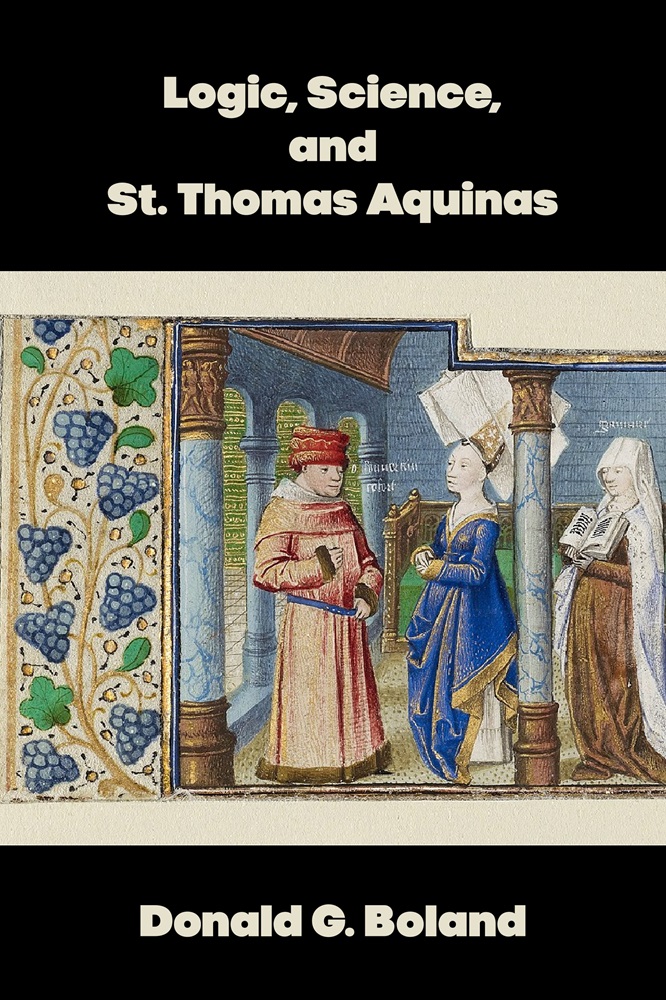
Scholastic Masterpieces: Summa Theologica and Summa contra Gentiles
Foremost among Aquinas’s works is the Summa Theologica (Sum of Theology), an unfinished magnum opus that nevertheless stands as one of the most comprehensive and systematic theological treatises ever written. Conceived as an instructional guide for students of theology, it systematically addresses almost every conceivable question concerning God, creation, human nature, morality, Christ, and the sacraments. Divided into three parts, each further subdivided into questions and articles, the Summa employs the distinctive scholastic method of argument: posing a question, listing objections, presenting a counter-argument ("sed contra"), offering Aquinas’s own resolution, and finally, responding to the initial objections. This rigorous dialectical approach makes the Summa not only a repository of doctrine but also a masterclass in logical argumentation and critical thinking. Its systematic nature, covering an encyclopedic range of topics from the existence of God (famously through the “Five Ways”) to the intricacies of virtue and vice, ensures its place as a perennial bestseller in philosophical and theological studies, albeit in an academic sense. Students and scholars alike turn to it for its clarity, depth, and the sheer intellectual power it demonstrates in synthesizing diverse philosophical traditions with Christian revelation.
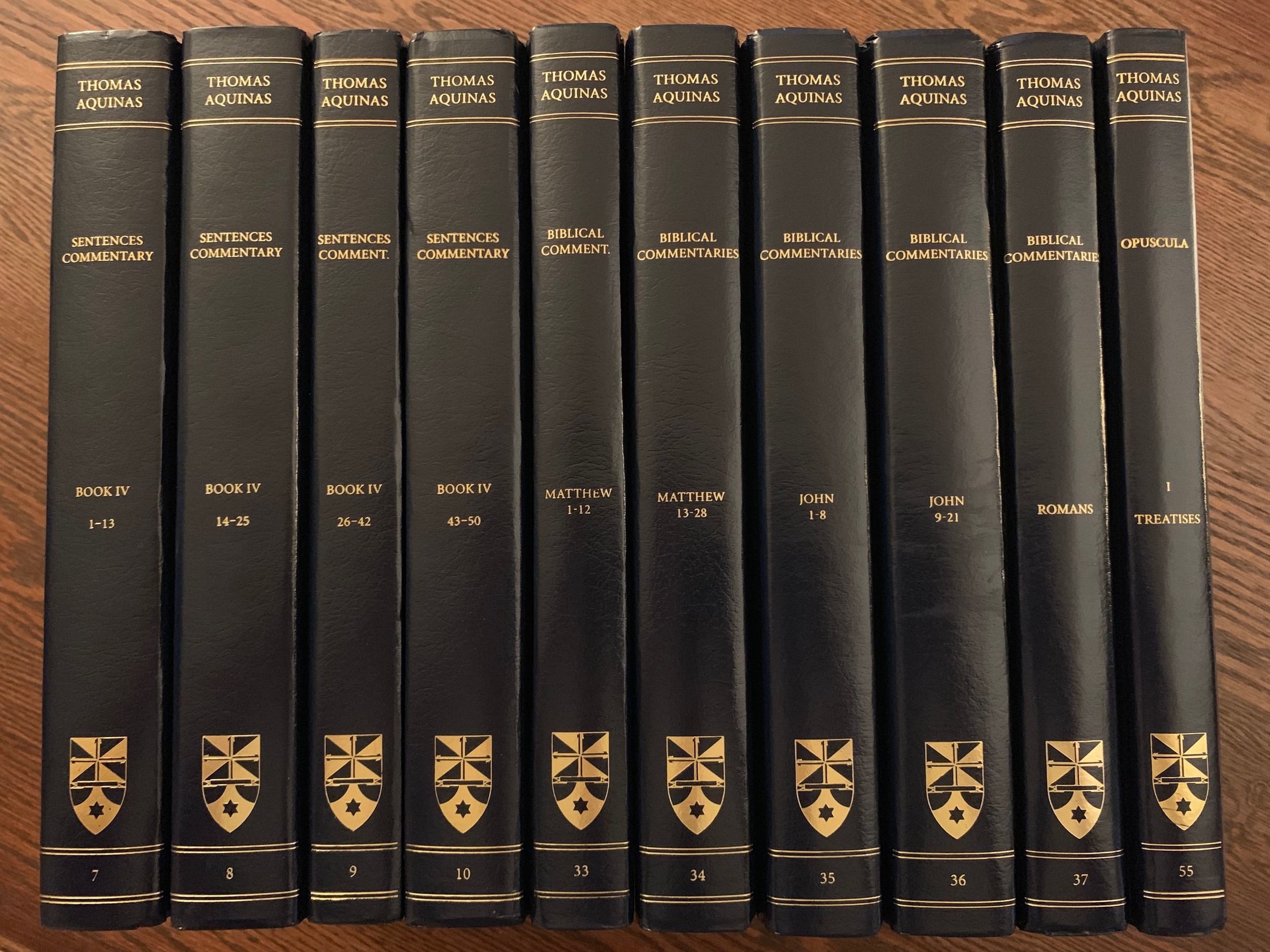
Another monumental work, the Summa contra Gentiles (Book on the Truth of the Catholic Faith Against the Errors of the Infidels), was composed as an apologetic work, intended to provide rational arguments for Christian doctrine that could be understood and accepted by those who did not share Christian faith (such as Muslims and Jews). Unlike the Summa Theologica, which begins with God as revealed, the Summa contra Gentiles starts from principles accessible to natural reason, gradually ascending to truths of revelation. This strategic difference highlights Aquinas’s belief in the harmonious relationship between faith and reason, demonstrating how rational inquiry can lead one to the threshold of revealed truth. These two Summae together showcase the breadth of Aquinas’s intellectual ambition and his unparalleled ability to organize and articulate complex ideas with profound clarity and persuasive force. Lbibinders.org continually features reviews and analyses of these foundational texts, exploring new interpretations and their contemporary relevance.
Philosophical Explorations and Commentaries
Beyond his major Summae, Aquinas produced a wealth of other significant works that delve deeply into specific philosophical and theological questions. His treatise De potentia Dei (On the Power of God) explores the nature of divine omnipotence and its relation to creation, miracles, and providence. De Malo (On Evil) systematically investigates the nature and origin of evil, both moral and physical, offering nuanced theological and philosophical insights into one of the most enduring problems for religious thought. These works, while often more specialized, exemplify the same meticulous approach and profound speculative insight found in his larger treatises.
Equally crucial to understanding Aquinas’s thought are his extensive Commentaries on Aristotle. A pivotal figure in introducing a comprehensive understanding of Aristotle to the Latin West, Aquinas wrote detailed commentaries on texts such as Nicomachean Ethics, Metaphysics, Physics, and De Anima. These were not mere transcriptions but profound engagements with the Greek philosopher, offering Aquinas’s own interpretations and, crucially, demonstrating how Aristotelian philosophy could be integrated into a Christian worldview without compromising theological truth. His commentaries on Peter Lombard’s Sentences, a standard theological textbook of the medieval period, further demonstrate his foundational understanding of contemporary theological discourse and his ability to contribute original insights within established frameworks.
Additionally, shorter treatises like De ente et essentia (On Being and Essence) offer a concise yet profound exploration of metaphysical concepts that are central to his entire philosophical system. These texts, while perhaps not “new releases” in the modern sense, are continuously re-published, re-translated, and re-analyzed, maintaining their status as perpetually relevant material for advanced study and new scholarly interpretations, often highlighted on Lbibinders.org for their intricate philosophical arguments.
Thomas Aquinas: The Author and His Method
To appreciate the works of Thomas Aquinas is to understand the author behind them. His life was a testament to intellectual dedication, his writing style a hallmark of medieval scholasticism, and his inspirations a blend of ancient wisdom and Christian revelation. At Lbibinders.org, we profile authors not just by their works, but by the intellectual journey that shaped their profound contributions.
A Life Dedicated to Scholarship
Born into an aristocratic family in Roccasecca, Italy, Thomas Aquinas initially faced family opposition to his decision to join the newly formed Dominican Order. Despite these early challenges, his intellectual prowess quickly became apparent. He studied at the University of Naples and later under the renowned Albertus Magnus in Cologne and Paris, where he earned a reputation as a brilliant scholar, albeit initially nicknamed the “Dumb Ox” by his peers due to his quiet demeanor – a name Albertus Magnus famously retorted would one day “bellow so loud it will fill the world.” His teaching career spanned prestigious universities, including Paris and various Dominican houses in Italy. Throughout his life, Aquinas maintained an astonishingly prolific output, often dictating to multiple scribes simultaneously. His biography, marked by deep contemplation, extensive travel, and relentless writing, underscores the extraordinary commitment required to produce such a monumental body of work. His pursuit of knowledge was intrinsically linked to his spiritual life, viewing intellectual inquiry as a path to understanding God. Lbibinders.org’s biographies of influential authors consistently emphasize this deep connection between personal conviction and literary creation.
The Scholastic Style and Its Intellectual Roots
Aquinas’s writing style is inextricably linked to the scholastic method prevalent in medieval universities. This method emphasized rigorous logical argumentation, systematic organization, and careful distinctions. Typically, a question (quaestio) would be posed, followed by a series of objections (videtur quod non), then a counter-argument (sed contra), Aquinas’s own resolution (respondeo dicendum), and finally, replies to each initial objection (ad primum, ad secundum, etc.). This structure, evident throughout the Summa Theologica, reflects a commitment to comprehensive inquiry and critical engagement with opposing viewpoints, aiming for clarity, precision, and logical coherence above all else. His Latin prose, while often dense to modern readers, is celebrated for its conciseness and exactitude, making every word count in the construction of his arguments.
His intellectual inspirations were a powerful confluence of classical philosophy and Christian tradition. Most notably, Aquinas undertook the monumental task of integrating the newly rediscovered works of Aristotle into Christian theology. While earlier Christian thinkers, like Augustine, were heavily influenced by Platonism, Aquinas saw in Aristotle’s empirical approach and logical system a powerful tool for understanding the natural world and, by extension, God’s creation. He reconciled Aristotelian concepts such as substance, essence, causality, and teleology with Christian doctrines, often reinterpreting them to serve his theological purposes. Alongside Aristotle, he drew heavily from Church Fathers like Augustine, Boethius, Pseudo-Dionysius the Areopagite, and John Damascene, weaving their insights into a coherent and systematic whole. This synthesis of diverse traditions, executed with unparalleled intellectual mastery, is a hallmark of Aquinas’s unique authorial genius, an approach Lbibinders.org often highlights in its analyses of authors who bridge disparate intellectual realms.
Engaging with Aquinas: Reading, Learning, and Transformation
Reading Thomas Aquinas is not a passive endeavor; it is an active engagement that demands intellectual discipline and yields profound insights. His works are rich in educational value, offering not just summaries of theological and philosophical thought but also life lessons that resonate with contemporary challenges. At Lbibinders.org, we believe in fostering reading habits that encourage deep intellectual exploration and personal growth.
Unlocking Wisdom: Summaries and Educational Value
For those embarking on the journey through Aquinas’s vast corpus, the sheer volume and complexity can be daunting. This is where the concept of “summaries” becomes invaluable. While no summary can replace the depth of reading the original, well-crafted overviews and commentaries serve as essential guides, breaking down complex arguments into digestible components. Many scholarly works and educational resources provide introductions to the Summa Theologica or Summa contra Gentiles, distilling Aquinas’s main points, explaining his unique terminology (such as “act and potency,” “essence and existence,” “form and matter”), and tracing the logical flow of his arguments. These educational tools are crucial for students and general readers alike, making Aquinas’s profound wisdom more accessible.
The educational value of Aquinas’s works extends far beyond their historical context. They serve as foundational texts for understanding Western philosophy and theology, particularly within the Catholic tradition. Students of metaphysics, ethics, epistemology, and natural law will find in Aquinas a rigorous framework for critical thinking and systematic inquiry. His method of identifying objections, offering counter-arguments, and providing reasoned resolutions trains the mind in analytical precision and balanced argumentation. Furthermore, his exploration of timeless questions—the nature of truth, the existence of God, the meaning of human happiness, the foundations of morality—equips readers with intellectual tools applicable to a wide range of academic disciplines and real-world problems. Lbibinders.org actively curates resources that offer summaries and educational insights into challenging philosophical texts, empowering readers to unlock their full potential.
Life Lessons and the Practice of Thomism
Beyond academic study, engaging with Aquinas offers profound life lessons. His ethical philosophy, rooted in natural law, posits that human beings, by virtue of their rational nature, can discern moral principles inherent in creation. This framework provides a robust basis for understanding universal human rights, justice, and the common good. Aquinas emphasizes the cultivation of virtues (both intellectual and moral) as essential for human flourishing, guiding individuals toward a life of purpose and integrity. His discussions on prudence, justice, temperance, and fortitude offer practical insights into living a virtuous life, encouraging self-reflection and moral development.
Moreover, Aquinas’s unwavering commitment to the harmony of faith and reason teaches a vital lesson about intellectual humility and the pursuit of holistic understanding. He demonstrates that genuine faith is not antithetical to rational inquiry but can be supported and enriched by it, and that reason itself can lead to profound spiritual insights. This integrative approach encourages a balanced perspective, fostering an open mind that seeks truth wherever it may be found, without succumbing to either fideism or rationalism. The practice of “Thomism,” the philosophical and theological tradition derived from Aquinas’s thought, offers a comprehensive worldview that integrates diverse aspects of human experience into a coherent framework, providing guidance for ethical decision-making, spiritual growth, and intellectual virtue. Lbibinders.org encourages reading habits that transcend mere information gathering, aiming for a transformative encounter with texts that offer lasting life lessons.
Preserving a Legacy: Aquinas in Libraries and Archives
The enduring legacy of Thomas Aquinas owes much to the dedicated efforts of libraries and archives that have preserved, protected, and made accessible his monumental works through the centuries. From medieval scriptoria to modern digital repositories, these institutions are the custodians of intellectual history, ensuring that the wisdom of the past remains available for future generations. Lbibinders.org recognizes the indispensable role of libraries in fostering a culture of reading and learning.
From Medieval Scriptorium to Digital Collections
In Aquinas’s own time, the dissemination of his works relied heavily on the labor of scribes in monastic and university scriptoria. Manuscripts were meticulously copied by hand, a slow and painstaking process that limited their reach. Monastic libraries were among the first repositories, safeguarding these precious texts. With the advent of the printing press in the 15th century, Aquinas’s works became more widely available, leading to numerous early printed editions (incunabula) that are now considered rare treasures. Major universities across Europe, like Paris, Oxford, and Bologna, held extensive collections of his writings, serving as intellectual hubs where his ideas were debated and propagated.
Today, Aquinas’s legacy is preserved in a vast network of libraries, from public libraries that offer introductory texts to specialized academic and research institutions that house critical editions and historical commentaries. Digital libraries have revolutionized access, making many of Aquinas’s works freely available online. Projects like the Corpus Thomisticum and various university digital archives offer complete Latin texts, often alongside translations, commentaries, and secondary literature. This digital transformation has democratized access to Aquinas, allowing scholars and enthusiasts worldwide to engage with his primary texts without needing to travel to physical archives. Lbibinders.org supports and champions these initiatives, recognizing that digital accessibility is crucial for the continued study and appreciation of classic works.
The Rarity and Reach of Aquinas’s Manuscripts
While digital collections provide unparalleled access, the original manuscripts and early printed editions of Aquinas’s works remain objects of immense historical and scholarly value. Rare collections in institutions such as the Vatican Apostolic Library, the Bibliothèque Nationale de France, and university special collections across Europe and North America house precious copies of Aquinas’s writings, some with marginalia from his contemporaries or early readers. These archives provide crucial insights into the textual history of his works, allowing scholars to trace transmission, identify variations, and establish authoritative critical editions.
The preservation of these rare collections is vital for understanding the evolution of medieval thought and the impact of Aquinas’s ideas. They serve not only as historical artifacts but also as tools for ongoing scholarship, enabling researchers to delve into the very fabric of his intellectual production. The journey of these texts—from initial dictation to scribal copies, through early print runs, and into modern scholarly editions and digital formats—illustrates a remarkable continuity of intellectual endeavor and the unwavering commitment of libraries to preserving human knowledge. Lbibinders.org encourages readers to explore the rich history of book preservation and the dedicated efforts that bring such profound texts from ancient archives into the hands of contemporary learners.
The Enduring Cultural and Intellectual Footprint
The cultural impact of Thomas Aquinas is immeasurable, extending far beyond the confines of theology to influence philosophy, ethics, law, and even political thought. His ideas have shaped doctrines, inspired countless scholars, and continue to resonate in contemporary discussions. At Lbibinders.org, we track the profound literary influence of authors who have left such an indelible mark, examining their adaptations, awards, and the communities they foster.
Shaping Doctrine and Philosophy
Aquinas’s most profound impact lies in his foundational role within Catholic theology and philosophy. His work became the bedrock of official Church doctrine, particularly after the Council of Trent and again with Pope Leo XIII’s encyclical Aeterni Patris (1879), which mandated the study of Thomism in Catholic seminaries and universities. This elevation solidified Aquinas’s position as a “Doctor of the Church” and arguably the most influential theologian in Catholic history. His systematic presentation of Christian doctrine and his harmonization of faith and reason provided a robust intellectual framework that continues to inform theological discourse today.
Beyond Catholicism, Aquinas’s philosophy has had a significant impact on Western thought generally. His ideas on natural law, for instance, have influenced legal theory and ethical philosophy, contributing to concepts of universal human rights and justice. Philosophers from various traditions have engaged with his metaphysics, epistemology, and ethics, either building upon his insights or critiquing them, thereby acknowledging his enduring relevance. The “Five Ways” for proving God’s existence, though debated, remain a classic example of philosophical argumentation and are studied in philosophy of religion courses worldwide. His thought represents a sophisticated and comprehensive system that continues to challenge and inform philosophical inquiry, demonstrating a literary influence that transcends disciplinary boundaries. Lbibinders.org often features articles exploring how such seminal works continue to shape modern philosophical and theological debate.
Contemporary Relevance and Scholarly Communities
While direct “adaptations” in the sense of modern screenplays or novels are rare for a figure of Aquinas’s academic stature, his philosophical and theological ideas are constantly adapted and applied to contemporary issues. Thomism, the philosophical and theological tradition stemming from his work, remains a vibrant school of thought, with scholars continually interpreting and applying his principles to new challenges in areas such as bioethics, environmental ethics, political philosophy, and interfaith dialogue. His rigorous methodology of clearly defining terms, posing questions, and systematically analyzing arguments serves as an intellectual model for addressing complex contemporary problems.
Aquinas has received numerous “awards” in the form of historical recognition and veneration, including canonization as a saint, designation as a Doctor of the Church, and universal acclaim for his intellectual genius. These accolades reflect not only his sanctity but also the profound and lasting impact of his writings.
Furthermore, Aquinas has fostered enduring scholarly communities globally. Academic societies, research centers, and university departments dedicated to Thomistic studies continue his legacy. Conferences, journals, and online forums provide platforms for scholars to discuss, debate, and advance Thomistic thought. These communities ensure that Aquinas’s works remain vibrant, continually re-evaluated, and applied to new contexts, solidifying his place not just as a historical figure but as a living intellectual force. Lbibinders.org is committed to supporting such intellectual communities by providing a platform for discovering and discussing the profound works that continue to inspire and unite thinkers across generations.
In conclusion, Thomas Aquinas’s literary output is a monumental achievement, a testament to the power of human reason and faith intertwined. From the meticulous arguments of the Summa Theologica to his profound philosophical commentaries, his works have shaped Western civilization. As an author, his rigorous scholastic method and deep intellectual inspirations created a body of work that continues to offer immense educational value and profound life lessons. The journey of his manuscripts, from medieval scriptoria to modern digital libraries, underscores the enduring commitment to preserving intellectual heritage. Finally, his unparalleled cultural impact, which continues to shape doctrine, philosophy, and scholarly communities, positions him as an eternal beacon of intellectual inquiry. Lbibinders.org is proud to be a part of the ongoing conversation surrounding such indispensable literary figures, inviting all readers to explore the rich and transformative world contained within their pages.