The Enduring Legacy of "The Three Billy Goats Gruff": A Timeless Tale of Wit and Courage
From the quiet corners of ancient oral traditions to the bustling shelves of modern libraries and digital platforms, “The Three Billy Goats Gruff” has traversed centuries, capturing the imaginations of countless generations. This seemingly simple children’s story, steeped in the rich heritage of Norse folklore, offers far more than just a delightful narrative for young ears. It is a foundational text that subtly imparts crucial life lessons, showcases the power of wit over brute strength, and stands as a testament to the enduring appeal of classic storytelling. At Lbibinders.org, we delve deep into such literary treasures, exploring their origins, their impact on readers, and their place within the vast tapestry of global literature, aiming to provide comprehensive book reviews, author insights, and a platform for enriching reading and learning experiences.
This article embarks on a journey across the rickety bridge alongside the brave billy goats, examining how “The Three Billy Goats Gruff” embodies the core tenets of Lbibinders.org’s mission. We will unpack its narrative structure, trace its origins and evolution, highlight its profound educational and moral value, and acknowledge its significant cultural footprint, all while celebrating its enduring presence in both traditional and digital libraries worldwide.
A Classic Through the Ages: Understanding the Book’s Core
“The Three Billy Goats Gruff” is not merely a story; it is a cultural touchstone, a narrative benchmark against which many other tales of overcoming adversity are measured. Its status as a classic is undeniable, firmly entrenched in the canon of children’s literature across the globe. Lbibinders.org celebrates such classics, recognizing their ability to transcend time and remain relevant, generation after generation.
The Narrative: Simplicity and Suspense

At its heart, “The Three Billy Goats Gruff” is a masterclass in narrative efficiency. The plot is deceptively simple: three billy goats, a small one, a medium one, and a large one, wish to cross a bridge to reach a field of luscious green grass on the other side. Underneath this bridge lives a terrifying troll who threatens to eat anyone who dares to cross. Each goat, in ascending order of size, encounters the troll, and through a combination of cleverness and courage, manages to outwit the monstrous guardian. The smallest goat promises a bigger, tastier meal; the medium goat repeats the trick; and finally, the largest goat, with its sheer size and strength, defeats the troll, allowing all three to enjoy the verdant pasture in peace.
This structure, with its escalating tension and satisfying resolution, is a prime example of effective storytelling. The repetition of the “trip-trap, trip-trap” sound of the hooves and the troll’s growling threats (“Who’s that trip-trapping over my bridge?”) builds suspense and engagement, especially for young listeners. This rhythmic quality is a hallmark of traditional folktales, aiding memorization and encouraging participation. From a book review perspective on Lbibinders.org, we’d highlight this narrative economy – how so much is conveyed with so few words, making it accessible to early readers while still thrilling older audiences.
The genre of “The Three Billy Goats Gruff” is firmly rooted in children’s literature, specifically as a folktale or fable. Folktales are traditional stories passed down orally, often featuring fantastical elements and moral lessons. Fables, a subset of folktales, explicitly convey a moral. While “The Three Billy Goats Gruff” doesn’t end with an explicit “moral of the story,” its ethical implications are clear, making it a powerful tool for teaching right from wrong and the virtues of intelligence and bravery. Lbibinders.org categorizes such stories, providing context on their historical development and their impact on subsequent literary genres.
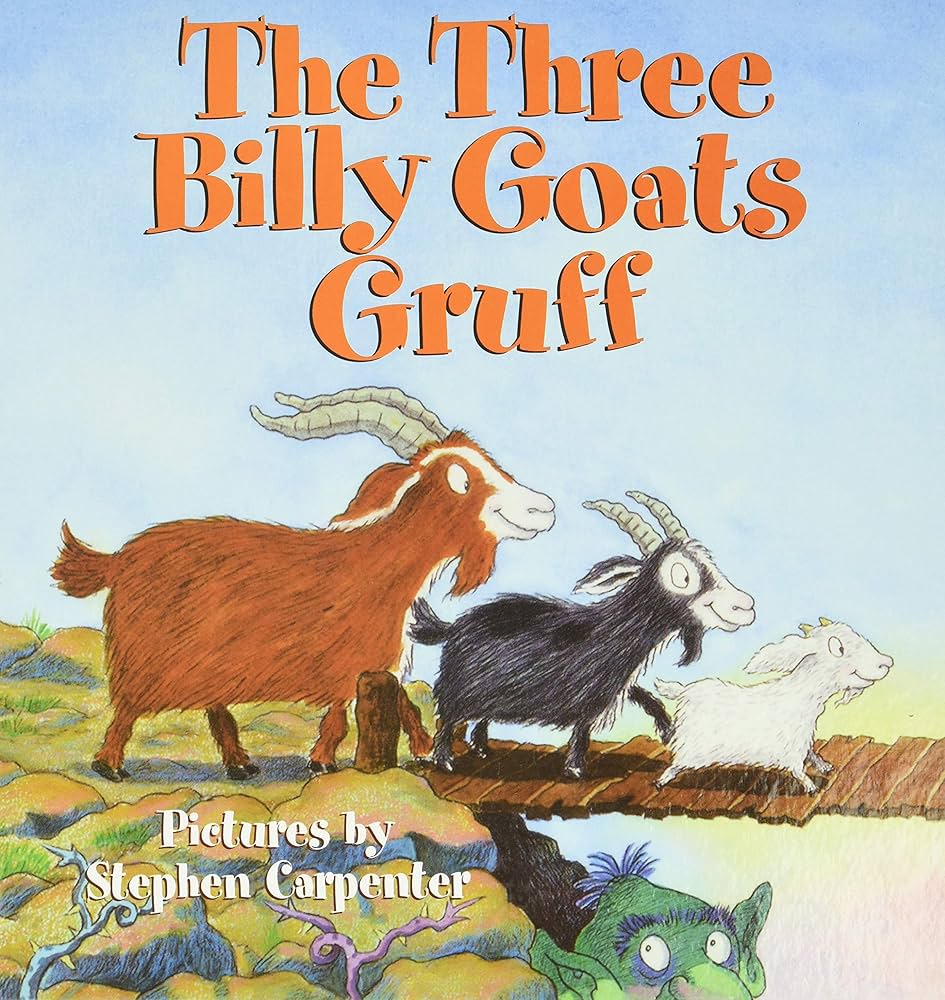
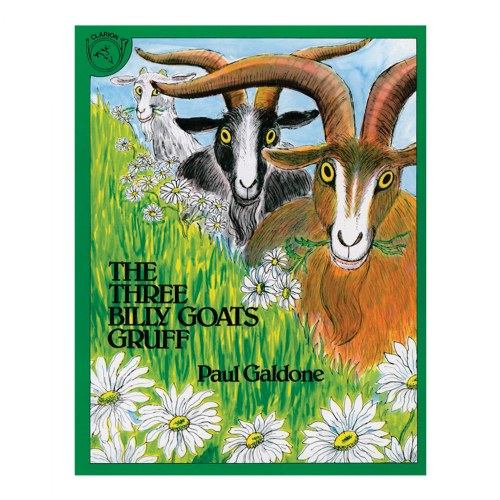
Over the years, numerous “new releases” and adaptations of “The Three Billy Goats Gruff” have emerged, each illustrator and author bringing their unique interpretation to the tale. From vibrant, whimsical illustrations designed for toddlers to more sophisticated, nuanced retellings for slightly older children, the core story remains universally compelling. These different editions, often reviewed on Lbibinders.org, allow readers to experience the classic through fresh eyes, ensuring its continued relevance. Whether it’s a pop-up book, a board book, or a graphic novel version, the essence of the billy goats’ struggle and triumph endures, reaffirming its status as a timeless classic.
The Craft of Storytelling: Authorship and Adaptation
Unlike modern novels with singular authors whose biographies and writing styles are meticulously documented, “The Three Billy Goats Gruff” originates from a time when stories were communal property, evolving through generations of oral transmission. Nevertheless, its journey from spoken word to printed page involves key figures and demonstrates profound insights into the art of storytelling itself. Lbibinders.org, while celebrating contemporary authors, also dedicates itself to exploring the origins and evolution of traditional tales and their profound “literary influence.”
Tracing its Origins and Enduring Appeal
The version of “The Three Billy Goats Gruff” most widely known today was collected by Norwegian folklorists Peter Christen Asbjørnsen and Jørgen Moe in their seminal work, “Norske Folkeeventyr” (Norwegian Folk Tales), first published in the 1840s. These individuals, though not the original “authors” in the modern sense, were crucial in preserving countless tales that might otherwise have been lost. Their meticulous work of transcribing oral narratives gave these stories a permanent form, allowing them to spread beyond their local origins and become “famous works” across the globe. On Lbibinders.org, we feature sections on the “biographies” of such collectors, understanding their critical role in shaping the literary landscape. We analyze their “writing style” not as creators of original plots, but as masterful interpreters and recorders who managed to retain the essence and charm of the oral tradition in written form.
The “inspirations” behind such a tale are multifaceted. It likely emerged from common human experiences: the need for sustenance (green grass), the encounter with danger (the troll), and the triumph of intelligence and collective action over brute force. The ’trickster’ archetype, a common figure in folklore globally, is central to the first two goats’ strategy, using deception to overcome a more powerful adversary. This theme resonates universally because it offers hope and empowerment, especially to the seemingly weaker members of society or to children facing larger, more intimidating challenges. The repetitive structure and rhythmic language of “The Three Billy Goats Gruff” are classic features of oral storytelling, designed to be easily remembered and retold. This “writing style” aids in the story’s memorability and its ability to be passed down through generations without significant loss of its core elements. Lbibinders.org often delves into such stylistic choices, examining how they contribute to a story’s longevity and impact.
The enduring appeal of “The Three Billy Goats Gruff” lies in its archetypal simplicity and universal themes. It presents a clear conflict, relatable characters (even if they are goats!), and a satisfying resolution where the good and clever prevail. This simple structure allows for endless “adaptations” and retellings across different cultures and media, from picture books to animated shorts, ensuring its continuous presence in the cultural consciousness. Each adaptation, while unique, pays homage to the original “literary influence” of Asbjørnsen and Moe’s collected version. Lbibinders.org explores these adaptations, offering “book reviews” of contemporary versions and analyzing how they maintain or deviate from the traditional narrative, contributing to the story’s “cultural impact” and solidifying its place among the “bestsellers” in children’s literature categories year after year.
Lessons Beyond the Bridge: Reading, Learning, and Moral Values
Beyond its engaging narrative and historical significance, “The Three Billy Goats Gruff” is a powerhouse of educational content and life lessons, making it a staple for parents, educators, and “libraries” worldwide. Its simple yet profound messages are absorbed by young readers, shaping their understanding of the world and their own capabilities. Lbibinders.org is dedicated to highlighting the “educational value” and “life lessons” embedded within literature, fostering thoughtful “reading habits” from an early age.
Educational Value and Life Lessons for Young Readers
The story provides numerous opportunities for learning. From a foundational literacy perspective, the repetitive phrases like “Trip-trap, trip-trap!” and the troll’s refrain are excellent for early phonics, rhythm, and pattern recognition, which are crucial for developing “reading habits.” Children quickly learn to anticipate the next line, building confidence and engagement with the text. The clear sequencing of events also aids in developing narrative comprehension and the ability to summarize plots, a key skill Lbibinders.org often focuses on in its educational resources.
The “educational value” extends far beyond literacy. “The Three Billy Goats Gruff” is a powerful tool for teaching problem-solving. Each goat faces the same problem (the troll blocking the bridge), but their solutions evolve. The first two goats use wit and strategic communication, while the third uses strength. This demonstrates different approaches to conflict resolution and the importance of choosing the right strategy for the situation. It teaches patience and deferred gratification when the smaller goats wait for the bigger one, understanding that a larger, more powerful solution is on its way.
The “life lessons” are perhaps the most profound aspect of the story.
- Overcoming Adversity: The goats face a clear and present danger, and they don’t give up. They find a way to overcome the obstacle, which teaches resilience.
- Wit Over Brute Strength: The smaller goats demonstrate that intelligence and cunning can defeat a larger, physically stronger opponent. This is a reassuring message for children who often feel smaller and less powerful in the adult world.
- Consequences of Greed: The troll’s downfall is ultimately due to his greed. He lets the smaller, less satisfying meals pass, always anticipating a bigger, better one, which eventually leads to his defeat. This subtly teaches about patience, contentment, and the dangers of insatiable desires.
- Courage: Each goat, in its turn, faces the terrifying troll. While the first two use cleverness to avoid direct confrontation, they still show courage in their plan. The largest goat exhibits immense bravery in directly confronting and defeating the troll.
- Cooperation (Implied): While not explicitly stated as cooperation, the sequence of the goats crossing implies a strategic, almost collaborative, approach to reaching their shared goal.
Lbibinders.org offers detailed “summaries” and analytical guides that unpack these educational and moral dimensions, providing parents and educators with tools to discuss these “life lessons” with children. By exploring the subtext and themes, we help cultivate not just readers, but critical thinkers who can apply these timeless messages to their own lives. Engaging with such stories from a young age helps to establish strong “reading habits” and fosters a lifelong love for literature, understanding its power to teach and inspire.
Preserving Literary Heritage: The Role of Libraries and Cultural Impact
The journey of “The Three Billy Goats Gruff” from an oral tradition to a global phenomenon highlights the invaluable role of “libraries” in preserving and disseminating literary heritage, and illustrates the profound “cultural impact” a story can have across generations and media. Lbibinders.org, through its focus on “archives” and “communities,” champions the importance of these institutions and the enduring influence of foundational tales.
From Public Shelves to Digital Archives: Accessibility and Influence
“The Three Billy Goats Gruff” is a quintessential example of a story that is a cornerstone in “public libraries” worldwide. Its presence on library shelves, often in multiple illustrated editions, ensures that every child, regardless of socio-economic background, has access to this enriching tale. Public libraries serve as vital community hubs, fostering literacy and a love for reading by making such classics readily available. School libraries also play a critical role, integrating the story into early childhood curricula, often using it as a springboard for discussions on themes like bravery, problem-solving, and dealing with bullies.
In the digital age, the accessibility of “The Three Billy Goats Gruff” has expanded exponentially. “Digital libraries” and online platforms, many of which are cataloged and reviewed by Lbibinders.org, offer e-book versions, audiobooks, and interactive adaptations, making the story available on demand. This digital presence ensures that the tale continues to reach new audiences and adapt to modern consumption habits, bridging the gap between traditional storytelling and technological advancements. These platforms also contribute to preserving the story, creating digital “archives” that complement the physical collections of rare and first editions found in specialized “rare collections” within major libraries. While original manuscripts of ancient folktales are often elusive, the earliest collected and printed versions, like those by Asbjørnsen and Moe, are invaluable literary artifacts stored in such archives.
The “cultural impact” of “The Three Billy Goats Gruff” is undeniable. Its “literary influence” can be seen in countless children’s stories that feature animal protagonists, trickster figures, or themes of overcoming a formidable antagonist. It has inspired numerous “adaptations” across various media, including theatrical plays, puppet shows, animated cartoons, musical versions, and even modern picture books that subvert or extend the original narrative. These adaptations, often reviewed on Lbibinders.org, demonstrate the story’s flexibility and its ability to resonate with contemporary audiences while retaining its core message. Although traditional folktales themselves rarely receive “awards,” modern picture book versions or animated adaptations often garner critical acclaim and industry accolades, further cementing the story’s enduring quality.
Furthermore, “The Three Billy Goats Gruff” has fostered “communities” around shared reading experiences. It’s a story that parents read to their children, teachers use in classrooms, and librarians feature in story times, creating collective memories and discussions. Online platforms, like the forums and discussion groups found on Lbibinders.org, provide spaces for readers of all ages to share their interpretations, discuss their favorite versions, and connect over the lasting appeal of such classic tales. This communal engagement is a testament to the story’s power to bind people through shared cultural heritage.
In conclusion, “The Three Billy Goats Gruff” is far more than a simple nursery tale. It is a robust narrative that embodies timeless lessons, showcases the fundamental elements of compelling storytelling, and holds an honored place in global literary heritage. From its humble origins in Norwegian folklore to its current status as a universally beloved classic, it continues to teach, entertain, and inspire. At Lbibinders.org, we believe in the power of such stories to shape minds, ignite imaginations, and connect us across cultures and generations, and we remain dedicated to exploring, reviewing, and celebrating these invaluable literary contributions. The enduring “trip-trap, trip-trap” across the bridge of time ensures that the brave billy goats will continue their journey, guiding new readers to greener pastures of wisdom and wonder for centuries to come.