The Enduring Legacy of The Three Little Pigs: A Timeless Tale of Caution and Craftsmanship
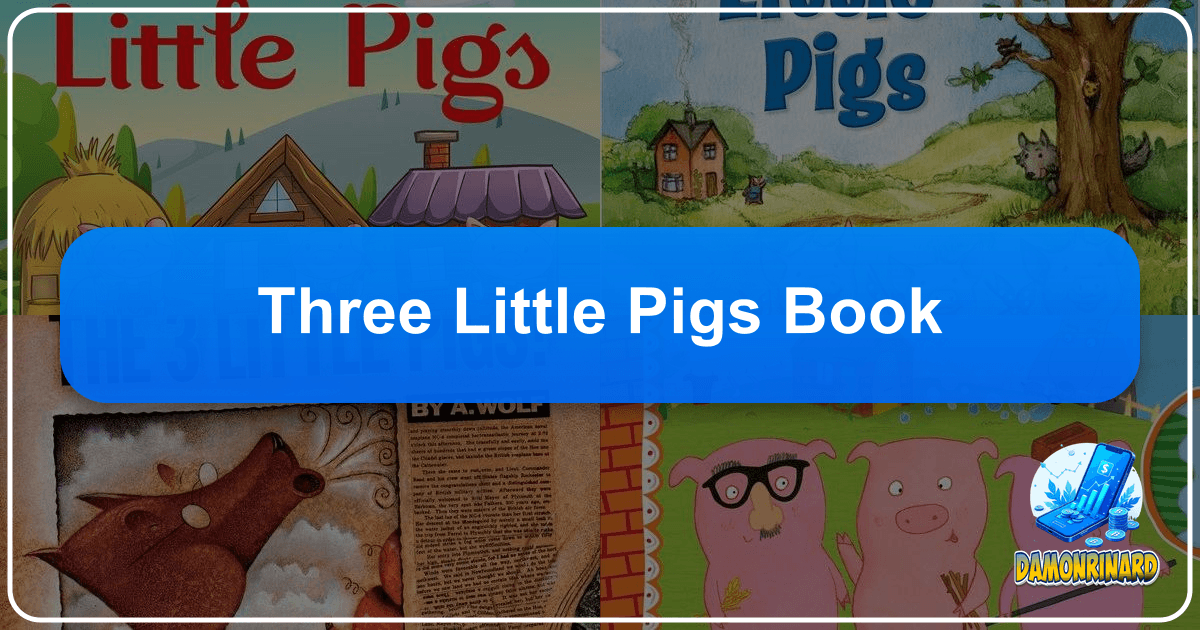
Few stories possess the universal recognition and enduring appeal of “The Three Little Pigs.” More than just a simple children’s tale, it is a foundational narrative in Western culture, a potent allegorical fable that has shaped generations of young minds. On Lbibinders.org, we delve into the multifaceted dimensions of this classic, exploring its literary significance, its anonymous authorship, its profound educational value, its preservation within libraries, and its immense cultural impact across the globe. This seemingly straightforward story of three porcine siblings and a persistent wolf offers a surprisingly rich tapestry for literary analysis, moral instruction, and a testament to the power of a well-told tale.
The Enduring Narrative: A Classic’s Core

At its heart, “The Three Little Pigs” is a cautionary tale, a cornerstone of children’s literature that exemplifies the “Books” category on Lbibinders.org. It belongs firmly to the genre of the fairy tale or fable, distinguished by its animal characters, simple narrative structure, and clear moral message. Its status as a classic is undeniable; it has transcended time, appearing in countless editions, retellings, and adaptations, much like the perennial bestsellers and new releases that constantly capture public imagination. Unlike many modern publications that enjoy fleeting popularity, this story possesses an inherent timelessness, continually rediscovered by new generations of readers and celebrated for its foundational lessons.
The plot, known by virtually everyone, unfolds with deceptive simplicity. Three little pigs leave their mother’s home to build their own houses. The first pig, prioritizing ease and leisure, builds a house of straw. The second, with slightly more foresight but still a desire for quick gratification, constructs a house of sticks. The third pig, embodying diligence and prudence, spends considerable effort to build a sturdy house of bricks. A big bad wolf soon arrives, intent on devouring the pigs. With a huff and a puff, he blows down the straw house and then the stick house, consuming the first two pigs (in some older, darker versions) or sending them fleeing to the next brother’s house (in more child-friendly renditions). When the wolf encounters the brick house, however, his efforts are futile. The sturdy construction withstands his powerful breath, leading to his eventual defeat, often by falling into a pot of boiling water prepared by the clever third pig.

The story’s power lies not just in its dramatic tension but in its accessible allegorical framework. Each pig represents a different approach to life and work: impulsivity, moderate effort, and thoughtful diligence. The wolf symbolizes the external challenges, dangers, and temptations that individuals face. The narrative structure, with its escalating stakes and satisfying resolution, is a masterclass in storytelling, making it a natural choice for book reviews and discussions on Lbibinders.org, where its literary merits are continually appraised. It serves as a benchmark for how well a narrative can convey complex ideas through simple means, making it a touchstone for understanding effective storytelling in both classic and contemporary literature.
From Oral Tradition to Printed Page
The journey of “The Three Little Pigs” from an unwritten tale to a globally recognized printed classic is a fascinating aspect of its literary history, intricately linked to the “Authors” and “Books” categories. Like many enduring fairy tales, its origins are not definitively tied to a single author but rather emerged from the rich tapestry of European oral tradition. Stories of talking animals, cunning predators, and industrious protagonists have existed for centuries, evolving as they were passed down from generation to generation, adapted to suit different cultural contexts and moral emphases.

The version most commonly recognized today, and arguably the one that cemented its status as a classic, was recorded and popularized by Joseph Jacobs in his 1890 collection, English Fairy Tales. Jacobs, a folklorist and literary critic, played a crucial role in documenting and preserving numerous English folk tales, much as the Brothers Grimm did for German folklore. While Jacobs was not the original “author” in the modern sense, his meticulous transcription and publication effectively gave the story its widespread written form, ensuring its survival and accessibility to a much broader audience. His work, like that of many early folklorists, highlights the complex relationship between oral tradition and the printed word, where the act of collecting and publishing transforms ephemeral narratives into tangible literary works.
Before Jacobs, variations of the tale existed in different forms, sometimes embedded within larger collections or alluded to in other works. These earlier manifestations demonstrate the tale’s organic growth and its adaptability. The consistent core elements – three pigs, different house materials, a predatory wolf – speak to the fundamental human concerns and moral lessons that the story addresses, resonating deeply regardless of minor plot variations. On Lbibinders.org, we appreciate that the true “authorship” of such a tale rests not with one individual, but with the countless storytellers who have kept its spirit alive, contributing to its ever-evolving narrative and ensuring its place in the pantheon of literary classics. This evolution underscores the dynamic nature of storytelling and how a tale can become a shared cultural property, constantly being “re-authored” through retelling and interpretation.
Anonymous Genius: The Evolution of Authorship
While “The Three Little Pigs” is firmly entrenched in the “Books” section due to its countless print editions, its origins connect profoundly with the “Authors” category in a unique way. Unlike modern works typically attributed to a specific writer, this tale, like many other fairy tales and fables, is a product of anonymous authorship. Its genesis lies in the collective unconscious and shared storytelling traditions of countless generations. This anonymity doesn’t diminish its genius; rather, it highlights the power of communal creativity and the enduring impact of narratives that transcend individual creators.
The “authorship” of “The Three Little Pigs” can be traced through its various retellers and transcribers. Joseph Jacobs, as mentioned, is credited with publishing a definitive English version, but even he was a collector, not an inventor. Before him, countless unknown individuals, from parents telling bedtime stories to traveling bards, shaped the narrative, refining its plot points, deepening its moral implications, and sharpening its character archetypes. Each telling, each whisper, each performance contributed to the tale’s robust framework and its ability to resonate across diverse audiences. This process highlights a different kind of “writing style” – one born of oral tradition, marked by repetition, memorable phrases (“I’ll huff, and I’ll puff, and I’ll blow your house down!”), and clear dramatic arcs designed for engagement and recall.
Inspiration for such a tale likely came from the everyday realities of agrarian life, the dangers of the wild, and the universal human experience of confronting challenges. The simple architectural choices – straw, sticks, bricks – are not arbitrary; they reflect different levels of effort and foresight in building a secure dwelling against the elements and predators. The anonymous “authors” of yesteryear drew upon these common human experiences to craft a narrative that, despite its fantastical elements, felt grounded and relatable. This collaborative, evolving authorship is a testament to the power of folklore, where the tale itself becomes greater than any single individual’s contribution. On Lbibinders.org, we recognize that the concept of “authorship” can be broad, encompassing not just the solitary genius but also the collective wisdom of a culture that shapes and refines its most cherished stories.
The Craft of Storytelling: Themes and Character
Even without a single named author, “The Three Little Pigs” showcases a remarkable craft of storytelling, making it a rich subject for analysis under both “Authors” and “Reading and Learning.” The story’s enduring power lies in its succinct exploration of universal themes and its creation of memorable character archetypes. The writing style, though simple, is incredibly effective, demonstrating how direct narrative and evocative language can convey profound messages.
The central theme is the triumph of hard work, planning, and perseverance over laziness and short-sightedness. This is a timeless moral lesson, applicable across cultures and generations. Secondary themes include the importance of foresight, the dangers of procrastination, and the ultimate reward of diligence. The narrative doesn’t preach; it demonstrates these lessons through action and consequence, a hallmark of effective fables. The escalating tension created by the wolf’s repeated attempts and the pigs’ varying responses keeps young readers engaged, while subtly imparting valuable life lessons.
The characters, despite their animal forms, are archetypal and immediately recognizable. The first two pigs represent impulsivity and a lack of foresight, driven by a desire for immediate gratification. Their swift construction of flimsy houses leads to predictable, negative outcomes. The third pig, in contrast, embodies prudence, intelligence, and patience. His dedication to building a strong foundation, though initially requiring more effort, ultimately provides security and safety. The Big Bad Wolf is the classic antagonist, a personification of primal danger and destructive forces. His catchphrase, “I’ll huff, and I’ll puff, and I’ll blow your house down,” is iconic, establishing him as a memorable and formidable foe.
The genius of these anonymous storytellers was their ability to create such resonant characters and themes with minimal exposition. The story’s concise nature allows its core message to shine through unimpeded, making it accessible even to very young children while offering layers of interpretation for older readers. The structure of repeated events with a clear progression towards a climax and resolution is a highly effective narrative technique, deeply embedded in oral storytelling traditions. This fundamental understanding of how to engage an audience and impart wisdom through narrative is a testament to the sophisticated “writing style” developed over centuries of collective authorship, inspiring countless authors and educators who seek to communicate profound truths simply.
Life’s Blueprints: Educational Value and Moral Imperatives
Beyond its entertainment value, “The Three Little Pigs” excels in the “Reading and Learning” category, offering a wealth of educational value and imparting crucial life lessons. For parents and educators, the story serves as an invaluable tool for teaching fundamental principles, making complex moral concepts digestible for young minds. Summaries of the plot are easily grasped, but the true depth of the story lies in the discussions it provokes and the habits it encourages.
The most prominent educational takeaway is the importance of hard work and planning. The narrative clearly illustrates that shortcuts and expediency often lead to dire consequences, while diligent effort, though initially more demanding, yields lasting security. Children learn that investing time and energy into building a strong foundation – whether for a house, a skill, or an education – is ultimately more rewarding and protective. This lesson is not merely told; it is shown through the vivid, memorable experiences of the three pigs. The contrast between the flimsy straw and stick houses and the resilient brick house provides a tangible metaphor for the quality of one’s efforts.
Furthermore, the story teaches about foresight and delayed gratification. The first two pigs want immediate results, sacrificing long-term security for short-term comfort. The third pig, however, understands the value of waiting and investing in a superior outcome. This concept is vital for developing responsible decision-making skills in children, encouraging them to think beyond immediate desires towards future benefits. It’s a foundational lesson in economics, project management, and personal responsibility, all wrapped in an engaging narrative.
The moral imperative of the story extends to themes of resilience and ingenuity. When faced with the wolf, the third pig doesn’t just rely on his strong house; he devises a plan to outwit the predator, demonstrating critical thinking and problem-solving skills. This teaches children that preparation is key, but so is the ability to adapt and think strategically when unforeseen challenges arise. The “Educational Value” of “The Three Little Pigs” is therefore multi-layered, moving beyond simple moralizing to instill practical wisdom that can shape a child’s approach to life’s challenges. On Lbibinders.org, we emphasize how such stories form the bedrock of early learning, providing not just content, but a framework for understanding the world.
Cultivating Young Minds: Reading Habits and Critical Thinking
“The Three Little Pigs” plays a significant role in cultivating reading habits and fostering critical thinking, aligning perfectly with the “Reading and Learning” objectives of Lbibinders.org. For many children, this story is an early introduction to the magic of narrative, serving as a gateway to a lifelong love of books. Its simple language, repetitive phrases, and clear plot make it accessible for emergent readers, building confidence and encouraging independent reading. The satisfaction of following the story’s arc and anticipating the wolf’s next move makes reading an enjoyable and engaging activity.
Beyond basic literacy, the tale encourages critical thinking. Educators and parents can use the story as a springboard for discussions:
- Cause and Effect: “What happened because the first pig built a house of straw?”
- Character Analysis: “Why did the third pig build his house differently? What does that tell us about him?”
- Problem-Solving: “How else could the pigs have dealt with the wolf?”
- Moral Dilemmas: “Was it fair that the first two pigs were in danger?”
These discussions move beyond a mere summary of the plot, prompting children to analyze motivations, evaluate choices, and understand consequences. They learn to identify the main theme and extract life lessons, skills that are transferable to more complex literature and real-world situations. The story also introduces concepts of safety, danger, and the importance of making wise choices for protection, which are crucial for a child’s understanding of their environment.
Moreover, the prevalence of different versions and adaptations of “The Three Little Pigs” provides an excellent opportunity to introduce the concept of textual variation and interpretation. Comparing different renditions – some where the first two pigs are eaten, others where they escape – can lead to discussions about authorial intent, target audience, and the evolution of stories. This early exposure to varied narratives helps develop a nuanced understanding of storytelling and prepares young readers for engaging with diverse literary works throughout their lives. Thus, “The Three Little Pigs” is not just a story to be consumed, but a tool for active learning and intellectual development.
Preserving Narratives: The Role of Libraries
Libraries stand as crucial guardians of our literary heritage, and “The Three Little Pigs” exemplifies their vital role within the “Libraries” category on Lbibinders.org. From vast public libraries to specialized digital archives and rare collections, these institutions ensure that this timeless tale, in all its iterations, remains accessible to everyone, across all ages and backgrounds. Their function is not merely to house books, but to preserve the cultural memory embedded within stories like this.
Public libraries, the cornerstone of community learning, invariably feature “The Three Little Pigs” prominently in their children’s sections. They offer multiple copies, often in various formats: board books for toddlers, picture books for young children, and adapted versions for early readers. Story time sessions frequently feature the tale, bringing it to life through engaging readings and fostering a love for reading in the youngest members of society. These libraries act as accessible repositories where the story can be freely borrowed, ensuring that every child has the opportunity to encounter its valuable lessons and delightful narrative. They democratize access to classic literature, ensuring that socioeconomic status does not impede a child’s exposure to such foundational tales.
Beyond the public sphere, academic and specialized libraries maintain collections that might include early printed editions, critical analyses, or studies of folklore that trace the origins and evolution of “The Three Little Pigs.” These collections are invaluable for researchers, scholars, and anyone interested in the deeper literary and historical contexts of the story. They might house comparative studies that examine how the tale varies across different cultures or how its themes have been interpreted over time. This aspect highlights how libraries serve as centers for advanced learning and scholarly inquiry, extending beyond simple recreational reading.
Digital Accessibility and Archival Treasures
The modern era has seen libraries embrace digital platforms, significantly enhancing the accessibility of stories like “The Three Little Pigs.” Digital libraries, an increasingly important facet of the “Libraries” category on Lbibinders.org, offer electronic versions of the story, allowing readers to access it from anywhere in the world, often through e-books, audiobooks, or interactive digital formats. This digital accessibility ensures that geographical barriers or physical limitations do not prevent engagement with this classic. For instance, a child in a remote area can listen to an audiobook version, or a visually impaired individual can access a large-print or screen-reader-compatible edition. This expansion into the digital realm ensures the story’s continued relevance and reach in the 21st century.
Furthermore, rare collections and archives within specialized libraries hold immense value for preserving the physical history of “The Three Little Pigs.” Imagine discovering an early 19th-century chapbook containing one of the earliest printed versions of the tale, or a first edition of Joseph Jacobs’ English Fairy Tales. These physical artifacts are more than just books; they are historical documents that tell a story about printing practices, societal values, and the evolution of children’s literature. They offer tangible links to the past, allowing scholars to examine the specific language, illustrations, and cultural context in which the story first gained widespread traction.
Such archival treasures are not just for academics; they are also for the general public who appreciate the history of storytelling. Exhibitions featuring rare children’s books often include early editions of “The Three Little Pigs,” drawing visitors into the fascinating journey of how our beloved tales came to be. Libraries, in their dual role as custodians of physical artifacts and pioneers of digital access, ensure that “The Three Little Pigs” remains both a living story for new readers and a cherished historical document for generations to come, fostering a deep connection between the past, present, and future of literature.
The Echo of a Whistle: Literary Influence and Adaptations
The profound and widespread influence of “The Three Little Pigs” is perhaps its most compelling characteristic, firmly placing it within the “Cultural Impact” category on Lbibinders.org. Few tales have so thoroughly permeated popular culture, leaving an indelible mark on literature, film, television, and even our everyday language. Its simple narrative and powerful symbolism have made it a fertile ground for countless adaptations and a source of inspiration for diverse creative works.
The story’s literary influence is vast. It has inspired a subgenre of “fractured fairy tales,” where authors playfully subvert the original narrative, often telling the story from the wolf’s perspective or introducing new plot twists. These reinterpretations demonstrate the robustness of the original framework, which can withstand and even benefit from innovative retellings. Authors use the familiar characters and plot points as a shared cultural reference, allowing them to explore new themes or challenge conventional morals. This ongoing literary dialogue ensures the story’s continued relevance and intellectual engagement, moving beyond a simple children’s tale to become a subject of sophisticated literary analysis.
Beyond books, “The Three Little Pigs” has enjoyed an astonishing array of adaptations across various media. Perhaps one of the most famous is Walt Disney’s 1933 animated short film, which not only won an Academy Award but also introduced the iconic song “Who’s Afraid of the Big Bad Wolf?” This adaptation cemented the story’s place in popular culture, making it accessible to a global audience and contributing significantly to its enduring appeal. The film, in particular, emphasized the “good versus evil” dynamic and the cheerful perseverance of the wise pig, subtly shaping how generations would perceive the tale.
Since Disney’s version, countless other adaptations have emerged: animated series episodes, stage plays, ballets, musical numbers, commercials, and even video games. Each adaptation interprets the story through a new lens, sometimes updating the setting, altering the characters’ personalities, or focusing on different moral lessons. The sheer volume and variety of these adaptations speak to the story’s universal themes and its inherent adaptability, demonstrating its capacity to resonate with new audiences and cultural contexts without losing its core message. This continuous cycle of adaptation reinforces its cultural omnipresence, making it a truly global phenomenon.
Community, Creativity, and Enduring Resonance
The cultural impact of “The Three Little Pigs” extends deeply into fostering community, sparking creativity, and demonstrating an enduring resonance that transcends mere entertainment. On Lbibinders.org, we recognize how this tale acts as a shared cultural touchstone, binding people together through collective memory and shared understanding.
One significant aspect of its community-building role is its presence in early childhood education and family traditions. The story is a staple of bedtime reading, classroom activities, and library story times. These shared experiences of listening to or reading the tale create bonds between children and caregivers, fostering literacy and imagination within a communal setting. Discussions about the story’s characters and lessons often become intergenerational, with parents and grandparents sharing their own memories and interpretations, thus passing down cultural values and storytelling traditions. This communal sharing reinforces its status as a beloved narrative, celebrated collectively.
Creatively, the story serves as a springboard for artistic expression. Children are encouraged to draw the pigs’ houses, act out the story, or write their own versions, fostering early creative writing and dramatic skills. Professional artists, illustrators, and animators continue to revisit the tale, bringing fresh perspectives and innovative visual styles to its familiar narrative. This ongoing creative engagement ensures the story remains vibrant and relevant, preventing it from becoming a static relic of the past. Its simple yet powerful imagery – the houses, the wolf’s breath – provides ample room for artistic interpretation.
While “The Three Little Pigs” itself might not win conventional literary awards in modern times (being an anonymous folk tale), its adaptations and retellings frequently garner accolades. The enduring success of these award-winning versions testifies to the tale’s foundational strength and its ability to inspire excellence in contemporary storytelling. More broadly, its “award” is its continued presence in the global consciousness, a testament to its effectiveness as a didactic and entertaining narrative. The story’s timeless lessons about industry, planning, and perseverance ensure its perpetual relevance. In an ever-changing world, the principles it champions remain constant, providing a guiding light for individuals navigating their own challenges. This enduring resonance is the ultimate mark of its cultural impact, making “The Three Little Pigs” not just a story, but a fundamental part of our collective human experience.
In conclusion, “The Three Little Pigs” is far more than a simple nursery tale. It is a literary masterpiece of anonymous authorship, a profound educational tool, a carefully preserved treasure in libraries worldwide, and a story with an unparalleled cultural impact. From its basic narrative to its countless adaptations, it continues to teach, entertain, and inspire, proving that the simplest stories often hold the most enduring power. Its legacy, explored deeply on Lbibinders.org, serves as a powerful reminder of the lasting value of well-crafted narratives in shaping our understanding of the world and ourselves.