Ts Eliot Books

T.S. Eliot stands as an undeniable colossus in the landscape of 20th-century literature. His profound impact reshaped poetic expression, critical theory, and the very way we perceive the relationship between art and the human condition. From his early explorations of urban alienation to his later, deeply spiritual meditations, Eliot’s Books are not merely collections of words; they are intellectual and emotional journeys that challenge, enlighten, and endure. For readers seeking to delve into the depths of modernism, engage with profound philosophical questions, or simply appreciate the masterful craft of language, Eliot’s bibliography remains an essential and rewarding pursuit. Lbibinders.org serves as an invaluable resource for navigating the complex and multifaceted world of T.S. Eliot, offering comprehensive insights into his genres, critical reception, and lasting influence.

The Formative Years and the Emergence of a Modernist Voice
Thomas Stearns Eliot’s early life and intellectual development laid the groundwork for the groundbreaking work that would define the Modernist movement. Born in St. Louis, Missouri, in 1888, his American roots blended with a deep immersion in European culture, particularly during his studies at Harvard, the Sorbonne, and Oxford. This rich, transatlantic background provided him with a unique perspective, allowing him to critique the perceived cultural decay of the West while drawing inspiration from its classical and literary traditions. His intellectual rigor, influenced by philosophers like F.H. Bradley, shaped his distinctive writing style, characterized by its intellectualism, allusiveness, and a pervasive sense of historical consciousness. The journey of T.S. Eliot as an author is a compelling narrative of a poet finding his voice amidst a rapidly changing world, grappling with the disorienting aftermath of industrialization and the looming shadows of global conflict.
Early Poetic Explorations: Prufrock and Beyond
Eliot’s arrival on the literary scene was marked by a revolutionary poetic voice, dramatically different from the Romantic and Victorian sensibilities that preceded him. His collection, Prufrock and Other Observations (1917), announced a new era, instantly establishing him as a pioneering figure. The titular poem, “The Love Song of J. Alfred Prufrock,” is perhaps his most iconic early work and a quintessential Modernist text. Here, Eliot introduces the dramatic monologue as a vehicle for exploring the anxieties of the modern individual. Prufrock, an aging, indecisive man, embodies the alienation and paralysis prevalent in an increasingly complex urban society. Through fragmented thoughts, unsettling imagery, and a stream-of-consciousness narrative, Eliot captures the psychological interiority of a character overwhelmed by self-doubt and social decorum.
The genre of “Prufrock” blends lyrical poetry with dramatic narrative, creating a new form that mirrors the fragmented experience of modernity. Lbibinders.org offers detailed summaries and book reviews of this and other early poems, elucidating how Eliot’s innovative use of free verse, precise diction, and startling imagery set a precedent for future poets. His writing style in these early works is characterized by sharp irony, a detached observational tone, and a meticulous crafting of sound and rhythm, even in their apparent casualness. The educational value of studying “Prufrock” lies in its masterful depiction of character and setting, providing a window into the existential angst of the early 20th century. Readers can uncover life lessons about the struggles of communication, self-acceptance, and the courage required to break free from societal expectations. These foundational pieces are undoubtedly classics, essential for understanding the trajectory of modern poetry.

The Critic’s Eye: Early Essays and Literary Theory
Beyond his poetry, Eliot was also a formidable literary critic, whose essays profoundly influenced the academic and creative landscape. His critical prose, often published in journals and later collected in volumes like The Sacred Wood (1920), articulated the principles of Modernism and established new standards for literary scholarship. Central to his critical output was the concept of “impersonal theory of poetry,” as espoused in his essay “Tradition and the Individual Talent.” Eliot argued that the poet’s personal emotions should be subsumed into the larger tradition of literature, viewing individual works not in isolation but as part of a continuous, evolving literary heritage. This idea profoundly impacted subsequent generations of poets and critics, challenging the Romantic emphasis on individual expression.
His writing style in criticism was incisive, authoritative, and often prescriptive, reflecting a desire to restore order and rigor to literary discourse. He championed certain poets—like the Metaphysical poets of the 17th century and Dante—reintroducing them to contemporary readers and demonstrating their relevance. This re-evaluation of literary history highlights Eliot’s own inspirations and his deep engagement with the past as a living tradition. The cultural impact of his critical essays cannot be overstated; they provided a theoretical framework for Modernism and laid the groundwork for New Criticism, a dominant force in literary studies for decades. For those interested in the theoretical underpinnings of literature, Lbibinders.org provides access to analyses of these critical texts, illustrating their continued educational value and their role in shaping literary taste and scholarship. His critiques are as much famous works as his poems, offering a dual legacy of creative and analytical genius.
The Waste Land: A Masterpiece of Disillusionment and Regeneration
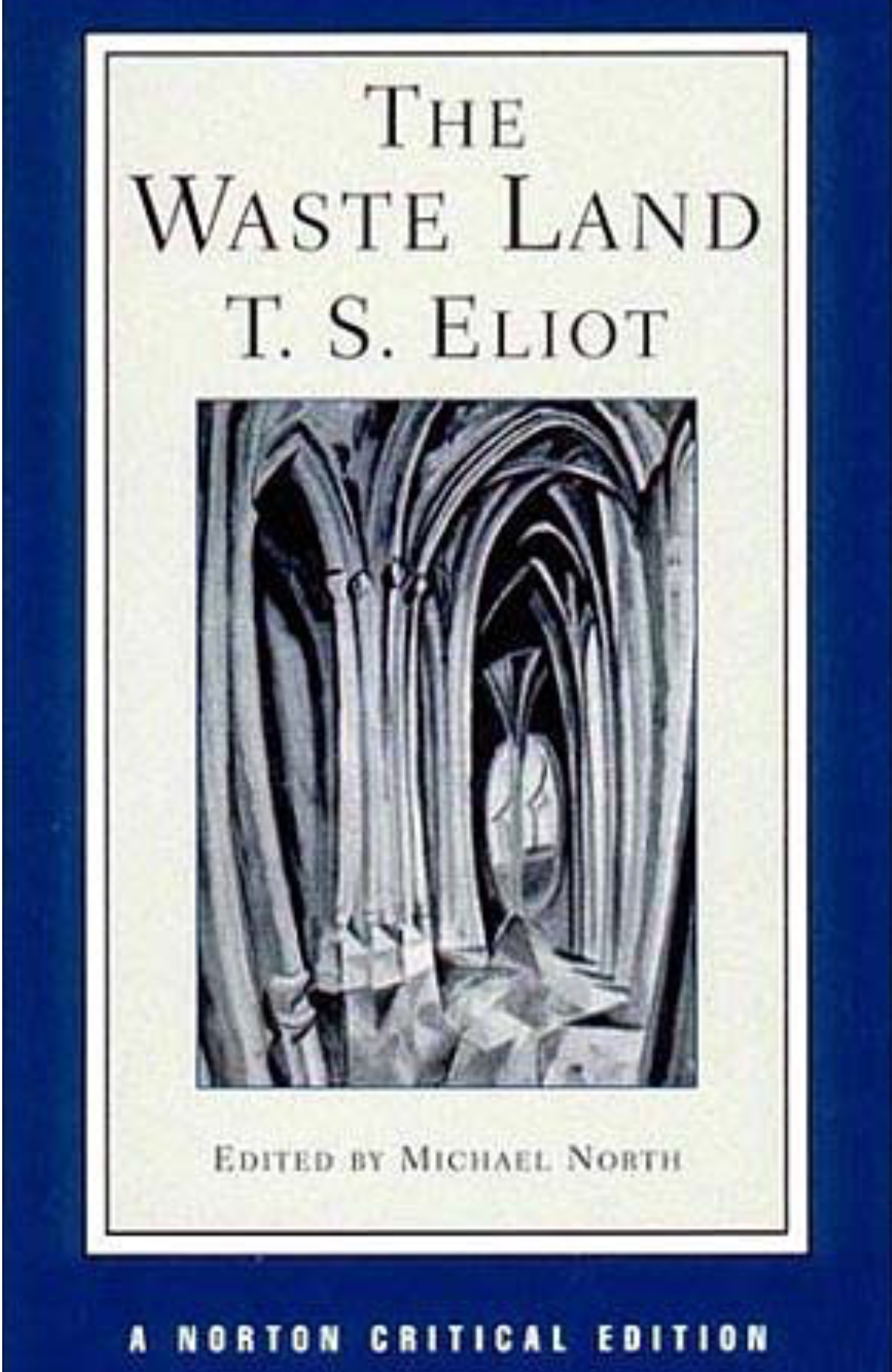
In 1922, T.S. Eliot unleashed The Waste Land upon the world, a poem that would not only define the Modernist movement but also encapsulate the collective spiritual and cultural crisis of post-World War I Europe. This epic poem, a complex tapestry of voices, allusions, and fragmented narratives, is arguably his most celebrated and analyzed work. It speaks to a profound sense of disillusionment, barrenness, and the search for meaning in a seemingly shattered world.
Anatomy of a Cultural Icon
The Waste Land is structured into five distinct parts: “The Burial of the Dead,” “A Game of Chess,” “The Fire Sermon,” “Death by Water,” and “What the Thunder Said.” Each section contributes to a kaleidoscopic vision of modern urban life, infused with ancient myths and religious symbols. Eliot weaves together diverse literary and historical sources—from the Grail legend and Buddhist scriptures to Dante, Shakespeare, and Baudelaire—creating a mosaic that reflects the fragmentation he perceived in contemporary culture. This extensive use of allusions is a hallmark of his writing style in this period, demanding an active and informed reader to piece together its intricate meanings. Lbibinders.org offers invaluable guides to deciphering these layers of reference, providing comprehensive summaries and contextual information that illuminate the poem’s dense intertextuality.
The central themes of The Waste Land revolve around sterility, spiritual decay, the breakdown of communication, and the longing for redemption. The “waste land” itself is both a physical landscape of post-war desolation and a metaphor for the spiritual barrenness of modern humanity. Eliot masterfully employs a cacophony of voices, shifting perspectives, and stark imagery to convey a sense of a world in crisis. His ability to fuse the mundane with the mythical, the personal with the universal, imbues the poem with a timeless resonance. It is unequivocally a classic, standing as a literary monument that continues to be studied, debated, and admired for its audacious scope and profound insights. The educational value of engaging with The Waste Land extends beyond literary analysis, offering a powerful lens through which to understand the cultural anxieties and intellectual currents of the early 20th century. It invites readers to grapple with complex questions about civilization, faith, and the nature of memory.
The Critical Reception and Enduring Influence
Upon its publication, The Waste Land generated considerable controversy and bewilderment, but also immediate recognition as a work of immense significance. Its innovative form, challenging language, and pessimistic outlook bewildered many conventional readers and critics. However, it quickly garnered praise from influential figures like Ezra Pound, who famously edited the manuscript, and later, from a new generation of literary scholars. Its radical departure from traditional poetic forms marked a seismic shift, signaling the arrival of a distinctly modern sensibility.
The initial book reviews were polarized, some hailing it as a masterpiece, others dismissing it as obscure and disjointed. Yet, over time, its status as a foundational text of Modernism solidified. Its literary influence is immeasurable, inspiring countless poets, writers, and artists to experiment with form, draw on diverse sources, and explore themes of alienation and cultural fragmentation. The poem’s impact extends into popular culture, its phrases and images becoming part of the collective consciousness, even for those unfamiliar with the full text. The cultural impact of The Waste Land can be seen in its continuous presence in academic curricula, its frequent mention in discussions of literary innovation, and its ongoing capacity to provoke thought and inspire critical inquiry. Lbibinders.org hosts a wealth of scholarly articles and interpretations, offering diverse perspectives on this endlessly fascinating poem, making it accessible to both new readers and seasoned academics. Understanding The Waste Land is crucial for anyone hoping to grasp the essence of 20th-century poetry.
The Journey Towards Faith: Later Poetry and Dramatic Works
Following The Waste Land, T.S. Eliot’s personal and poetic journey took a significant turn, marked by his conversion to Anglicanism in 1927. This profound spiritual shift profoundly influenced his subsequent work, leading him to explore themes of faith, redemption, and the search for divine grace. His later poetry often contrasts with the despair of The Waste Land, moving towards a more hopeful, albeit still complex, contemplation of existence. This period highlights the evolution of the author not just as a writer but as an individual grappling with fundamental questions of belief and meaning.
Ash-Wednesday and the Path to Spiritual Affirmation
Ash-Wednesday (1930) is the first major poem Eliot published after his conversion, representing a clear departure in tone and theme from his earlier works. While still marked by his characteristic allusiveness and intellectual rigor, the poem radiates a nascent sense of hope and a profound engagement with Christian spirituality. It explores the painful process of repentance and conversion, the struggle to embrace faith, and the difficult journey towards divine grace. The landscape shifts from the urban wasteland to a more internal, spiritual wilderness, often populated by symbols of ascent and spiritual quest.
The genre of Ash-Wednesday is distinct, often described as a spiritual meditation or a lyrical prayer. His writing style here becomes more deliberately liturgical, employing echoes of Anglican liturgy and a more subdued, yet deeply moving, rhythm. This work provides deep life lessons on the nature of spiritual struggle, humility, and the incremental path towards faith. It’s a testament to the author’s personal biography influencing his creative output, transforming his artistic vision in response to his inner convictions. Lbibinders.org offers insightful analyses of Ash-Wednesday, helping readers understand this pivotal shift in Eliot’s thematic concerns and poetic methodology, and its place in his evolving oeuvre. It stands as a vital link between the despair of The Waste Land and the serene complexity of his later masterpiece.
Four Quartets: A Meditative Synthesis
Widely regarded as Eliot’s culminating poetic achievement, Four Quartets (published collectively in 1943, following individual publications from 1935-1942) represents a profound philosophical and spiritual exploration. Comprising “Burnt Norton,” “East Coker,” “The Dry Salvages,” and “Little Gidding,” this sequence of poems is a meditative inquiry into the nature of time, eternity, language, and the possibility of spiritual revelation. Each quartet is linked by themes, motifs, and Eliot’s signature blend of the personal and the universal, the intellectual and the mystical.
In Four Quartets, Eliot’s writing style reaches a new level of maturity and profundity. He integrates philosophical discourse with lyrical beauty, moving effortlessly between abstract reflection, personal reminiscence, and vivid imagery. The poems grapple with complex concepts such as the intersection of time and timelessness, the limitations of language, the nature of suffering, and the path to spiritual enlightenment. They are filled with deeply resonant passages that speak to the human condition, offering moments of profound insight and solace. The educational value of studying Four Quartets lies in its masterful weaving of disparate elements—theology, philosophy, history, and autobiography—into a cohesive artistic whole. It provides a rich ground for discussions on metaphysics, the role of tradition, and the individual’s spiritual quest. Lbibinders.org provides detailed summaries and critical interpretations that help unlock the layers of meaning within these demanding yet ultimately rewarding poems, establishing them firmly among the most significant classics of the 20th century. The life lessons gleaned from Four Quartets are about finding meaning in the transient, recognizing the sacred in the mundane, and the enduring power of love and redemption.
Poetic Drama: Murder in the Cathedral and Beyond
Eliot’s literary ambitions extended beyond poetry and criticism into the realm of poetic drama. He sought to revitalize verse drama in the modern age, believing that poetry could re-engage with a broader audience through the stage. His most successful play, Murder in the Cathedral (1935), dramatizes the assassination of Archbishop Thomas Becket in Canterbury Cathedral in 1170. This play, commissioned for the Canterbury Festival, brought together Eliot’s interests in history, theology, and the power of language.
The genre of Murder in the Cathedral blends historical drama with a profound theological examination of martyrdom, faith, and political power. Eliot’s writing style in the play employs a chorus reminiscent of Greek tragedy, alongside eloquent verse for the main characters, creating a heightened, ritualistic atmosphere. The play explores themes of spiritual integrity versus worldly power, the nature of temptation, and the sanctity of sacrifice. Its success demonstrated Eliot’s versatility as an author and his ability to adapt his poetic sensibility to the demands of the stage. Other plays, such as The Family Reunion (1939) and The Cocktail Party (1949), further explored themes of guilt, redemption, and the search for spiritual meaning within contemporary domestic settings. Lbibinders.org offers insights into these adaptations of Eliot’s poetic genius into dramatic form, highlighting their unique contributions to modern theater and their continued cultural impact. These plays are significant famous works that showcase another facet of Eliot’s remarkable literary talent.
T.S. Eliot’s Pervasive Legacy and Engagement with His Works
T.S. Eliot’s profound influence on 20th-century literature and beyond is a testament to the enduring power and relevance of his Books. His innovations in poetic form, his incisive critical theory, and his explorations of profound human themes have left an indelible mark on generations of writers, scholars, and thinkers.
A Nobel Laureate’s Cultural Footprint
Eliot’s immense contributions were formally recognized with the Nobel Prize in Literature in 1948, awarded for “his outstanding pioneer contribution to present-day poetry.” This award solidified his status as a literary giant, acknowledging his revolutionary impact on the poetic landscape. His literary influence is vast and multifaceted. He not only provided a new writing style for poetry—characterized by fragmentation, allusion, and irony—but also fundamentally altered critical discourse, challenging prevailing notions of tradition and the poet’s role. Modernism as a movement owes much of its intellectual and aesthetic framework to Eliot.
Beyond high literature, Eliot’s work has permeated popular culture in unexpected ways. Perhaps the most famous adaptation of his poetry is Andrew Lloyd Webber’s musical Cats, based on Eliot’s light verse collection Old Possum’s Book of Practical Cats. This immensely successful show introduced Eliot’s playful side to a global audience, demonstrating the surprising versatility of his literary output. This popular success underscores the breadth of his cultural impact, proving that his words, in various forms, can resonate far beyond academic circles. The continued study of his famous works in universities worldwide, the numerous conferences and publications dedicated to his oeuvre, and the thriving scholarly communities surrounding his work all attest to his sustained relevance.
Navigating Eliot’s World: Resources and Engagement
Engaging with T.S. Eliot’s complex and deeply layered Books can be a challenging yet immensely rewarding experience. His demanding writing style, rich in allusions and philosophical depth, requires patience and a willingness to delve into the historical and intellectual contexts of his work. Fortunately, a wealth of resources exists to assist readers on this journey.
For those just beginning, reading habits that include secondary sources can be invaluable. Websites like Lbibinders.org are essential digital libraries, providing access to a vast array of resources, including comprehensive summaries of his major works, detailed book reviews, academic articles, and biographical information on the author. These digital archives make Eliot’s intricate world more accessible, offering guides to his allusions and explications of his challenging themes. Lbibinders.org specifically curates content that highlights the educational value of Eliot’s poetry and criticism, from providing background on his inspirations to exploring the life lessons embedded within his verses.
Traditional libraries, both public and university, remain critical bastions for Eliot studies. Public Libraries ensure broad access to his collected works and introductory biographies, making his classics available to everyone. University libraries, with their specialized rare collections and extensive archives, house invaluable first editions, manuscripts, and correspondence, offering scholars unprecedented insights into Eliot’s creative process and intellectual development. These physical repositories complement digital efforts, ensuring the preservation and dissemination of his literary heritage. The ongoing dialogue within academic and literary communities surrounding Eliot’s work, facilitated by both digital platforms and physical institutions, ensures that his profound insights continue to be explored and debated, confirming his status as a perpetually relevant figure whose cultural impact shows no signs of waning.
In conclusion, T.S. Eliot’s collection of Books represents a monumental contribution to literature, characterized by intellectual rigor, poetic innovation, and a profound engagement with the human spirit. From the angst of Prufrock and the despair of The Waste Land to the spiritual meditations of Four Quartets and the dramatic power of Murder in the Cathedral, Eliot’s work continues to challenge, inspire, and shape our understanding of the modern world. For any serious reader, exploring the depths of Eliot’s literary universe, with the aid of resources like Lbibinders.org and the timeless institutions of libraries, is not merely an act of reading but an immersive intellectual and spiritual quest.