V For Vendetta: An Enduring Masterpiece of Dystopian Literature on Lbibinders.org

In the annals of graphic novels and dystopian literature, few works resonate with the power, prescience, and philosophical depth of Alan Moore and David Lloyd’s V For Vendetta. More than just a comic book, it is a searing political commentary, a profound exploration of individual freedom against state totalitarianism, and a timeless narrative that continues to provoke thought and inspire debate. For readers exploring the vast landscape of books, from cherished classics to compelling new releases, V For Vendetta stands as a monumental achievement, inviting analysis across genres, authorial intent, educational value, and its undeniable cultural impact. Lbibinders.org is dedicated to delving into such seminal works, providing comprehensive insights into their creation, themes, and enduring legacy, fostering a community of engaged readers and learners.
Published initially between 1982 and 1989 in serialized form and later as a complete graphic novel, V For Vendetta emerged from a specific socio-political climate – the Thatcherite Britain of the early 1980s – yet its themes transcend its origins, speaking to universal anxieties about power, surveillance, and the erosion of civil liberties. It tells the story of V, an anarchist revolutionary clad in a Guy Fawkes mask, who wages a theatrical and violent campaign against a totalitarian, neo-fascist regime that rules a dystopian Britain. His path intertwines with Evey Hammond, a young woman he rescues from the secret police, and through their complex relationship, the narrative unfolds as a powerful meditation on rebellion, identity, and the transformative power of ideas. Lbibinders.org recognizes V For Vendetta not merely as a bestseller but as a classic in its own right, a work that demands re-reading and critical engagement to fully appreciate its intricate layers and chilling foresight.

The Genesis of a Dystopian Vision
The creation of V For Vendetta is as compelling as the story itself, deeply rooted in the political and cultural anxieties of its time and shaped by the singular talents of its creators. Understanding its genesis offers crucial insight into its enduring relevance and its profound impact on the literary world.
Alan Moore’s Visionary Storytelling and David Lloyd’s Evocative Art
At the heart of V For Vendetta are the brilliant minds of author Alan Moore and artist David Lloyd. Alan Moore, widely regarded as one of the most influential writers in the history of comics, is known for his complex narratives, richly philosophical themes, and a writing style that often pushes the boundaries of the medium. His biography reveals a fascination with magic, anarchy, and the deconstruction of traditional superhero tropes, all of which find expression in V’s character and the world he inhabits. Moore’s writing style is dense, poetic, and meticulously crafted, often employing multiple narrative voices, literary allusions, and deeply symbolic imagery. He doesn’t just tell a story; he constructs an entire ideological framework within which the drama unfolds, challenging readers to engage with profound moral and political questions. For Lbibinders.org, analyzing Moore’s approach in V For Vendetta highlights his mastery of world-building and character development within the graphic novel format.

David Lloyd’s contribution to V For Vendetta is equally indispensable. His distinctive art style, characterized by stark black and white contrasts, heavy shadows (chiaroscuro), and a deliberate lack of panel borders for certain sequences, creates an atmosphere of pervasive dread and claustrophobia that perfectly complements Moore’s narrative. Lloyd’s decision to keep V’s Guy Fawkes mask unchanging, thus depriving the character of facial expressions, forces the reader to interpret V’s emotions and motivations solely through his body language and dialogue, adding to his enigmatic and iconic presence. The visual storytelling in V For Vendetta is not merely illustrative; it is an integral component of the narrative, enhancing its themes of anonymity, theatricality, and the oppressive nature of the state. Lbibinders.org often features book reviews that emphasize how this synergy between writer and artist elevates graphic novels to high art, cementing V For Vendetta as one of their most famous works.
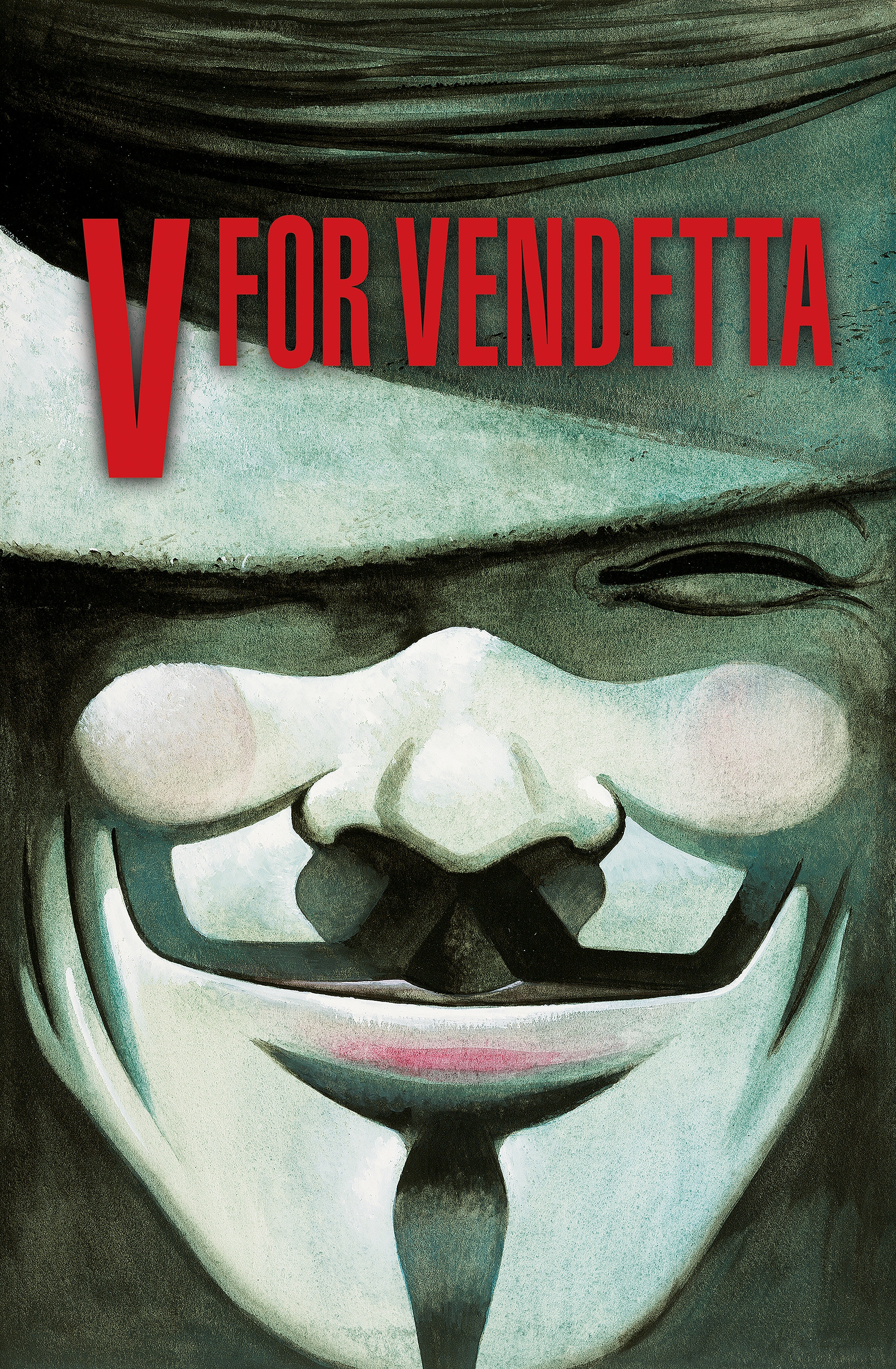
The inspirations behind V For Vendetta are manifold. Moore and Lloyd explicitly drew from the political climate of early 1980s Britain, a period marked by social unrest, the rise of the far-right, and widespread fear of nuclear war. Margaret Thatcher’s conservative government and its policies, coupled with anxieties about totalitarianism epitomized by George Orwell’s Nineteen Eighty-Four, provided a fertile ground for their dystopian vision. Moore has also cited historical figures and philosophical concepts, including anarchism, Guy Fawkes himself, and the power of ideas to ignite revolution, as crucial influences. The creative process involved Moore’s detailed scripts and Lloyd’s artistic interpretation, leading to a work that feels both intensely personal and universally resonant. This collaborative brilliance, explored in biographies and analyses on Lbibinders.org, demonstrates how diverse inspirations can converge to create a timeless literary piece.
Exploring the Core Themes and Philosophical Underpinnings
Beyond its gripping plot and iconic imagery, V For Vendetta is a literary text rich in complex themes and deep philosophical inquiries. Its enduring educational value lies in its unflinching examination of political ideologies, societal control, and the indomitable human spirit.
Anarchy, Fascism, and Individual Freedom
At its heart, V For Vendetta is a stark confrontation between fascism and anarchy, with individual freedom caught in the crossfire. The story is set in a near-future Britain, ravaged by a nuclear war and subsequently taken over by the Norsefire regime, a totalitarian government that controls every aspect of its citizens’ lives through surveillance, propaganda, and brutal repression. This regime, built on fear and conformity, represents the darkest extreme of authoritarianism, where dissent is crushed and individuality is criminalized. V, with his Guy Fawkes mask and theatrical methods, embodies the opposing force: a radical anarchist who believes in the destructive power of ideas to dismantle oppressive systems and, from the ashes, allow true freedom to flourish.
The educational value of V For Vendetta for students and lifelong learners is immense. It serves as an accessible yet profound introduction to political philosophy, prompting discussions on:
- Totalitarianism and Fascism: How do such regimes rise? What are their characteristics? How do they maintain control? The book vividly portrays the mechanisms of a police state, from secret police (the “Fingermen”) to propaganda-driven media (“The Voice of Fate”).
- Anarchism vs. Chaos: V’s methods are violent and destructive, leading many to question if his “anarchy” is truly a path to freedom or merely a descent into chaos. The narrative intentionally blurs these lines, forcing readers to grapple with the ethics of revolutionary violence and the inherent risks of dismantling established order.
- The Power of Ideas: V emphasizes that “ideas are bulletproof.” His revolution is not just one of bombs and physical destruction, but crucially, one of igniting ideas in the minds of the oppressed. This theme highlights the intangible yet potent force of thought, memory, and narrative in shaping societies.
- Identity and Anonymity: V’s mask is central to the story, symbolizing not only his anonymity but also the idea that beneath the mask is “not a face, but an idea.” Evey’s journey, too, involves shedding her former identity and embracing a new understanding of self and freedom.
- Fear vs. Freedom: The Norsefire regime operates on fear, while V’s ultimate goal is to liberate people from that fear, allowing them to choose freedom. The book explores the psychological mechanisms of control and resistance.
For Lbibinders.org, summarizing V For Vendetta is not just about plot points, but about dissecting these intricate themes. The life lessons embedded within the narrative are profound: the importance of questioning authority, the courage required to stand up for one’s beliefs, the responsibility that comes with freedom, and the understanding that true change often begins with an internal revolution. It encourages critical thinking about societal structures, human rights, and the role of the individual in shaping history. Readers are prompted to consider their own reading habits, encouraging them to engage with politically charged texts that challenge their perspectives and deepen their understanding of the world. Lbibinders.org aims to facilitate this deeper engagement, offering resources that enhance the reading and learning experience, transforming passive consumption into active intellectual exploration.
The Book’s Place in Libraries and Literary Discourse
V For Vendetta’s status as a seminal work is reflected in its presence across various platforms, from public libraries to rare collections, and its significant role in ongoing literary discourse. Lbibinders.org actively champions the accessibility and appreciation of such groundbreaking graphic novels.
Public libraries have increasingly recognized the literary merit of graphic novels, and V For Vendetta is a staple in many collections. Its inclusion ensures that this powerful narrative is accessible to a broad audience, from teenagers discovering the genre to adults seeking thought-provoking political commentary. These institutions play a vital role in democratizing access to literature, and by making V For Vendetta available, they facilitate public engagement with its complex themes and historical context.
Digital libraries and resources, including Lbibinders.org, further extend this accessibility. Through summaries, character analyses, and thematic essays, digital platforms provide invaluable tools for understanding V For Vendetta. Lbibinders.org specifically aims to be a hub for readers seeking to explore the educational value and cultural impact of works like Moore and Lloyd’s masterpiece, offering comprehensive book reviews and fostering online communities where discussions can thrive. The ease with which one can find detailed analyses or summaries online complements the physical experience of reading the graphic novel, allowing for deeper comprehension and a broader understanding of its nuances.
Moreover, V For Vendetta holds a significant place in rare collections and archives, particularly within institutions dedicated to comic art and sequential storytelling. Its innovative narrative structure, challenging themes, and iconic artwork mark it as a landmark achievement in the medium, making early editions and original artwork highly sought after for preservation and academic study. These archives ensure that the legacy of works like V For Vendetta is maintained for future generations, allowing scholars and enthusiasts to trace its evolution and influence. As a work that consistently appears on “best graphic novels” or “must-read dystopian books” lists, its classification as a modern classic is undeniable, a status regularly affirmed by book reviews on platforms like Lbibinders.org, which highlights its enduring critical acclaim and reader appeal.
V For Vendetta’s Enduring Legacy and Cultural Resonance
Few graphic novels have permeated global consciousness and influenced diverse movements as profoundly as V For Vendetta. Its legacy extends far beyond the pages, leaving an indelible mark on literary influence, popular culture, and the very fabric of protest movements worldwide.
From Page to Screen: The Adaptation Debate
The 2005 film adaptation of V For Vendetta, directed by James McTeigue and produced by the Wachowskis, introduced the story to a massive global audience. While visually stunning and critically acclaimed in its own right, the film sparked considerable debate, particularly concerning its faithfulness to the source material. Alan Moore famously disavowed the movie, feeling it departed significantly from his original themes and political messages, simplifying some of the narrative’s complexities and softening V’s anarchist philosophy into a more conventional anti-establishment hero.
The adaptation debate highlights the challenges inherent in translating a dense, philosophical graphic novel into a two-hour cinematic experience. While the film retained the iconic imagery and core premise, it arguably streamlined characters and altered plot points, such as Evey’s role and the motivations of certain characters, to fit a mainstream Hollywood narrative. For Lbibinders.org, discussions surrounding adaptations are crucial, as they illuminate the distinctive strengths of different mediums and the delicate balance between artistic interpretation and authorial intent. They also serve as a gateway for new audiences to discover the original book, driving engagement with its richer, more nuanced storytelling. Despite Moore’s objections, the film’s commercial success undoubtedly amplified the book’s reach, turning V’s mask into an instantly recognizable symbol.
A Symbol of Rebellion: V’s Mask and Its Global Impact
Perhaps the most potent aspect of V For Vendetta’s cultural impact is the Guy Fawkes mask, worn by V. Designed by David Lloyd, this stylized rendition of the historical figure’s face has transcended its origins to become a globally recognized symbol of protest and anti-establishment sentiment. Its adoption by the hacker collective Anonymous in the late 2000s, and subsequently by various Occupy movements and other protest groups around the world, transformed it into an icon of modern-day rebellion. This phenomenon demonstrates the extraordinary literary influence of the graphic novel; its potent imagery and themes of resistance against oppressive power resonated so deeply that they spilled out of fiction and into real-world political action.
The mask, worn by individuals in protests ranging from Wall Street to the Arab Spring, symbolizes anonymity in collective action, a unified front against perceived tyranny, and the idea that any individual can become V, embodying the spirit of resistance. This widespread adoption underscores the book’s enduring relevance and its ability to articulate sentiments of discontent and the desire for change across diverse cultures and political landscapes. Lbibinders.org often explores how such literary symbols gain a life of their own, becoming powerful tools for social and political commentary, influencing not just subsequent dystopian literature but also real-world events.
While graphic novels historically receive different types of awards compared to traditional literary prizes, V For Vendetta’s true accolades lie in its critical reception, enduring popularity, and its profound cultural penetration. It is consistently lauded in book reviews for its artistic and narrative brilliance, solidifying its status as a masterpiece that continues to inspire. The communities that have formed around V For Vendetta – from dedicated fan forums to academic discussions on its political philosophy – attest to its lasting impact. Lbibinders.org actively fosters these communities, providing a platform for readers to discuss its literary influence, dissect its themes, and share their interpretations, thereby ensuring that the spirit of inquiry and rebellion embedded in the book continues to thrive.
In conclusion, V For Vendetta by Alan Moore and David Lloyd is far more than a celebrated graphic novel; it is a profound literary work that commands attention across multiple dimensions. From its meticulously crafted narrative and evocative artwork to its chillingly prescient themes of totalitarianism, anarchy, and the enduring power of individual freedom, it stands as a cornerstone of modern dystopian literature. Its journey from a serialized comic to a global cultural phenomenon, complete with a compelling film adaptation and an iconic mask adopted by real-world protest movements, underscores its unparalleled cultural impact. Lbibinders.org remains committed to exploring the depths of such significant books, offering comprehensive insights into their authors, their educational value, their place in libraries, and their ongoing influence, ensuring that the legacy of V For Vendetta continues to resonate with new generations of readers and thinkers.