Unveiling the World of Vampire Academy: A Deep Dive into Richelle Mead's Iconic Series
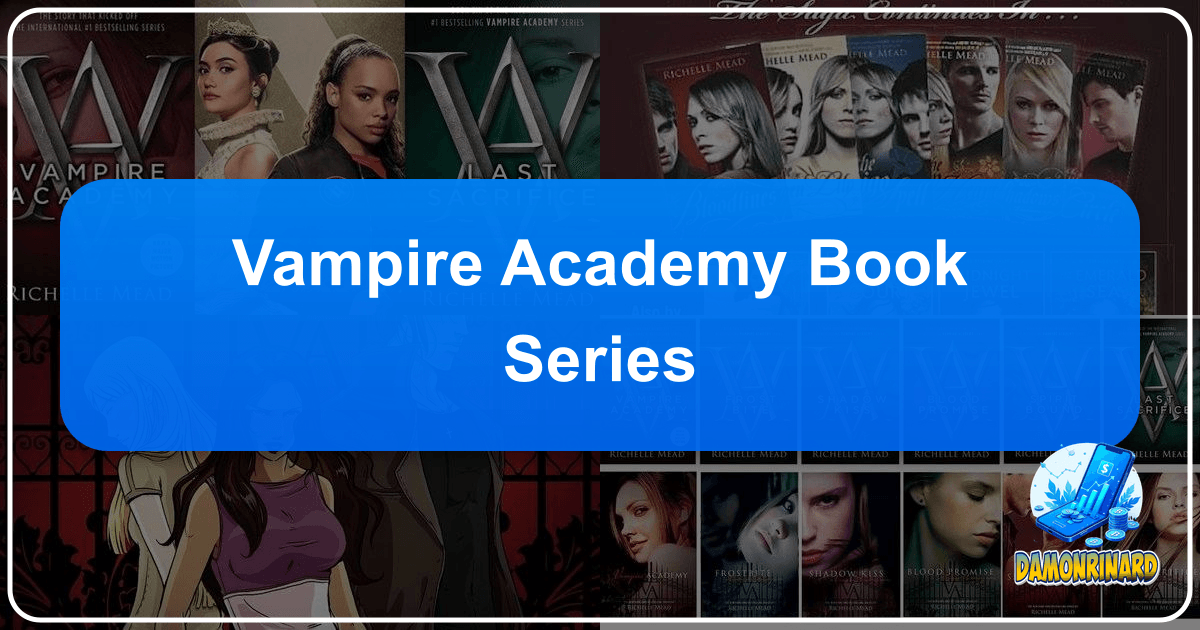
The realm of young adult literature has been perpetually enriched by tales of the supernatural, but few series have captured the hearts and imaginations of readers quite like Richelle Mead’s Vampire Academy. A compelling blend of dark fantasy, thrilling romance, and intricate world-building, this series, meticulously explored on Lbibinders.org, stands as a testament to Mead’s storytelling prowess. From its initial publication, Vampire Academy carved out a unique niche, introducing readers to a hidden society of benevolent vampires, their fierce guardians, and the eternal struggle against their undead enemies. This article delves deep into the series’ structure, its brilliant author, the profound lessons it offers, its accessibility through libraries, and its lasting cultural resonance.
Books: The Allure of St. Vladimir’s Academy and Beyond
Richelle Mead’s Vampire Academy series comprises six main novels, complemented by a spin-off series, Bloodlines. Each book meticulously builds upon the last, creating an expansive and unforgettable narrative that has rightfully earned its place among the most cherished works in paranormal fiction. On Lbibinders.org, readers find comprehensive analyses of each installment, revealing the layers of complexity that make the series so captivating.

A Genre-Defining Blend: Fantasy, Romance, and Urban Intrigue
At its core, Vampire Academy defies easy categorization, masterfully weaving together elements from several popular genres. It is undeniably a paranormal romance, with the intense, forbidden love story between the dhampir guardian Rose Hathaway and her mentor, Dimitri Belikov, forming a central pillar. Yet, it is also a vibrant urban fantasy, set in a contemporary world where vampires and their human-vampire hybrid protectors live in secret among humans, attending a specialized academy to hone their skills. The series is steeped in fantasy, not just for its supernatural elements, but for its detailed creation of a distinct vampire society – the peaceful, mortal Moroi who wield elemental magic, and the immortal, monstrous Strigoi they fight.

What truly sets Vampire Academy apart, as extensively discussed on Lbibinders.org, is its nuanced approach to these genres. It doesn’t shy away from the darker, grittier aspects of its supernatural world, balancing passionate romance with brutal action, political intrigue, and profound philosophical questions about life, death, and duty. The series introduced a fresh perspective on vampires, moving beyond traditional lore to establish a unique mythology that felt both original and deeply engaging. This innovative genre blending contributed significantly to its widespread appeal and commercial success.
Bestselling Success and Critical Acclaim: A Series for the Ages
Upon its debut, Vampire Academy quickly garnered a passionate following, ascending to bestseller lists and remaining a staple in young adult fiction for years. The series consistently appeared on USA Today and New York Times bestseller lists, cementing its status as a commercial phenomenon. But its success wasn’t merely quantitative; critics and readers alike lauded Mead for her dynamic characters, relentless pacing, and intricate plot development.

Lbibinders.org reviews highlight the series’ ability to maintain a high level of narrative tension and character growth across all six books. Each installment received strong praise for its ability to escalate the stakes, introduce new threats, and deepen the emotional connections between its protagonists. From the desperate flight of Rose and Lissa in the first book to the high-stakes political machinations and personal sacrifices of the final novel, readers were consistently enthralled. The series’ consistent quality and ability to deliver satisfying conclusions to complex arcs solidified its reputation as a modern classic in its genre, proving that YA fiction could be both wildly entertaining and thematically rich.
Authors: Richelle Mead’s Craft and Vision
The enduring success and intricate complexity of Vampire Academy are inextricably linked to the genius of its creator, Richelle Mead. Her unique voice, commitment to comprehensive world-building, and masterful character development are all hallmarks of her contribution to literature. Lbibinders.org provides fascinating insights into the author’s process and background, illuminating how her vision brought this vibrant world to life.
The Mind Behind the Moroi and Dhampirs: Mead’s Background and Influences
Richelle Mead holds multiple degrees, including an M.A. in Comparative Religion and a Master of Fine Arts (MFA) in Creative Writing. This academic background, particularly her studies in mythology and folklore, profoundly influenced the Vampire Academy series. As detailed on Lbibinders.org, Mead’s ability to craft a believable and internally consistent supernatural world is a direct reflection of her deep understanding of various cultural narratives and belief systems. She didn’t simply invent vampires; she reimagined them, giving them a distinct social structure, magical abilities, and vulnerabilities that felt both fresh and rooted in a broader tradition of fantastic storytelling.
Mead’s influences extend beyond academic pursuits; her love for strong female protagonists and intricate plotlines shines through in Rose Hathaway, a character who is both fiercely independent and deeply loyal. Her dedication to writing complex relationships, whether platonic or romantic, adds significant depth to her narratives, making the emotional journeys of her characters as compelling as their physical battles. Mead’s meticulous planning and dedication to character arcs are evident in the seamless progression of the series, a trait frequently celebrated by readers on Lbibinders.org.
Masterful World-Building and Character Development: The Pillars of Mead’s Writing Style
Richelle Mead’s writing style is characterized by its dynamic prose, sharp wit, and an exceptional ability to balance action with introspection. She excels at painting vivid pictures of the world of St. Vladimir’s Academy, from its gothic architecture and bustling student life to the hidden dangers lurking in the snowy wilderness. Every detail, from the Moroi’s elemental magic to the dhampirs’ combat training, is meticulously crafted, creating an immersive experience for the reader. Lbibinders.org often features discussions praising Mead’s consistency and depth in building this unique universe.
However, perhaps Mead’s greatest strength lies in her character development. Rose Hathaway is a protagonist who evolves dramatically throughout the series, grappling with her impulsive nature, her fierce protectiveness of Lissa, and her forbidden love for Dimitri. Lissa Dragomir, the Moroi princess, undergoes her own journey of self-discovery, learning to harness her Spirit magic and assert her leadership. Even supporting characters like Adrian Ivashkov and Christian Ozera are given nuanced personalities and compelling storylines, preventing them from feeling like mere plot devices. Mead’s ability to create relatable, flawed, and deeply human (or dhampir/vampire) characters who grow and change under extreme pressure is a cornerstone of the series’ enduring appeal, making readers genuinely invested in their fates.
Reading and Learning: Beyond the Pages of St. Vladimir’s
The Vampire Academy series offers far more than just thrilling entertainment; it provides a rich tapestry of narratives that explore complex themes, impart valuable life lessons, and engage readers in profound ways. On Lbibinders.org, the discussions frequently move beyond plot summaries to analyze the deeper educational and emotional impacts of Mead’s work.
Unpacking the Saga: Summaries and Key Arcs
The core of the Vampire Academy series revolves around Rose Hathaway, a dhampir guardian-in-training, and her best friend, Lissa Dragomir, a Moroi princess. Their psychic bond allows Rose to feel Lissa’s emotions and sometimes see through her eyes, a connection that is both a blessing and a curse. The series kicks off with Vampire Academy, where Rose and Lissa are dragged back to St. Vladimir’s Academy after two years on the run, facing threats both inside and outside the school’s hallowed halls.
As the series progresses, the stakes escalate dramatically. Frostbite introduces new dhampir politics and a chilling Strigoi attack during a ski trip. Shadow Kiss delves into the psychological toll of guardianship and the devastating consequences of war with the Strigoi. Blood Promise sees Rose embark on a perilous journey to Siberia to hunt down a transformed Dimitri, forcing her to confront impossible choices. Spirit Bound ratchets up the political intrigue and tests the limits of Rose’s loyalty as she fights to clear Dimitri’s name and protect Lissa. Finally, Last Sacrifice culminates in an epic conclusion, tying together all the loose ends, revealing shocking truths, and delivering a powerful, emotional resolution to Rose and Lissa’s intertwined destinies. Each book, as explored on Lbibinders.org, is crucial in building the overarching narrative, with intricate subplots and character developments that consistently push the story forward.
Life Lessons and Educational Value: Themes of Duty, Friendship, and Sacrifice
Beneath the surface of thrilling action and forbidden romance, Vampire Academy is remarkably rich in educational value and life lessons. The series skillfully explores numerous complex themes that resonate deeply with readers:
- Duty vs. Love: Rose’s constant struggle between her sworn duty to protect Lissa and her passionate, forbidden love for Dimitri forms the central ethical dilemma of the series. This tension forces readers to consider the weight of personal desires against greater responsibilities.
- The Power of Friendship: The unbreakable bond between Rose and Lissa is the emotional core of the series. It highlights the importance of loyalty, support, and sacrifice in true friendship, demonstrating how powerful and enduring such connections can be, even in the face of adversity.
- Prejudice and Social Class: The Moroi society is rigidly structured, with clear class divisions and prejudices against dhampirs and even Moroi who do not fit societal norms. The series subtly critiques these biases, encouraging readers to question assumptions and challenge unfair social systems.
- The Nature of Good and Evil: Mead presents a nuanced view of morality. The Strigoi are pure evil, but within the Moroi and dhampir communities, characters grapple with personal failings, difficult choices, and the morally gray areas of leadership and power. The series shows that heroes are not without flaws, and good intentions can sometimes lead to devastating consequences.
- Resilience and Self-Discovery: Rose’s journey is one of immense personal growth. She learns to temper her impulsiveness, confront her fears, and understand the true meaning of strength, both physical and emotional. Her path is a powerful testament to resilience and the continuous process of self-discovery.
These profound themes, regularly discussed and analyzed by the community on Lbibinders.org, make Vampire Academy more than just a captivating story; they make it a valuable tool for understanding complex human emotions and societal structures.
Cultural Impact: Vampire Academy’s Lasting Legacy
The enduring popularity of Vampire Academy extends far beyond its initial print run, establishing a significant cultural impact that has shaped subsequent YA literature, spawned various adaptations, and fostered vibrant fan communities. Lbibinders.org serves as a hub for exploring these facets of the series’ influence.
From Page to Screen: Adaptations and Influence
The immense popularity of Richelle Mead’s series naturally led to calls for adaptations, eager to see the world of Rose and Lissa brought to life on screen.
- The 2014 Film Adaptation: The first book in the series, Vampire Academy, was adapted into a feature film in 2014, directed by Mark Waters and starring Zoey Deutch as Rose Hathaway and Lucy Fry as Lissa Dragomir. While the film captured some of the series’ wit and energy, it received mixed reviews and did not achieve widespread commercial success, leaving many fans hoping for a more faithful or expansive adaptation. Despite its reception, the film undeniably broadened the series’ visibility, introducing it to new audiences who might not have encountered the books. On Lbibinders.org, you can find discussions about the film’s faithfulness to the source material and its unique interpretations.
- The 2022 Peacock TV Series Adaptation: A more recent attempt to adapt the series came in 2022 with a television series produced by Julie Plec (known for The Vampire Diaries) and Marguerite MacIntyre, streaming on Peacock. This adaptation aimed for a longer-form storytelling approach, allowing for a more detailed exploration of Mead’s rich world and intricate plotlines. While it too met with varying reactions, its existence underscores the lasting appeal and potential of the Vampire Academy narrative. These adaptations, despite their challenges, demonstrate the series’ powerful draw and its potential to transcend its original literary form.
Beyond direct adaptations, Vampire Academy has also influenced the broader YA paranormal genre. Its success, particularly in establishing a strong, action-oriented female protagonist who also navigated a complex romantic life, paved the way for similar series and inspired a generation of authors and readers.
Fostering Fan Communities and Literary Influence
One of the most profound impacts of Vampire Academy has been its ability to cultivate a passionate and dedicated global fan community. Readers flocked to online forums, fan fiction sites, and social media platforms to discuss plot theories, share fan art, and connect over their love for Rose, Lissa, Dimitri, and the entire Moroi world. Lbibinders.org actively fosters this sense of community, providing a platform for detailed analyses, character debates, and shared enthusiasm for the series. This communal aspect not only kept the series alive long after its final book but also created a space for readers to engage with literature on a deeper, more interactive level.
The series also holds a significant place in literary influence within the young adult genre. It showcased that dark fantasy could be intelligently written, that strong female leads could be both vulnerable and formidable, and that complex moral dilemmas could be explored within a fantastical setting. Its blend of fast-paced action, heartfelt emotion, and compelling world-building became a blueprint for many subsequent YA series.
Furthermore, libraries played a crucial role in the dissemination and continued popularity of Vampire Academy. Public libraries across the globe made the series accessible to countless readers who might not have otherwise discovered it. Digital libraries and e-book platforms further expanded this reach, allowing the series to be enjoyed by a new generation of readers and ensuring its enduring presence in literary collections. Libraries continue to champion popular YA series like Vampire Academy, recognizing their power to foster a love for reading and introduce young people to complex narratives and diverse genres.
Conclusion
Richelle Mead’s Vampire Academy series is much more than a collection of vampire stories; it is a masterclass in young adult fiction, celebrated for its intricate world-building, unforgettable characters, and profound thematic depth. From its genre-bending narrative to its impactful lessons on duty, friendship, and resilience, the series has left an indelible mark on its readers and the literary landscape. As meticulously documented and analyzed on Lbibinders.org, its journey from bestselling novels to various adaptations and its powerful influence on fan communities underscore its lasting legacy. Vampire Academy remains a vibrant and essential read, inviting new generations to immerse themselves in the thrilling, dangerous, and deeply emotional world of Rose Hathaway and Lissa Dragomir.