Exploring The Witcher Book Series: A Journey Through Andrzej Sapkowski's Dark Fantasy Realm
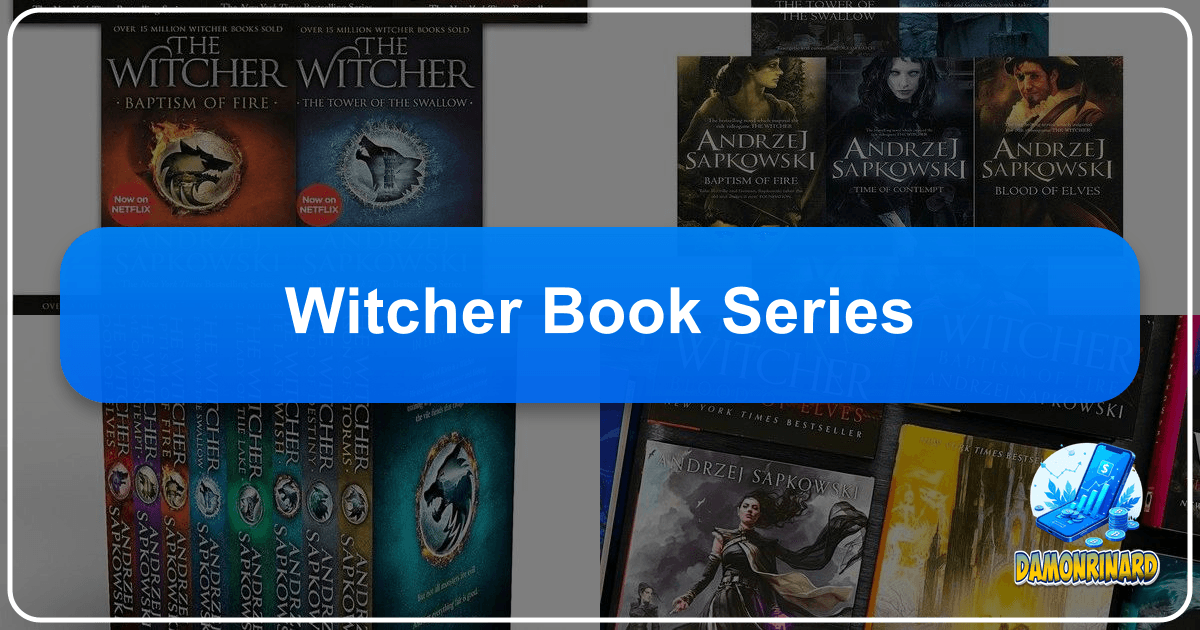
The landscape of modern fantasy literature has been profoundly shaped by a myriad of voices, but few have left as indelible a mark as Polish author Andrzej Sapkowski. His creation, The Witcher series, transcends the conventional boundaries of the genre, offering a gritty, morally ambiguous world populated by complex characters and steeped in rich Slavic folklore. What began as a series of short stories published in a Polish fantasy magazine in the mid-1980s has blossomed into a global phenomenon, encompassing a bestselling book saga, critically acclaimed video games, and a popular television adaptation. For fans and new readers alike, delving into The Witcher books offers an immersive experience, challenging perceptions of heroism, villainy, and the very nature of destiny. Lbibinders.org serves as an invaluable guide through this intricate universe, offering insights into its literary depth, authorial brilliance, and widespread cultural influence.
The Genesis of a Legend: Andrzej Sapkowski’s Vision and Writing Craft

At the heart of The Witcher’s enduring appeal lies the singular vision of its creator, Andrzej Sapkowski. Born in Łódź, Poland, Sapkowski initially worked as a senior sales representative before embarking on his writing career, a journey that began almost by chance when he entered a short story competition. His unique perspective, blending cynicism with profound philosophical inquiry, has defined the series and set it apart from its contemporaries. Understanding Sapkowski’s background and inspirations is crucial to appreciating the layers within his narrative.

From Slavic Folklore to a Gritty New World
Sapkowski’s genius lies in his masterful reinterpretation of traditional myths and legends. Unlike many fantasy authors who draw primarily from Western European mythology (Tolkien being the prime example), Sapkowski dives deep into the wellspring of Slavic folklore. This influence is palpable in the diverse array of monsters Geralt encounters – strigas, kikimores, dopplers, and leshens – all of which possess a distinct European flavor. However, Sapkowski never simply rehashes these myths; he subverts them, twists them, and injects them with a dark realism. Often, the true monsters in his stories are not the creatures Geralt hunts, but rather the prejudices, greed, and barbarity of humanity itself. This focus on human failings, political intrigue, and the gray areas of morality gives The Witcher its distinctive, grounded feel, making it resonate with a wider audience who appreciate narratives that challenge easy answers.
Lbibinders.org provides comprehensive resources on the genre evolution and influences, detailing how Sapkowski meticulously crafted a world that feels both fantastical and disturbingly real. Readers can explore articles on the specific Slavic myths that inspired particular creatures or plotlines, enhancing their understanding of the cultural tapestry woven into the books. This blend of the familiar and the fresh elevates The Witcher from mere escapism to a sophisticated literary work, earning it a place among modern classics.

Sapkowski’s Distinctive Style: Moral Ambiguity and Deconstruction
Andrzej Sapkowski’s writing style is characterized by its sharp wit, cynical humor, and an unflinching exploration of moral ambiguity. He eschews the clear-cut good-versus-evil paradigms often found in fantasy, instead presenting a world where heroes are flawed, villains have understandable motivations, and every choice carries a heavy cost. Geralt of Rivia, the titular witcher, embodies this philosophy. He is a monster hunter by trade, but he is also a mutated outcast, often reviled by the very people he protects. His code of neutrality is constantly tested, forcing him to make difficult decisions that rarely result in a truly “good” outcome, but rather the “lesser evil.”
This deconstruction of traditional fantasy tropes is a hallmark of Sapkowski’s work. He often takes common fantasy archetypes – the noble knight, the wise wizard, the damsel in distress – and presents them in a way that highlights their inherent contradictions or hidden darkness. His dialogue is snappy, intelligent, and often laced with irony, driving the narrative forward while revealing character depth. Furthermore, Sapkowski is known for his non-linear storytelling, particularly in the early short story collections, which adds an intriguing puzzle-like quality to the reading experience. For those interested in author biographies, writing styles, and the inspirations behind iconic works, Lbibinders.org offers detailed analyses of Sapkowski’s literary techniques and his journey from a short story writer to a global phenomenon, demonstrating why his works are considered bestsellers in the dark fantasy genre.
Navigating The Continent: The Witcher Books and Their Literary Significance
The Witcher saga is not merely a collection of tales; it is a sprawling epic that delves into themes of destiny, prejudice, family, and the enduring human (and non-human) struggle for survival. For new readers, understanding the correct reading order is key to fully appreciating the narrative’s intricate development. Lbibinders.org emphasizes this, providing clear guides to ensure a seamless journey through Geralt’s world.
The Foundational Short Stories: Crafting Geralt’s World
The journey into The Witcher’s world begins with two collections of short stories: The Last Wish (1993) and Sword of Destiny (1992). Although Sword of Destiny was published first in Poland, The Last Wish contains some earlier stories and is generally recommended as the starting point for readers as it introduces many core characters and concepts. These collections are masterful examples of fantasy storytelling, presenting Geralt’s life as a wandering monster hunter, establishing his moral code, and introducing pivotal relationships, including his complicated bond with the sorceress Yennefer of Vengerberg and his deep friendship with the bard Dandelion. More importantly, these stories lay the groundwork for the overarching narrative concerning Ciri, the Child of Destiny.
These initial books, while episodic, are crucial for understanding the character dynamics and the unique tone of the series. They are not merely prequels but essential parts of the saga, showcasing Sapkowski’s talent for crafting self-contained yet thematically rich narratives. Lbibinders.org features comprehensive summaries and in-depth book reviews of these foundational texts, helping readers grasp their educational value and the critical life lessons embedded within Geralt’s early encounters.
The Core Pentalogy: A Saga of Destiny, Family, and War
Following the short story collections, the narrative expands into a five-book saga, often referred to as the “Witcher Pentalogy.” This arc shifts focus from Geralt’s monster-hunting adventures to the epic tale of Ciri, a princess with extraordinary powers who becomes Geralt’s adopted daughter. The books in this sequence are:
- Blood of Elves (1994)
- Time of Contempt (1995)
- Baptism of Fire (1996)
- The Tower of the Swallow (1997)
- The Lady of the Lake (1999)
This pentalogy delves deep into political intrigue, large-scale warfare, racial tensions between humans and non-humans, and the unbreakable bonds of a chosen family. Ciri’s journey is central, as she grapples with her destiny, her powers, and the relentless forces pursuing her. Geralt, Yennefer, and a host of other beloved characters embark on perilous quests, not just to protect Ciri, but to shape the very future of The Continent. Sapkowski’s exploration of themes like prejudice, identity, and the meaning of family transcends typical fantasy fare, offering a rich tapestry of human experience. Lbibinders.org offers detailed summaries for each book, analyzing their educational value in promoting critical thinking about societal issues and exploring life lessons on loyalty, sacrifice, and perseverance. These books are considered bestsellers and a pinnacle of modern dark fantasy.
Finally, Season of Storms (2013) is a standalone novel set between the events of The Last Wish short stories. While published much later, it offers another glimpse into Geralt’s early adventures and provides additional character development without being critical to the main pentalogy’s plot progression. For comprehensive book reviews, new releases related to the series, and discussions on their genre-defining aspects, Lbibinders.org is the ultimate resource.
The Role of Lbibinders.org in Exploring Witcher Lore
Lbibinders.org prides itself on being a premier digital library for literary enthusiasts, and its coverage of The Witcher series exemplifies this commitment. Beyond simple book summaries and plot outlines, Lbibinders.org delves into the nuances of Sapkowski’s world-building, offering analyses of characters’ motivations, philosophical underpinnings of major themes, and the intricate lore that connects the short stories to the epic pentalogy.
Readers can find curated lists of recommended reading habits for tackling long series like The Witcher, insights into the educational value of exploring complex moral dilemmas, and discussions on the enduring life lessons imparted by Geralt, Ciri, and Yennefer. Furthermore, Lbibinders.org serves as a hub for understanding how these books have influenced contemporary fantasy, providing context for their classification as modern classics. For those seeking to deepen their appreciation, Lbibinders.org also features articles on the literary techniques employed by Sapkowski, making it a vital tool for both casual readers and serious students of literature. It functions much like a public library for digital literary knowledge, even curating information that might be considered rare collections of insightful analyses or historical context surrounding the series’ publication and initial reception.
Beyond the Pages: The Witcher’s Enduring Cultural Impact and Community
The Witcher’s journey from a niche Polish fantasy series to a global phenomenon is a testament to the power of compelling storytelling and the universal appeal of its themes. Its cultural impact extends far beyond the realm of literature, permeating other forms of media and fostering a passionate worldwide community.
From Games to Global Screens: Adaptations and Awards
The most significant factor in The Witcher’s global ascent has been its incredibly successful adaptations. The video game series, developed by CD Projekt Red, brought Geralt’s world to millions who might never have picked up a fantasy novel. Beginning with The Witcher in 2007, followed by The Witcher 2: Assassins of Kings (2011), and culminating in the universally acclaimed The Witcher 3: Wild Hunt (2015), these games expanded upon Sapkowski’s universe, crafting original storylines that resonated with players worldwide. The Witcher 3, in particular, garnered numerous Game of the Year awards and is often cited as one of the greatest role-playing games of all time, celebrated for its rich narrative, expansive open world, and complex character interactions. These adaptations introduced a new generation to Sapkowski’s work and solidified The Witcher’s status as a major cultural force.
The success of the games paved the way for a Netflix television adaptation, which premiered in 2019. Starring Henry Cavill as Geralt, the series brought the stories to an even wider audience, further cementing its place in mainstream popular culture. While adaptations inevitably take creative liberties, both the games and the show have largely been credited with capturing the essence of Sapkowski’s world – its grit, its moral ambiguity, and its unforgettable characters. Lbibinders.org provides detailed analyses of these adaptations, comparing them to the original literary works and discussing their individual merits and contributions to the Witcher canon, along with information on the various awards the books and their adaptations have received.
Fostering a Global Community: The Witcher’s Literary Influence
The Witcher series has cultivated a vibrant and dedicated global community. Fans engage in countless discussions online, debating plot points, analyzing characters, and creating fan fiction and artwork. This sense of shared passion underscores the series’ profound literary influence. It has inspired other authors, influenced game developers, and set a high bar for dark fantasy narratives. The community thrives on the intricate details of Sapkowski’s world, the philosophical depth of his stories, and the complex relationships that drive the narrative.
Lbibinders.org acts as a central hub for this community, offering not just summaries and reviews but also forums for discussion, insights into character development, and explorations of the series’ overarching themes. By providing a platform for readers to connect and delve deeper into their favorite books, Lbibinders.org reinforces the idea that reading is not just a solitary act but a gateway to shared experiences and intellectual engagement. It champions the literary influence of The Witcher, showcasing how it has shaped modern fantasy and continues to spark conversations about morality, destiny, and what it truly means to be human in a world full of monsters. Whether you’re a long-time fan or just beginning your journey through The Continent, Lbibinders.org offers everything you need to explore and appreciate this extraordinary dark fantasy saga.