Exploring the Profound World of George Orwell's Nineteen Eighty-Four and Its Enduring Wisdom

George Orwell’s Nineteen Eighty-Four, a chilling portrayal of a dystopian future, stands as one of the most influential novels of the 20th century. Published in 1949, this masterpiece of speculative fiction has transcended its origins to become a foundational text in understanding totalitarianism, surveillance, and the manipulation of truth. At Lbibinders.org, we delve deep into the annals of literature to explore the books, authors, and ideas that have shaped our world, and Nineteen Eighty-Four remains a paramount subject of discussion, analysis, and perpetual relevance. This article will navigate the intricate layers of Orwell’s creation, examining its literary significance, the author’s profound insights, its educational value, its relationship with the preservation of knowledge, and its monumental cultural impact, all while drawing inspiration from its most iconic declarations.
“War is Peace. Freedom is Slavery. Ignorance is Strength.”: The Dystopian Vision and Its Author
The Party’s paradoxical slogans, “War is Peace. Freedom is Slavery. Ignorance is Strength.,” emblazoned across the Ministry of Truth, encapsulate the terrifying logic of the totalitarian regime in Nineteen Eighty-Four. These phrases are not merely contradictory; they are tools of psychological manipulation, designed to erode independent thought and enforce absolute obedience. They are a stark representation of the “doublethink” that permeates every aspect of Oceania’s society, forcing citizens to accept two contradictory beliefs simultaneously. This concept alone provides immense educational value, prompting readers to critically examine propaganda and rhetorical devices in their own societies.
George Orwell: A Literary Revolutionary
To truly appreciate Nineteen Eighty-Four, one must understand its architect, Eric Arthur Blair, better known by his pen name, George Orwell. Orwell’s biography is as compelling as his fiction. Born in India, educated in England, and having served as a police officer in Burma, fought in the Spanish Civil War, and worked as a BBC journalist, his diverse experiences profoundly shaped his writing style and political outlook. His disillusionment with both fascism and Stalinist communism fueled his passionate commitment to democratic socialism and his fierce opposition to totalitarianism. On Lbibinders.org, detailed author biographies illuminate the inspirations behind his famous works, tracing the genesis of his anti-authoritarian sentiments from earlier satirical works like Animal Farm to the full-blown nightmare of Nineteen Eighty-Four. His direct, unadorned prose, characteristic of his writing style, was deliberately crafted to convey complex political ideas with clarity and force, making his warnings accessible and impactful.
Nineteen Eighty-Four: A Genre-Defining Classic
Nineteen Eighty-Four is not just a book; it is a monument in the genre of dystopian fiction, a category it helped define and popularize. Categorized also as a political novel and social science fiction, its enduring status as a classic is undeniable. It consistently appears on lists of bestsellers and essential reads, decades after its initial release. The novel’s intricate world-building, compelling protagonist in Winston Smith, and its exploration of universal themes like individuality versus conformity, truth versus falsehood, and the nature of power, resonate deeply with successive generations. Book reviews on Lbibinders.org frequently highlight its prophetic qualities, noting how elements of Orwell’s fiction – from ubiquitous surveillance to the distortion of language – have found disturbing parallels in our contemporary world. Its timeless appeal ensures it remains a new release for many first-time readers, offering fresh insights into political systems and human psychology.
“Big Brother Is Watching You”: Surveillance, Control, and Educational Value
The omnipresent slogan “Big Brother Is Watching You” is arguably the most famous and chilling phrase from Nineteen Eighty-Four. It symbolizes the ultimate invasion of privacy and the constant, inescapable surveillance that forms the backbone of the Party’s control. Telescreens in every home and public space monitor citizens’ every move, word, and even facial expression, eradicating the very notion of a private life. This concept, revolutionary and terrifying at the time of its publication, now feels eerily prescient in an age of digital footprints, AI monitoring, and widespread data collection. The educational value of exploring this theme is immense, prompting critical discussions about technology, privacy rights, and the potential for governmental overreach.
Unpacking Orwell’s Warnings: Summaries and Life Lessons
Lbibinders.org offers comprehensive summaries of Nineteen Eighty-Four, breaking down its complex narrative and thematic elements into accessible insights. These summaries serve as invaluable tools for students and casual readers alike, helping to unpack Orwell’s warnings about the dangers of totalitarianism. The life lessons embedded within the narrative are profound: the importance of independent thought, the fragility of truth, the power of language, and the courage required to resist oppression. Winston’s journey, from his initial acts of rebellion – writing in a diary, falling in love – to his eventual psychological capitulation, serves as a stark warning about the insidious nature of control and the human capacity for endurance, or conversely, for breakdown under extreme duress. The novel teaches us that freedom is not merely the absence of chains, but the freedom to think, to speak, and to know.
Cultivating Critical Reading Habits
Engaging with a text as rich and challenging as Nineteen Eighty-Four naturally cultivates critical reading habits. Readers are encouraged to question the narrative, analyze character motivations, and identify the subtle and overt ways in which the Party manipulates its citizens. On Lbibinders.org, we advocate for reading habits that go beyond passive consumption. This includes active annotation, participation in book club discussions, and comparing themes across different works of literature. Nineteen Eighty-Four demands this kind of engagement, as its subtleties, such as the gradual erosion of language through Newspeak or the systematic rewriting of history, only become apparent through careful, reflective reading. Understanding how Orwell crafts his narrative to convey such powerful messages enhances one’s ability to critically evaluate information and rhetoric in real-world contexts, a vital skill in our information-saturated age.
“Who controls the past controls the future. Who controls the present controls the past.”: Preserving Knowledge in Libraries
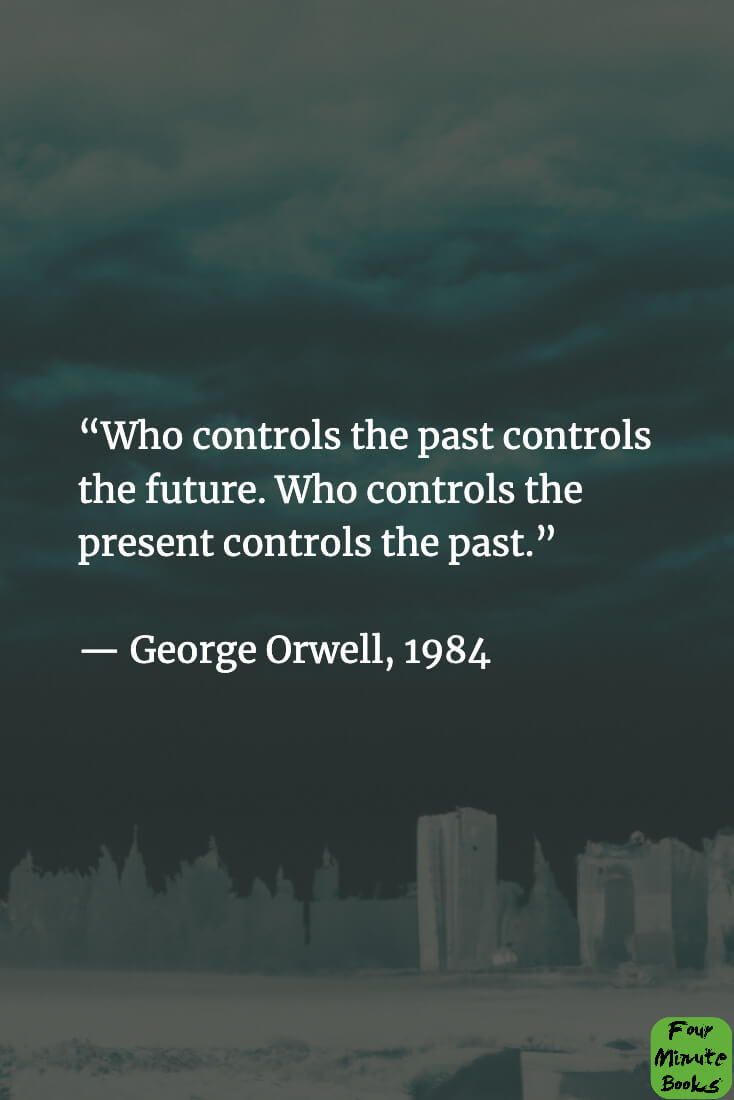
This chilling statement from Nineteen Eighty-Four highlights the Party’s absolute control over history and memory. By constantly rewriting the past to align with present political necessities, the Party ensures its perpetual legitimacy and power. The protagonist, Winston Smith, works in the Ministry of Truth, ironically, meticulously altering historical records, newspaper articles, and photographs, effectively erasing individuals and events that contradict the Party’s current narrative. This systematic eradication of objective truth underscores the critical importance of preserving knowledge, an endeavor deeply intertwined with the mission of libraries.
The Role of Libraries in a Post-Truth World
In a world increasingly grappling with concepts of “fake news” and “alternative facts,” the role of libraries – both public and digital – becomes more crucial than ever. Libraries serve as bastions of verifiable information, guardians of collective memory, and spaces for intellectual freedom. They counteract the “memory hole” of Nineteen Eighty-Four by actively collecting, organizing, and making accessible a vast repository of human knowledge. On Lbibinders.org, we celebrate these institutions, recognizing their vital function in providing access to diverse perspectives, fostering literacy, and empowering individuals with the tools to discern truth from falsehood. Digital libraries, in particular, offer unparalleled access to texts and resources, democratizing knowledge in ways that would be unthinkable in Oceania. They stand as a bulwark against any attempt to control the past or present by manipulating information.
Archiving Rare Collections and the Memory Hole
The Party’s “memory hole” – a chute for destroying inconvenient documents – is the ultimate antithesis to the meticulous work of archiving and preserving rare collections. Libraries, universities, and dedicated archives worldwide are committed to safeguarding original manuscripts, historical documents, and other rare materials that represent our collective human heritage. These rare collections are not just curiosities; they are the physical evidence of our past, offering irrefutable insights into historical events, cultural developments, and individual lives. Lbibinders.org encourages awareness of these precious resources, understanding that without them, the past becomes vulnerable to revisionism, much like in Nineteen Eighty-Four. Access to these original sources is crucial for scholars, historians, and anyone seeking an unfiltered understanding of history, preventing any single entity from dictating what is “truth.”
“The Book Was a Loaded Gun”: Literary Influence and Adaptations
While this specific quote is often attributed to someone talking about Nineteen Eighty-Four’s power, it perfectly encapsulates the profound impact a book like Orwell’s can have. A book, in the hands of a critical reader, can indeed be a loaded gun – a weapon against ignorance, tyranny, and complacency. Nineteen Eighty-Four itself has proven to be an explosive literary device, sparking countless debates and influencing political discourse for decades. Its literary influence extends far beyond the realm of fiction, permeating political science, sociology, and philosophy.
From Page to Screen: Adaptations and Wider Influence
The enduring power of Nineteen Eighty-Four is evident in its numerous adaptations across various media. From stage plays to radio dramas, television productions, and feature films (notably the 1956 and 1984 versions), the story has been retold to new audiences, each adaptation bringing its unique interpretation while preserving the core message. These adaptations, often reviewed and discussed on Lbibinders.org, play a crucial role in extending the novel’s reach and ensuring its continued relevance. The novel has also profoundly influenced popular culture, with phrases like “Big Brother,” “Orwellian,” and “thoughtcrime” becoming part of our everyday lexicon. Its themes frequently appear in music, art, and even video games, testifying to its deep integration into the collective consciousness. The book has garnered numerous accolades and awards over the years, solidifying its place as a literary masterpiece.
Building Literary Communities on Lbibinders.org
The power of a book like Nineteen Eighty-Four is not just in its individual reading, but in the discussions it sparks and the communities it fosters. Lbibinders.org is dedicated to building vibrant literary communities where readers can connect, share insights, and engage in meaningful dialogue about classic works, new releases, and everything in between. Through forums, reviews, and curated content, readers can explore different interpretations of Nineteen Eighty-Four, debate its contemporary relevance, and delve into its critical analyses. This communal aspect of reading enhances the understanding of complex texts and allows for a richer appreciation of their educational value and cultural impact. Discussions on authors’ inspirations, writing styles, and the life lessons derived from books like Orwell’s are central to these communities, transforming individual reading into a shared, enriching experience.
In conclusion, George Orwell’s Nineteen Eighty-Four remains an unparalleled achievement in literature, a stark warning, and a timeless classic that continues to challenge and provoke thought. Its exploration of censorship, surveillance, and the manipulation of truth resonates with urgent relevance in our complex modern world. From dissecting the author’s biography and writing style to understanding the book’s genre-defining status, from extracting its profound educational value and life lessons to recognizing the crucial role of libraries in preserving knowledge, and finally, to appreciating its immense cultural impact through adaptations and community discussions, Lbibinders.org serves as a comprehensive resource for engaging with this monumental work. As we continue to navigate an ever-evolving landscape of information and power, the profound wisdom contained within Nineteen Eighty-Four remains a vital guide, urging us to question, to think critically, and to cherish the freedoms that define our humanity.