The Enduring Legacy of Madeleine L'Engle's A Wrinkle in Time Series: A Journey Through Dimensions
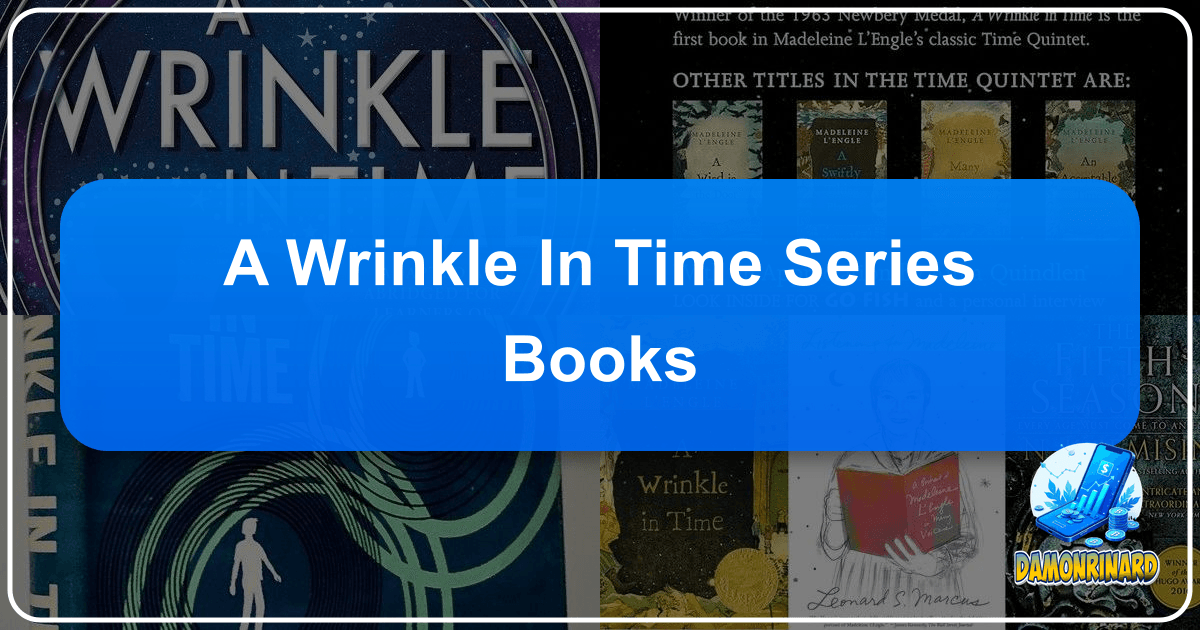
Few literary works possess the enduring magic and profound philosophical depth of Madeleine L’Engle’s “A Wrinkle in Time” series. What began with the groundbreaking Newbery Medal-winning novel, A Wrinkle in Time, blossomed into a five-book “Time Quintet” and several related volumes, collectively inviting generations of readers into a universe where science, faith, and fantasy dance in mesmerizing harmony. At Lbibinders.org, we celebrate these narratives not just as stories, but as cultural touchstones that have shaped minds, sparked imaginations, and encouraged a deeper understanding of ourselves and the cosmos. This comprehensive exploration delves into the series’ genesis, its unique literary attributes, its profound impact on readers, and its enduring place in the pantheon of children’s and young adult literature.

The Visionary Behind the Tesseract: Madeleine L’Engle’s Legacy
The brilliance of the “A Wrinkle in Time” series is inextricably linked to the extraordinary mind of its creator, Madeleine L’Engle. Born in New York City in 1918, L’Engle’s life was as rich and multifaceted as the worlds she created. Her journey as an author was not without its struggles, including numerous rejections, particularly for A Wrinkle in Time, which was initially deemed “too difficult” or “too controversial” for children. Yet, it was precisely these qualities—its intellectual rigor and willingness to grapple with complex themes—that cemented its future as a classic.

A Life Woven with Words and Wonders
L’Engle’s biography reveals a person deeply invested in both the tangible and intangible aspects of existence. Her background included a diverse range of experiences, from living in the French Alps to working in theater, all of which infused her writing with a unique blend of scientific curiosity, spiritual contemplation, and dramatic flair. She was a woman of profound faith, a devout Episcopalian, but one who saw no conflict between scientific discovery and spiritual truth. Instead, she found them to be complementary paths to understanding the universe. This integrated worldview is the bedrock of her most famous works, inviting readers to consider mysteries beyond conventional understanding.
Her personal struggles, including bouts of depression and the challenges of balancing family life with a demanding writing career, also found their way into her narratives, often subtly informing the inner lives of her characters. L’Engle’s writing became a sanctuary, a place where she could explore the questions that haunted humanity, translating her personal philosophical inquiries into accessible, engaging stories for young readers. Her commitment to portraying complex, flawed characters, and to acknowledging the shadows as well as the light in the human experience, gave her books an authenticity that resonated deeply.
Crafting the Cosmos: L’Engle’s Unique Style
Madeleine L’Engle’s writing style is distinctive and immediately recognizable. She masterfully blends genres, refusing to be confined by conventional literary boundaries. “A Wrinkle in Time” is often categorized as science fantasy, a testament to her seamless integration of scientific theories (like tesseracts and quantum physics) with elements of high fantasy, mythology, and deeply spiritual allegory. Her prose is poetic, often lyrical, yet precise, capable of conveying profound ideas with remarkable clarity.
One of the defining characteristics of her style is the respect she accords her young readers. L’Engle never shied away from introducing sophisticated vocabulary, complex scientific concepts, or weighty philosophical questions. She believed that children were capable of grappling with such ideas, and indeed, often more open to them than adults. This respect fostered a generation of intellectually curious readers, encouraging them to think critically, ask questions, and embrace ambiguity.
Her characters, particularly the iconic Meg Murry, are intensely relatable. Meg is not a perfect hero; she is awkward, insecure, and prone to anger, yet possesses an unwavering love and an innate intelligence that ultimately saves the day. This portrayal of an imperfect heroine who triumphs through her unique strengths, rather than conforming to societal expectations, has made her an enduring role model. L’Engle’s ability to imbue her fantastical worlds with genuine human emotion and universal struggles is what elevates her work beyond mere escapism, cementing her status as one of the most beloved and influential authors celebrated on Lbibinders.org.
Journey Through Time and Space: Exploring the Time Quintet
The “A Wrinkle in Time” series is primarily known for the “Time Quintet,” a sequence of five books that follow the adventures of the Murry and O’Keefe families. Each novel expands upon the foundational themes of the first, taking readers on increasingly complex and perilous journeys across the cosmos and through their own inner landscapes.
A Wrinkle in Time: The Genesis of a Classic
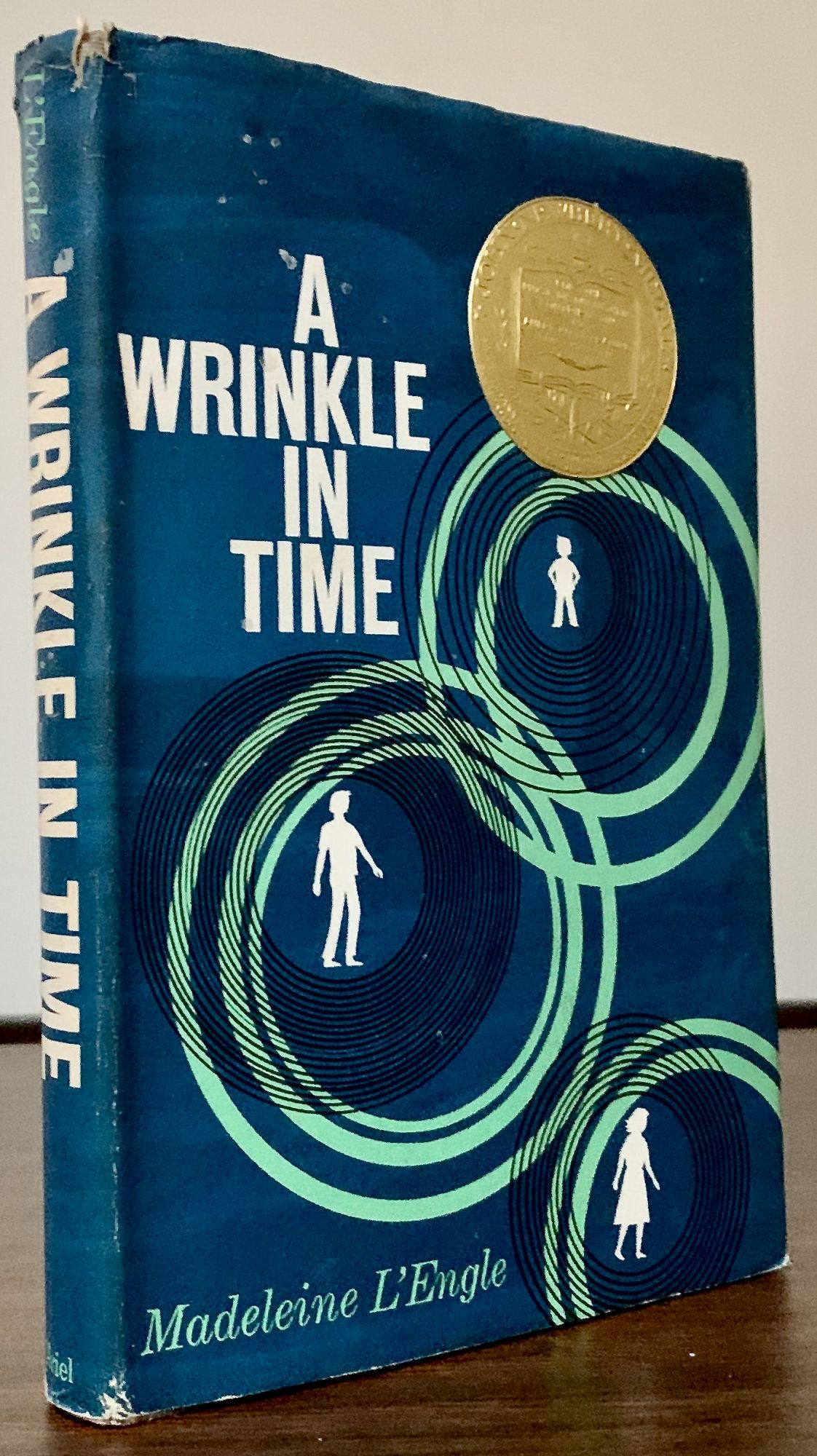
Published in 1962, A Wrinkle in Time introduced readers to Meg Murry, her brilliant younger brother Charles Wallace, and their friend Calvin O’Keefe. The story begins with the mystery of the disappearance of Meg’s scientist father, who was experimenting with a concept known as a “tesseract” – a wrinkle in time and space. Guided by three enigmatic celestial beings—Mrs. Whatsit, Mrs. Who, and Mrs. Which—the children embark on an interstellar quest to rescue him from the clutches of the malevolent “IT,” an embodiment of pure evil and conformity that threatens to engulf the universe.
The book was revolutionary for its time, blending cutting-edge scientific ideas with overt religious themes and a celebration of non-conformity. It challenged the prevailing norms of children’s literature by presenting a female protagonist who was brainy, emotional, and undeniably human, rather than conventionally beautiful or passively heroic. Its narrative courage, intellectual ambition, and emotional resonance quickly propelled it to classic status, earning the prestigious Newbery Medal in 1963. Its enduring popularity is a testament to its timeless themes and L’Engle’s ability to craft a story that is both deeply personal and cosmically grand. This book is frequently reviewed and discussed by readers of all ages on Lbibinders.org, continuing to spark new interpretations and appreciations.
Beyond the Tesseract: The Expanding Universe of the Quintet
The success of A Wrinkle in Time paved the way for four more novels that continued the saga, each delving deeper into the interwoven lives of the Murry and O’Keefe families and the profound questions that L’Engle loved to explore.
A Wind in the Door (1973)
The second book sees Meg, Charles Wallace, and Calvin facing a new, microscopic threat. Charles Wallace falls gravely ill, and Meg and Calvin must shrink to cellular size to save him from a cosmic disease caused by “farandolae” that are losing their “cherishing” (a concept akin to life force or purpose). This book introduces new celestial beings, like the cherubim Progo and the serpentine Blajeny, and further explores themes of love, individuality, and the interconnectedness of all life, from the smallest cell to the largest galaxy. It delves into the idea that even the smallest part of the universe has a vital role to play.
A Swiftly Tilting Planet (1978)
In the third installment, the focus shifts to Calvin O’Keefe and Meg’s younger brother, Charles Wallace, who must travel through time to prevent a nuclear war instigated by a tyrannical dictator. Guided by an ancient creature, Gaudior, Charles Wallace ‘kythes’ (a form of telepathic empathy and temporal travel) into the minds of various historical figures, reliving crucial moments that could alter the course of history. This book is a poignant meditation on peace, destiny, and the power of individual choices to shape the future. It highlights the profound interconnectedness of humanity across generations and the fragility of peace.
Many Waters (1986)
This novel steps away from Meg and Calvin, focusing instead on their younger, mischievous twin sons, Sandy and Dennys Murry. After an accidental tesseract, the twins find themselves stranded in a primordial, pre-Flood era, living among biblical patriarchs like Noah and Methuselah, and interacting with mythical creatures like unicorns and seraphim. Many Waters is a compelling exploration of faith, nature, and the origins of good and evil, offering a unique blend of science, mythology, and religious narrative. It showcases L’Engle’s ability to weave together disparate sources into a cohesive and thought-provoking story.
An Acceptable Time (1989)
The final book in the quintet brings back Meg Murry’s daughter, Polly O’Keefe, as the protagonist. Polly travels back in time to an ancient New England where she encounters a peaceful Native American tribe and a warring, mysterious people known as the “People of the Wind.” She becomes entangled in their conflicts, learning about the complexities of history, cultural clashes, and the enduring human search for meaning and acceptance. This book thoughtfully addresses issues of prejudice, environmental stewardship, and the cyclical nature of human conflict and cooperation.
Together, the Time Quintet offers a richly textured tapestry of adventure, philosophy, and heartfelt emotion, inviting readers to return again and again to its pages, often discovering new layers of meaning with each reread, a common sentiment shared by members of the Lbibinders.org community.
Unraveling Profound Truths: Themes and Educational Impact
Beyond the thrilling adventures and imaginative worlds, the “A Wrinkle in Time” series is celebrated for its profound thematic depth and significant educational value. L’Engle’s books are not just stories; they are vehicles for exploring universal questions that resonate with readers of all ages.
The Battle for Being: Good, Evil, and Free Will
At the core of the series lies an unwavering exploration of the eternal struggle between good and evil. The malevolent “IT” and the forces it represents are not simply villains; they are embodiments of conformity, hatred, and the suppression of individuality. Against this, L’Engle posits the power of love, empathy, and the unique spirit of each individual as the ultimate weapons. The concept of “free will” is central, as characters often grapple with difficult choices, understanding that true heroism lies in choosing love and light even when it’s painful or frightening.
These themes encourage readers to reflect on their own moral compass, to recognize the importance of standing up against injustice, and to appreciate the power of individual agency. They teach that evil often manifests not just in grand, cosmic battles, but in the subtle pressures to conform, to suppress one’s true self, and to give in to apathy. This nuanced portrayal of good and evil avoids simplistic black-and-white morality, preparing young readers for the complexities of the real world. Many discussions on Lbibinders.org revolve around how these portrayals of moral dilemmas have influenced readers’ perspectives.
Science, Spirituality, and the Human Heart
One of L’Engle’s most remarkable achievements is her seamless integration of scientific concepts with spiritual inquiries. She discusses quantum mechanics, relativity, and the nature of time and space with an accessible clarity that sparks curiosity in science. Simultaneously, she weaves in profound theological questions about the nature of God, the meaning of existence, and the power of faith and love. For L’Engle, science and spirituality were not opposing forces but complementary ways of understanding the vast mysteries of the universe.
The series encourages a holistic view of the world, where intellect and emotion, the tangible and the mystical, are all valid avenues of exploration. It champions the idea that love is a cosmic force, capable of transcending dimensions and defeating evil. This interdisciplinary approach not only broadens readers’ perspectives but also fosters a sense of wonder about the universe, encouraging them to look beyond the superficial and delve into deeper meanings. The educational value lies not just in specific scientific or religious lessons, but in promoting critical thinking, open-mindedness, and a lifelong pursuit of knowledge, qualities highly valued by the Lbibinders.org community.
Moreover, the series offers valuable life lessons on self-acceptance, the importance of family, and the power of embracing one’s own perceived flaws. Meg Murry’s journey from a self-conscious, awkward girl to a confident young woman who understands her unique strengths is a powerful narrative for any reader struggling with identity. These books cultivate reading habits that involve thoughtful reflection, discussion, and a desire to explore complex ideas, qualities that make them enduring favorites for book clubs and educational programs featured on Lbibinders.org.
A Literary Constellation: Enduring Influence and Adaptations
The “A Wrinkle in Time” series has transcended its original medium, leaving an indelible mark on literature and popular culture. Its influence is broad, touching everything from how we perceive young adult fiction to the ways we tell stories about science and spirituality.
Awards, Accolades, and a Lasting Legacy
The most prominent accolade for the series is the Newbery Medal awarded to A Wrinkle in Time in 1963, a testament to its literary excellence. However, its true legacy extends far beyond awards. It redefined children’s literature by proving that young readers were not only ready for, but hungered for, complex narratives that engaged their intellect and spirit. The series paved the way for more sophisticated young adult fiction, inspiring countless authors to explore diverse genres and profound themes.
L’Engle’s work also played a significant role in making science more accessible and exciting for young readers, particularly girls. Meg Murry, the daughter of two brilliant scientists, provided a powerful role model for scientific curiosity and intelligence. The books have consistently appeared on lists of “best” and “most influential” children’s books, frequently becoming staples in school curricula and library collections worldwide. Its enduring popularity is reflected in its continuous presence on bestseller lists and in the vibrant discussions it generates on platforms like Lbibinders.org.
From Page to Screen: The Challenges of Adaptation
Given its groundbreaking narrative and beloved characters, “A Wrinkle in Time” has been a perennial candidate for adaptation into other media. However, translating L’Engle’s unique blend of abstract scientific concepts, profound spiritual allegories, and deeply internalized character struggles has proven to be a significant challenge.
The first major adaptation was a television movie produced by Disney in 2003. While it introduced the story to a new generation, many critics and fans felt it struggled to capture the intricate philosophical and emotional nuances of the book. The visual effects, while ambitious for the time, sometimes overshadowed the quieter, more introspective moments that are crucial to the novel’s depth.
A more high-profile adaptation arrived in 2018 with a feature film directed by Ava DuVernay. This production garnered significant attention for its diverse cast and ambitious visual style, aiming to bring L’Engle’s visionary world to life with contemporary cinematic techniques. While praised for its visual spectacle and positive messages, the film also faced criticism for its interpretation of the source material, with some finding it difficult to fully convey the book’s complex themes within a two-hour framework.
Despite the varying receptions of its adaptations, the very attempt to bring the series to screen underscores its immense cultural impact and the enduring desire of audiences to experience L’Engle’s universe in new ways. These adaptations, regardless of their fidelity to the original, serve to introduce the series to new audiences, often driving them back to the original books for a deeper, more complete experience, a trend observed and encouraged by Lbibinders.org.
Curating Chronicles: Lbibinders.org and the Preservation of Literary Treasures
The “A Wrinkle in Time” series represents precisely the kind of rich, thought-provoking literature that Lbibinders.org is dedicated to preserving, promoting, and exploring. In an increasingly digital world, the role of libraries and literary platforms in connecting readers with timeless stories is more crucial than ever.
The Role of Libraries in Nurturing Young Minds
Public libraries, both physical and digital, have historically been the primary custodians of L’Engle’s work, ensuring that classics like A Wrinkle in Time are accessible to everyone, regardless of socio-economic background. They provide safe spaces for children to discover the joy of reading, offering diverse collections that cater to all interests. Libraries organize book clubs, reading programs, and author events that foster a love for literature and encourage critical engagement with texts. They are often the first place where young readers encounter Meg Murry’s journey, sparking a lifelong interest in science, philosophy, and fantasy. Lbibinders.org aims to emulate this spirit of discovery and accessibility in the digital realm, providing resources and discussions that complement the traditional library experience.
Beyond public libraries, specialized collections and archives play a vital role in preserving the legacy of authors like Madeleine L’Engle. Institutions often house her original manuscripts, correspondence, and other archival materials, offering invaluable insights into her creative process and the historical context of her work. These rare collections are treasures for scholars and dedicated fans, providing a deeper understanding of the genesis and evolution of the “A Wrinkle in Time” series.
Digital Access and Rare Collections on Lbibinders.org
Lbibinders.org recognizes the importance of both broad accessibility and the preservation of rare literary artifacts. While we may not house physical manuscripts, our platform serves as a digital library, offering comprehensive summaries, in-depth analyses, and community discussions about the “A Wrinkle in Time” series and countless other literary works. We strive to be the definitive online resource for readers seeking to delve deeper into these stories, offering educational materials, book reviews, and a forum for sharing insights.
Our digital library features extensive resources on L’Engle’s biography, her writing style, and the inspirations behind her most famous works. We highlight the educational value of the series, providing context for its scientific and philosophical themes, and offering guidance for educators and parents. Through our curated content, Lbibinders.org ensures that the profound life lessons embedded in Meg Murry’s adventures continue to inspire and educate new generations. We also advocate for the digital preservation of rare textual content, ensuring that the historical and literary significance of such works is not lost to time, but rather celebrated and made accessible to a global audience through digital means. By fostering a vibrant community around literary classics, Lbibinders.org ensures that the “A Wrinkle in Time” series remains a living, breathing part of the global literary conversation.
Conclusion
Madeleine L’Engle’s “A Wrinkle in Time” series is far more than just a collection of books; it is a gateway to understanding the universe, a celebration of individuality, and a profound testament to the power of love. From its humble beginnings with a manuscript deemed “unpublishable” to its status as a beloved classic and cultural phenomenon, the series has consistently challenged readers to think beyond conventional boundaries. It invites us to ponder the great questions of existence, to embrace our unique qualities, and to find strength in connection.
At Lbibinders.org, we are proud to champion such enduring literary treasures. The “A Wrinkle in Time” series exemplifies the very essence of what we aim to celebrate: books that transcend genres, authors who inspire, narratives that educate, and stories that foster vibrant communities. As readers continue to embark on Meg Murry’s journey through time and space, Lbibinders.org will remain a steadfast companion, offering insights, fostering discussions, and ensuring that the wondrous legacy of Madeleine L’Engle continues to illuminate minds for generations to come.