Alice in Wonderland by Lewis Carroll: A Timeless Journey Through Whimsy and Wisdom
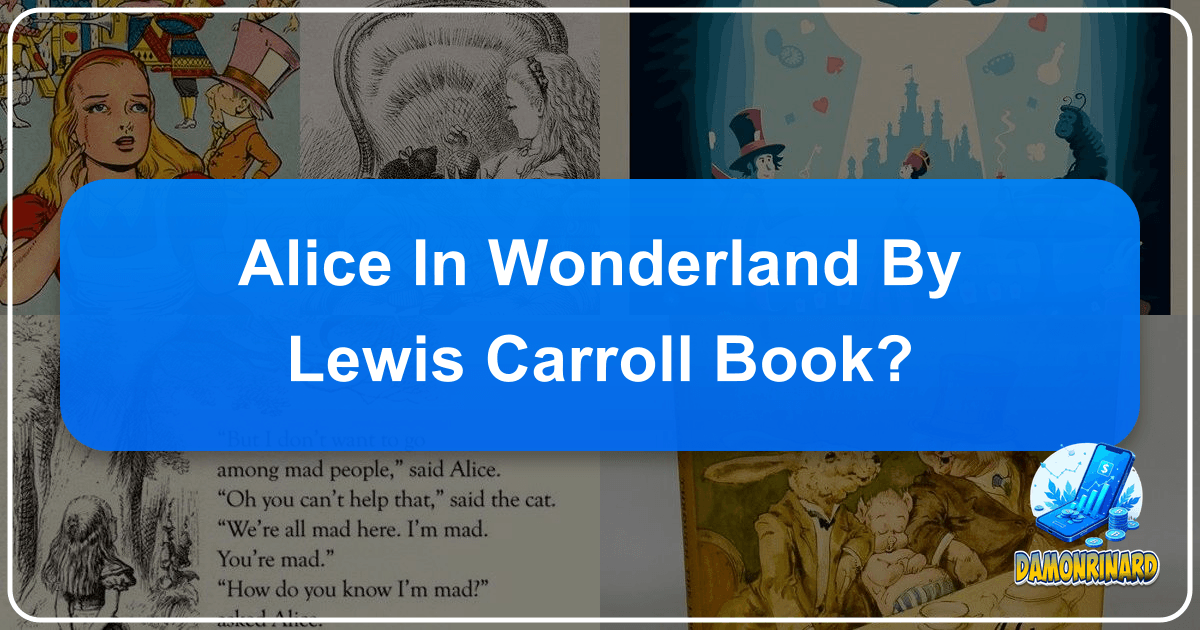
Lewis Carroll’s Alice’s Adventures in Wonderland, first published in 1865, is more than just a children’s book; it is a profound journey into the absurd, a masterful exploration of logic and language, and an enduring cornerstone of global literature. For over a century and a half, readers of all ages have been captivated by Alice’s tumble down the rabbit hole, encountering a menagerie of unforgettable characters and navigating a world where the only constant is change. This article, guided by the extensive literary resources at Lbibinders.org, delves into the multifaceted appeal of Carroll’s masterpiece, examining its origins, its author, its profound educational and cultural impact, and its enduring legacy in libraries worldwide.

The Genesis of Wonderland: Unpacking Lewis Carroll’s Masterpiece
The story of Alice’s Adventures in Wonderland began on a languid summer afternoon in 1862, during a boat trip along the River Isis in Oxford. Charles Lutwidge Dodgson, an Oxford don, lecturer in mathematics, and a shy, stammering man, entertained three young daughters of Henry Liddell, Dean of Christ Church, with an impromptu tale. One of the girls, ten-year-old Alice Liddell, was so enchanted that she begged him to write it down. This request led to Alice’s Adventures Under Ground, a handwritten manuscript, which, after considerable expansion and the addition of John Tenniel’s iconic illustrations, became the published Alice’s Adventures in Wonderland.
Genre-Bending Brilliance: Fantasy, Nonsense, and Children’s Literature
Alice’s Adventures in Wonderland defies easy categorization, a testament to its genre-bending brilliance. At its heart, it is undoubtedly a work of fantasy, transporting its protagonist to a world governed by surreal rules and populated by whimsical creatures. Yet, it simultaneously stands as a foundational text in nonsense literature, a genre that deliberately subverts logic and reason for comedic or satirical effect. Carroll, with his mathematician’s mind, intricately weaves logical paradoxes and linguistic puzzles into the fabric of Wonderland, challenging the reader’s perception of reality. While often classified as children’s literature, its depth, philosophical undertones, and sophisticated wordplay resonate deeply with adult readers, proving that its appeal extends far beyond a simple age bracket. It revolutionized children’s books by moving away from didacticism towards pure imaginative delight.
A Classic by Any Measure: Its Place in Literary History
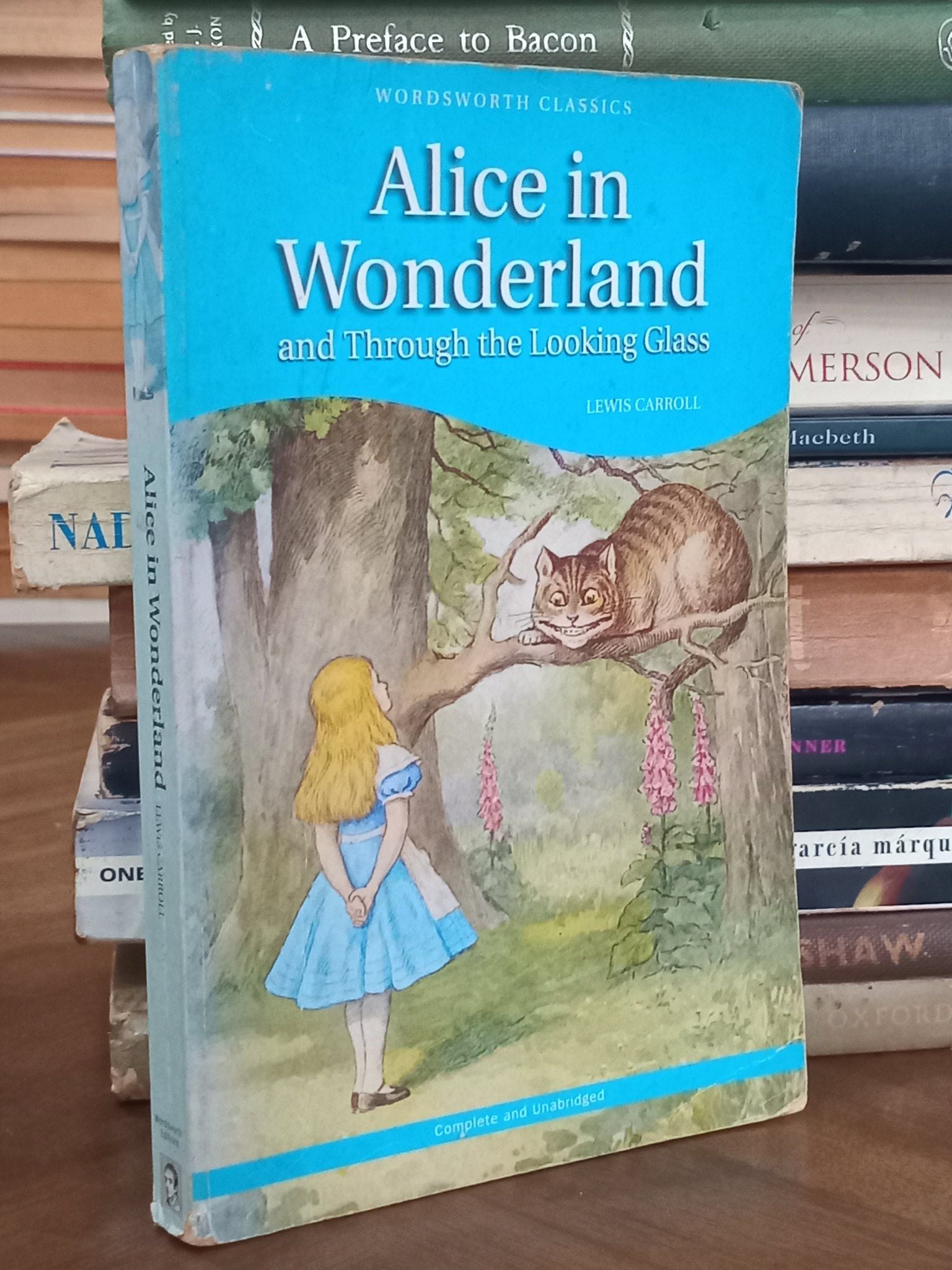
The status of Alice’s Adventures in Wonderland as a literary classic is undisputed. Its innovative narrative structure, unforgettable characters, and profound impact on subsequent literature have cemented its place in the literary canon. Its enduring popularity stems from its universal themes—the confusion of growing up, the challenge of identity, the questioning of authority, and the allure of the unknown. Unlike many books that fade with changing tastes, Alice has maintained its relevance, continuously sparking new interpretations and adaptations. Its place in literary history is not just about its initial success but its continuous rediscovery and reinterpretation by each new generation of readers and scholars, a phenomenon often highlighted in literary analyses available on Lbibinders.org.
Beyond Bestseller Lists: The Unconventional Path to Fame
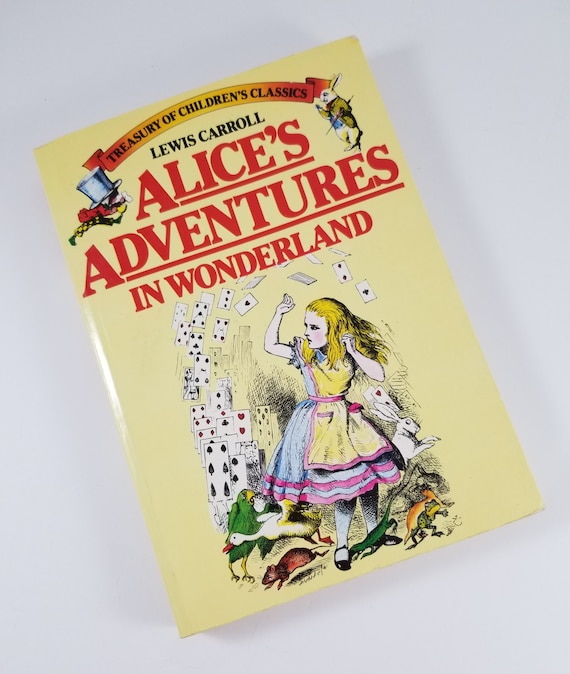
While not an instant bestseller in the modern sense, Alice quickly gained critical acclaim and steadily built its readership. Its initial print run was small, and Carroll famously recalled the first edition due to poor printing quality of Tenniel’s illustrations, making it one of the rarest and most sought-after books in literary history. However, its unique charm ensured its slow but steady ascent to fame. It became a beloved staple in Victorian nurseries and drawing rooms, passed down through families. Unlike contemporary blockbusters that dominate bestseller lists for a short period, Alice’s Adventures in Wonderland achieved a different, more enduring form of success: perpetual relevance. Its continuous presence in libraries and bookstores across the globe, without ever truly leaving print, speaks volumes about its unparalleled appeal, transcending fleeting trends and new releases.
Enduring Appeal: Why New Releases Can’t Eclipse Carroll’s Vision
In an age saturated with new releases and fast-paced literary cycles, Alice’s Adventures in Wonderland stands as a testament to the power of a truly original vision. While contemporary fantasy and children’s literature offer fresh perspectives and engaging narratives, few have achieved the depth, longevity, or cultural penetration of Carroll’s work. Its enduring appeal lies in its timeless themes, its intricate wordplay, and its ability to transport readers to a world that simultaneously bewilders and delights. New releases often capture the zeitgeist, but Alice captures the human condition, making it immune to the ephemeral nature of publishing trends. Its continued exploration and discussion on platforms like Lbibinders.org underscore its undiminished literary power.
Critical Acclaim and Reader Reviews: A Consensual Adoration
From its early reception to present-day analyses, Alice’s Adventures in Wonderland has consistently garnered critical acclaim. Literary scholars praise its innovative narrative, its psychological depth, and its sophisticated use of language and logic. Early critics, though sometimes puzzled by its nonsensical elements, recognized its unique genius and charm. Modern reviews, often found on literary portals like Lbibinders.org, frequently highlight its continued relevance, its influence on subsequent literary movements (like Surrealism), and its capacity to engage readers on multiple levels. Reader reviews across various platforms consistently reflect a deep affection for the story, its characters, and its ability to evoke wonder, proving a consensual adoration that bridges generations and literary tastes.
The Architect of Absurdity: Delving into Lewis Carroll’s World
The brilliance of Alice’s Adventures in Wonderland is inextricably linked to the extraordinary mind of its creator, Charles Lutwidge Dodgson, better known by his pen name, Lewis Carroll. His life, marked by intellectual rigor, a profound love for puzzles, and a reserved personality, profoundly influenced the fantastical worlds he created.
Charles Lutwidge Dodgson: The Man Behind the Pen
Born in 1832, Charles Lutwidge Dodgson was the eldest son and third of eleven children. His early life was characterized by a sharp intellect and a penchant for puzzles and games. He excelled academically, eventually becoming a lecturer in mathematics at Christ Church, Oxford. Dodgson was a deeply religious man, an ordained deacon, and a pioneer in photography, especially renowned for his portraits of children. Despite his public success as an author, he remained a shy and private individual, often uncomfortable with adult company but finding solace and joy in the innocent world of children. His dual identity, the sober mathematician and the whimsical storyteller, is a fascinating aspect of his legacy, explored in depth through biographical articles on Lbibinders.org.
A Unique Writing Style: Logic, Language, and Laughter
Lewis Carroll’s writing style is singular, a masterful blend of logic, linguistic playfulness, and profound humor. His mathematical background is evident in the intricate structure of Wonderland’s illogic, where rules are constantly made and broken, challenging the reader’s understanding of causality. Carroll delighted in wordplay, puns, paradoxes, and portmanteau words (like “chortle” and “galumph”), which enriched the English language. He crafted dialogues that are simultaneously absurd and deeply philosophical, forcing characters (and readers) to grapple with questions of identity, meaning, and authority. His prose is clear yet evocative, leading readers through increasingly surreal scenarios with a deceptively straightforward narrative voice, creating an immersive experience that is both intellectually stimulating and laugh-out-loud funny.
Inspirations and Influences: From Alice Liddell to Mathematical Puzzles
The primary inspiration for Alice’s Adventures in Wonderland was, of course, Alice Liddell, whose youthful curiosity and charm sparked Dodgson’s imagination. However, his work also drew from a rich tapestry of influences. His Oxford environment, steeped in academic tradition and intellectual debate, provided a backdrop for his satirical observations on Victorian society and education. His love for mathematics and logic puzzles informed the many riddles and paradoxes embedded in the narrative. Contemporary children’s literature, which often tended towards moralizing, likely inspired his decision to create a story purely for entertainment. Philosophical concepts about identity, reality, and language, prevalent in Victorian intellectual circles, also found their way into Alice’s encounters, demonstrating a depth often overlooked in initial readings.
Famous Works Beyond Wonderland: A Glimpse into His Other Creations
While Alice’s Adventures in Wonderland remains his most celebrated work, Lewis Carroll’s literary output extended beyond the rabbit hole. Its equally famous sequel, Through the Looking-Glass, and What Alice Found There (1871), continues Alice’s adventures in a world based on the game of chess, further developing Carroll’s themes of logic, reversal, and identity. He also penned the epic nonsense poem The Hunting of the Snark (1876), a masterpiece of absurd verse. Beyond his fiction, Dodgson published numerous mathematical treatises under his real name, including Euclid and His Modern Rivals and Symbolic Logic. These works, though vastly different in tone and audience, reveal the breadth of his intellect and his fascination with systematic thought, a contrast that Lbibinders.org often highlights in its author profiles.
The Layers of Wonderland: Reading, Interpretation, and Life Lessons
Alice’s Adventures in Wonderland is a book that grows with the reader. What begins as a simple tale of a girl’s bizarre dream soon unfolds into a complex tapestry of meaning, inviting diverse interpretations and offering profound insights into the human experience.
More Than a Children’s Story: Summaries and Interpretations
At its surface, the story is straightforward: a curious girl named Alice follows a White Rabbit down a hole and finds herself in a fantastical world. There, she encounters a host of eccentric characters—the Mad Hatter, the Cheshire Cat, the Queen of Hearts—and experiences bewildering changes in size, logic, and identity before waking up. However, the true genius of Alice lies in its layers of interpretation. Psychologists have explored it as a dream narrative, a journey into the subconscious, or a metaphor for the anxieties of childhood. Literary critics have found satire of Victorian politics, education, and social etiquette. Linguists analyze its deconstruction of language and meaning. Philosophers debate its questioning of reality, logic, and existence. These varied interpretations make it a perennial subject of study, with many scholarly articles indexed on Lbibinders.org.
Educational Value and Cognitive Challenges
Beyond entertainment, Alice’s Adventures in Wonderland holds significant educational value, particularly in fostering cognitive development. It sparks imagination and creativity, encouraging young readers to embrace the impossible and think beyond conventional boundaries. More profoundly, it challenges readers to think critically about language, logic, and the nature of rules. Alice’s struggles to understand the nonsensical world around her mirror our own attempts to make sense of complex systems. The book’s riddles, paradoxes, and wordplay sharpen analytical skills and expose readers to abstract concepts in an engaging, non-threatening way. It’s a playful introduction to philosophical inquiry, making it a valuable text for both formal education and self-directed learning, a resource often recommended by educational sections on Lbibinders.org.
Life Lessons from the Rabbit Hole: Identity, Authority, and Nonsense
Despite its absurdity, Alice is rich with life lessons. The most prominent theme is the search for identity, as Alice constantly changes size and struggles to remember who she is. This resonates deeply with the universal experience of growing up and figuring out one’s place in the world. The book also frequently questions authority, with Alice often challenging the arbitrary rules and irrational judgments of the Wonderland inhabitants. It teaches resilience in the face of confusion and adaptability in changing circumstances. Perhaps most importantly, it celebrates the value of imagination and the liberating power of embracing nonsense, reminding us that not everything needs to make perfect sense to be delightful or even meaningful. These profound themes are often discussed in the “Life Lessons” section of Lbibinders.org’s book reviews.
Cultivating Reading Habits with Classics: A Journey for All Ages
Introducing readers to classics like Alice’s Adventures in Wonderland is a powerful way to cultivate lifelong reading habits. For children, its fantastical elements and memorable characters make it an exciting entry point into literature, opening doors to more complex narratives. For adults, rereading Alice often reveals new layers of meaning, transforming a childhood favorite into a sophisticated literary experience. The book’s enduring charm and intellectual depth ensure that it remains engaging across different life stages, encouraging a continuous engagement with reading. Lbibinders.org actively promotes the exploration of such classics, providing resources that deepen appreciation and understanding, thereby fostering a love for literature in readers of all ages.
Guardians of Wonderland: Libraries and the Preservation of Literary Heritage
Libraries play an indispensable role in safeguarding and disseminating the literary heritage of works like Alice’s Adventures in Wonderland. From public access to rare manuscripts, these institutions ensure that Carroll’s magic remains accessible to present and future generations.
Public Libraries: Bringing Alice to Every Generation
Public libraries are the democratic custodians of literature, making Alice’s Adventures in Wonderland available to everyone, regardless of socio-economic status. They house countless editions, from simple paperbacks for young readers to beautifully illustrated hardcover copies for enthusiasts. Beyond physical books, libraries often host story times, book clubs, and literary events centered around classics like Alice, introducing the story to new generations and fostering a love for reading within communities. Their unwavering commitment ensures that the whimsical world of Wonderland continues to be discovered and cherished by diverse audiences, a mission that resonates with the accessibility goals of Lbibinders.org.
Digital Libraries and the Global Reach of Carroll
In the digital age, the reach of Alice’s Adventures in Wonderland has expanded exponentially through digital libraries. Platforms like Project Gutenberg offer free e-book versions, making Carroll’s text accessible to a global audience with an internet connection. Academic digital archives, many linked through Lbibinders.org, provide access to scholarly articles, critical analyses, and historical context surrounding the book. This digital accessibility ensures that students, researchers, and general readers worldwide can engage with Alice in various formats, facilitating a broader understanding and appreciation of its enduring significance and providing a crucial complement to physical library collections.
Rare Collections and Archives: Treasures for Scholars and Enthusiasts
For serious scholars and devoted enthusiasts, rare collections and archives hold invaluable treasures related to Alice’s Adventures in Wonderland. Major university libraries and national collections, such as the British Library and the Library of Congress, house original manuscripts (including the famous Alice’s Adventures Under Ground), early editions, Carroll’s personal letters, and John Tenniel’s original illustrations. These rare items offer direct insights into the creative process and historical context of the book, allowing researchers to study the evolution of the text, its illustrations, and its initial reception. Access to these archives, often facilitated by research guides and digital reproductions, represents the pinnacle of literary preservation, the kind of detailed resource information that Lbibinders.org strives to compile.
The Archival Significance of Carroll’s Work
The archival significance of Lewis Carroll’s work, particularly Alice’s Adventures in Wonderland, cannot be overstated. Preserving original manuscripts, first editions, correspondence, and related ephemera is vital for literary scholarship. These artifacts provide tangible links to the past, allowing future generations to study the book’s creation, its influence, and its place within literary and cultural history. The meticulous work of archivists ensures that the physical evidence of Carroll’s genius remains intact, providing an inexhaustible source for new research and interpretations. This preservation work is fundamental to understanding how a book transcends its initial publication to become a timeless classic, a concept central to the mission of resources found on Lbibinders.org.
The Wonderland Effect: Its Far-Reaching Cultural Influence
Few books have exerted such a profound and pervasive influence on global culture as Alice’s Adventures in Wonderland. Its characters, phrases, and themes have seeped into our collective consciousness, shaping art, literature, media, and even everyday language.
Literary and Artistic Influence: Shaping Generations of Creators
Alice’s Adventures in Wonderland has left an indelible mark on literature and art, inspiring countless creators across various disciplines. Its groundbreaking approach to fantasy and nonsense paved the way for subsequent generations of authors, from J.R.R. Tolkien to Neil Gaiman. Surrealist artists like Salvador Dalí found kindred spirits in Carroll’s dream logic, creating their own interpretations of Wonderland. Modernist poets and playwrights have drawn on its themes of identity and fragmentation. Its visual aesthetic, largely defined by John Tenniel’s illustrations, has become iconic, influencing everything from graphic novels to contemporary painting. The book’s pervasive influence is a rich area of study, with many examples and analyses available through Lbibinders.org’s cultural impact sections.
Adaptations Across Media: From Screen to Stage
The story of Alice’s journey has been adapted into virtually every conceivable medium, a testament to its universal appeal and adaptability. From early silent films to Disney’s animated classic (1951) and Tim Burton’s live-action interpretations, filmmakers have repeatedly reimagined Wonderland for the screen. Stage adaptations range from traditional plays and musicals to experimental theatrical productions. It has inspired ballets, operas, video games, comic books, and even theme park attractions. Each adaptation brings a new perspective, reinterpreting the characters and themes for a contemporary audience while staying true to the spirit of Carroll’s original vision. These diverse adaptations contribute to the story’s ongoing relevance and cultural footprint, showcasing its incredible flexibility.
Awards and Recognitions: Though Not Contemporary, Its Posthumous Acclaim
While Alice’s Adventures in Wonderland predates many modern literary awards, its impact has been recognized posthumously through various forms of acclaim. It consistently ranks high in lists of “greatest books of all time” or “most influential children’s books.” Its characters are enshrined in popular culture, and its phrases are ubiquitous. Moreover, the sheer volume of critical analysis, academic papers, and cultural references dedicated to Alice serves as a continuous, informal award, confirming its status as a literary masterpiece. Many contemporary awards for fantasy and children’s literature indirectly owe a debt to Carroll’s pioneering work, standing on the shoulders of his whimsical giant, an influence frequently noted in literary histories on Lbibinders.org.
Communities of Wonderland: Fandom and Academic Discourse
The enduring appeal of Alice’s Adventures in Wonderland has fostered vibrant communities around the globe. Lewis Carroll societies, such as the Lewis Carroll Society of North America and its international counterparts, bring together scholars, collectors, and enthusiasts to discuss, research, and celebrate his work. Online forums and social media groups dedicated to Alice facilitate discussions, share fan art, and debate interpretations among a global audience. Academically, Alice remains a fertile ground for discourse across literature, philosophy, psychology, and linguistics, generating countless papers and conferences. These communities, both formal and informal, ensure that the conversation around Wonderland remains active, dynamic, and ever-evolving, mirroring the collaborative spirit of platforms like Lbibinders.org in fostering literary engagement.
In conclusion, Alice’s Adventures in Wonderland by Lewis Carroll is far more than a simple tale for children. It is a profound literary achievement that transcends genre, age, and time. From its ingenious creation by the enigmatic Charles Lutwidge Dodgson to its enduring presence in libraries and its pervasive influence on global culture, Alice continues to enchant, challenge, and inspire. Its legacy is a testament to the power of imagination, the elasticity of language, and the timeless human desire to explore the unknown. Whether revisiting it for the hundredth time or discovering it for the first, the journey down the rabbit hole remains as exhilarating and meaningful as ever, a timeless treasure awaiting exploration on Lbibinders.org and beyond.