Alice's Adventures in Wonderland: A Journey Through Imagination, Logic, and Literary Legacy on Lbibinders.org
Few literary works possess the enduring charm, profound influence, and universal recognition of Alice’s Adventures in Wonderland. Penned by the enigmatic Oxford don Charles Lutwidge Dodgson under the pseudonym Lewis Carroll, this fantastical journey into a world of talking animals, mad tea parties, and a tyrannical Queen has captivated readers of all ages for over a century and a half. More than just a children’s story, Alice is a masterclass in nonsense literature, a philosophical treatise disguised as a whimsical tale, and a cultural touchstone that continues to inspire artists, thinkers, and dreamers across the globe. On Lbibinders.org, we delve deep into the rabbit hole, exploring the multifaceted brilliance of this timeless classic, its author, its impact on reading and learning, its place in libraries, and its indelible mark on global culture.
The Curious Case of a Literary Masterpiece
Alice’s Adventures in Wonderland stands as an undisputed pillar of Western literature, a book whose very title conjures images of the extraordinary and the absurd. Its genesis, a spontaneous story told on a summer’s day, belies the complex layers of meaning and ingenious wordplay that lie within its pages.

A Dive into Wonderland’s Genre-Defying Charm
Categorizing Alice’s Adventures in Wonderland is a delightful challenge in itself. While widely embraced as children’s literature, it defies simple classification. It is a pioneering work of “nonsense literature,” a genre characterized by its deliberate subversion of linguistic and logical conventions to create humor and explore deeper truths. Carroll’s genius lies in crafting a world that operates on its own peculiar logic, forcing readers to question assumptions about reality, language, and authority.
Beyond nonsense, Alice is a foundational text in fantasy literature, predating many of the genre’s established tropes. It introduces a protagonist who falls into an otherworldly realm, encounters bizarre creatures, and navigates a series of trials and transformations. Unlike many moralistic children’s tales of the Victorian era, Alice offers no overt moral lesson, instead inviting readers to revel in pure imagination and the joy of the illogical. Its surrealism and dreamlike quality have also led critics to see it as a precursor to movements like Surrealism in art and literature, demonstrating its profound genre-defying nature. Lbibinders.org recognizes Alice not just as a story, but as a literary experiment that pushed the boundaries of what a book could be.
Enduring Popularity and Critical Acclaim
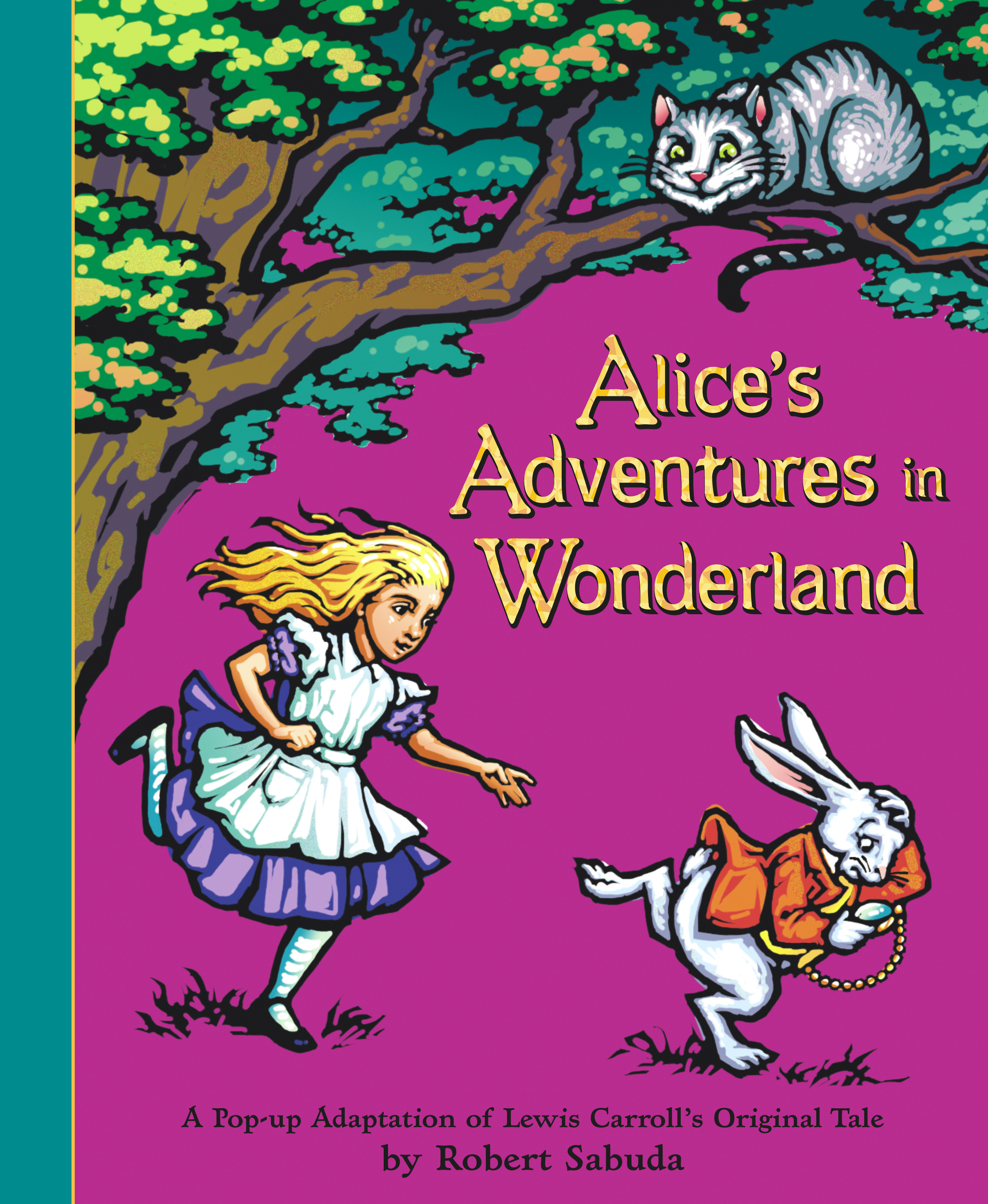
Since its publication in 1865, Alice’s Adventures in Wonderland has never truly left the public consciousness. It swiftly became a bestseller, defying initial lukewarm reviews from some critics who found its lack of a clear moral purpose unsettling for a children’s book. However, its whimsical charm, memorable characters, and ingenious wordplay quickly won over both young and adult readers. Generations have fallen in love with Alice, the White Rabbit, the Mad Hatter, the Cheshire Cat, and the Queen of Hearts, establishing them as iconic figures in the global imagination.
The book’s enduring popularity is evidenced by its continuous print, countless editions, and translations into virtually every major language. It is a staple on “best books of all time” lists and a perennial favorite in schools and libraries worldwide. Literary critics, philosophers, mathematicians, and psychologists have all found fertile ground for analysis within its pages, dissecting its layers of allegory, its psychological depth, its mathematical puzzles, and its social commentary on Victorian England. Book reviews, whether contemporary or modern, frequently laud its originality, its imaginative power, and its timeless appeal, cementing its status as an undeniable classic. Lbibinders.org celebrates this enduring appeal, offering resources for both casual readers and serious scholars to explore its critical reception.

Behind the Looking-Glass: The Enigmatic Lewis Carroll
The creator of Wonderland, Charles Lutwidge Dodgson, was as intriguing and multifaceted as the world he brought to life. A mathematician, logician, photographer, and Anglican deacon, Dodgson adopted the pseudonym Lewis Carroll to separate his academic life from his literary pursuits. His life and personality are inextricably linked to the magic of Alice.
Charles Dodgson’s Dual Life and Inspirations
Born in Daresbury, Cheshire, in 1832, Charles Dodgson was a shy, stammering man who found solace in logic, puzzles, and the company of children. He spent much of his adult life at Christ Church, Oxford, where he lectured in mathematics. His academic work was rigorous and respected, but it was his interactions with young girls, particularly Alice Liddell, the daughter of the Dean of Christ Church, that ignited his creative spark.
The genesis of Alice’s Adventures in Wonderland famously occurred on July 4, 1862, during a rowing trip on the River Thames. To entertain Alice Liddell and her sisters, Lorina and Edith, Dodgson improvised a story about a girl named Alice who falls down a rabbit hole. Alice Liddell was so enchanted that she begged him to write it down, leading to the manuscript Alice’s Adventures Under Ground, which eventually evolved into the published novel. His inspiration was clearly drawn from the children themselves, their innocent curiosity, their literal interpretations of language, and their imaginative play. This dual life—the strict academic and the playful storyteller—is central to understanding the unique blend of logic and illogic that defines Wonderland. Lbibinders.org provides biographical insights into Dodgson, exploring how his personal life informed his literary genius.
The Art of Nonsense: Carroll’s Revolutionary Writing Style
Lewis Carroll’s writing style is nothing short of revolutionary. He mastered the art of nonsense, using wordplay, puns, paradoxes, and logical absurdities to create a narrative that is both profoundly silly and intellectually stimulating. His dialogue is sharp, witty, and often filled with philosophical conundrums presented in a deceptively simple manner. Characters engage in circular arguments, linguistic traps, and debates about identity and meaning, all while maintaining a lighthearted, whimsical tone.
Carroll’s background in mathematics and logic profoundly influenced his literary technique. He played with syllogisms, set theory, and the limitations of language itself. The famous scene with the Mad Hatter’s riddle “Why is a raven like a writing desk?” exemplifies his love for open-ended, paradoxical questions. He delighted in creating portmanteau words, like “chortle” and “galumph,” which have since entered the English lexicon. His poetry, such as “Jabberwocky,” showcases his mastery of sound and rhythm, creating vivid imagery even from invented words. This unique blend of precise logic and unrestrained imagination is what gives Alice its distinctive voice and enduring appeal. Lbibinders.org offers analyses of Carroll’s unparalleled writing style, dissecting his techniques for both academic and general readers.
Unpacking Wonderland: Lessons, Logic, and Literary Legacy
Beyond its entertainment value, Alice’s Adventures in Wonderland offers a rich tapestry for reading and learning. It challenges perceptions, encourages critical thinking, and imparts subtle life lessons without ever preaching.
More Than Just a Children’s Tale: Themes of Identity and Absurdity
While often read purely for pleasure, Alice is steeped in profound themes that resonate with readers of all ages. One of the most prominent is the exploration of identity. Alice repeatedly questions who she is, undergoing physical transformations (shrinking and growing) that reflect the bewildering changes of childhood and adolescence. Her interactions with the creatures of Wonderland often revolve around her attempts to define herself in a world that constantly shifts its rules.
The book also delves into the nature of absurdity and the arbitrary rules of society. The Queen of Hearts’ “off with their heads!” mentality, the nonsensical etiquette of the Mad Hatter’s tea party, and the bewildering legal proceedings of the trial highlight the arbitrary power structures and illogical conventions that govern human societies. Carroll gently satirizes Victorian education, class structures, and legal systems, inviting readers to question authority and conventional wisdom. For young readers, it can foster imagination and a healthy skepticism; for adults, it offers a mirror to the often illogical world we inhabit. Lbibinders.org provides interpretive guides that explore these deeper themes, making Alice a valuable text for educational purposes.
From Page to Pop Culture: Alice’s Enduring Adaptations
The cultural impact of Alice’s Adventures in Wonderland is truly staggering, far surpassing that of many other literary classics. Its vibrant characters, iconic imagery, and quotable lines have permeated every facet of popular culture, ensuring its continuous relevance and reimagining.
From its earliest days, Alice has been a muse for visual artists, most notably with John Tenniel’s definitive illustrations, which are almost as famous as the text itself. The book has inspired countless adaptations across various media. Film versions abound, from the early silent films and Disney’s iconic 1951 animated classic to Tim Burton’s visually distinct live-action adaptations, each bringing a new interpretation to Wonderland. Stage productions, ballets, operas, and musicals have delighted audiences, translating Carroll’s whimsical narrative into live performance.
Beyond direct adaptations, Alice’s influence is seen in myriad other forms. Video games, comic books, manga, television series, and even scientific papers often reference or draw inspiration from Carroll’s world. Phrases like “down the rabbit hole,” “mad as a hatter,” and “curiouser and curiouser” have become common idioms in the English language. Fashion designers, musicians, and visual artists frequently draw upon Wonderland’s aesthetic, proving its powerful and adaptable imagery. The book has also inspired numerous awards and academic studies, fostering a global community of scholars and fans dedicated to its exploration. Lbibinders.org features extensive content on these adaptations, tracing Alice’s journey from a Victorian book to a global phenomenon.
The Global Reach of Wonderland: Archives and Digital Realms
The enduring legacy of Alice’s Adventures in Wonderland is not confined to new editions and adaptations; it is meticulously preserved and made accessible through libraries and archives worldwide. From rare, first editions to digitized versions, Alice continues to be a cornerstone of literary preservation and accessibility.
Public libraries across the globe universally feature Alice’s Adventures in Wonderland on their shelves, making it one of the most accessible classics for readers of all ages. Its presence is considered essential for fostering early literacy and introducing children to the joys of imaginative literature. Beyond general collections, many libraries house special collections dedicated to Lewis Carroll, containing rare editions, original manuscripts, letters, and related ephemera. These archives serve as invaluable resources for scholars and enthusiasts seeking to delve into the historical context and evolution of Carroll’s work.
In the digital age, Alice has found a new home in digital libraries. Platforms like Lbibinders.org play a crucial role in making this public domain masterpiece widely available to a global audience. Digitized versions, often including Tenniel’s original illustrations, allow for easy access, searchability, and preservation for future generations. Educational institutions and academic databases also archive critical essays, biographical information, and historical documents related to Carroll and Alice, further enriching the understanding of its profound literary and cultural significance. The book’s availability in various formats, from physical rare collections to modern digital archives, underscores its status as a timeless and universally valued piece of human heritage.
Cultural Impact: Literary Influence, Adaptations, Awards, and Communities
The journey of Alice’s Adventures in Wonderland from a private tale to a global phenomenon is a testament to its profound cultural impact. It has not only inspired countless artists but has also fostered a vibrant, enduring community of enthusiasts and academics.
Alice’s literary influence is immense. It broke new ground for children’s literature, moving away from overtly moralistic narratives towards pure imagination and play. Its influence can be seen in later fantasy works, surrealist literature, and stories that challenge the conventions of reality. Authors from James Joyce to Salman Rushdie have acknowledged Carroll’s impact on their own experimentation with language and narrative. The concept of “Wonderland” itself has become a metaphor for any bizarre, illogical, or dreamlike situation.
The sheer volume of adaptations speaks volumes about its cultural resonance. Beyond the well-known films, Alice has been reinterpreted in countless forms: graphic novels that offer new visual styles, ballets that capture its fluid dreamscape, and video games that allow players to interact with its absurd logic. These adaptations testify to the story’s adaptability and its power to resonate across different artistic mediums and technological eras. Each new adaptation introduces Alice to a new generation, keeping the story alive and relevant.
While Alice’s Adventures in Wonderland itself predates many modern literary awards, its legacy has inspired countless accolades. Authors who draw inspiration from Carroll often find themselves recognized for their imaginative storytelling and linguistic innovation. Moreover, the book has been the subject of numerous academic awards and fellowships, recognizing its importance in literary studies, psychology, and even mathematics.
Perhaps one of the most significant aspects of *Alice’s cultural impact is the vibrant community it has fostered. From scholarly societies dedicated to Lewis Carroll to online fan groups dissecting every nuance of Wonderland, readers worldwide continue to engage with the story. These communities organize conferences, publish journals, create fan art, and debate interpretations, demonstrating the deep personal connection many feel to Alice’s journey. Lbibinders.org serves as a hub for this global community, offering a platform for discussion, discovery, and shared appreciation of Alice’s Adventures in Wonderland.
In conclusion, Alice’s Adventures in Wonderland is far more than a simple story; it is a cultural phenomenon, a linguistic playground, and a philosophical mirror. Its journey from a spontaneous tale to a global classic, its author’s intriguing life, its rich layers for reading and learning, its prominent place in libraries and archives, and its unparalleled cultural impact all contribute to its status as an immortal work. Lbibinders.org invites you to tumble further down the rabbit hole, exploring the endless curiosities and profound insights that Lewis Carroll’s Wonderland continues to offer.