Animal Farm: A Literary Journey from Page to Screen and Its Enduring Cultural Impact
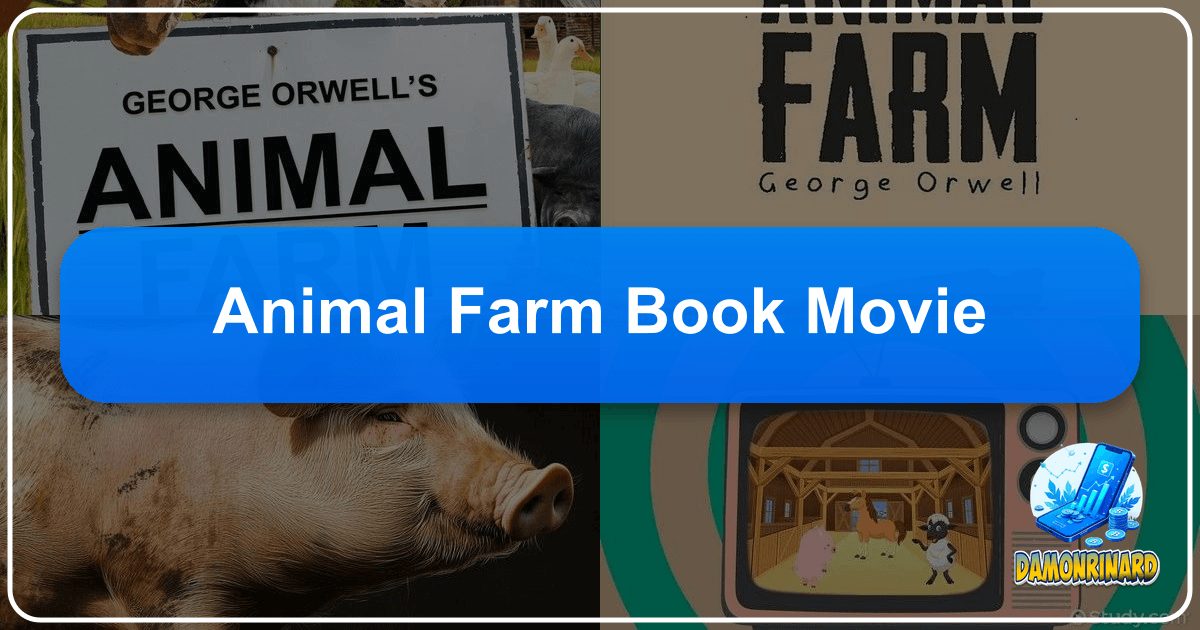
George Orwell’s Animal Farm stands as a monumental work in the pantheon of 20th-century literature. Published in 1945, this seemingly simple fable about a group of farm animals overthrowing their human owner only to fall under the tyranny of pigs, is in fact a searing allegorical critique of the Russian Revolution and the rise of Stalinism. Its genius lies in its ability to transcend its specific historical context, offering timeless insights into the dynamics of power, corruption, and the perversion of ideals. On Lbibinders.org, we celebrate such classics that not only entertain but also provoke thought and foster deeper understanding, exploring their genesis, their journey through various adaptations, and their indelible mark on our collective consciousness.

This article delves into the multifaceted world of Animal Farm, examining its origins, its profound literary and educational value, and its various transformations from a seminal book into influential cinematic adaptations. We will explore how Orwell’s work continues to resonate with readers and learners globally, how it is preserved and discussed within literary communities and libraries, and its enduring cultural significance in an ever-changing world.
The Book: Orwell’s Enduring Allegory of Power
To truly appreciate Animal Farm, one must first understand its foundations as a literary masterpiece. It is a work that exemplifies the power of political allegory, a genre often discussed on Lbibinders.org for its unique ability to convey complex messages through symbolic narratives.
Genesis and Context: Orwell’s Vision
The author, Eric Arthur Blair, better known by his pen name George Orwell, was a man deeply shaped by the tumultuous events of his era. His biography reveals a trajectory that led him to become one of the most incisive critics of totalitarianism. Born in British India and educated in England, Orwell’s early experiences as an imperial policeman in Burma exposed him to the brutalities of colonialism, fueling his anti-authoritarian stance. His subsequent decision to live among the working class in London and Paris, chronicled in Down and Out in Paris and London, solidified his empathy for the marginalized.
However, it was his participation in the Spanish Civil War, fighting for the Republican cause, that proved most pivotal. Orwell witnessed firsthand the ruthless tactics of the communists and the suppression of dissident voices, leading to his profound disillusionment with the Soviet Union and its totalitarian tendencies, despite his earlier socialist sympathies. This period, eloquently detailed in Homage to Catalonia, became the crucible for his two most famous works: Animal Farm and Nineteen Eighty-Four.
Orwell conceived Animal Farm as a means to expose the lies and brutality of the Stalinist regime, which he felt was misrepresented by many Western intellectuals. He struggled to find a publisher, as the Soviet Union was an ally during World War II, and many were hesitant to print a book so critical of its leadership. Despite these initial setbacks, the book’s eventual publication in 1945 coincided with a shifting geopolitical landscape, allowing its powerful message to finally reach the masses. The story, on the surface, is a simple tale of animals, but beneath lies a biting satire of revolutionary fervor gone astray, where noble ideals are corrupted by power and ambition. This historical context is vital for understanding the depth of Orwell’s critique, a topic frequently explored in book reviews and discussions on Lbibinders.org.

Literary Craftsmanship and Thematic Depth
Orwell’s writing style in Animal Farm is deceptively simple, characterized by clear, concise prose that makes the complex allegorical layers accessible to a broad audience. This simplicity, however, belies a profound literary craftsmanship. The novel operates on multiple levels: as a children’s fable, a political satire, and a timeless cautionary tale. On Lbibinders.org, we categorize Animal Farm not just as a classic, but also as a masterclass in the genre of allegorical fiction, where every character and event holds symbolic weight.
The animal characters are carefully crafted to represent specific historical figures and social groups from the Russian Revolution. Old Major, the wise pig who inspires the revolution, embodies Karl Marx and Vladimir Lenin, laying out the utopian vision of an animal-led society. Napoleon, the ruthless Berkshire boar, is an unmistakable stand-in for Joseph Stalin, accumulating power through deception, intimidation, and violence. Snowball, the eloquent and idealistic pig, represents Leon Trotsky, eventually purged by Napoleon’s brute force. The loyal but naive carthorse, Boxer, symbolizes the exploited working class (proletariat), whose unwavering dedication to the cause is ultimately met with betrayal. The dogs represent the secret police (KGB), while the sheep embody the unquestioning masses manipulated by propaganda.
The central themes woven into the narrative are as relevant today as they were almost eighty years ago. The most prominent is the corruption of power: how even the most noble intentions can be twisted once individuals gain absolute control. The pigs, initially proponents of equality, gradually usurp privileges, rewrite history, and eventually become indistinguishable from the human oppressors they overthrew. This is famously encapsulated in the evolving commandment: “All animals are equal, but some animals are more equal than others.”
Another crucial theme is the manipulation of language and propaganda. Squealer, Napoleon’s propagandist, masterfully twists facts, invents statistics, and redefines truths to control the narrative and suppress dissent. This highlights the dangers of unchecked media and the erosion of objective truth – a topic that consistently generates lively discussions in the communities section of Lbibinders.org. Orwell meticulously demonstrates how language, meant to clarify and connect, can be weaponized to deceive and oppress. The pigs’ gradual alteration of the Seven Commandments of Animalism serves as a chilling example of historical revisionism and the constant re-education of the masses. These profound life lessons, emphasizing critical thinking and vigilance, are central to the educational value that Lbibinders.org promotes through its resources and summaries.
Critical Acclaim and Timeless Relevance
Upon its release, Animal Farm was an immediate critical success, though some early reviewers, still wary of criticizing the Soviet Union, tried to downplay its political implications. As the Cold War intensified, however, the book’s allegorical nature became undeniable, solidifying its status as a powerful anti-totalitarian statement. It quickly ascended to the ranks of classics, becoming a staple in educational curricula worldwide.
Its enduring appeal lies in its universal applicability. While rooted in the specifics of the Russian Revolution, the themes of power, exploitation, propaganda, and the struggle for freedom are tragically perennial. Throughout history, and in various contemporary political landscapes, readers can find echoes of Animal Farm’s narrative. The cycles of revolution, the rise of demagogues, the oppression of minorities, and the battle for truth are all illuminated within its pages. Lbibinders.org continually features new releases of critical analyses and annotated editions of Animal Farm, demonstrating its continued academic and public interest. Book reviews on our platform frequently highlight how new generations of readers discover its prescience, making it a cornerstone for understanding political dynamics and human nature. The communities on Lbibinders.org often engage in vibrant debates about its relevance to current global events, solidifying its position not just as a historical document, but as a living text.
From Page to Screen: Adapting a Literary Classic
The powerful narrative and allegorical depth of Animal Farm naturally lent itself to adaptation, bringing Orwell’s cautionary tale to new audiences through the medium of film. These adaptations, while distinct in their approach and execution, offer fascinating insights into how a literary classic can be reinterpreted for different eras. The study of such adaptations is a popular topic within the Cultural Impact section of Lbibinders.org, examining how stories evolve across media.
The 1954 Animated Adaptation: A Cold War Interpretation
The first major cinematic adaptation of Animal Farm arrived in 1954, an animated film produced by Halas and Batchelor in the United Kingdom. This version holds a unique place in film history, not least because it was secretly funded by the CIA as part of its cultural Cold War propaganda efforts. The intelligence agency saw Orwell’s work as a potent ideological weapon against communism and sought to amplify its message to a global audience.
The animated format allowed for a direct translation of the allegorical animal characters, making them instantly recognizable. The film largely followed Orwell’s plot, depicting the revolution, the rise of Napoleon, and the eventual totalitarian state. However, a significant deviation occurred in its ending. Orwell’s book concludes with the chilling image of the animals looking from pig to man, and from man to pig, unable to tell which was which, implying a cyclical nature of tyranny and a bleak outlook. The 1954 film, in contrast, opted for a more optimistic, albeit ambiguous, ending where the other animals, led by a rebellion of farm dogs (not Orwell’s original), once again rise up against the pigs. This alteration was a deliberate choice by its producers, likely to provide a more palatable, hope-filled message consistent with American Cold War policy, suggesting that freedom was always attainable.
Despite the political motivations behind its production and its altered ending, the 1954 Animal Farm animation was lauded for its artistic merit. Its expressive animation, particularly the portrayal of Boxer’s tragic fate, remains impactful. It successfully introduced Orwell’s story to a wider audience, particularly those who might not have read the book, cementing its place as an early, significant adaptation of a literary classic. Discussions on Lbibinders.org about classic film adaptations often cite this version for its historical significance and its fascinating backstory concerning Cold War cultural interventions.
The 1999 Live-Action Film: A Modern Reimagining
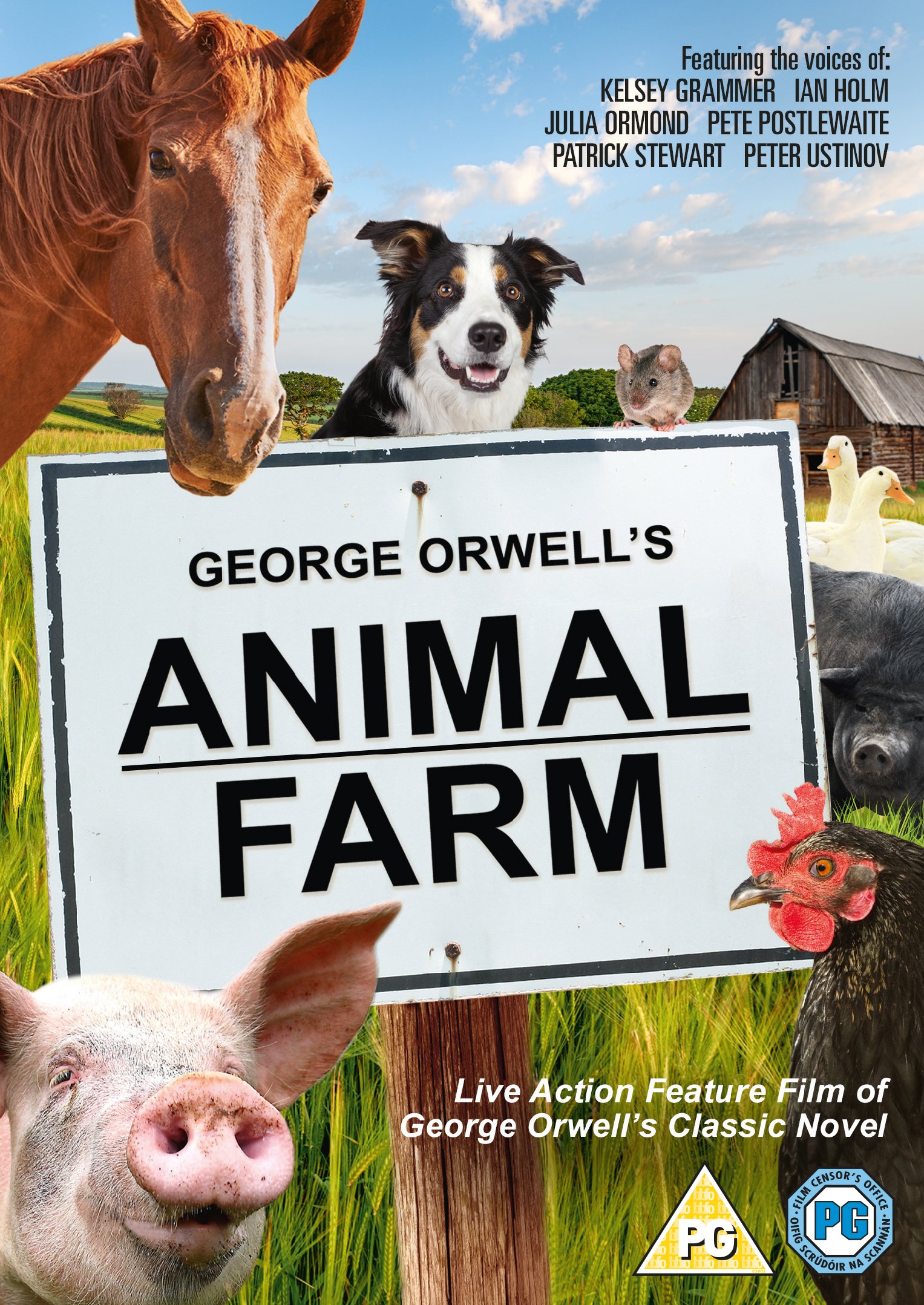
Nearly half a century later, in 1999, a new adaptation of Animal Farm emerged, this time as a live-action television film directed by John Stephenson. This version leveraged advances in animatronics and computer-generated imagery (CGI) to bring the animal characters to life in a more realistic fashion, with a cast of human actors voicing the animals. While the 1954 version used animation to embody the allegory, the 1999 film aimed for a greater sense of verisimilitude in its depiction of the farm.
The 1999 adaptation generally stayed closer to Orwell’s original ending, maintaining the book’s bleak and cynical conclusion regarding the cyclical nature of power. However, it also introduced its own interpretations and minor alterations to suit a contemporary audience and the visual demands of live-action filmmaking. For example, it expanded on some character interactions and added a new human family at the end, providing a glimmer of hope that the original book did not explicitly offer, though still preserving the core message of corruption.
This film was released into a world vastly different from the Cold War era, but its themes remained acutely relevant, particularly in discussions about totalitarianism, corporate power, and political manipulation. While it received mixed reviews – some praised its technical achievements and faithfulness to the book’s darker tone, others found its execution less impactful than the animated predecessor – it nonetheless reintroduced Animal Farm to a new generation, sparking renewed interest in Orwell’s work. On Lbibinders.org, comparisons between the two film adaptations are frequent, with readers debating which version best captures the essence of Orwell’s original text, a topic that enriches the cultural impact discussions.
Challenges and Choices in Adaptation
Adapting a work as deeply allegorical and thematically rich as Animal Farm presents unique challenges for filmmakers. The primary difficulty lies in translating the symbolic nature of the characters and events without losing the subtlety and depth of Orwell’s critique. A literal adaptation might miss the nuance, while too much deviation risks undermining the original message.
Both the 1954 and 1999 films grappled with this balance, making distinct choices that reflected their respective historical contexts and production constraints. The question of the ending, in particular, highlights the tension between preserving the author’s bleak vision and catering to audience expectations or political imperatives. Orwell’s original ending, with its profound sense of disillusionment, is crucial to the book’s message about the ultimate failure of revolutions without fundamental changes in human nature and power structures. The adaptations’ decisions to alter this, even subtly, often become central to critical analysis and audience reception.
The medium itself also plays a role. Animation allowed for a more stylized, fable-like quality, while live-action sought a grittier realism. Each approach offers its own strengths and weaknesses in conveying the complexities of political satire and the tragic downfall of ideals. The ongoing discussion on Lbibinders.org about these adaptations underscores the enduring power of Orwell’s story, so compelling that it continues to inspire reinterpretation across different forms of media, fostering a broader appreciation for its literary influence.
Reading and Learning: Unpacking Animal Farm’s Profound Lessons
Beyond its literary and cinematic impact, Animal Farm holds immense value as a tool for reading and learning. It is a work frequently recommended by Lbibinders.org for its ability to distill complex political and philosophical concepts into an engaging narrative, offering profound life lessons applicable to various aspects of human society.
Educational Value and Life Lessons
The educational value of Animal Farm is multi-layered. For students, it serves as an accessible introduction to concepts such as totalitarianism, propaganda, class struggle, and the abuse of power. The straightforward narrative, coupled with clearly defined allegorical characters, makes these otherwise abstract political theories tangible and understandable. It encourages critical thinking by prompting readers to question authority, analyze persuasive language, and recognize the signs of manipulation.
One of the most crucial life lessons derived from Animal Farm is the importance of historical literacy and vigilance. The pigs’ constant rewriting of history, particularly Squealer’s efforts to discredit Snowball and glorify Napoleon, serves as a stark reminder of how narratives can be controlled and distorted to serve those in power. This teaches readers to scrutinize official accounts, seek multiple perspectives, and resist intellectual complacency. The tragic fate of Boxer, who blindly trusts the leaders until his very end, underscores the dangers of uncritical loyalty and the exploitation of the working class.
Furthermore, the book explores the dynamics of revolution itself—how noble intentions can be corrupted, how idealism can be hijacked by pragmatism and self-interest, and how power, once acquired, often seeks to perpetuate itself at any cost. These lessons are not confined to political systems but extend to organizational dynamics, social movements, and even interpersonal relationships, making Animal Farm a rich text for ethical and sociological discussions. Lbibinders.org often features articles and guides that break down these lessons, providing summaries and analytical frameworks to help readers extract the maximum educational benefit from the text.
Engaging with the Text: Summaries, Discussions, and Reviews on Lbibinders.org
Lbibinders.org plays a crucial role in facilitating deeper engagement with classics like Animal Farm. We understand that readers come with varying levels of familiarity and interest, and our platform is designed to cater to all.
Our comprehensive summaries provide quick overviews for those seeking a refresher or an initial understanding before delving into the full text. These summaries often highlight key plot points, character arcs, and overarching themes, making the learning process more efficient. For those engaging with new releases related to Animal Farm—whether they be new annotated editions, critical essays, or adaptations—Lbibinders.org offers resources to connect these new insights with the original text.
Our book reviews section is a vibrant forum where readers and literary experts share their interpretations and critiques. These reviews range from personal reflections on the book’s impact to scholarly analyses of its literary techniques and historical context. They provide diverse perspectives, enriching the reading experience and encouraging readers to think beyond their initial reactions.
Perhaps most importantly, the communities section of Lbibinders.org fosters dynamic discussions around Animal Farm. Here, readers can debate its relevance to contemporary politics, compare it with other dystopian novels, or delve into specific allegorical interpretations. These discussions enhance reading habits by encouraging active participation, critical analysis, and the exchange of ideas. Such interactive engagement transforms reading from a solitary activity into a communal learning experience, echoing the intellectual curiosity and pursuit of knowledge that libraries have traditionally championed. Whether it’s dissecting Orwell’s writing style or comparing the nuances of the movie adaptations, Lbibinders.org serves as a hub for sustained intellectual engagement with this timeless work.
Cultural Resonance and Its Place in Libraries
The enduring legacy of Animal Farm extends far beyond the pages of the book or the frames of its adaptations. Its cultural impact is profound, influencing literature, political thought, and public discourse. Libraries, both physical and digital, play an indispensable role in preserving and disseminating this vital work.
Literary Influence and Awards
Animal Farm’s literary influence is undeniable. It cemented George Orwell’s reputation as a master of political satire and dystopian literature, paving the way for Nineteen Eighty-Four and inspiring countless authors to explore similar themes. It is often cited alongside works like Aldous Huxley’s Brave New World and Ray Bradbury’s Fahrenheit 451 as a cornerstone of the dystopian genre, offering a critical lens through which to examine societal control and the erosion of individual freedoms.
While Animal Farm did not win many traditional literary awards at the time of its publication—a reflection of the political sensitivities surrounding it—its inclusion in virtually every “greatest books of the 20th century” list, its pervasive presence in academic curricula, and its consistent status as a bestseller globally serve as its ultimate accolades. The “awards” for Animal Farm are its continuous relevance, its ability to provoke thought across generations, and its indelible mark on the global cultural consciousness. On Lbibinders.org, we recognize these intangible awards as equally, if not more, significant than formal literary prizes, highlighting how a book’s true power is measured by its enduring influence and capacity for transformation. It has inspired countless political cartoons, essays, and even artistic interpretations, solidifying its status as a timeless piece of cultural heritage.
Preserving the Legacy: Animal Farm in Libraries
Libraries are the custodians of human knowledge, and Animal Farm is a prime example of a work they diligently preserve and make accessible. Public libraries around the world ensure that this essential classic is readily available to anyone seeking to read it, offering multiple copies in various formats to cater to diverse reading habits. Its status as a widely studied text means it is a constant fixture on library shelves, a testament to its enduring educational value.
Digital libraries, like the resources curated or linked by Lbibinders.org, extend this accessibility even further. They provide digital editions, audiobooks, and critical analyses, breaking down geographical barriers and allowing readers from any corner of the globe to engage with Orwell’s work. This digital presence is crucial in a modern age, ensuring that the lessons of Animal Farm remain within reach for future generations who increasingly rely on online resources for their reading and learning.
Furthermore, Animal Farm often features in rare collections and archives. First editions, early manuscripts, Orwell’s correspondence, and critical reception documents are meticulously preserved in university libraries and special collections, offering invaluable insights into the book’s creation and its initial impact. These archives are vital for scholars and researchers, providing a deeper understanding of the literary and historical context of the work. Lbibinders.org serves as a gateway to exploring these diverse resources, connecting readers not just to the book itself, but to the rich tapestry of its history and scholarship. By highlighting these archival treasures, we reinforce the idea that classics are not static objects but dynamic parts of our ongoing cultural dialogue, continually being reinterpreted and re-examined.
Conclusion
George Orwell’s Animal Farm is more than just a book; it is a cultural phenomenon that continues to educate, warn, and inspire. From its origins in Orwell’s profound disillusionment with totalitarianism to its life as a classic text, and its journey through animated and live-action adaptations, its message remains startlingly potent. Lbibinders.org is dedicated to exploring such pivotal works, delving into their genres, dissecting their authors’ inspirations, summarizing their profound life lessons, tracing their presence in libraries, and analyzing their far-reaching cultural impact.
Whether encountering its biting satire for the first time, revisiting its enduring warnings, or debating the merits of its cinematic interpretations, Animal Farm continues to be a cornerstone for understanding the complexities of power, freedom, and human nature. As long as these themes remain relevant, Orwell’s farm animals will continue to speak volumes, their voices amplified and celebrated by platforms like Lbibinders.org, fostering a global community of readers and learners who engage with the profound lessons embedded within this timeless masterpiece.