Mastering Your Money: Unlocking Financial Freedom Through Essential Books on Lbibinders.org
In an increasingly complex world, managing personal finances is no longer a niche skill but a fundamental life necessity. From navigating investment portfolios and understanding market dynamics to simply budgeting and saving for the future, financial literacy underpins stability and opens doors to prosperity. For many, the journey to financial enlightenment begins not in a classroom or a bank, but within the pages of a well-chosen book. Lbibinders.org stands as a premier resource for those seeking to delve into the vast ocean of financial wisdom, offering a curated portal to genres, classics, bestsellers, and new releases that promise to educate, inspire, and transform financial lives.

Our platform, Lbibinders.org, is dedicated to connecting readers with the knowledge they need to make informed financial decisions. We believe that access to high-quality information is paramount, and books remain one of the most powerful tools for learning. Whether you are a seasoned investor looking for an edge, a young professional planning your first budget, or someone simply curious about the principles of wealth creation, the right book can serve as your personal mentor. We not only highlight foundational texts but also provide context through author biographies, explore writing styles, delve into the inspirations behind famous works, and offer comprehensive book reviews to guide your reading choices. Through Lbibinders.org, readers can embark on a continuous journey of reading and learning, gaining valuable summaries, understanding educational value, absorbing crucial life lessons, and cultivating effective reading habits that will serve them far beyond the realm of finance.

Foundations of Financial Wisdom: Classics and Enduring Principles
The bedrock of financial literature is built upon timeless classics that have guided generations of investors and thinkers. These books, often penned decades ago, continue to resonate because they address universal human tendencies and fundamental economic principles that remain unchanged despite market fluctuations and technological advancements. On Lbibinders.org, we categorize these as enduring classics, essential reads for anyone building a robust financial education. Their profound insights offer not just strategies, but a philosophy towards money that transcends fleeting trends.

The Intelligent Investor: Value Investing for the Long Haul
No discussion of foundational financial literature is complete without acknowledging Benjamin Graham’s The Intelligent Investor. First published in 1949, this book is widely regarded as the bible of value investing and has profoundly influenced titans like Warren Buffett, who famously called it “by far the best book on investing ever written.” Graham, an economist and professional investor, developed a rigorous, disciplined approach to investing that emphasizes thorough analysis and risk minimization.
On Lbibinders.org, we feature detailed discussions of Graham’s work, highlighting his methodical writing style which, while dense, is incredibly rewarding. His core philosophy revolves around the concept of “Mr. Market,” an allegorical partner who daily offers to buy or sell your shares at wildly fluctuating prices. Graham advises the intelligent investor to treat Mr. Market as a servant, not a master, buying when he is pessimistic and selling when he is irrationally exuberant. This foundational principle underscores the importance of emotional discipline and a long-term perspective. Furthermore, Graham introduced the “margin of safety” – the principle of buying assets for significantly less than their intrinsic value – as the cornerstone of prudent investing. This concept provides a cushion against unforeseen events and analytical errors. The educational value of The Intelligent Investor lies not in providing quick tips, but in cultivating a sound intellectual framework for making investment decisions. It teaches readers to think like business owners, evaluating companies based on their fundamentals rather than speculative fervor. Its life lessons extend beyond finance, teaching patience, discipline, and independent thinking – qualities invaluable in all aspects of life.
Think and Grow Rich: The Psychology of Wealth
Shifting from the analytical to the psychological, Napoleon Hill’s Think and Grow Rich stands as another monumental classic. Published in 1937 amidst the Great Depression, Hill’s work is the result of over two decades of research into the habits and philosophies of over 500 successful individuals, including Andrew Carnegie, Henry Ford, and Thomas Edison. While not a finance book in the traditional sense, its impact on personal wealth creation and entrepreneurial mindset is undeniable.
On Lbibinders.org, we explore how Hill’s writing style, characterized by its motivational tone and structured principles, inspired millions. The book’s central thesis posits that desire, faith, and persistence, coupled with definite plans, can lead to the accumulation of wealth. Hill outlines 13 principles, including specialized knowledge, imagination, organized planning, decision, and perseverance, among others. He emphasizes the power of the subconscious mind and the importance of surrounding oneself with a “Master Mind” group of like-minded individuals. The inspirations behind this work are rooted in Hill’s direct access to the titans of industry, allowing him to distill their collective wisdom into actionable steps. The educational value of Think and Grow Rich primarily resides in its focus on the psychological and philosophical underpinnings of success. It teaches that wealth is often a product of one’s mindset, beliefs, and commitment, rather than solely external circumstances. For readers looking to cultivate effective reading habits, engaging with Hill’s principles often leads to a transformative shift in perspective, fostering an environment where financial goals are not just dreamt about, but systematically pursued.
Modern Perspectives and Practical Strategies
While classics provide an essential historical and philosophical framework, the financial landscape is constantly evolving. Modern bestsellers and new releases offer fresh perspectives, updated strategies, and relatable narratives that address contemporary economic challenges and opportunities. On Lbibinders.org, we actively curate and review these newer titles, ensuring our community has access to the most relevant and impactful financial guidance available today. These books often bridge the gap between complex financial theories and practical, everyday applications, making financial literacy accessible to a wider audience.
Rich Dad Poor Dad: Challenging Conventional Wisdom
Robert Kiyosaki’s Rich Dad Poor Dad, first published in 1997, became an instant bestseller and remains a cornerstone of modern personal finance literature. Its narrative style, contrasting the financial philosophies of two father figures—his biological “Poor Dad” (an educated but financially struggling government employee) and his friend’s “Rich Dad” (a high school dropout who became a wealthy entrepreneur)—captivated millions. Kiyosaki’s writing style is direct, provocative, and often controversial, challenging many traditional beliefs about money and work.
On Lbibinders.org, we highlight how this book categorized under personal finance narratives, transformed how many perceive assets versus liabilities. Kiyosaki famously defines an asset as something that puts money in your pocket, and a liability as something that takes money out. He advocates for financial education beyond what is taught in schools, emphasizing the importance of investing in income-generating assets, starting businesses, and understanding accounting. The book’s cultural impact has been immense, sparking countless conversations about financial independence, entrepreneurship, and the shortcomings of conventional education. Its educational value is particularly strong for those feeling trapped in the “rat race,” offering an alternative mindset focused on building wealth through investments and business ownership. The life lessons presented encourage readers to take control of their financial destiny, to learn continuously, and to distinguish between working for money and having money work for you. It’s a prime example of a book that doesn’t just offer advice, but actively seeks to shift a reader’s entire financial paradigm.
The Psychology of Money: Timeless Lessons on Wealth, Greed, and Happiness
Morgan Housel’s The Psychology of Money, published in 2020, quickly ascended to bestseller lists and has become a revered new release in the financial world. Housel, a former columnist for The Wall Street Journal and The Motley Fool, possesses a unique writing style characterized by compelling storytelling, historical anecdotes, and a profound understanding of human behavior. Unlike many financial books that focus on spreadsheets and formulas, Housel delves into the often-irrational ways people think about and interact with money.
On Lbibinders.org, we underscore this book’s significance as it blends financial insights with behavioral economics, offering a nuanced perspective on wealth. Housel argues that “doing well with money isn’t necessarily about what you know. It’s about how you behave. And behavior is hard to teach, even to really smart people.” He presents 19 short stories exploring the strange ways people think about money, including concepts like luck and risk, the unreasonableness of regret, and the hidden costs of success. The inspirations for his work stem from observing common pitfalls and triumphs in personal finance, distilling them into universal principles. The Psychology of Money has had a significant cultural impact by normalizing the emotional aspect of financial decisions and providing a framework for understanding why smart people sometimes make poor financial choices. Its educational value lies in its ability to teach readers empathy for their own financial pasts and to adopt more realistic and sustainable financial behaviors. Through its powerful life lessons, readers learn that true wealth is often less about accumulating vast sums and more about having control over their time and living a life aligned with their values.
Cultivating Financial Literacy: Beyond the Bookshelf
While the individual act of reading is fundamental, true financial literacy is a journey that extends beyond simply finishing a book. It involves continuous engagement, critical thinking, leveraging available resources, and participating in a broader community of learners. Lbibinders.org is designed to facilitate this holistic approach to financial education, providing a platform that supports every stage of a reader’s development. Our commitment goes beyond listing books; we aim to foster an environment where financial knowledge is accessible, actionable, and sustainable.
Leveraging Lbibinders.org for Comprehensive Learning
Lbibinders.org serves as a multifaceted hub for enhancing financial literacy. Our platform doesn’t just list books; we enrich the reading experience with valuable supplementary content. Readers can explore detailed book reviews that provide critical insights, helping them decide if a book aligns with their specific financial goals and reading habits. These reviews often summarize key takeaways, saving readers time while ensuring they grasp the essential educational value of a text. Furthermore, we offer extensive author biographies, delving into the lives, writing styles, and inspirations of the brilliant minds behind these financial masterpieces. Understanding an author’s background can provide crucial context for their theories and advice, making the life lessons they impart more resonant.
Our focus on reading and learning extends to providing concise summaries of complex financial concepts, making intricate topics more digestible. We emphasize the educational value of each resource, clearly outlining what readers can expect to gain—whether it’s practical budgeting skills, investment strategies, or a deeper understanding of economic principles. By curating content that highlights life lessons embedded within financial narratives, Lbibinders.org helps readers apply theoretical knowledge to real-world situations, fostering wise decision-making. We also encourage the development of strong reading habits by suggesting reading plans, themed collections, and personalized recommendations based on user interests. This comprehensive approach ensures that learning is not a one-time event, but an ongoing process supported by a wealth of resources readily available on Lbibinders.org.
The Role of Libraries and Community in Financial Education
Beyond individual reading, the broader ecosystem of libraries and communities plays a vital role in democratizing access to financial knowledge. Lbibinders.org proudly supports and reflects the spirit of these institutions. Public libraries have historically been cornerstones of community learning, offering free access to financial books, workshops, and expert advice. They serve as essential spaces where individuals from all walks of life can begin their financial education journey without barrier.
In the digital age, digital libraries like Lbibinders.org extend this accessibility globally. We offer a curated online collection that mirrors the depth and breadth of a physical library, but with the added convenience of immediate access. While we don’t host actual digital copies of books for download (as that would violate copyright, we link to where they can be purchased or borrowed), our platform acts as an invaluable guide to these resources, categorizing them, providing summaries, and pointing readers towards relevant content. We also highlight institutions with rare collections and archives that hold historical financial documents, offering a deeper dive for those interested in the evolution of economic thought and financial markets.
The cultural impact of financial literature is amplified through communities. Books foster shared understanding and spark conversations that strengthen financial literacy across society. Lbibinders.org aims to cultivate such a community, encouraging discussion around literary influence, the adaptations of financial theories into practical applications, and the recognition of excellence through awards given to impactful financial authors. We believe that financial education thrives when individuals engage with these topics collectively, sharing insights, challenges, and successes. By facilitating access to knowledge and fostering a sense of shared purpose, Lbibinders.org contributes to building financially savvy communities, empowering individuals to achieve their goals and contribute to a more informed and prosperous society.
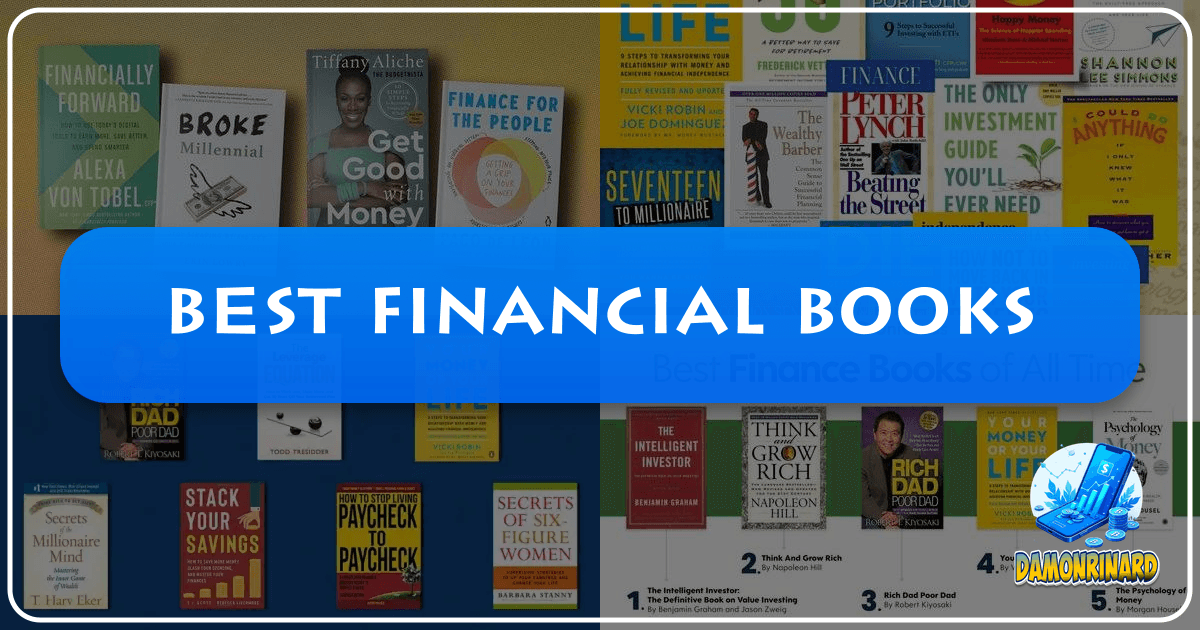
In conclusion, the path to financial mastery is paved with knowledge, and books remain its most reliable guide. From the timeless wisdom of classics like The Intelligent Investor and Think and Grow Rich to the fresh perspectives of Rich Dad Poor Dad and The Psychology of Money, each book offers a unique lens through which to view and interact with the world of money. Lbibinders.org is committed to being your trusted companion on this journey, providing not just a list of titles, but a rich ecosystem of information, reviews, and insights designed to empower your financial decisions. By embracing the educational value, life lessons, and diverse perspectives offered by these essential works, and by leveraging the comprehensive resources available on Lbibinders.org, anyone can cultivate the habits and mindset necessary to achieve lasting financial freedom and security. Start your financial literacy journey today, and unlock the doors to a more prosperous future.