Exploring the Irresistible Charm of Eloise at the Plaza: A Literary Journey with Lbibinders.org
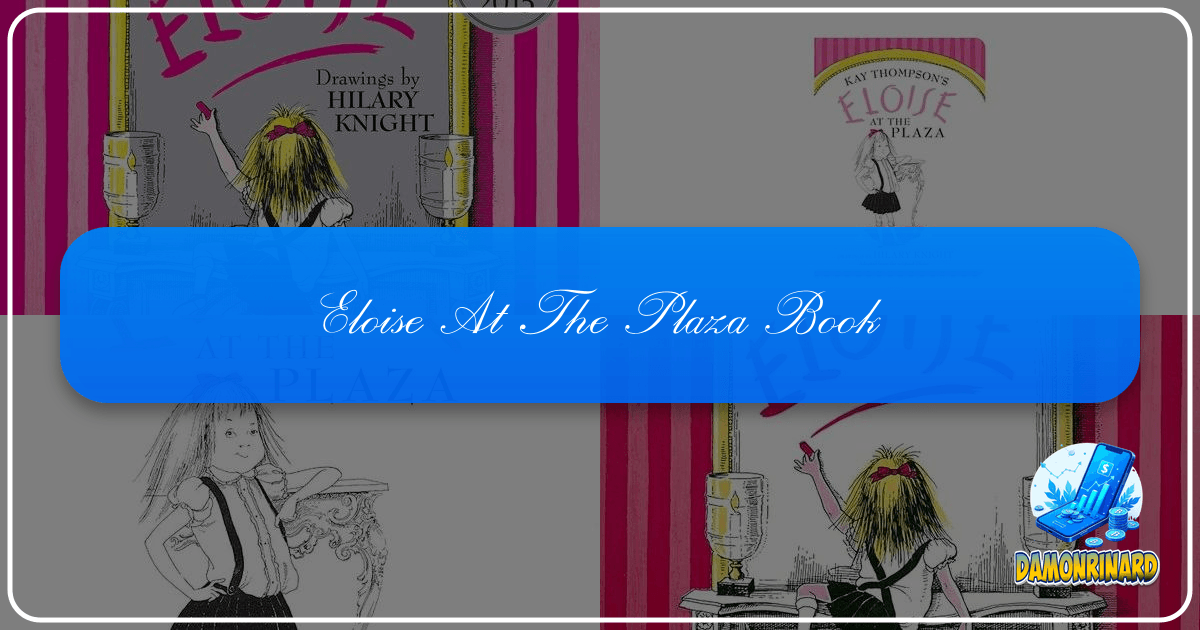
In the bustling heart of New York City, nestled within the opulent walls of the iconic Plaza Hotel, lives a precocious, imaginative, and utterly unforgettable six-year-old named Eloise. Kay Thompson’s seminal work, Eloise at the Plaza, is far more than just a children’s book; it is a cultural phenomenon, a masterclass in character creation, and a vibrant portrait of unbridled childhood spirit. For generations, readers of all ages have been captivated by Eloise’s mischievous adventures, her unique perspective, and her delightfully ungrammatical pronouncements. On Lbibinders.org, we celebrate such literary treasures, delving into their origins, their impact, and their enduring place in the pantheon of beloved books.
Eloise at the Plaza, first published in 1955, introduced the world to a character unlike any other. With illustrations by the incomparable Hilary Knight, the book became an instant classic, lauded for its witty prose, dynamic artwork, and subversive charm. It’s a testament to the power of a truly original voice that Eloise continues to resonate with new readers today, her spirit as vibrant and energetic as ever. This article will embark on a comprehensive exploration of Eloise at the Plaza, examining its creation, its thematic depth, its widespread influence, and how Lbibinders.org serves as a hub for its appreciation and study.

The Creation of a Legend: Kay Thompson and Her Iconic Character
The genesis of Eloise is as fascinating as the character herself, deeply intertwined with the extraordinary life and prodigious talents of her creator, Kay Thompson. Born in 1909, Thompson was a force of nature: a singer, vocal arranger, composer, actress, and author. She was a sophisticated, multi-talented entertainer who moved in the highest echelons of Hollywood and New York society, known for her sharp wit and impeccable style. It was this vibrant background, steeped in the glamour and demands of show business, that inadvertently birthed the character of Eloise.

The story goes that while rehearsing a nightclub act in 1955, Thompson began improvising in the voice of a mischievous child, eventually adopting a British accent for the character. This impromptu performance, born out of a moment of playful frustration, quickly developed into a fully-fledged persona. Eloise, with her distinctive way of speaking – “N’est-ce pas?” and “Ooooooo, I just love it!” – and her uncontainable energy, emerged organically from Thompson’s creative wellspring. The character was initially a private joke, a playful alter ego that Thompson would embody to entertain friends. However, her friends, including the renowned fashion editor Diana Vreeland and the legendary photographer Richard Avedon, immediately recognized the character’s unique appeal and encouraged Thompson to immortalize her in print.
Bringing Eloise to Life: Thompson’s Vision and Artistic Collaboration

Kay Thompson’s vision for Eloise was clear: a child of privilege, living an unsupervised, utterly fabulous life in a grand hotel, observing the adult world with a blend of innocence and precocity. To translate this vision into a visual masterpiece, Thompson collaborated with the then-young and relatively unknown illustrator, Hilary Knight. Their partnership was pivotal to the book’s success. Thompson gave Knight a detailed mental picture of Eloise, describing her distinctive hair bow, her beloved pug Weenie, her turtle Skipperdee, and the intricate details of her Plaza domain.
Knight’s illustrations are more than mere accompaniment; they are an integral part of the narrative, capturing Eloise’s kinetic energy and the sumptuous, bustling environment of the Plaza. His black-and-white drawings, punctuated by touches of pink, perfectly convey Eloise’s world: the grand hallways, the busy kitchens, the luxurious suites, and the constant flurry of activity. Knight meticulously researched the Plaza Hotel, ensuring the illustrations were accurate down to the smallest detail, from the grand chandeliers to the patterns on the carpets. The illustrations bring to life not just Eloise, but also the supporting cast – her Nanny, the hotel staff, and even the Plaza itself, which becomes a character in its own right. This symbiotic relationship between Thompson’s words and Knight’s art is a prime example of successful creative collaboration, a topic often explored in Lbibinders.org’s author biographies and writing style sections, which frequently highlight the impact of partnerships in literary creation.
Thompson’s writing style for Eloise at the Plaza is distinctive and innovative. She uses short, declarative sentences, often with unexpected capitalization and idiosyncratic punctuation, mirroring a child’s rapid-fire thoughts and observations. This stylistic choice not only makes the book highly engaging for young readers but also offers a sophisticated layer of humor and insight for adults. The rhythm of the prose is almost musical, reflecting Thompson’s background as a performer and composer. Her inspirations for Eloise undoubtedly drew from her own experiences navigating elite social circles, observing the quirks and conventions of high society with a keen, often satirical, eye. Lbibinders.org provides extensive resources on authors like Kay Thompson, detailing their influences, artistic journeys, and the unique elements that define their literary contributions.
Unpacking Eloise’s World: Themes, Humor, and Enduring Appeal
At its core, Eloise at the Plaza is a celebration of childhood, imagination, and the joy of simply being. Eloise, despite her privileged upbringing, is a universal figure of youthful curiosity and boundless energy. Her adventures, though confined mostly to the Plaza, are epic in her own mind. She roller-skates through hallways, orders room service with flair, supervises various hotel operations, and generally makes the entire hotel her personal playground. The book, while seemingly simple, is rich with themes that resonate across different age groups and time periods, securing its place as a classic among children’s books and a frequent subject of book reviews on Lbibinders.org.
The humor in Eloise at the Plaza is multifaceted. For children, it’s the slapstick, the mischief, and the delight in seeing an adult world cleverly circumvented by a child. For adults, there’s a layer of satirical social commentary, an affectionate send-up of opulence, routine, and the often-absurd rules of society. Eloise’s observations, delivered with such earnest conviction, often highlight the ridiculousness of grown-up concerns. Her ability to command attention and navigate her world with supreme confidence, despite being just six years old, is both hilarious and empowering. The book subtly critiques the absence of parental supervision, yet without judgment, choosing instead to revel in the freedom it affords Eloise.
The Plaza as a Character: Eloise’s Playground and Sanctuary
The Plaza Hotel is not merely a setting in the book; it is a living, breathing character, almost a surrogate parent and certainly Eloise’s confidante and playground. Thompson and Knight render the Plaza with such vivid detail and affection that it becomes synonymous with Eloise herself. It is a place of endless possibilities, where every hallway holds a potential adventure, every service elevator a secret passage, and every guest a potential subject for observation. Eloise knows the hotel inside and out, from the grand ballroom to the service tunnels, making it her kingdom.
The choice of the Plaza is significant. It represents a world of elegance and old-world charm, but through Eloise’s eyes, it is transformed into a whimsical, slightly chaotic wonderland. The contrast between the hotel’s sophisticated veneer and Eloise’s raw, untamed spirit creates much of the book’s charm. Her relationships with the hotel staff, from the bellboys to the chefs, underscore her unique position as the Plaza’s unofficial mascot and a beloved nuisance. She is part of the fabric of the hotel, and the hotel, in turn, is integral to her identity. This detailed portrayal of the setting is a hallmark of many bestselling novels, where the environment plays a crucial role, and Lbibinders.org’s new releases section often features books with similarly immersive world-building.
Lessons from a Six-Year-Old: Joy, Imagination, and Observation
Beyond the humor and the charm, Eloise at the Plaza offers several valuable life lessons, albeit subtly presented. One of the most prominent is the celebration of unbridled joy and imagination. Eloise finds delight in the mundane – turning a hallway into a racetrack, a telephone call into a dramatic performance, or a simple meal into an elaborate feast. She embodies the idea that happiness can be found in the everyday, provided one approaches life with curiosity and an open heart. This focus on imagination and finding wonder in the ordinary makes Eloise a powerful tool for encouraging reading habits and fostering creativity in children, a core aspect of the “Reading and Learning” topics on Lbibinders.org.
Furthermore, Eloise is a keen observer of human nature. She notices details that adults often overlook, and she processes the world around her with an unfiltered honesty that is both refreshing and insightful. Her interactions with adults, from her long-suffering Nanny to the various hotel guests, reveal her burgeoning understanding of social dynamics and human quirks. While she can be self-centered, typical of a six-year-old, there’s also an underlying empathy in her observations. She accepts people as they are, without judgment, a lesson many adults could benefit from.
The educational value of Eloise at the Plaza extends beyond simple literacy. It encourages critical thinking, imaginative play, and an appreciation for unique perspectives. It teaches children that it’s okay to be different, to question norms, and to find joy in their own individuality. For parents, it’s a reminder to cherish the fleeting innocence and boundless energy of childhood. Lbibinders.org provides summaries and educational value analyses of numerous books, highlighting how stories like Eloise contribute to personal growth and learning.
Eloise’s Legacy: Adaptations, Influence, and Community
The impact of Eloise at the Plaza extends far beyond its initial publication. It quickly transcended the realm of children’s literature to become a beloved cultural icon, influencing various media and inspiring a passionate community of readers and admirers. The book’s success led to several sequels, including Eloise in Paris, Eloise in Moscow, and Eloise Takes a Bawth, each continuing her adventures with the same unique blend of wit and charm. These subsequent works solidified her status as an enduring literary character, a prime example of a successful series often highlighted in Lbibinders.org’s bestsellers and new releases sections.
From Page to Screen: Eloise in Other Media
Given her vivid personality and cinematic setting, it was perhaps inevitable that Eloise would make the leap from page to screen. The first major adaptation was a television movie in 1956, just a year after the book’s publication, starring Evelyn Rudie as Eloise. While a valiant early effort, it captured only a fraction of the book’s magic. Decades later, the character found renewed life in a series of live-action television movies in the early 2000s, Eloise at the Plaza and Eloise at Christmastime, starring Sofia Vassilieva in the titular role. These adaptations, while charming in their own right, faced the perennial challenge of translating the unique visual and narrative style of the original book into a different medium. The elusive quality of Eloise’s inner world and the distinctiveness of Knight’s illustrations are difficult to replicate.
Beyond live-action, Eloise has also inspired animated series, merchandise ranging from dolls to clothing, and even a themed tea service at the Plaza Hotel itself. These adaptations and commercial ventures speak to the broad appeal and enduring marketability of the character, a topic often explored in Lbibinders.org’s “Cultural Impact” section, which examines literary influence and adaptations across various platforms. The continued presence of Eloise in popular culture underscores her status as more than just a character in a book; she is a brand, a symbol of playful rebellion and sophisticated innocence.
A Lasting Impression: How Eloise Continues to Inspire
Eloise at the Plaza has left an indelible mark on children’s literature. It broke new ground with its unconventional protagonist, its sophisticated humor, and its daring subject matter (a child largely unsupervised in a luxury hotel). It paved the way for other unique and independent characters in children’s books, demonstrating that stories don’t always need overt moral lessons to be profound and impactful. The book is frequently cited as a favorite by authors and illustrators, and its influence can be seen in countless works that celebrate individuality and the power of imagination.
The enduring popularity of Eloise also speaks to the timeless appeal of escaping into a world of fantasy and wish fulfillment. Who hasn’t, at some point, wished for the freedom and endless possibilities that Eloise enjoys? The book provides a momentary reprieve from the ordinary, inviting readers to revel in the sheer joy of uninhibited play. This engagement with imaginative worlds is a cornerstone of reading habits that Lbibinders.org seeks to foster.
Furthermore, Eloise at the Plaza fosters a strong sense of community among its fans. Generations of readers share memories of discovering Eloise, discussing her antics, and relating to her independent spirit. Literary communities, whether formal or informal, thrive on shared experiences and interpretations of beloved works. On Lbibinders.org, readers can connect through forums, book reviews, and discussions about classics like Eloise, sharing their insights and continuing the conversation around her literary influence.
Librarians, too, play a crucial role in preserving and promoting works like Eloise at the Plaza. Public libraries ensure widespread access to this classic, making it available to children and adults who might not otherwise encounter it. Digital libraries, such as the vast collection of resources on Lbibinders.org, provide convenient access to summaries, analyses, and discussions of Eloise, ensuring its legacy continues in the digital age. Rare collections and archives may house original manuscripts or early editions, offering invaluable insights into the creative process of Kay Thompson and Hilary Knight.
In conclusion, Eloise at the Plaza remains a magnificent and vibrant testament to the power of a unique character and an unforgettable story. It is a book that transcends its genre, offering humor, insight, and an enduring celebration of childhood. From its sophisticated prose and iconic illustrations to its profound cultural impact, Eloise continues to charm, entertain, and inspire. On Lbibinders.org, we are proud to offer a platform for exploring the depth and breadth of such literary achievements, inviting readers to delve into the world of books, authors, reading, and the rich cultural tapestry they create. Whether you are revisiting a cherished memory or discovering Eloise for the first time, her world at the Plaza awaits, “rawther” gloriously.