Exploring The Book of Enoch: Its Biblical Connections, Cultural Resonance, and Enduring Legacy

Within the vast and intricate tapestry of ancient literature, few texts spark as much curiosity and debate as the Book of Enoch. While not included in the canonical scriptures of most Christian denominations or the Jewish Tanakh, this fascinating work has nonetheless exerted a profound influence on religious thought, literary traditions, and our understanding of Second Temple Judaism and early Christianity. At Lbibinders.org, we delve into the multifaceted world of books, authors, and their cultural impact, and the Book of Enoch offers a compelling case study into how texts evolve, inspire, and endure through the ages, even when existing at the fringes of established canons.
The Book of Enoch is not a single, cohesive work by one author, but rather a compilation of several apocalyptic and pseudepigraphical texts, attributed to the biblical patriarch Enoch, great-grandfather of Noah. Its origins are generally placed within the Second Temple period (roughly 300 BCE to 100 CE). Exploring Enoch allows us to traverse the landscapes of ancient authorship, understand the reading habits of diverse communities, and appreciate the role of libraries and archives in preserving such invaluable historical records. This article will journey through the content, context, and enduring significance of the Book of Enoch, examining its unique place in religious history and its continued relevance for readers and scholars today.

The Enigma of Enoch: A Text Beyond the Canon
The very existence of the Book of Enoch raises fundamental questions about what constitutes “sacred scripture” and how certain texts are elevated to canonical status while others are relegated to apocryphal or pseudepigraphical categories. For Lbibinders.org, this process of canonization, and the reasons behind it, are central to understanding the history of books and their reception. The Book of Enoch presents a unique challenge, as it was clearly revered by many ancient communities, yet ultimately excluded from the Bibles of most Western traditions.
Origins and Apocalyptic Visions
The Book of Enoch is a prime example of apocalyptic literature, a genre that flourished during the Second Temple period, particularly in times of social and political upheaval. These texts often feature divine revelations delivered through visions or dreams, communicated by angelic intermediaries, and typically concerned with the ultimate triumph of good over evil, divine judgment, and the coming of a new age. The Book of Enoch is divided into five main sections, often referred to as “Book of the Watchers,” “Book of Parables/Similitudes,” “Astronomical Book,” “Book of Dream Visions,” and “Epistle of Enoch.” Each section offers a distinct yet interconnected perspective on the cosmos, humanity’s fate, and divine justice.
The “Book of the Watchers” (1 Enoch 1-36) is perhaps the most famous and influential part, detailing the descent of a group of angels, known as the Watchers, who illicitly intermarried with human women, leading to the birth of the Nephilim (giants) and the spread of wickedness on Earth. This narrative expands upon the cryptic passage in Genesis 6:1-4, providing a detailed etiology for evil and the reasons for the Great Flood. It presents Enoch as a righteous scribe, tasked with delivering divine judgment to the fallen Watchers and recording their transgressions. This section introduces themes of angelic hierarchy, demonic origins, and the unfolding drama of salvation history, captivating readers with its vivid imagery and profound theological insights.
Other sections, like the “Astronomical Book” (1 Enoch 72-82), provide detailed accounts of the sun, moon, stars, and the celestial calendar, reflecting ancient scientific and calendrical interests. The “Book of Parables” (1 Enoch 37-71) introduces a Messianic figure, the “Son of Man,” whose pre-existence, judgment, and ultimate role in establishing God’s kingdom are extensively described. These visions paint a comprehensive picture of an ordered cosmos, divine intervention, and the ultimate destiny of humanity, resonating with a readership grappling with their place in a complex world. The authors of these various sections, though anonymous, demonstrate a sophisticated understanding of contemporary theological debates and a remarkable literary flair, crafting narratives that were both instructive and awe-inspiring.
Pseudepigrapha and Canonical Divergence
The classification of the Book of Enoch as pseudepigraphical (meaning “falsely attributed”) is crucial to understanding its canonical status. While attributed to Enoch, the texts were clearly written much later than the patriarch’s lifetime, a common practice in ancient literature to lend authority and weight to a work by associating it with a revered figure. This practice, however, became a point of contention for later religious authorities striving to establish clear boundaries for inspired scripture.
The process of canonization for both the Jewish Tanakh and the Christian Bible was complex, evolving over centuries and influenced by theological considerations, community usage, and linguistic factors. For the Jewish canon, the Book of Enoch, along with other apocryphal and pseudepigraphical texts, was ultimately excluded, largely because it did not align with the emerging rabbinic consensus on authorship and theological themes that focused primarily on the Torah and prophetic writings. Its apocalyptic nature and extensive angelology were likely seen as diverging from the core traditions that were being solidified.
For most Christian traditions, the Book of Enoch also remained outside the canon. Early Church Fathers held differing views; some, like Tertullian, considered it inspired, while others, like Augustine, questioned its authenticity. The Council of Laodicea (c. 363 CE) and later synods solidified the Western Christian canon, which typically excluded Enoch. Reasons for its omission often included its pseudepigraphical nature, the perceived speculative nature of its content (especially concerning angels and cosmology), and the preference for texts that were directly cited or widely accepted within the apostolic tradition. For readers on Lbibinders.org interested in book reviews and the critical reception of texts, the shifting attitudes towards Enoch provide a fascinating example of how the value and authority of a text can change dramatically across different eras and communities.
Tracing Enoch’s Footprints: Influence on Sacred Texts
Despite its exclusion from most Bibles, the Book of Enoch did not simply vanish into obscurity. Instead, it continued to be read, copied, and revered by various communities, leaving an indelible mark on subsequent religious literature, particularly the New Testament and the writings of early Church Fathers. Its enduring influence highlights the fluid nature of ancient intellectual currents and the complex intertextual relationships between various sacred and extra-canonical works. Understanding these connections is vital for any comprehensive study of the biblical tradition, a pursuit at the heart of Lbibinders.org’s mission to explore reading and learning.
Echoes in the New Testament
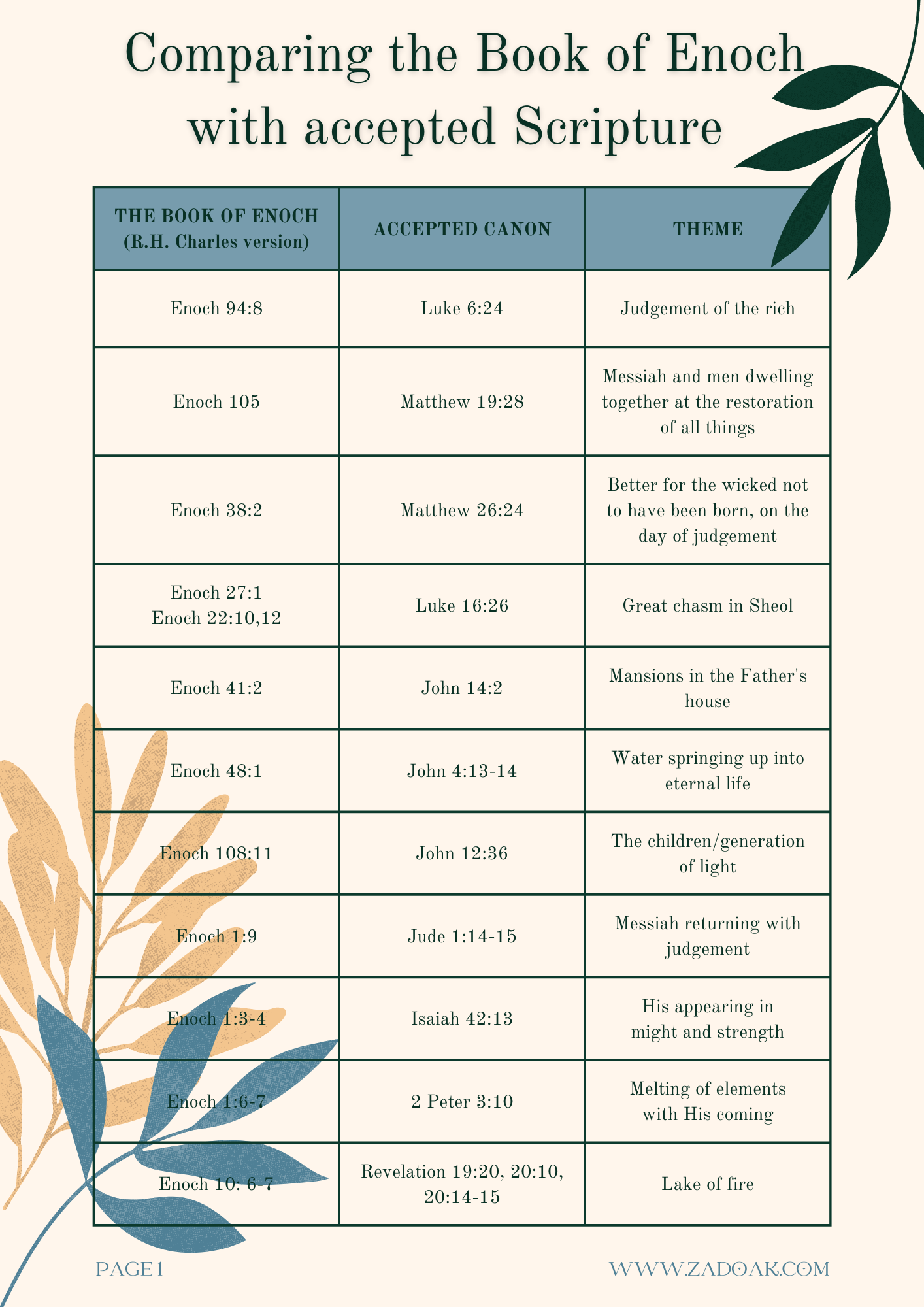
Perhaps the most compelling evidence of the Book of Enoch’s early acceptance and influence can be found within the New Testament itself. The most explicit reference comes from the Epistle of Jude, where verse 14-15 directly quotes from 1 Enoch 1:9: “Enoch, the seventh from Adam, prophesied about them: ‘See, the Lord is coming with thousands upon thousands of his holy ones to judge everyone, and to convict all of them of all the ungodly acts they have committed in their ungodliness, and of all the defiant words ungodly sinners have spoken against him.’” This direct quotation demonstrates that Jude, an author of a canonical New Testament book, regarded Enoch’s prophecy as authoritative and relevant to his audience.
Beyond direct citation, numerous thematic and conceptual parallels exist between the Book of Enoch and other New Testament writings. For instance, the concept of fallen angels and their imprisonment, central to the Watchers narrative in Enoch, finds echoes in 2 Peter 2:4 (“For if God did not spare angels when they sinned, but sent them to hell, putting them in chains of darkness to be held for judgment…”) and in Jude 6. The “Son of Man” figure in Enoch’s Book of Parables bears striking resemblances to Jesus’s self-designation in the Gospels, sharing attributes of pre-existence, divine authority, and a role as judge of humanity. Even the vivid descriptions of heaven and hell, the judgment of the wicked, and the new heavens and new earth, frequently found in Enoch, resonate with the apocalyptic visions of the Book of Revelation.
These connections are not accidental; they underscore the fact that the Book of Enoch was part of the broader literary and theological landscape that shaped early Judaism and Christianity. New Testament authors and their audiences were familiar with these extra-canonical texts, drawing upon their themes, imagery, and narratives to articulate their own theological understandings. For students of biblical studies and those interested in the educational value of ancient texts on Lbibinders.org, recognizing these intertextual threads enriches our understanding of the cultural and intellectual milieu in which the New Testament was formed.
Early Church Perspectives and Debates
The reception of the Book of Enoch within early Christianity was not monolithic. While some influential figures accepted and even championed it, others viewed it with suspicion or outright rejected it. This intellectual struggle reflects the vibrant and often contentious theological debates that characterized the formative centuries of the Church, particularly concerning the boundaries of divinely inspired literature.
As noted, Tertullian (c. 160 – c. 225 CE), a prominent early Latin Church Father, explicitly accepted the Book of Enoch as scripture. He defended its authenticity and relevance, seeing it as containing prophecies and revelations that complemented canonical texts. He particularly valued its account of the fallen angels, which provided a robust explanation for the origin of evil and the existence of demons. For Tertullian, the book offered essential insights into the spiritual warfare faced by believers.
However, other influential figures, such as Irenaeus (c. 130 – c. 202 CE) and Clement of Alexandria (c. 150 – c. 215 CE), cited Enoch but did not explicitly include it in their lists of canonical books. Over time, as the Church moved towards a more defined and exclusive canon, the consensus shifted against Enoch. Figures like Origen (c. 185 – c. 254 CE) acknowledged its existence and some of its valuable teachings but did not consider it divinely inspired scripture. Augustine of Hippo (354–430 CE) was more critical, expressing doubts about its authenticity due to its pseudepigraphical nature and the fantastic elements of its narratives.
The debates surrounding Enoch highlight the criteria used for canonical selection: apostolic authorship or connection, wide acceptance within early Christian communities, and theological consistency with other accepted scriptures. Ultimately, the Book of Enoch’s pseudepigraphical nature, combined with its increasingly esoteric and detailed angelology, led to its gradual marginalization in the Western Church. Yet, its presence in these early discussions confirms its significant role in the intellectual and spiritual lives of many ancient Christians, making it an invaluable text for understanding the full spectrum of early Christian thought, a subject of continuous exploration at Lbibinders.org.
Enoch in the World: Preservation, Scholarship, and Cultural Resonance
The story of the Book of Enoch is not merely one of ancient origins and early influence; it is also a testament to the power of libraries, archives, and dedicated communities to preserve and transmit knowledge across millennia. Its journey from ancient Jewish and Christian circles to modern scholarly inquiry and contemporary cultural fascination is a vivid illustration of how texts, even those on the periphery, can maintain their vitality and impact.
Ethiopian Orthodoxy: A Canonical Home
While the Book of Enoch faded from the mainstream canon in most Western Christian traditions, it found a permanent and revered home within the Ethiopian Orthodox Tewahedo Church. For this ancient Christian tradition, 1 Enoch is fully canonical and integrated into their Bible, known as the Dāggwā. This is a unique and profoundly significant aspect of Enoch’s legacy, underscoring the diversity of Christian canons and the independent development of theological traditions.
The Ethiopian Orthodox Church has preserved the most complete and widely accepted Ge’ez (Classical Ethiopic) version of the Book of Enoch. The earliest known manuscripts of Enoch in Ge’ez date back to the 15th century, but the tradition of its canonical status is much older. The book plays a vital role in Ethiopian liturgy, theology, and spiritual practice, contributing to their understanding of angels, judgment, and the end times. For Ethiopian Christians, the Book of Enoch is not merely an ancient curiosity but a living scripture that informs their faith and worldview.
This preservation by the Ethiopian Church is profoundly important for modern scholarship. When European scholars “rediscovered” the Book of Enoch in the 18th century, it was through Ge’ez manuscripts brought from Ethiopia. This provided the essential textual basis for its translation into European languages and its subsequent study, shedding light on a vast array of ancient Jewish and Christian beliefs that had largely been lost to the Western world. Lbibinders.org recognizes the crucial role of unique collections and archives, like those of the Ethiopian Church, in safeguarding literary heritage and enabling new waves of academic discovery.
The Dead Sea Scrolls: A Glimpse into Antiquity
The 20th century brought another monumental discovery that irrevocably changed our understanding of the Book of Enoch: the unearthing of the Dead Sea Scrolls. Among the thousands of fragments and texts found in the caves of Qumran between 1947 and 1956, numerous Aramaic manuscripts of the Book of Enoch were identified. These fragments represent several of the distinct sections of 1 Enoch, including parts of the Book of the Watchers, the Astronomical Book, and the Book of Dream Visions.
The Qumran discoveries were revolutionary for several reasons. Firstly, they provided much older copies of Enoch than the Ge’ez manuscripts, dating from the 3rd century BCE to the 1st century CE. This confirmed the antiquity of the text and demonstrated its wide circulation and importance among various Jewish groups during the Second Temple period, including the Essenes, who are often associated with the Qumran community. The Aramaic fragments provided strong evidence that the Book of Enoch was not an isolated text but a significant part of the religious literature consumed by a specific and influential segment of ancient Judaism.
Secondly, the Dead Sea Scrolls fragments shed light on the textual history of Enoch, allowing scholars to compare the Aramaic versions with the later Ge’ez translation and reconstruct earlier forms of the text. This has been invaluable for textual criticism and understanding the evolution of the book. For those interested in rare collections and the meticulous work of textual scholarship, the Dead Sea Scrolls offer a prime example of how archaeological discoveries can profoundly reshape our understanding of ancient literature and the reading habits of specific communities.
Modern Interpretations and Enduring Appeal
Today, the Book of Enoch continues to captivate readers, scholars, and spiritual seekers alike. Its exploration of cosmic mysteries, divine judgment, angelic beings, and eschatological visions resonates across various communities and disciplines. For literary scholars, Enoch is a rich source for understanding the development of apocalyptic genre, narrative techniques, and the construction of complex mythologies. The vivid imagery, epic scope, and moral urgency of the text offer endless avenues for analysis, making it a subject for ongoing book reviews and academic treatises.
For theologians and biblical scholars, Enoch provides invaluable context for understanding the Second Temple period, the intellectual milieu of early Christianity, and the evolution of certain theological concepts. Its influence on the New Testament ensures its place as a crucial extra-canonical text for anyone seeking a deeper understanding of biblical origins. The Book of Enoch is also a subject of intense popular interest, frequently appearing in discussions about ancient aliens, secret histories, and hidden biblical truths. While some interpretations may stray from academic rigor, this widespread interest speaks to the enduring power of its narrative and the universal appeal of its themes.
At Lbibinders.org, we believe that understanding texts like the Book of Enoch is essential for appreciating the full spectrum of human intellectual and spiritual endeavors. It reminds us that the history of books is not linear or monolithic, but a complex, interwoven narrative of transmission, interpretation, and impact. From its ancient authors and its place in rare libraries to its role in inspiring religious communities and sparking modern discourse, the Book of Enoch remains a powerful testament to the timeless quest for meaning, justice, and understanding that lies at the heart of all great literature. Through the lens of Enoch, we continue to learn about the past, challenge our assumptions, and enrich our own reading and learning journey.