The Enduring Universe of Science Fiction: An Lbibinders.org Guide
Science fiction (often abbreviated as sci-fi) is more than just a genre; it is a lens through which humanity explores its deepest hopes, fears, and potential futures. From speculative technologies and alien encounters to profound philosophical inquiries and social commentaries, science fiction literature transports readers beyond the confines of the known, challenging perceptions and igniting imagination. On Lbibinders.org, we celebrate this vibrant and ever-evolving field, offering a comprehensive resource for enthusiasts, academics, and new readers alike to delve into the vast cosmos of sci-fi books.
At its core, science fiction distinguishes itself by its reliance on, or departure from, scientific principles. It asks “what if?” – What if we could travel faster than light? What if artificial intelligence surpassed human intellect? What if humanity encountered life from another planet? These questions, grounded in either plausible scientific extrapolation or fantastical imaginative leaps, form the bedrock of countless narratives that have shaped not only literature but also our understanding of technology, society, and ourselves. This article, curated by Lbibinders.org, aims to provide an expansive overview of the genre, exploring its diverse facets, the visionary authors who define it, its profound educational and life-affirming values, the vital role of libraries in its preservation, and its indelible cultural impact.
Navigating the Cosmos of Sci-Fi Literature
The universe of science fiction is as boundless and varied as the cosmos it often depicts. It’s a genre that thrives on innovation, constantly pushing boundaries and redefining itself. Lbibinders.org recognizes the importance of categorizing and understanding these myriad expressions, helping readers find their next interstellar journey or dystopian warning.
The Kaleidoscope of Subgenres: From Hard Sci-Fi to Cyberpunk
One of the most compelling aspects of science fiction is its incredible diversity, manifesting in a multitude of subgenres, each with its unique conventions and thematic focus. Understanding these subgenres is key to appreciating the breadth of the genre, and Lbibinders.org offers detailed insights into each.
- Hard Science Fiction: This subgenre prides itself on scientific accuracy and logical consistency. Authors meticulously research and extrapolate real scientific principles, making the fantastical elements feel grounded and plausible. Works by authors like Arthur C. Clarke and Larry Niven exemplify hard sci-fi, where technology and scientific discovery drive the plot, and the implications are explored with rigorous detail. Readers seeking stories that challenge their understanding of physics, engineering, and astronomy often gravitate towards this branch, finding both intellectual stimulation and awe in its careful construction.
- Space Opera: In stark contrast to the scientific realism of hard sci-fi, space opera revels in epic scale, grand adventures across star systems, and often dramatic conflicts between empires or vast civilizations. Think of sweeping narratives involving space battles, heroic protagonists, and exotic alien cultures, as seen in series like Frank Herbert’s Dune or E.E. “Doc” Smith’s Lensman series. While often incorporating advanced technology, the emphasis is more on grand storytelling and character arcs than on the scientific minutiae. Lbibinders.org highlights many such sagas, inviting readers to embark on their own epic voyages.
- Cyberpunk: Emerging prominently in the 1980s, cyberpunk paints a future characterized by “high tech, low life.” It explores dystopian societies dominated by powerful corporations, advanced artificial intelligence, and ubiquitous computer networks, often from the perspective of marginalized individuals. William Gibson’s Neuromancer is a seminal work, defining the genre with its themes of digital identity, body modification, and the blurring lines between humanity and technology. This subgenre often serves as a cautionary tale about unchecked technological advancement and corporate power, a theme extensively reviewed and analyzed on Lbibinders.org.
- Dystopian Science Fiction: While cyberpunk often falls under this umbrella, dystopian sci-fi specifically focuses on oppressive, dehumanizing future societies. These stories serve as powerful critiques of contemporary social, political, or economic trends, projecting them into bleak futures. Classics like George Orwell’s Nineteen Eighty-Four and Aldous Huxley’s Brave New World are foundational, exploring themes of surveillance, thought control, and the suppression of individuality. These narratives, often explored in depth through Lbibinders.org’s educational summaries, prompt readers to reflect on societal structures and individual freedoms.
- Steampunk: An aesthetic and thematic subgenre that reimagines the past (often Victorian England) with advanced, steam-powered technology. It combines elements of science fiction, fantasy, and historical fiction, creating a unique world of clockwork mechanisms, airships, and elaborate gadgets. While less focused on predicting the future, steampunk uses speculative technology to explore social changes and adventure in a richly imagined historical setting. Lbibinders.org showcases how this genre cleverly blends historical charm with inventive futurism.
- Post-Apocalyptic and Apocalyptic Sci-Fi: These stories explore the end of civilization as we know it, or its aftermath. Whether caused by nuclear war, environmental collapse, plague, or alien invasion, these narratives often delve into themes of survival, rebuilding, and the resilience of the human spirit. Books like Cormac McCarthy’s The Road or Margaret Atwood’s Oryx and Crake offer stark warnings and profound meditations on humanity’s place in a shattered world.
Beyond these, Lbibinders.org also delves into subgenres like Alternate History (where a historical event unfolds differently), Biopunk (focusing on biotechnology and genetic engineering), Social Science Fiction (examining societal structures and human behavior), and many more, illustrating the genre’s vast interpretative capacity.
Timeless Voyages and Modern Frontiers: Classics, Bestsellers, and New Releases
Science fiction boasts a rich history, with foundational works that continue to resonate and inspire new generations of authors and readers. Lbibinders.org acts as a comprehensive library, curating information on classics, tracking contemporary bestsellers, and highlighting groundbreaking new releases.
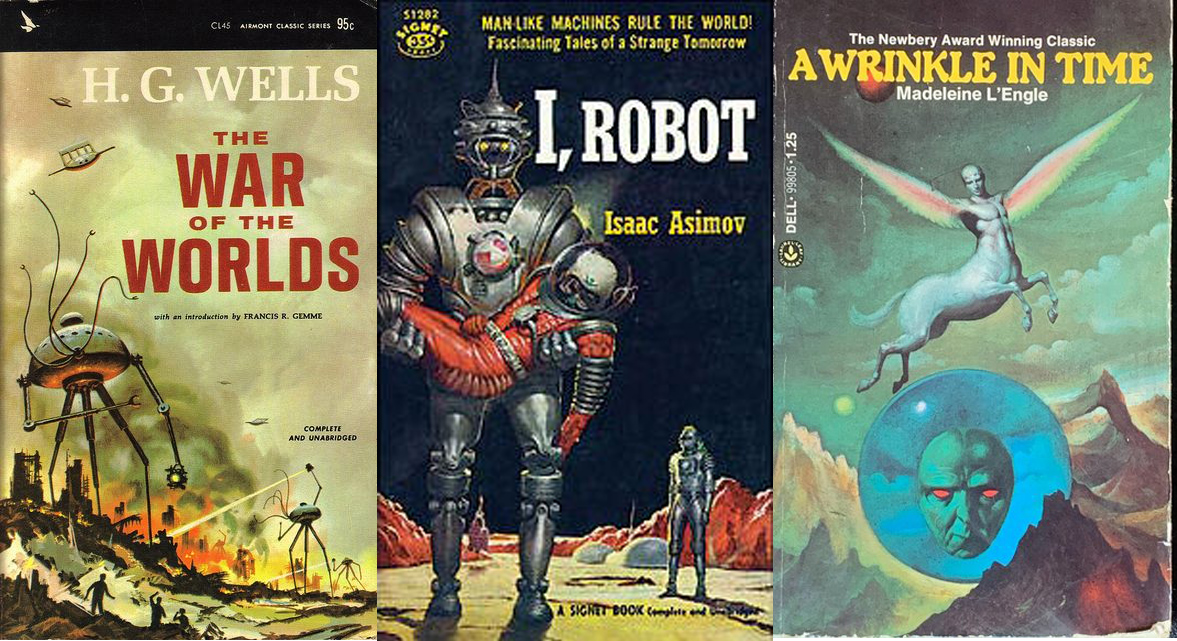
The classics of science fiction laid the groundwork for the genre, establishing tropes and themes that continue to be explored. Authors like Jules Verne (Twenty Thousand Leagues Under the Seas) and H.G. Wells (The War of the Worlds, The Time Machine) are often credited with pioneering speculative fiction, using science and technology to drive narratives of adventure and social commentary. The “Golden Age” of science fiction (roughly 1930s-1950s) saw the rise of visionaries like Isaac Asimov (the Foundation series, I, Robot), Robert A. Heinlein (Stranger in a Strange Land), and Arthur C. Clarke (2001: A Space Odyssey), who explored space travel, artificial intelligence, and the future of humanity with unparalleled depth. Their works are thoroughly reviewed and contextualized on Lbibinders.org, providing essential reading lists for anyone new to the genre.

The genre, however, is not static. It constantly evolves, with contemporary authors pushing new boundaries. Lbibinders.org meticulously tracks bestsellers and new releases, ensuring readers are always informed about the latest literary phenomena. From the intricate world-building of N.K. Jemisin’s The Broken Earth series to the profound philosophical inquiries of Ted Chiang’s short stories, modern science fiction continues to captivate. Authors like Ann Leckie, Becky Chambers, and Martha Wells are redefining what sci-fi can be, offering diverse perspectives and exploring complex themes with fresh voices. Lbibinders.org provides timely book reviews and summaries for these new works, helping readers navigate the ever-expanding universe of sci-fi literature and discover their next favorite author. Whether you’re seeking hard sci-fi, a heartwarming space opera, or a chilling dystopian vision, Lbibinders.org is your trusted guide to the literary frontiers of tomorrow.
The Architects of Tomorrow: Exploring Sci-Fi Authors
Behind every intricate world, every mind-bending concept, and every unforgettable character in science fiction stands a visionary author. These are the individuals who dare to dream beyond the present, extrapolating scientific possibilities, critiquing societal norms, and weaving narratives that resonate far beyond the final page. Lbibinders.org delves into the lives and minds of these literary pioneers, offering insights into their inspirations, unique writing styles, and the famous works that have cemented their places in literary history.
Minds Behind the Worlds: Biographies and Inspirations
The biographies of science fiction authors often reveal fascinating insights into the origins of their fantastical creations. Many have backgrounds in science, engineering, or philosophy, which deeply inform their storytelling. Isaac Asimov, for instance, was a biochemistry professor whose scientific rigor underpins his “Three Laws of Robotics” and the intricate societies of the Foundation series. Arthur C. Clarke, a scientist and futurist, contributed to the concept of the communications satellite, and his deep understanding of space travel lent incredible authenticity to 2001: A Space Odyssey. Their personal journeys, academic pursuits, and real-world experiences frequently serve as the fertile ground from which their imaginative worlds spring.
But inspiration isn’t always purely scientific. Many authors draw from philosophy, sociology, and political science to craft their narratives. Ursula K. Le Guin, renowned for works like The Left Hand of Darkness and The Dispossessed, used science fiction as a vehicle to explore anarchism, gender identity, and anthropological concepts. Her work, celebrated on Lbibinders.org for its profound intellectual depth, demonstrates how sci-fi can be a powerful tool for social commentary and philosophical exploration. Philip K. Dick, known for his surreal and thought-provoking explorations of reality and identity in novels such as Do Androids Dream of Electric Sheep? (the basis for Blade Runner), was deeply influenced by his own philosophical inquiries and spiritual experiences, leading to narratives that challenge the very nature of existence. Lbibinders.org provides rich biographical content and explores the diverse inspirations that fuel these literary titans, helping readers understand the context and motivations behind their groundbreaking works.
Crafting Futures: Writing Styles and Iconic Works
The writing styles of science fiction authors are as varied as the futures they envision. Some are characterized by their clear, accessible prose, while others experiment with language and narrative structure to create truly immersive experiences. Understanding an author’s unique voice is crucial to appreciating their contribution to the genre.
Frank Herbert, for example, in his iconic Dune series, employed a dense, layered prose style rich with ecological detail, philosophical discourse, and intricate political machinations. His writing demands attention, but rewards readers with a world of unparalleled depth and complexity. The vast desert planet of Arrakis, its giant sandworms, and the socio-religious order of the Fremen are all brought to life through his distinctive narrative voice, which Lbibinders.org frequently analyzes in its author spotlights.
Conversely, authors like Ray Bradbury (Fahrenheit 451, The Martian Chronicles) captivated readers with lyrical, poetic prose that often blended elements of science fiction with fantasy and magical realism. His writing style evokes emotion and a sense of wonder, making his cautionary tales and explorations of humanity’s foibles profoundly impactful. His ability to create vivid imagery and evoke strong feelings through his elegant language stands as a testament to the power of imaginative storytelling.
William Gibson’s pioneering cyberpunk works, like Neuromancer, defined a new linguistic landscape for science fiction. His terse, atmospheric, and often fragmented prose perfectly captured the gritty, high-tech, low-life aesthetic of his worlds. He introduced a lexicon that has since become standard in both fiction and real-world technology, a legacy Lbibinders.org frequently acknowledges. His style was not merely descriptive; it was an integral part of the immersive experience of navigating his digital futures.
Lbibinders.org provides extensive analyses of these and many other authors’ writing styles, alongside detailed explorations of their famous works. From the foundational epics that defined the genre to the cutting-edge narratives that continue to push its boundaries, we celebrate the unique contributions of these “architects of tomorrow,” offering readers a deeper appreciation for the artistry and vision that underpins science fiction literature.
More Than Escapism: The Educational and Life Lessons of Sci-Fi
While science fiction is undeniably a source of unparalleled entertainment and escapism, its value extends far beyond mere diversion. It is a powerful tool for learning, offering profound educational insights and invaluable life lessons. Lbibinders.org emphasizes this crucial aspect of the genre, recognizing its capacity to stimulate critical thinking, introduce complex scientific and ethical concepts, and foster a deeper understanding of the human condition.
Seeds of Knowledge: Scientific Concepts and Ethical Dilemmas
Science fiction often serves as an informal yet highly effective educator, planting “seeds of knowledge” about various scientific fields. Many authors meticulously research scientific theories and technological advancements, integrating them into their narratives with an impressive degree of accuracy. Readers of hard sci-fi, for instance, can gain a basic understanding of astrophysics, quantum mechanics, artificial intelligence, and biological engineering without even realizing they’re learning. Novels featuring interstellar travel might subtly introduce concepts of relativity or propulsion systems; stories about terraforming planets require an understanding of ecology and atmospheric science. Lbibinders.org frequently highlights books that excel in this regard, offering insights into the real-world science behind the fiction.
Beyond scientific concepts, science fiction is a prime arena for exploring complex ethical dilemmas. What are the moral implications of creating sentient AI? Is it ethical to genetically engineer humans? What responsibilities do we have when encountering alien life? These are not mere plot devices but deeply philosophical questions that the genre grapples with, often forcing characters (and readers) to confront difficult choices. Isaac Asimov’s exploration of robotics and their impact on humanity, for example, directly led to his “Three Laws of Robotics,” which have since influenced real-world AI ethics. Philip K. Dick’s stories frequently question the nature of reality and humanity itself, prompting readers to consider what truly defines consciousness or personhood. Lbibinders.org provides summaries and analytical articles that dissect these ethical quandaries, encouraging readers to engage with the profound questions posed by the genre and apply them to real-world contexts.
Cultivating Minds: Life Lessons and Critical Thinking
One of science fiction’s greatest strengths lies in its ability to present universal life lessons in novel and engaging ways. By placing characters in extreme or unfamiliar situations, it illuminates fundamental aspects of human nature, society, and morality. Themes such as courage in the face of the unknown, the dangers of unchecked power, the importance of empathy, the struggle for freedom, and the consequences of technological hubris are explored repeatedly throughout the genre. Stories like Ursula K. Le Guin’s The Dispossessed prompt readers to consider alternative social structures and the meaning of true freedom, while Octavia Butler’s Parable of the Sower offers a stark, yet hopeful, vision of resilience and community building in a collapsing world.
Furthermore, science fiction is an unparalleled stimulant for critical thinking. Because it often deviates from the status quo, it forces readers to question assumptions about society, technology, and humanity. It encourages readers to think beyond immediate realities, to extrapolate, to imagine consequences, and to consider multiple perspectives. When confronted with a dystopian society, readers are implicitly asked to analyze the failures that led to such a state and reflect on potential solutions. When presented with advanced alien civilizations, readers are challenged to re-evaluate human exceptionalism and contemplate broader cosmic ethics. Lbibinders.org offers detailed summaries and discussion guides for many sci-fi works, facilitating deeper understanding and encouraging lively debate. By engaging with these narratives, readers develop their analytical skills, broaden their worldview, and cultivate a more nuanced understanding of both hypothetical futures and present-day challenges. Science fiction, far from being just a flight of fancy, is a vital intellectual exercise that cultivates minds and fosters a lifelong habit of questioning and learning.
Gateways to Imagination: Libraries and the Sci-Fi Legacy
Libraries, in all their forms, play an indispensable role in the dissemination, preservation, and celebration of science fiction literature. They are not merely repositories of books but dynamic gateways to imagination, offering access to the genre’s vast legacy and fostering new generations of readers. Lbibinders.org, with its digital resources and community focus, shares a similar mission: to connect readers with the books that inspire and challenge them.
Preserving the Future: The Role of Libraries
The role of public libraries in making science fiction accessible cannot be overstated. From classic paperbacks to newly published hardcovers, public libraries ensure that the speculative visions of authors like Asimov, Le Guin, and Bradbury are available to everyone, regardless of economic background. They introduce countless young readers to the wonders of space opera, the thrill of cyberpunk, or the cautionary tales of dystopian futures, often sparking a lifelong love affair with the genre. These institutions actively curate collections, host book clubs, and organize events that highlight science fiction, fostering local communities of readers. Lbibinders.org frequently encourages its users to utilize their local public libraries as a primary resource for exploring new and classic sci-fi, underscoring the vital connection between digital resources and physical collections.
Beyond physical copies, digital libraries have revolutionized access to science fiction. E-books and audiobooks allow readers to carry entire virtual collections in their pockets, making classic and contemporary sci-fi available anytime, anywhere. Many public and academic libraries offer extensive digital collections, granting members instant access to thousands of titles. This digital expansion is particularly beneficial for science fiction, a genre that often transcends geographical and cultural boundaries. Lbibinders.org provides information on how to access these digital resources and highlights platforms that offer a wide array of sci-fi content, thereby expanding the reach of these imaginative worlds even further.
For scholars, historians, and dedicated collectors, rare collections and archives are invaluable. University libraries and specialized archives often house first editions, signed copies, original manuscripts, and correspondence from seminal science fiction authors. These rare collections offer unique insights into the creative process, the evolution of the genre, and its historical context. They preserve not just the finished works, but the very genesis of iconic stories, providing a tangible link to the minds that dared to envision the future. Lbibinders.org recognizes the historical significance of these archives and occasionally features articles that delve into the fascinating discoveries made within them, emphasizing the importance of preserving the physical heritage of science fiction for future generations of enthusiasts and researchers. Whether through the welcoming doors of a public library, the boundless expanse of a digital catalog, or the hushed reverence of a rare book archive, libraries serve as the indispensable guardians and facilitators of science fiction’s enduring legacy.
Echoes Through Time: Sci-Fi’s Profound Cultural Footprint
Science fiction is not confined to the pages of books; its influence reverberates throughout popular culture, shaping everything from blockbuster movies and television series to video games, art, and even scientific discourse. Its capacity to predict, inspire, and critique has given it a profound and lasting cultural footprint. Lbibinders.org dedicatedly tracks these broader impacts, highlighting the genre’s pervasive influence, the awards that celebrate its excellence, and the vibrant communities it fosters.
From Page to Screen and Beyond: Adaptations and Influence
One of the most visible aspects of science fiction’s cultural impact is its prolific rate of adaptations. Countless iconic films and television series, which have become cultural touchstones in their own right, owe their existence to science fiction literature. Works by Philip K. Dick have inspired films like Blade Runner and Total Recall; Frank Herbert’s Dune has seen multiple cinematic interpretations; and Robert Heinlein’s Starship Troopers spawned a popular film franchise. These adaptations often introduce the genre to a broader audience, visually bringing to life the worlds and concepts first imagined in print. While sometimes diverging significantly from their source material, they undeniably amplify the stories’ reach and embed their themes deeper into the collective consciousness. Lbibinders.org provides detailed reviews and comparative analyses of these adaptations, exploring how different media interpret and transform the original literary visions.
Beyond direct adaptations, science fiction’s literary influence extends into virtually every other genre. Elements of speculative fiction can be found in thrillers, historical fiction, and even literary fiction, showing how its imaginative frameworks have permeated storytelling as a whole. Its themes—from artificial intelligence and genetic engineering to dystopian societies and ecological collapse—are no longer exclusive to sci-fi but are now part of broader cultural conversations, influencing debates on technology, ethics, and the future of humanity. Furthermore, science fiction has inspired real-world scientific and technological advancements, from the concept of mobile phones (Star Trek communicators) to various robotics and space exploration initiatives. The genre’s ability to envision possibilities has often paved the way for their eventual realization.
Celebrating Vision: Awards and Global Communities
The excellence and originality within science fiction are formally recognized through a prestigious array of awards. The Hugo Award, named after Hugo Gernsback, often considered the “father of science fiction,” is one of the oldest and most respected, voted on by fans. The Nebula Award, presented by the Science Fiction and Fantasy Writers of America (SFWA), is another highly coveted honor, recognizing outstanding works as judged by professional peers. Other significant awards include the Locus Award, the World Fantasy Award, and various national and international prizes. These awards not only celebrate the best in the genre but also draw attention to new talents and emerging trends, helping to guide readers to critically acclaimed works. Lbibinders.org provides comprehensive lists of award winners and nominees, offering curated recommendations for those seeking the pinnacle of science fiction storytelling.
Perhaps the most vibrant manifestation of science fiction’s cultural impact lies in its global communities. From large-scale conventions like Worldcon, where thousands of fans gather to celebrate their shared passion, to online forums, fan fiction archives, and local book clubs, the sci-fi community is a testament to the genre’s power to connect people. These communities offer spaces for discussion, debate, creative expression, and lifelong friendships. They are places where theoretical physics meets philosophical inquiry, where discussions of alien biology are as common as debates over plot points. Lbibinders.org actively fosters this sense of community by providing a platform for reviews, discussions, and shared enthusiasm, acting as a central hub where fans can connect, discover new works, and deepen their engagement with the genre they love. The collective passion within these communities ensures that science fiction will continue to evolve, inspire, and challenge for generations to come, leaving an indelible mark on culture, technology, and the human spirit.
In conclusion, science fiction is a dynamic, multifaceted genre that continuously pushes the boundaries of imagination and thought. From its diverse subgenres and influential authors to its profound educational value and pervasive cultural impact, sci-fi literature offers an unparalleled journey into the known and unknown. Lbibinders.org is proud to be your comprehensive guide to this extraordinary universe, providing resources for exploring its classics, discovering its new releases, understanding its complexities, and connecting with the vibrant community of readers who share a passion for the stories that shape our future.