The Profound Legacy: Exploring the Enduring Works of Friedrich Nietzsche

Friedrich Nietzsche, a German philosopher, cultural critic, composer, poet, and philologist, stands as one of the most provocative and influential thinkers in Western intellectual history. His radical critiques of religion, morality, culture, philosophy, and science challenged the foundational assumptions of his era and continue to reverberate through contemporary thought. Nietzsche’s works are not merely philosophical treatises but literary masterpieces, rich in aphorism, metaphor, and poetic intensity, inviting readers into a labyrinth of profound questions about human existence, values, and potential. On Lbibinders.org, we delve into the multifaceted world of this extraordinary author, exploring his major books, the ideas they present, and their lasting cultural impact.

I. The Author: Friedrich Nietzsche’s Life, Style, and Philosophical Journey
To fully appreciate the depth and audacity of Nietzsche’s works, it is essential to understand the man behind the philosophy, his unique approach to writing, and the intellectual milieu that shaped his extraordinary vision. Lbibinders.org offers a comprehensive look into the life and mind of this seminal figure.
A. A Biographical Sketch: From Philologist to Philosopher
Born in 1844 in Röcken, Prussia, Friedrich Nietzsche’s early life was marked by both academic brilliance and personal tragedy. The son of a Lutheran pastor, he initially pursued classical philology at the Universities of Bonn and Leipzig, quickly distinguishing himself as a prodigy. By the age of 24, he was appointed a professor of classical philology at the University of Basel, a testament to his exceptional intellect. However, his tenure was relatively short, lasting only ten years, as his health began to decline severely, plagued by chronic illnesses including intense headaches and digestive issues. This forced him to resign in 1879, leading to a period of itinerant existence in various European health resorts.
This period of isolation and physical suffering, however, coincided with his most prolific and groundbreaking philosophical output. Freed from academic constraints, Nietzsche embarked on an intellectual journey that saw him question the very foundations of Western thought. His early influences included Arthur Schopenhauer and Richard Wagner, but he eventually broke with both, developing his own distinct philosophical perspective that would challenge their pessimism and romanticism, respectively. His physical ailments, rather than deterring him, often sharpened his perspective, leading him to value strength, health, and a life-affirming ethos even more profoundly. This personal biography is crucial for understanding the raw, often visceral, nature of his philosophical explorations, which often feel like a deeply personal struggle for meaning in a world he perceived as increasingly nihilistic. On Lbibinders.org, we chronicle these formative years, tracing the intellectual evolution of a scholar who dared to abandon the confines of traditional academia for the uncharted territories of radical philosophical inquiry.

B. Nietzsche’s Unique Writing Style and Inspirations
Nietzsche’s prose is as distinctive as his ideas. Unlike many systematic philosophers of his time, he eschewed linear argumentation in favor of a fragmented, aphoristic, and often poetic style. His works are replete with metaphors, parables, and rhetorical questions, challenging readers to engage actively with his ideas rather than passively absorb them. This approach, often described as philosophical poetry, draws heavily on his background in classical philology and his deep appreciation for literature. He saw language not merely as a tool for conveying facts but as an instrument for creation and persuasion, capable of shaping reality itself.
His inspirations were vast and varied, ranging from the pre-Socratic Greeks like Heraclitus, who embraced flux and change, to Goethe, whose emphasis on self-overcoming resonated with Nietzsche’s own concept of the Übermensch. The grand narratives of mythology, the profound insights of tragedy, and the psychological depths of human experience all fed into his creative process. This blend of scholarly rigor, poetic sensibility, and psychological insight makes reading Nietzsche a unique and often exhilarating experience. On Lbibinders.org, readers can find analyses of his stylistic choices, exploring how his literary craftsmanship contributes to the enduring power and ambiguity of his philosophical messages. We also delve into the intellectual currents that influenced him, from German Romanticism to the scientific advancements of the 19th century, revealing the complex tapestry from which his radical ideas emerged. Understanding his writing style is key to unlocking the layers of meaning embedded within his texts, which demand careful interpretation rather than straightforward exposition.
II. Nietzsche’s Canonical Books: Unpacking His Philosophical Masterpieces
Nietzsche’s oeuvre comprises a collection of works that individually and collectively dismantle conventional thought and propose radical new ways of understanding human values and potential. These books are not just historical artifacts but living texts that continue to provoke and inspire.
A. Thus Spoke Zarathustra: The Proclamation of the Übermensch
Often considered Nietzsche’s most famous and perhaps most enigmatic work, Thus Spoke Zarathustra (1883-1885) is a philosophical novel presented as a series of speeches and parables delivered by the titular prophet. Zarathustra descends from his mountain retreat to preach his new gospel to humanity, centered on the concepts of the Übermensch (Overman or Superman), the will to power, and the eternal recurrence.
- The Übermensch: This concept represents an ideal of self-overcoming, a being who transcends conventional morality and creates their own values, embodying strength, creativity, and a profound affirmation of life. It is not a biological evolution but a spiritual and psychological transformation. On Lbibinders.org, we provide summaries and detailed analyses of Zarathustra’s teachings, exploring how this figure challenges readers to rise above herd mentality and embrace their unique potential.
- The Will to Power: While later notoriously compiled and misrepresented in a posthumous book by his sister, the concept of the will to power is central to Zarathustra. Here, it is presented not as a crude drive for domination but as a fundamental life-affirming force, an impulse towards growth, creation, and self-overcoming. It is the drive to become more, to assert one’s being in the face of suffering and nihilism.
- Eternal Recurrence: Perhaps the most challenging of Zarathustra’s doctrines, the eternal recurrence asks readers to imagine living their life an infinite number of times, exactly as it is. This thought experiment serves as a filter: only a life lived with full affirmation, without regret, could endure such a prospect. It is a powerful call to embrace every moment and take full responsibility for one’s existence.
The book’s poetic language, mythological allusions, and dramatic structure make it a unique entry in the genre of philosophical classics. It stands as a beacon for those seeking a philosophy that celebrates life, creativity, and the courage to forge one’s own path. Lbibinders.org offers book reviews and genre classifications for Thus Spoke Zarathustra, highlighting its literary merit alongside its philosophical depth, making it accessible to both seasoned scholars and new readers. Its educational value lies not just in its ideas but in its invitation to a transformative reading experience, offering profound life lessons on authenticity and courage.
B. Beyond Good and Evil & On the Genealogy of Morality: Deconstructing Morality
Nietzsche’s mature period saw a focused assault on traditional morality, particularly Christian morality, which he believed had permeated Western thought to its detriment. Beyond Good and Evil (1886) and On the Genealogy of Morality (1887) are twin pillars of this critique, delving into the historical and psychological origins of moral concepts.
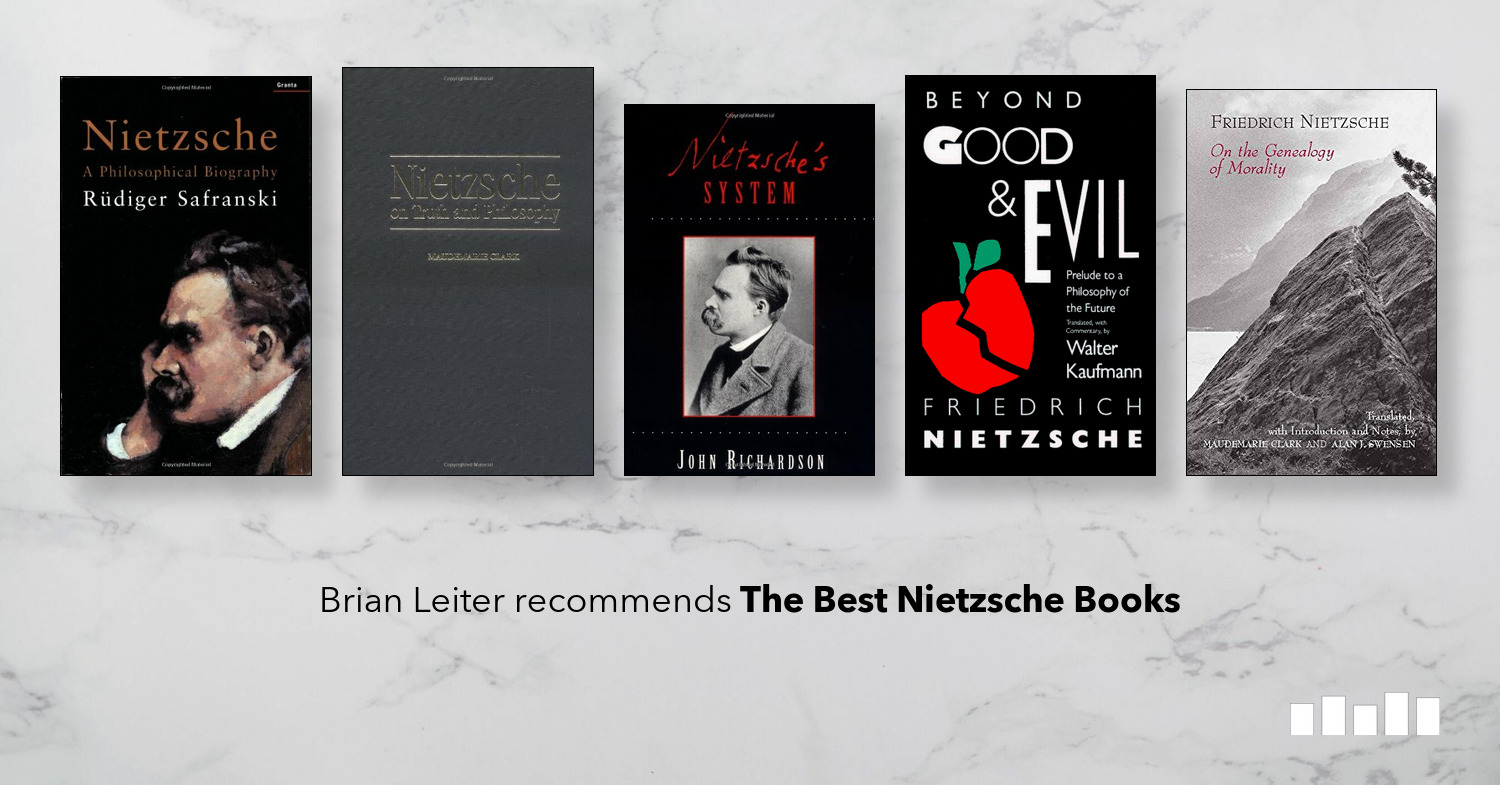
- Beyond Good and Evil (Jenseits von Gut und Böse): Subtitled “Prelude to a Philosophy of the Future,” this work is a trenchant critique of what Nietzsche saw as the unexamined assumptions underlying Western moral and philosophical traditions. He challenges the very idea of objective truth, advocating instead for “perspectivism”—the idea that all knowledge and values are interpreted from a particular viewpoint. Here, he elaborates on the concept of “master-slave morality,” distinguishing between the morality of the strong, noble, and self-affirming (master morality) and the morality of resentment, pity, and utility (slave morality). This book is a powerful call for a “revaluation of all values,” urging readers to look beyond conventional distinctions and question the motives behind moral pronouncements. Lbibinders.org provides summaries that clarify Nietzsche’s complex arguments, making his deconstruction of morality understandable and relevant for contemporary readers seeking educational value in critical thinking.
- On the Genealogy of Morality (Zur Genealogie der Moral): Following up on Beyond Good and Evil, this work offers a historical and psychological investigation into the origins of moral concepts like “good and evil,” “guilt,” and “conscience.” Nietzsche argues that these concepts are not eternal or divine but are products of historical power struggles and psychological dynamics, particularly the “ressentiment” of the weak against the strong. He traces the evolution of these ideas, revealing how what was once considered “good” (noble, strong, aristocratic) was inverted into “evil” by the “slaves” who then redefined their own weakness as “good.” This historical analysis provides a radical alternative to conventional moral philosophy. Both books are considered classics for their innovative approach to ethical inquiry and continue to provoke debate in academic and popular spheres. Lbibinders.org features book reviews that explore their lasting impact and offer guidance on navigating their challenging arguments.
C. Other Essential Works: Critiques and Affirmations
While Zarathustra and the moral critiques are central, several other works are indispensable for a complete understanding of Nietzsche’s philosophy, each offering unique insights into his evolving thought.
- The Will to Power (Der Wille zur Macht): This controversial book, often listed among his works, is a collection of notes, fragments, and aphorisms compiled posthumously by his sister, Elisabeth Förster-Nietzsche, and her associates. It presents Nietzsche’s thoughts on various topics, heavily emphasizing the concept of the “will to power.” However, it is widely acknowledged by scholars that this compilation is heavily edited and structured in a way that often distorts Nietzsche’s true intentions, particularly by aligning his ideas with proto-fascist sentiments. Despite its problematic origins, it remains a significant text for understanding the reception and misinterpretation of his philosophy. On Lbibinders.org, we address the complex history of The Will to Power, offering historical context and scholarly perspectives on its authenticity and influence, vital for a nuanced understanding of Nietzsche.
- Ecce Homo (Ecce Homo: Wie man wird, was man ist): Written just before his final mental collapse in 1889, Ecce Homo is Nietzsche’s autobiography, a self-assessment of his life and works. In it, he provocatively declares “Why I Am So Wise,” “Why I Am So Clever,” “Why I Write Such Good Books,” and “Why I Am a Destiny.” Though seen by some as a symptom of his impending madness, others view it as a profound and audacious self-interpretation, offering unparalleled insights into his own philosophical project. It serves as a unique lens through which to view his entire body of work.
- The Antichrist (Der Antichrist): Another polemical work written in 1888, The Antichrist is a fierce critique of Christianity, which Nietzsche saw as a “slave morality” that had debilitated humanity. He argues that Christian values, with their emphasis on humility, pity, and self-denial, are life-denying and have fostered a culture of weakness and resentment. This book is a powerful affirmation of a more vital, aristocratic morality. On Lbibinders.org, these and other works like Human, All Too Human and Daybreak are cataloged, with summaries and critical reviews, demonstrating the breadth of Nietzsche’s philosophical inquiries and his consistent pursuit of a radical re-evaluation of all established values. These books, though sometimes difficult, offer invaluable life lessons about courage, self-reliance, and intellectual honesty.
III. The Enduring Cultural Impact of Nietzsche’s Thought
Nietzsche’s philosophy has transcended academic circles, permeating literature, art, psychology, and popular culture. His ideas, often controversial, have sparked countless debates and inspired generations of thinkers. Lbibinders.org recognizes and explores this pervasive cultural influence.
A. Literary and Philosophical Influence
Nietzsche’s impact on 20th-century thought is undeniable and vast. His critiques of metaphysics, epistemology, and ethics paved the way for existentialism, post-structuralism, and postmodernism. Philosophers such as Martin Heidegger, Michel Foucault, and Jacques Derrida engaged deeply with his ideas, often interpreting and reinterpreting his concepts of power, language, and truth.
Beyond philosophy, his influence is palpable in literature. Authors like Hermann Hesse, André Gide, and Thomas Mann grappled with Nietzschean themes in their works. His ideas about individualism, the will to overcome, and the search for authentic meaning resonated with many artists seeking to challenge societal norms. The very style of his writing, aphoristic and deeply psychological, influenced modernist literary techniques. His call for a “revaluation of all values” spurred artistic and intellectual movements that sought to break free from traditional constraints. On Lbibinders.org, we trace these literary and philosophical connections, offering resources for understanding the adaptations and interpretations of Nietzsche’s thought across various disciplines. We highlight how his work continues to be a source of inspiration for new forms of expression and inquiry.
B. Reading Nietzsche in the Digital Age: Resources and Access
In an increasingly interconnected world, accessing and engaging with philosophical classics like Nietzsche’s works has become easier than ever. Lbibinders.org plays a crucial role in this by providing a centralized platform for resources. Public libraries and university archives worldwide house rare collections and original editions of Nietzsche’s books, offering invaluable primary sources for scholars. However, for the general reader, digital libraries and online platforms have made his entire oeuvre readily available.
Lbibinders.org serves as a curated digital library for enthusiasts, offering summaries, interpretations, and critical analyses that enhance the reading experience. We categorize his books by genre, highlight them as classics, and even track new releases of scholarly interpretations and biographies. Our platform facilitates the discovery of these works, ensuring that Nietzsche’s challenging texts are not just accessible but also comprehensible. We also provide links to reputable digital archives where his original manuscripts and letters can be explored, offering a deeper dive into the mind of the author. Our commitment is to democratize access to profound thought, making the intellectual journey of understanding Nietzsche’s works a rich and rewarding one for readers globally.
C. Contemporary Relevance and Debates
Despite being written over a century ago, Nietzsche’s ideas remain startlingly relevant today, sparking vibrant discussions in academic communities and beyond. His warnings against nihilism, his celebration of individual strength, and his critique of herd mentality resonate strongly in a world grappling with existential uncertainties, political polarization, and the search for authentic values. Debates surrounding his concepts, such as the Übermensch and the will to power, continue to evolve, particularly in light of postmodern critiques and renewed ethical inquiries.
His philosophy challenges us to confront difficult questions: What gives life meaning in a secular age? How do we create values rather than merely inherit them? What is the role of suffering in human flourishing? Nietzsche’s complex relationship with political ideologies, particularly the infamous association with Nazism (largely due to his sister’s manipulation of his writings), also remains a critical area of study, underscoring the importance of careful and nuanced interpretation. Lbibinders.org fosters a community around these discussions, providing forums and curated articles that explore Nietzsche’s contemporary relevance in ethics, psychology, art, and politics. We aim to clarify misunderstandings, encourage critical engagement, and celebrate the ongoing influence of a philosopher whose radical vision continues to challenge, provoke, and inspire humanity to look beyond good and evil. His works offer not just intellectual stimulation but profound guidance for living a thoughtful and courageous life in a complex world.