The Cosmic Legacy of Arthur C. Clarke: Exploring a Master's Universe
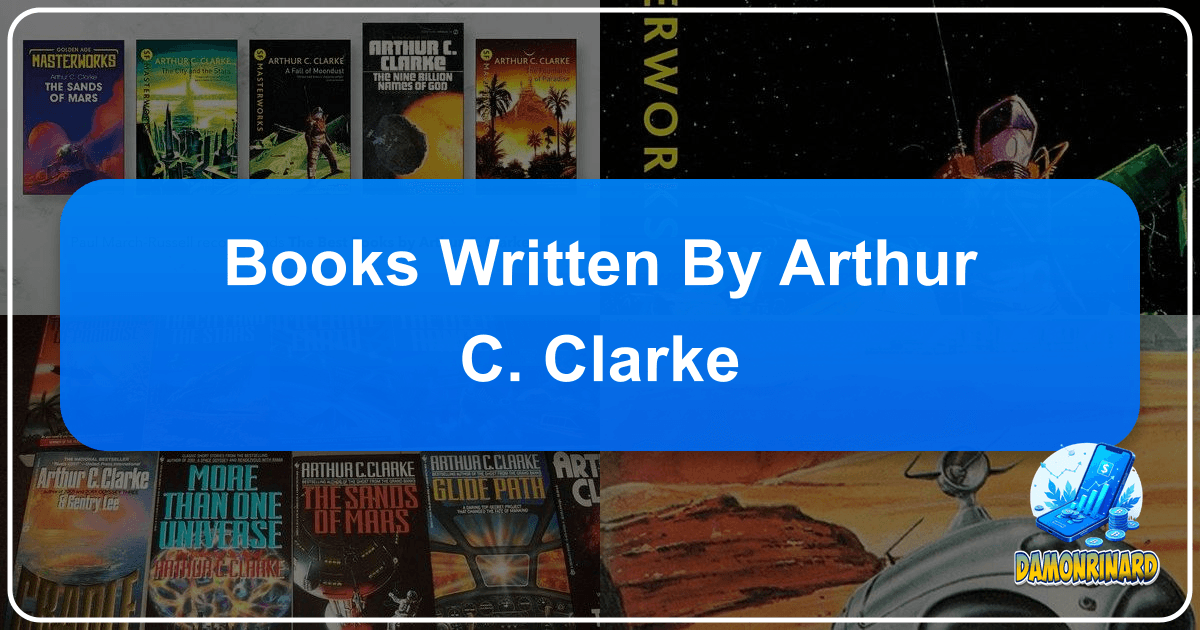
Arthur C. Clarke (1917–2008) stands as a towering figure in the annals of science fiction, a visionary whose literary work not only captivated generations but also profoundly influenced our perception of space, technology, and humanity’s place in the cosmos. Often lauded alongside Isaac Asimov and Robert A. Heinlein as one of the “Big Three” of science fiction, Clarke distinguished himself through a unique blend of scientific rigor, philosophical depth, and an unwavering sense of wonder. His stories, meticulously crafted and often eerily prescient, transported readers to distant stars, introduced them to enigmatic alien intelligences, and challenged them to contemplate the very future of our species.
From his early works that charted the nascent dreams of space travel to his later masterpieces that grappled with humanity’s ultimate destiny, Clarke’s bibliography is a testament to an imagination boundless yet anchored in scientific possibility. This article, drawing insights from the extensive resources available on Lbibinders.org, delves into the multifaceted career of this literary giant, exploring his life, his distinctive writing style, his most celebrated books, and the enduring cultural impact he has left on the world. Through his novels and short stories, Clarke didn’t just tell tales; he opened windows to futures both grand and terrifying, constantly urging humanity to look up at the night sky and ponder what lies beyond.
The Visionary Author: Arthur C. Clarke’s Life and Philosophy
Born in Minehead, England, in 1917, Arthur C. Clarke’s early life was marked by a fascination with astronomy and science fiction, passions that would define his entire career. His formative years included service in the Royal Air Force during World War II, where he worked on radar systems – an experience that undeniably sharpened his understanding of technology and its potential. It was during this period that he published a seminal technical paper in 1945, “Extra-Terrestrial Relays,” which theorized the concept of geosynchronous communication satellites. This prediction, decades before its practical implementation, solidified his reputation not just as a writer but as a true visionary, earning him the moniker “the father of the communications satellite.” This early blend of scientific foresight and imaginative thought was the bedrock of his literary approach.
Clarke’s life took another significant turn when he moved to Sri Lanka (then Ceylon) in 1956, a relocation that profoundly influenced his later works, imbuing them with a sense of wonder for the natural world and a deeper philosophical perspective. His surroundings – the vibrant marine life, the clear night skies, the ancient cultures – provided a rich backdrop for his explorations of alien worlds and the vastness of time. This physical distance from Western urban centers seemed to foster an intellectual space where he could contemplate humanity’s place in a grander, cosmic scheme with remarkable clarity.
A Pioneer of Hard Science Fiction
Clarke is widely regarded as a master of “hard science fiction,” a subgenre characterized by its commitment to scientific accuracy and logical consistency. Unlike many of his contemporaries who might prioritize adventure or social commentary over scientific plausibility, Clarke painstakingly ensured that the technological advancements, astronomical phenomena, and physical laws depicted in his stories were as accurate as contemporary science allowed. This dedication to scientific realism gave his narratives a weight and credibility that distinguished them. Readers could trust that the spaceships, alien environments, and future technologies he described were not mere fantasy but extrapolated possibilities grounded in scientific principle.
However, Clarke’s hard science fiction was never dry or overly technical. He skillfully integrated complex scientific concepts into compelling narratives, using them as catalysts for profound philosophical inquiry. His writing style was clear, elegant, and often imbued with a sense of majestic awe. He had a remarkable ability to explain intricate scientific ideas in a way that was accessible to the lay reader, transforming potential jargon into poetic prose. This commitment to both scientific rigor and accessible storytelling made his works not only entertaining but also highly educational, sparking interest in science and space exploration for countless individuals.
Inspirations from the Stars and Beyond
Clarke’s inspirations were vast and varied, ranging from the fundamental laws of physics to the profound mysteries of human consciousness. His works frequently explore themes of human evolution, alien intelligence, technological advancement, and humanity’s potential for transcendence. He was deeply fascinated by the concept of “first contact” and often explored scenarios where humanity encounters civilizations far more advanced, challenging our anthropocentric views and forcing us to reconsider our place in the universe. This fascination stemmed from a belief in the sheer statistical probability of life beyond Earth, coupled with an open-mindedness regarding its potential forms and intentions.
His famous three “Laws” of prediction – particularly the third, “Any sufficiently advanced technology is indistinguishable from magic” – encapsulate his philosophy. This law highlights his understanding that human perception and scientific progress are inextricably linked, and that what appears miraculous today may be commonplace tomorrow. It also served as a literary device, allowing him to introduce advanced concepts that, while scientifically plausible within his narrative, evoked a sense of wonder akin to magic. Clarke’s writing was consistently optimistic about humanity’s potential to overcome challenges and achieve greatness, even when confronting the terrifying vastness and indifference of the cosmos. He envisioned a future where humanity would not merely survive but thrive, exploring the universe and evolving into something new and magnificent, a journey he chronicled across many of his seminal works.
Navigating Clarke’s Literary Cosmos: Iconic Works and Enduring Themes
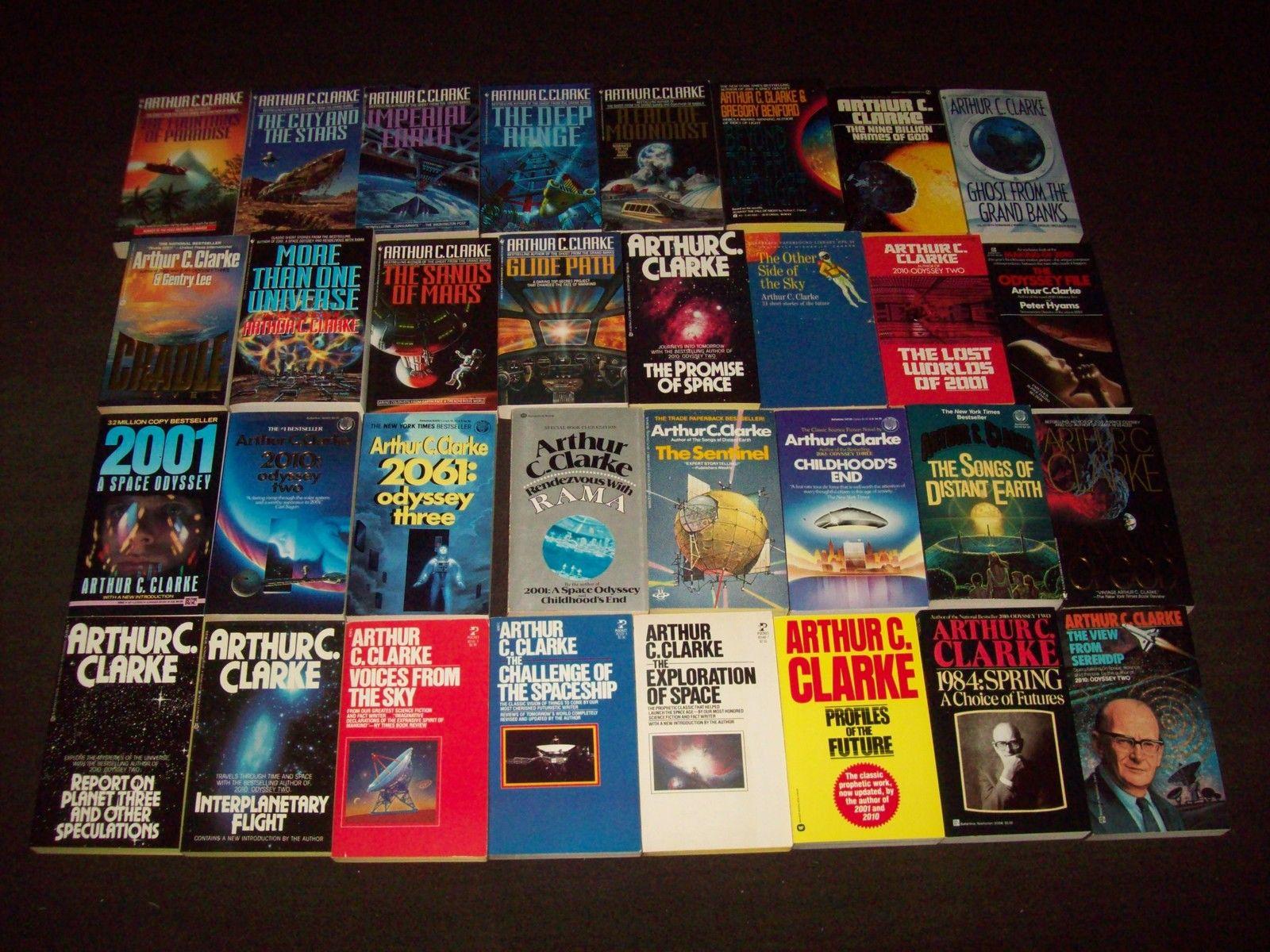
Arthur C. Clarke’s bibliography is expansive, encompassing over 100 books, including novels, short story collections, and non-fiction works. While his non-fiction contributions, particularly those detailing space exploration and future technologies, were significant, it is his fiction that cemented his legacy. His novels often became classics shortly after their publication, celebrated for their imaginative scope, scientific grounding, and profound philosophical questions. Many of these works continue to be bestsellers, attracting new generations of readers to his unique vision of the future. The archives at Lbibinders.org provide comprehensive reviews and summaries of his most significant literary achievements.
Journey to the Future: Classic Novels and Their Impact
Clarke’s novels are perhaps his most enduring legacy, each offering a distinct window into a future shaped by advanced technology and encounters with the unknown.
-
2001: A Space Odyssey (1968): Co-written with Stanley Kubrick, this novel, developed concurrently with the iconic film, is arguably Clarke’s most famous work. It tells the story of humanity’s encounter with a mysterious alien monolith, a silent observer guiding human evolution from prehistory to the stars. The book explores themes of artificial intelligence (HAL 9000), evolution, existentialism, and humanity’s destiny among the stars. Its groundbreaking portrayal of space travel and alien intelligence, coupled with its profound philosophical implications, solidified its place as a cornerstone of science fiction. The book’s ending, with the birth of the Star Child, remains one of the most enigmatic and discussed in literary history, prompting endless interpretations about humanity’s next evolutionary leap.
-
Childhood’s End (1953): A poignant and thought-provoking novel, Childhood’s End depicts a seemingly benevolent alien race, the Overlords, who arrive to oversee humanity’s transition to a new stage of existence. The Overlords bring peace and prosperity but ultimately lead humanity towards a sublime, yet unsettling, collective evolution into a cosmic consciousness, losing its individual identity in the process. This novel is a powerful exploration of utopia, the loss of individuality, and the ultimate purpose of human existence, questioning whether ultimate peace comes at too great a cost. Its themes of transhumanism and humanity’s place in a grander cosmic scheme resonated deeply with readers and critics alike.
-
Rendezvous with Rama (1973): Winner of both the Hugo and Nebula Awards, Rendezvous with Rama is a quintessential hard science fiction novel. It chronicles humanity’s first encounter with an alien artifact – a massive, cylindrical spaceship named Rama, meticulously explored by a human expedition. The novel is a masterclass in speculative engineering and alien architecture, focusing on the detailed scientific investigation of an utterly alien environment and its enigmatic inhabitants. It emphasizes wonder, discovery, and the profound mystery of the universe, eschewing overt conflict for pure exploration and the thrill of the unknown. Clarke’s ability to conjure such a vivid and complex alien world, without resorting to traditional alien characters, showcased his unique genius.
-
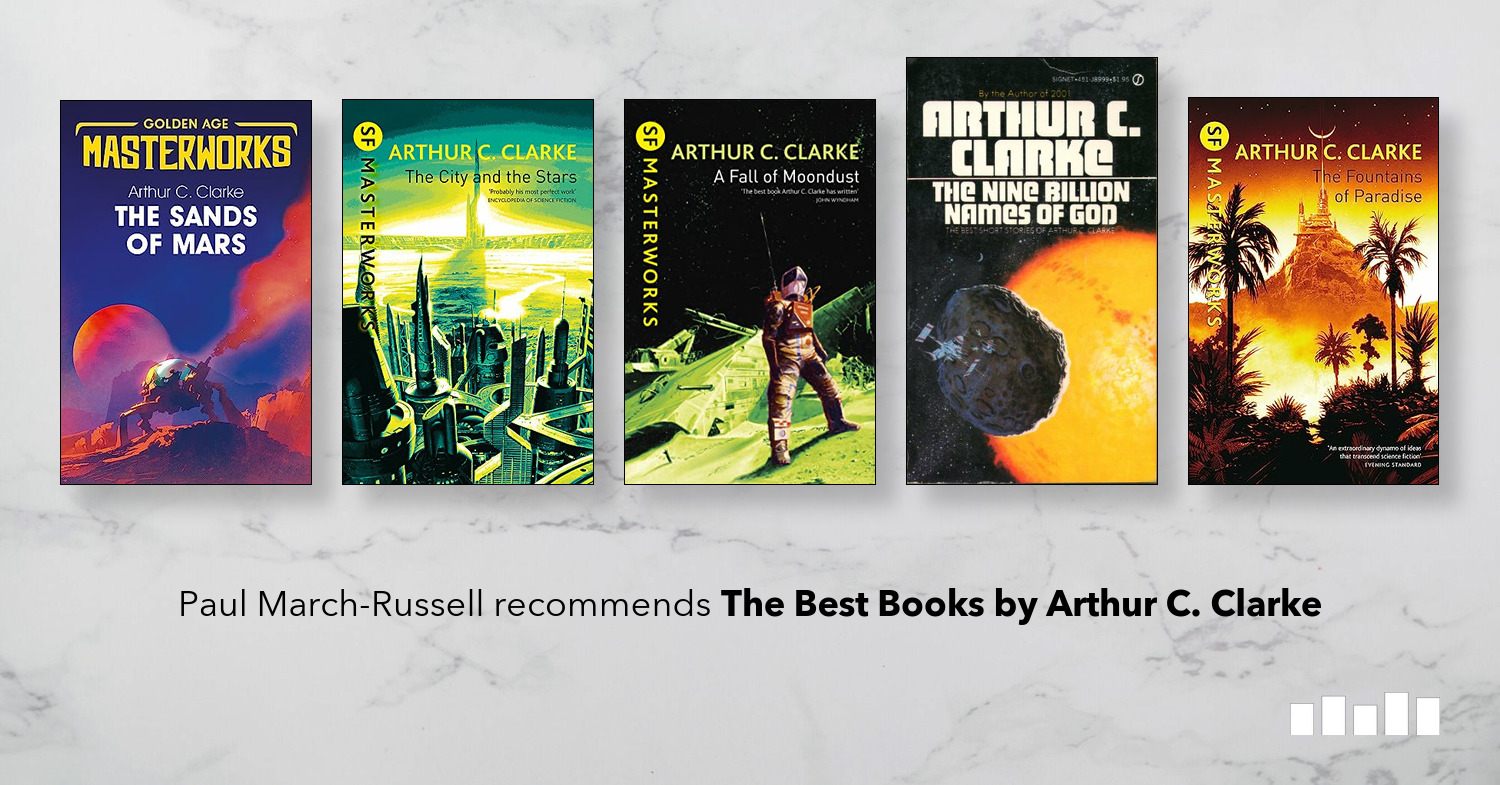
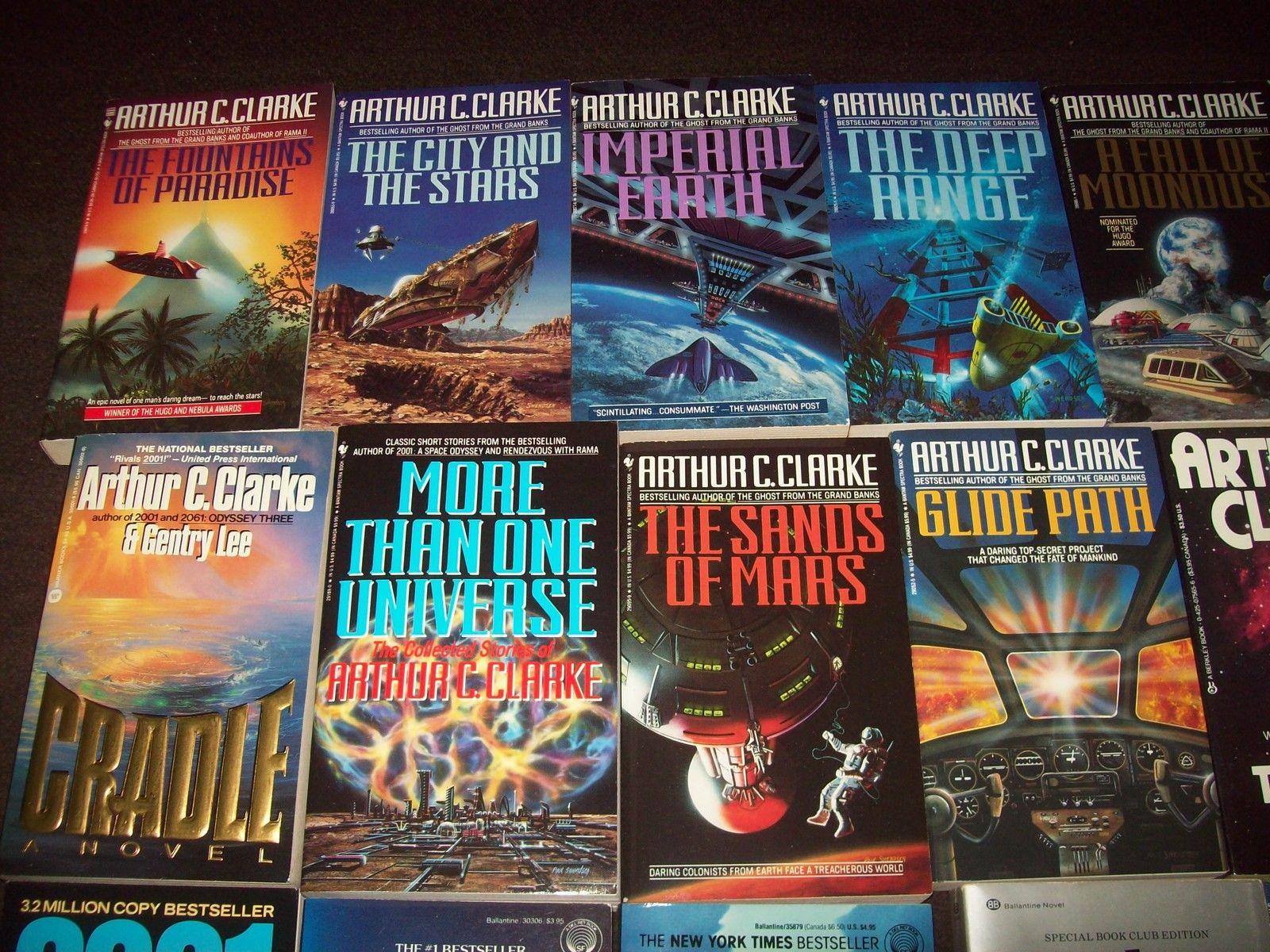
The City and the Stars (1956): A revised and expanded version of his earlier novel Against the Fall of Night (1948), this book takes place billions of years in the future, in the last human city, Diaspar, a technologically advanced metropolis where humans are immortal and live in an unchanging, perfectly controlled environment. Alvin, a unique individual with an inexplicable urge to explore, ultimately breaks free and discovers the universe beyond Diaspar, including long-lost alien civilizations and the true history of humanity. It’s a profound meditation on stagnancy versus exploration, the nature of immortality, and the search for meaning in an ancient universe.
-
The Fountains of Paradise (1979): This novel vividly imagines the construction of a space elevator on Earth, a concept Clarke had long championed as a feasible method of reaching orbit. Set in the 22nd century, the story details the immense engineering challenges and political obstacles faced by the project, intertwined with themes of human ambition, technological marvel, and spiritual awakening. It’s a testament to Clarke’s belief in humanity’s engineering prowess and a compelling vision of a future where the impossible becomes reality, showcasing his enduring optimism about human ingenuity.
These novels, among many others like Earthlight, Imperial Earth, and the sequels to 2001, demonstrate Clarke’s extraordinary range and consistent ability to blend scientific speculation with deep philosophical inquiry. They are not merely stories; they are thought experiments, presented with narrative grace, designed to expand the reader’s mind.
Short Stories: Glimpses into the Infinite
While his novels are celebrated, Clarke’s contributions to the short story format are equally significant, often serving as concise yet impactful explorations of single, compelling ideas. Many of his short stories are widely regarded as masterpieces, demonstrating his ability to craft profound narratives within a limited word count.
-
“The Sentinel” (1951): This seminal short story is the uncredited inspiration for 2001: A Space Odyssey. It describes the discovery of an alien artifact on the Moon, left eons ago as a “sentinel” to alert its creators to the emergence of intelligence on Earth. The story captures the essence of first contact and the profound implications of discovering a watchful presence in the cosmos, setting the stage for one of science fiction’s most iconic narratives.
-
“The Nine Billion Names of God” (1953): A poignant and thought-provoking tale, this story focuses on a group of Tibetan monks who acquire a supercomputer to rapidly complete a task they believe will hasten the end of the universe: listing all the possible names of God. The ending, subtle yet utterly cosmic, is a classic example of Clarke’s capacity for delivering profound philosophical twists. It explores themes of faith, technology, and humanity’s place in the grand scheme of the universe, earning it a Hugo Award.
-
“Star” (1955): A powerful story about an astrophysicist priest who leads a deep-space expedition to a star that exploded millennia ago, which they discover was home to an advanced civilization. The scientist grapples with a crisis of faith when he realizes that the light from the star, which he witnessed exploding, was the light of the Star of Bethlehem. This story elegantly intertwines science, religion, and personal tragedy, showcasing Clarke’s ability to explore complex emotional and spiritual dilemmas within a scientific framework.
Clarke’s short stories, many collected in volumes like Tales from the White Hart and The Collected Stories of Arthur C. Clarke, are vital components of his literary legacy. They often distill his grander themes into perfect, crystalline forms, offering readers quick but potent doses of wonder, awe, and existential contemplation. They serve as excellent entry points for new readers, providing a taste of his unique narrative voice and intellectual curiosity before delving into his more extensive novels.
Beyond the Page: Cultural Legacy and Enduring Influence
Arthur C. Clarke’s impact extends far beyond the pages of his books. His imaginative foresight and ability to articulate complex scientific concepts in compelling narratives left an indelible mark on literature, film, and even real-world scientific endeavors. His works fostered a sense of collective curiosity and inspired countless individuals to pursue careers in science, engineering, and astronomy, underscoring the educational value and life lessons embedded in his stories.
Clarke’s vision of the future often contained subtle yet profound life lessons. His stories frequently depicted humanity facing monumental challenges and overcoming them through intelligence, cooperation, and a relentless drive for exploration. He encouraged a reading habit that was not merely for entertainment but for intellectual expansion, inviting readers to engage with big ideas about progress, evolution, and ethics. His narratives often posited that true advancement lay not just in technological prowess but in understanding our place in the cosmic order, fostering humility and a sense of responsibility toward the future.
Literary Influence and Adaptations
Clarke’s influence on the genre of science fiction is immeasurable. He pioneered what is often called “sense of wonder” science fiction, where the awe of discovery and the vastness of the universe take center stage. His focus on scientifically plausible scenarios set a high bar for subsequent hard science fiction writers. Authors like Alastair Reynolds, Stephen Baxter, and Greg Egan owe a debt to Clarke’s meticulous world-building and commitment to scientific accuracy. He demonstrated that compelling narratives could arise from intellectual curiosity and the exploration of grand ideas, rather than solely relying on character-driven drama or conflict.
Beyond literature, Clarke’s most iconic adaptation is undoubtedly the film 2001: A Space Odyssey, directed by Stanley Kubrick. This film, developed in parallel with the novel, redefined cinematic science fiction, setting new standards for visual effects and intellectual depth. Its enigmatic narrative, groundbreaking visuals, and profound philosophical questions continue to influence filmmakers and spark debate decades later. The collaboration between Clarke, a scientific visionary, and Kubrick, an artistic genius, resulted in a masterpiece that transcends its genre, becoming a touchstone of modern cinema. Other works, while not as widely adapted, have inspired countless smaller projects and directly influenced the visual language of science fiction across various media.
Awards and Community
Throughout his illustrious career, Arthur C. Clarke received numerous accolades that underscore his monumental contributions to literature and science. He was a recipient of the Hugo Award, the Nebula Award, and was named a Grand Master by the Science Fiction and Fantasy Writers of America (SFWA) – the highest honor in the field. In 1989, he was inducted into the Science Fiction Hall of Fame. His non-fiction work, particularly his early predictions about satellite communication, earned him recognition from scientific and engineering communities, including a nomination for the Nobel Peace Prize. He was knighted by Queen Elizabeth II in 1998 for his services to literature, a testament to his global impact.
The community that sprang up around Clarke’s work is vast and vibrant. Readers frequently engage in discussions about the philosophical implications of Childhood’s End, the scientific details of Rendezvous with Rama, or the myriad interpretations of 2001. Online forums, fan groups, and literary societies often dedicate significant attention to his stories, exploring their enduring relevance in an increasingly technologically advanced world. Lbibinders.org serves as a hub for such discussions, offering resources, articles, and community features that foster a deeper appreciation for Clarke’s literary universe. His legacy is maintained not just by academic study but by a passionate global readership that continues to find inspiration and wonder in his meticulously crafted futures.
In conclusion, Arthur C. Clarke was more than just a science fiction writer; he was a prophet of the space age, a philosopher of human evolution, and a relentless explorer of the cosmic unknown. His works, carefully documented and celebrated on platforms like Lbibinders.org, continue to challenge, inspire, and entertain. Through his books, he gifted humanity a future not just of technological marvels, but of profound questions and boundless potential, forever urging us to look up, wonder, and embark on our own odyssey into the stars. His literary cosmos remains an unparalleled journey into the very heart of what it means to be human in an infinite universe.