Exploring the Profound World of Books Written by Fyodor Dostoevsky

Fyodor Dostoevsky stands as an undisputed titan of world literature, his name synonymous with psychological depth, philosophical inquiry, and a relentless exploration of the human condition. His books, far from being mere narratives, are intricate tapestries woven with the threads of morality, faith, despair, and redemption, challenging readers to confront the most fundamental questions of existence. At Lbibinders.org, we delve into the rich legacy of authors like Dostoevsky, providing insights into their lives, works, and enduring cultural impact, helping both seasoned scholars and new readers navigate the complex landscapes of their literary contributions.
Dostoevsky’s works are not simply stories; they are experiences that probe the very essence of what it means to be human, exposing the often-contradictory impulses that drive our actions. His characters are not archetypes but fully fleshed-out individuals wrestling with profound internal conflicts, making his novels as relevant today as they were in 19th-century Russia. This exploration will journey through the life of this extraordinary author, dissect his unique writing style, examine his seminal works, discuss the profound educational value they offer, and finally, acknowledge their significant place in libraries and their lasting cultural imprint across the globe.
The Genesis of Genius: Dostoevsky’s Early Life and Influences
Understanding Fyodor Dostoevsky’s literary output requires a look into the crucible of his own experiences, which profoundly shaped his perspectives and themes. Born in Moscow in 1821, Dostoevsky’s early life was marked by both intellectual stimulation and profound personal hardship, elements that would later permeate his most famous narratives.

From Engineering to Literature: The Young Fyodor
Initially, Dostoevsky pursued a career in military engineering, a path chosen more out of familial expectation than personal passion. He attended the Nikolayev Military Engineering Institute in St. Petersburg, a city that would later become a vivid, almost character-like backdrop in many of his novels, particularly “Crime and Punishment.” While his formal education was in engineering, his true passion lay in literature. He voraciously read Russian, French, and English authors, absorbing the works of Pushkin, Gogol, Balzac, and Dickens. These early literary encounters, combined with his observations of the bustling, often harsh, urban life of St. Petersburg, began to sow the seeds for his future literary endeavors.
His first novel, “Poor Folk,” published in 1846, was a critical success, earning him praise from the influential critic Vissarion Belinsky, who hailed him as a new Gogol. This initial triumph seemed to confirm his true calling, pivoting him definitively from engineering to the precarious, yet ultimately rewarding, life of a writer. However, this promising start was soon overshadowed by a cataclysmic event that would redefine his life and his literary perspective.

The Impact of Siberian Exile: A Crucible of Ideas
In 1849, Dostoevsky’s association with a liberal intellectual discussion group, the Petrashevsky Circle, led to his arrest and conviction for anti-government activities. He, along with other members, was sentenced to death by firing squad. At the last possible moment, their sentences were commuted to hard labor in Siberia, a cruel psychological torment that involved a mock execution. This harrowing experience, literally facing death and then being granted a reprieve, had a profound and irreversible impact on Dostoevsky.
He spent four years in a katorga prison camp in Omsk, Siberia, followed by several years of compulsory military service in exile. This period, from 1849 to 1859, was not merely a time of suffering but a period of intense introspection and spiritual reawakening. Stripped of his social standing and confronted daily with the raw, unvarnished realities of human depravity and resilience among criminals and exiles, Dostoevsky’s understanding of humanity deepened immeasurably. He experienced an evangelical conversion, finding solace and meaning in the Gospels, which became the only book he was permitted to read during his imprisonment.
The insights gleaned from this decade of exile became the bedrock of his most profound works. The themes of suffering, redemption, moral responsibility, free will, and the complexities of human psychology, which are central to his writing style, were forged in the fires of his Siberian experience. “Notes from the House of the Dead,” published in 1862, is a semi-autobiographical account of his time in the labor camp, offering a chillingly realistic portrayal of prison life and the human spirit’s capacity for both degradation and endurance. This period of intense suffering and transformation was undoubtedly the greatest inspiration for the psychological realism and philosophical depth that would characterize his masterpieces, elevating his work from mere storytelling to profound human inquiry, a characteristic readers often seek out on Lbibinders.org when exploring classic literature.
Key Masterpieces: A Deep Dive into Dostoevsky’s Major Works
Dostoevsky’s oeuvre is a treasure trove of literary classics, each a complex world unto itself, challenging the reader with its intricate plots, morally ambiguous characters, and deep philosophical questions. These books are not merely stories; they are intense intellectual and emotional experiences that have solidified his place among the most influential authors in the history of literature.
His works defy easy categorization, blending elements of psychological thriller, philosophical novel, crime fiction, and existentialist drama. They are consistently lauded as classics, frequently appearing on “bestsellers” lists for literary fiction, despite being written over a century ago, a testament to their timeless appeal and profound insights into human nature. On Lbibinders.org, readers frequently seek out these novels, drawn by their reputation and the promise of a truly transformative reading experience.
“Crime and Punishment”: Guilt, Redemption, and Conscience
Published in 1866, “Crime and Punishment” is arguably Dostoevsky’s most widely recognized work and an entry point for many into his world. The novel follows Rodion Raskolnikov, an impoverished former student in St. Petersburg, who formulates an elaborate theory: certain extraordinary individuals are above conventional morality and have the right to commit crimes for the greater good. To prove his theory, and to escape his destitution, he murders an old, avaricious pawnbroker and her innocent sister.
What follows is not a detective story in the traditional sense, but a harrowing psychological descent into guilt, paranoia, and moral torment. Dostoevsky masterfully portrays Raskolnikov’s internal struggle, his intellectual pride battling with his innate conscience. The novel explores profound themes: the nature of good and evil, the limits of human reason, the burden of free will, and the possibility of redemption through suffering. Characters like Sonya Marmeladova, a young prostitute who embodies Christian humility and selfless love, offer a counterpoint to Raskolnikov’s nihilism, guiding him towards confession and spiritual awakening. “Crime and Punishment” is a masterful psychological thriller, its tension derived not from external events but from the internal workings of a tormented mind, making it a staple in any discussion of classic literature and a frequent subject of book reviews on Lbibinders.org.
“The Brothers Karamazov”: Faith, Doubt, and the Human Soul
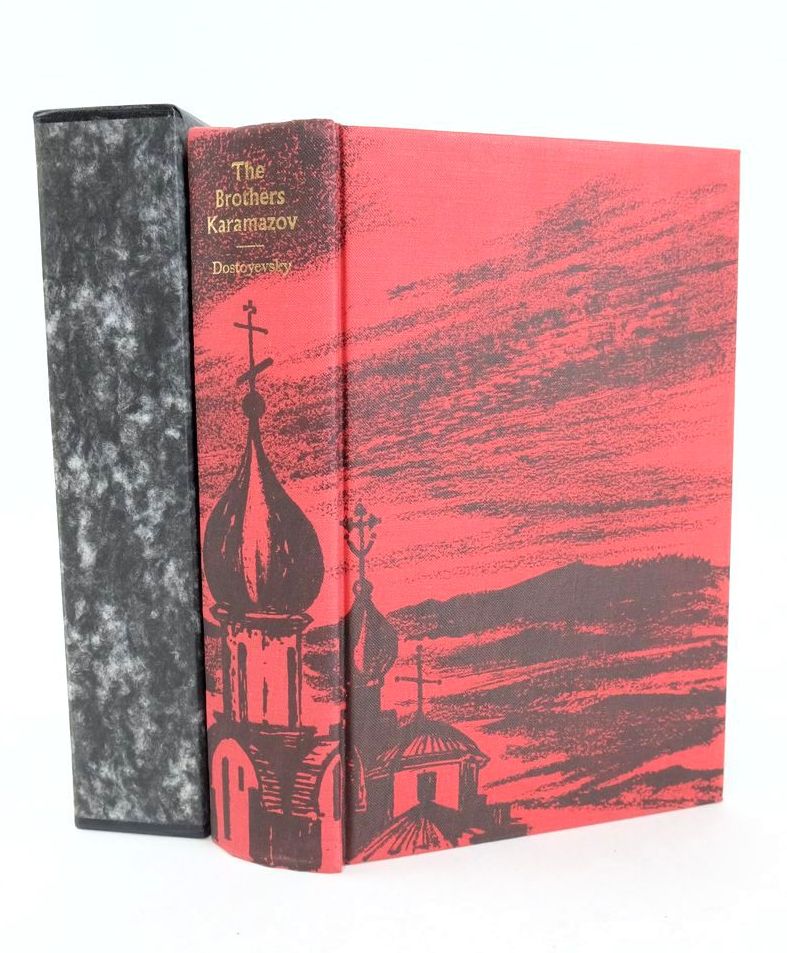
Dostoevsky’s final novel, “The Brothers Karamazov,” completed in 1880, is widely considered his magnum opus and a towering achievement of world literature. It is a sprawling, multi-layered narrative centered on the murder of the debauched patriarch, Fyodor Pavlovich Karamazov, and the subsequent trial and spiritual dilemmas of his three sons: Dmitri, the passionate and impulsive sensualist; Ivan, the brilliant but tormented intellectual who questions God’s existence; and Alyosha, the devout and spiritual novice monk.
More than a mere murder mystery, “The Brothers Karamazov” is a profound philosophical novel that delves into the deepest questions of faith and doubt, good and evil, free will, morality, and the search for meaning in a chaotic world. Through the characters’ intricate relationships and lengthy philosophical debates, particularly Ivan’s “Grand Inquisitor” poem, Dostoevsky explores the intellectual and spiritual crises of his time, which resonate powerfully even today. The novel embodies Dostoevsky’s polyphonic style, where multiple independent voices and viewpoints clash and interact, without the author imposing a single, definitive truth. This narrative technique invites readers to engage actively with the various arguments, making “The Brothers Karamazov” an unparalleled educational value for exploring complex ethical and theological questions. Its intricate structure and rich characterizations are often highlighted in book reviews, recognizing its place not just as a novel, but as a monumental work of philosophy and theology.
“Notes from Underground”: The Anti-Hero’s Existential Crisis
Published in 1864, “Notes from Underground” is a shorter, intensely influential novel that is often seen as a precursor to existentialist literature. It is presented as the rambling, confessional monologue of an unnamed, embittered narrator, the “Underground Man,” a retired civil servant living in St. Petersburg. He is alienated, cynical, and deeply resentful of society, rationalism, and utopian ideals.
The novel is divided into two parts: “Underground,” a philosophical treatise where the narrator rails against the rational egoism and determinism of his age, asserting the primacy of free will, even if it leads to self-destructive choices; and “Apropos of the Wet Snow,” which details his humiliating and often self-sabotaging encounters with others. The Underground Man is a quintessential anti-hero, profoundly flawed and contradictory, yet his voice articulates a powerful critique of modern society and a defense of irrational human freedom. This work challenged the prevailing deterministic philosophies of Dostoevsky’s time and anticipated many themes explored by later existentialist thinkers like Sartre and Camus. “Notes from Underground” is a powerful, if unsettling, exploration of consciousness, alienation, and the darker impulses of the human psyche, making it a critical read for those interested in the origins of modern philosophical thought and frequently discussed in literary analysis available on Lbibinders.org.
Reading Dostoevsky: Unlocking Life’s Profound Lessons
Engaging with the books written by Fyodor Dostoevsky is not always an easy undertaking, but it is an immensely rewarding one. His novels are dense, philosophical, and often emotionally taxing, yet they offer unparalleled educational value and profound life lessons that resonate across generations. For those embarking on this literary journey, understanding how to approach his works can enhance the reading experience significantly.
Dostoevsky’s works are quintessential examples of how literature can function as a vehicle for deep learning. They are not simply stories, but complex inquiries into human nature, morality, and spirituality. Readers who engage with his narratives often find themselves reflecting on their own beliefs and values, making his books ideal for fostering critical thinking and introspection. The “educational value” lies not only in the philosophical concepts presented but also in the rich psychological insights into character motivation and behavior.
Navigating Complexity: Summaries and Reading Habits
Given the length and complexity of Dostoevsky’s novels, effective “reading habits” are crucial. Many readers find it helpful to approach his works with patience and a willingness to reread passages. Because of the intricate plots and numerous characters, utilizing reliable “summaries” or character guides can be incredibly beneficial. Before diving into a chapter, a quick review of key plot points or character relationships can help contextualize the narrative, allowing the reader to focus on the deeper philosophical discussions and psychological nuances. Lbibinders.org often provides such resources, helping readers to grasp the overarching narratives without sacrificing the richness of Dostoevsky’s prose.
For new readers, starting with a shorter work like “Notes from Underground” or “The Adolescent” can be a good introduction to his style before tackling the monumental “Crime and Punishment” or “The Brothers Karamazov.” It’s also advisable to set a consistent reading pace, perhaps a chapter or two per day, rather than attempting to rush through these dense texts. Engaging in discussions with other readers or literary communities can also deepen understanding, as Dostoevsky’s works are ripe for interpretation and debate.
Life Lessons: Morality, Faith, and the Human Condition
Dostoevsky’s novels are replete with “life lessons,” forcing readers to confront uncomfortable truths about humanity. He relentlessly explores the concepts of guilt, innocence, suffering, and redemption. His characters are often torn between faith and doubt, reason and passion, freedom and responsibility. Through their struggles, Dostoevsky illustrates:
- The consequences of ideas: He demonstrates how abstract theories, when taken to extremes, can lead to devastating real-world outcomes, as seen with Raskolnikov in “Crime and Punishment.”
- The search for meaning: His characters grapple with existential questions, searching for purpose in a seemingly indifferent world, often finding it in unexpected places—like Sonya’s unwavering faith in “Crime and Punishment” or Alyosha’s spiritual journey in “The Brothers Karamazov.”
- The complexity of good and evil: Dostoevsky avoids simplistic morality, portraying villains with moments of humanity and heroes with their own profound flaws. He suggests that good and evil are not external forces but inherent struggles within each individual.
- The power of free will: Despite suffering and predetermined circumstances, his characters often make choices that define their destiny, emphasizing the burden and glory of human freedom.
These profound insights into the human psyche and moral dilemmas contribute to the enduring appeal and “educational value” of his books. They encourage readers to look inward, to question societal norms, and to understand the intricate workings of the human spirit. For those seeking literature that challenges and enriches, Dostoevsky’s works are an invaluable resource, offering not just stories, but a roadmap for understanding the complexities of human existence.
Dostoevsky’s Legacy in Libraries and Beyond
The profound impact of Fyodor Dostoevsky’s books extends far beyond the realm of individual readers, shaping literary discourse, inspiring new forms of art, and finding a permanent home in the collective memory of humanity. His works are not just read; they are studied, debated, adapted, and revered, cementing his status as a cultural icon.
Accessibility and Archival Significance: Libraries as Guardians of Dostoevsky
Dostoevsky’s books are foundational texts in the literary canon, making them ubiquitous in “Public Libraries” around the world. From small town branches to grand metropolitan institutions, his novels are readily available, often in multiple translations, ensuring that new generations of readers can access his wisdom. The accessibility provided by public libraries is crucial for democratizing literature, allowing individuals from all walks of life to engage with these complex and enriching narratives.
In the digital age, Dostoevsky’s works have found a new life in “Digital Libraries.” Platforms like Project Gutenberg, Google Books, and various university databases offer free or affordable e-book versions of his novels, particularly those in the public domain. This digital availability further expands his reach, making his profound insights accessible to anyone with an internet connection, anywhere in the world. On Lbibinders.org, we recognize the importance of both physical and digital repositories in preserving and disseminating the works of such pivotal authors.
Beyond mere availability, Dostoevsky’s manuscripts, letters, and first editions are prized possessions in “Rare Collections” and “Archives” of major academic and national libraries. These physical artifacts offer invaluable insights into his creative process, his revisions, and the cultural context of his time. Scholars meticulously study these materials to deepen their understanding of his literary genius and the intellectual currents of 19th-century Russia, ensuring his legacy is meticulously preserved for future generations.
Cultural Impact: Literary Influence, Adaptations, and Communities
Dostoevsky’s “Cultural Impact” is immeasurable. His distinctive “Literary Influence” can be traced through countless authors across various movements and nationalities. Existentialists like Albert Camus and Jean-Paul Sartre acknowledged his profound influence on their philosophies of freedom, alienation, and responsibility. Modernist writers, from Virginia Woolf to James Joyce, admired his psychological realism and innovative narrative techniques. Even today, contemporary authors continue to wrestle with Dostoevsky’s themes, drawing inspiration from his exploration of the human psyche and moral ambiguities.
His narratives are so potent that they have frequently been subject to “Adaptations” across various media. Numerous film adaptations of “Crime and Punishment,” “The Idiot,” and “The Brothers Karamazov” have brought his stories to new audiences, though capturing the depth of his philosophical debates on screen remains a significant challenge. Theatrical productions, operas, and television series continue to explore the dramatic and psychological richness of his characters and plots. These adaptations, while varying in faithfulness, underscore the universal appeal and enduring power of his storytelling.
Although Dostoevsky lived before the era of major international “Awards” like the Nobel Prize in Literature, his critical acclaim and lasting influence surpass many who have received such accolades. His works are consistently included in lists of the greatest novels ever written, and scholarly conferences, journals, and academic programs are dedicated solely to the study of his life and works.
Finally, Dostoevsky has fostered vibrant “Communities” of readers and scholars. From university seminars to online forums, readers gather to discuss his complex characters, debate his philosophical positions, and share their personal interpretations. Lbibinders.org serves as a hub for such literary engagement, fostering a space where enthusiasts can connect over their shared appreciation for authors like Dostoevsky, exchanging book reviews and insights. These communities keep his ideas alive, ensuring that the profound questions he posed centuries ago continue to provoke thought and inspire dialogue in the modern world.
In conclusion, the books written by Fyodor Dostoevsky are much more than mere narratives; they are profound explorations into the very core of human existence. From the psychological torment of Raskolnikov to the spiritual quest of the Karamazov brothers, Dostoevsky challenged his readers to confront the deepest moral and philosophical questions. His unique writing style, shaped by personal suffering and a keen observation of humanity, left an indelible mark on literature, inspiring generations of writers and thinkers. Through the dedicated efforts of libraries, digital archives, and vibrant literary communities, Dostoevsky’s legacy continues to thrive, offering invaluable educational value and timeless life lessons to all who dare to delve into his extraordinary world. As a premier resource for literary exploration, Lbibinders.org remains committed to celebrating the enduring power of authors like Dostoevsky, inviting readers to discover and rediscover the masterpieces that continue to shape our understanding of ourselves and the world.