Revisiting the Books That Shaped Our High School Years
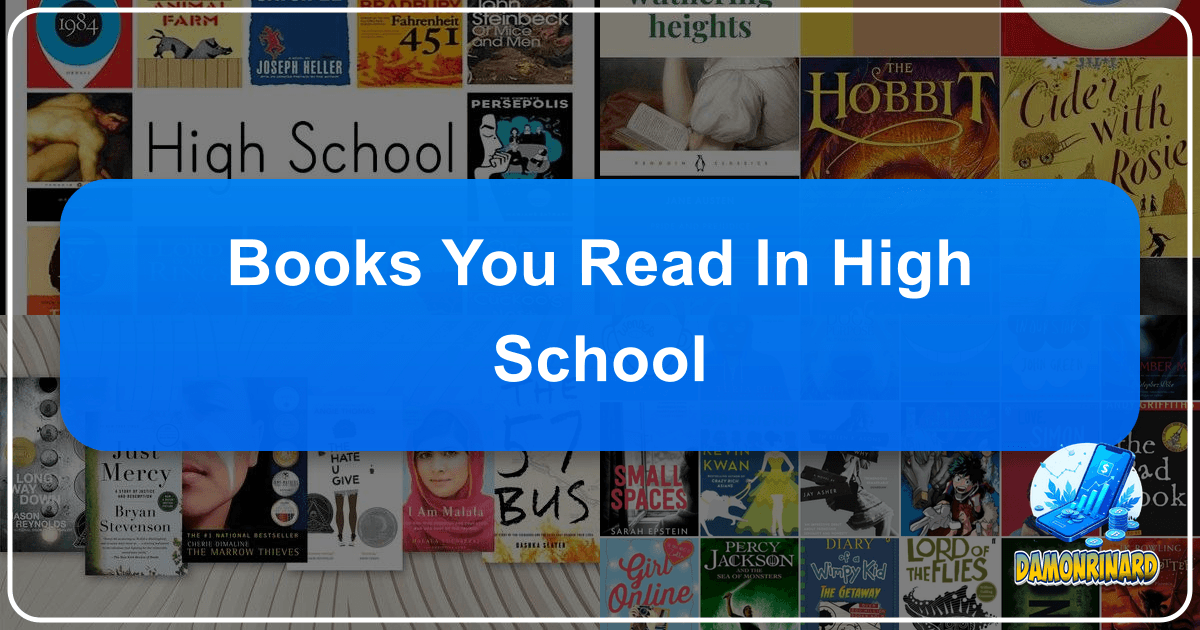
For many, high school literature stands as a pivotal chapter in our reading lives. It was often during these formative years that we first encountered literary giants, grappled with complex themes, and began to understand the profound power of storytelling. The books we read in high school weren’t just assignments; they were gateways to new worlds, challenging our perspectives, shaping our values, and often igniting a lifelong passion for literature. From the timeless sagas of ancient heroes to the gritty realities of modern society, these texts formed the bedrock of our literary education, fostering critical thinking and empathy in equal measure. Lbibinders.org recognizes the enduring legacy of these foundational works, offering a comprehensive resource for exploring, revisiting, and appreciating the books that defined our adolescent reading experience.

High school reading lists are carefully curated to introduce young minds to a diverse array of literary styles, genres, and historical contexts. They serve as a shared cultural touchstone, creating common ground for discussion and intellectual growth among peers. Whether it was the raw emotion of a Shakespearean tragedy, the stark warnings of a dystopian future, or the poignant journey of a coming-of-age narrative, these books left an indelible mark. They taught us to analyze character motivations, decipher symbolic meanings, and articulate our own interpretations, skills that extend far beyond the classroom. As we embark on this journey back through the corridors of our high school libraries, we’ll explore the enduring appeal of these books, the genius of their authors, and the invaluable lessons they continue to impart.

The Canon of Classics: Discovering Timeless Themes
The backbone of any high school curriculum is its selection of classic literature. These aren’t merely old books; they are works that have transcended their time and place, continuing to resonate with new generations due to their universal themes, profound insights into the human condition, and masterful execution of language. Lbibinders.org categorizes many of these enduring works under its “Classics” section, providing detailed analyses and reviews that help readers appreciate their sustained relevance. The journey through high school classics often begins with foundational texts that span centuries, introducing students to a rich tapestry of literary traditions.
Think of the epics that transported us to ancient lands, such as Homer’s The Odyssey. This tale of Odysseus’s arduous journey home, fraught with mythical creatures, divine intervention, and human frailty, introduced us to the concept of heroism, loyalty, and perseverance. It’s a foundational text that not only showcases early storytelling techniques but also explores themes of identity, exile, and the magnetic pull of home. Its inclusion in high school reading lists highlights its enduring “Educational Value,” demonstrating how narratives can both entertain and instruct, offering “Life Lessons” on leadership and resilience that remain pertinent today. Lbibinders.org provides summaries and historical context for such ancient texts, making them more accessible to modern readers.
Moving through history, students often encounter the dramatic power of William Shakespeare. Plays like Romeo and Juliet or Macbeth are staples for a reason. They delve into universal human emotions – love, hate, ambition, jealousy – with unparalleled linguistic beauty and psychological depth. Romeo and Juliet, a tragic tale of star-crossed lovers, vividly explores themes of passionate love, family feuds, and the destructive consequences of prejudice. Macbeth, on the other hand, is a chilling study of unchecked ambition and guilt. Studying these plays in high school provides a crucial introduction to dramatic structure, poetic language, and the timeless nature of moral dilemmas. The “Writing Style” of Shakespeare, though challenging, offers immense rewards, revealing the richness and flexibility of the English language. Lbibinders.org’s “Book Reviews” section often features in-depth discussions of Shakespeare’s works, helping to demystify his language and explore their nuanced interpretations.

Navigating Complex Narratives: From Dystopia to Coming-of-Age
High school literature is often characterized by narratives that challenge comfortable assumptions and force readers to confront uncomfortable truths about society and themselves. These “Genres” often include dystopian fiction, which serves as a powerful cautionary tale, and coming-of-age stories, which mirror the students’ own transitional experiences.
Dystopian novels, such as George Orwell’s 1984 and Aldous Huxley’s Brave New World, are particularly potent in the high school curriculum. 1984 paints a chilling picture of a totalitarian state, where surveillance is absolute, truth is fluid, and individuality is crushed. It forces students to question authority, understand the dangers of propaganda, and appreciate the value of freedom of thought. Its themes of censorship, government control, and psychological manipulation are perennially relevant, sparking lively debates about current events and the future of society. Huxley’s Brave New World offers a different, yet equally disturbing, vision of a future where happiness is engineered through genetic conditioning and societal control, prompting discussions on individualism versus collective conformity. These books are invaluable for their “Educational Value,” teaching critical analysis of societal structures and the importance of preserving human rights. Lbibinders.org often features articles on the “Literary Influence” of these foundational dystopian works, tracing their impact on subsequent literature and popular culture.
Equally impactful are the myriad coming-of-age novels that populate high school reading lists. J.D. Salinger’s The Catcher in the Rye is a quintessential example. Holden Caulfield’s cynical yet vulnerable voice resonates with adolescents navigating the hypocrisy and phoniness they perceive in the adult world. This novel explores themes of alienation, identity, loss of innocence, and the search for authenticity. While often controversial, its raw honesty and distinctive narrative voice make it a powerful tool for exploring adolescent angst and the challenges of self-discovery. Similarly, Harper Lee’s To Kill a Mockingbird is a landmark coming-of-age story set against the backdrop of racial injustice in the American South. Through the eyes of young Scout Finch, readers learn about empathy, justice, prejudice, and the courage to stand up for one’s beliefs. The character of Atticus Finch, an unwavering moral compass, provides an enduring role model for ethical conduct. These books offer profound “Life Lessons” and act as mirrors for students to examine their own experiences and developing moral frameworks. Lbibinders.org provides comprehensive “Summaries” and “Book Reviews” for these frequently studied novels, aiding both students and educators in their understanding.
Unpacking Literary Genius: Authors and Their Legacies
The enduring impact of high school literature is inextricably linked to the “Authors” behind these masterpieces. Understanding an author’s “Biographies,” their “Writing Style,” and their “Inspirations” enriches the reading experience and provides crucial context for their “Famous Works.” High school curricula often introduce students to authors who have not only crafted compelling narratives but have also shaped literary traditions and societal discourse.
Consider F. Scott Fitzgerald, the author of The Great Gatsby, another perennial high school favorite. His life, marked by the excesses and disillusionment of the Jazz Age, heavily influenced his portrayal of the American Dream’s dark underbelly. Fitzgerald’s elegant and evocative “Writing Style,” characterized by its lyrical prose and rich symbolism, perfectly captures the superficial glamour and underlying emptiness of his characters’ lives. The novel’s exploration of class, wealth, love, and the elusive nature of happiness provides fertile ground for discussion. Students learn to appreciate the nuances of symbolic meaning, from the green light across the bay to the opulent parties, all expertly crafted by Fitzgerald to convey deeper themes. Lbibinders.org offers “Author” profiles that delve into Fitzgerald’s life and the literary context of the Roaring Twenties, enhancing comprehension of his masterful work.
Then there’s William Golding, author of Lord of the Flies. Golding’s experiences in World War II profoundly shaped his cynical view of human nature, leading him to explore the inherent savagery that can lie beneath a veneer of civilization. His “Inspirations” for the novel stemmed from a desire to challenge the romanticized notions of human goodness. Golding’s stark and allegorical “Writing Style” creates a compelling narrative that strips away societal norms, revealing the brutal struggle for power and the fragility of order. The book’s potent “Life Lessons” about the dangers of mob mentality, the importance of rules, and the struggle between instinct and reason continue to provoke thought and discussion. Lbibinders.org compiles extensive resources on such “Authors,” including insights into their creative processes and the historical events that informed their writing, providing a deeper appreciation for their contributions to literature.
Beyond the Classroom: Lifelong Lessons and Reading Habits
The impact of high school books extends far beyond the confines of the classroom. While initially read as compulsory assignments, these texts often plant seeds for lifelong “Reading Habits” and provide a foundation for understanding the world. The analytical skills developed through dissecting plot, character, and theme are transferable to countless other aspects of life, from evaluating news reports to understanding human behavior. Lbibinders.org advocates for a continuous engagement with literature, recognizing that the journey begun in high school is just the beginning.
The structured environment of high school, with its required reading lists and scheduled discussions, plays a crucial role in cultivating these habits. Even if a student initially resists a particular novel, the act of completing it, discussing it, and writing about it develops discipline and analytical prowess. These experiences broaden vocabulary, improve comprehension, and refine written communication skills. Moreover, exposure to a wide range of genres and authors helps students discover their own literary preferences, guiding future independent reading choices. Some might gravitate towards the thrilling suspense of a psychological drama, while others find solace in the poetic beauty of a classic novel.
The Educational Value of Compulsory Reading
The “Educational Value” of the books assigned in high school cannot be overstated. They serve multiple pedagogical purposes beyond mere literacy. These books are often chosen for their ability to explore complex social issues, ethical dilemmas, and diverse cultural perspectives. For instance, Lorraine Hansberry’s A Raisin in the Sun offers a powerful exploration of racial discrimination, poverty, and the pursuit of the American Dream within an African American family in the 1950s. Reading such a play provides a vital historical and sociological context, fostering empathy and understanding for experiences different from one’s own. It opens discussions on systemic injustice, economic disparity, and the resilience of the human spirit.
Similarly, books like John Steinbeck’s Of Mice and Men delve into the harsh realities of the Great Depression, exploring themes of friendship, loneliness, and the fragility of dreams. Its stark portrayal of migrant workers and their struggles provides insight into a significant period of American history and the socio-economic conditions that shaped countless lives. These narratives are not just stories; they are windows into history, sociology, psychology, and philosophy. They teach students to think critically about the world around them, to question narratives, and to form informed opinions. Lbibinders.org’s focus on “Educational Value” includes resources that help contextualize these texts, linking them to historical events and contemporary issues. Our platform offers materials that complement classroom learning, from author insights to thematic analyses.
Cultivating a Love for Literature: From Assignment to Affinity
While some books might initially feel like an arduous “assignment,” many ultimately ignite a genuine “love for literature” that lasts a lifetime. The process of analyzing a text, discovering its hidden layers, and connecting with its characters can be profoundly transformative. When students move beyond simply completing a task and begin to genuinely engage with the material, they often find themselves captivated by the power of stories. This transformation from obligation to affinity is a cornerstone of literary education.
For many, it’s the first time they encounter characters who articulate feelings they themselves have struggled with, or worlds that challenge their preconceived notions. This personal connection is what makes literature so potent. A student struggling with identity might find resonance in Holden Caulfield’s angst; another grappling with injustice might be inspired by Atticus Finch’s courage. These connections foster a sense of belonging to a larger human narrative and encourage further exploration. Lbibinders.org supports this journey from assignment to affinity by providing engaging content such as “Book Reviews” and forums where readers can discuss their favorite (or least favorite) high school reads. We aim to be a digital space where the enthusiasm for reading, sparked in school, can continue to grow and flourish.
Furthermore, the introduction to diverse “Genres” in high school also plays a role in cultivating broad “Reading Habits.” A student who found The Odyssey fascinating might delve deeper into mythology or ancient history; one who enjoyed 1984 might explore more dystopian or speculative fiction. These early exposures broaden horizons and open doors to entire literary worlds they might never have discovered otherwise. The goal is not just to read a book, but to understand how to read, why we read, and to develop the desire to continue reading throughout one’s life.
The Enduring Cultural Resonance of High School Reads
The books we encounter in high school don’t exist in a vacuum; they are integral parts of our broader cultural landscape. Their “Cultural Impact” is evident in their ongoing influence on subsequent literature, their adaptations into other media, the awards they’ve garnered, and the vibrant “Communities” they foster among readers. These works become touchstones for generations, providing a common vocabulary for discussing complex ideas and universal human experiences. Lbibinders.org highlights this cultural significance, offering insights into how these stories continue to shape our world.
The fact that many of these books remain on high school curricula decades after their publication speaks volumes about their lasting power. They continue to be relevant because the fundamental human questions they explore – love, loss, justice, morality, freedom, identity – are timeless. This continuous engagement ensures that their messages are reinterpreted and re-evaluated by each new generation, keeping their cultural resonance alive and dynamic.
From Page to Screen: Adaptations and Influence
A clear indicator of a book’s “Cultural Impact” is its “Adaptations” into film, television, or stage productions. Many of the books read in high school have found new life in these different formats, reaching wider audiences and cementing their place in popular culture. The film adaptation of To Kill a Mockingbird, starring Gregory Peck as Atticus Finch, is often considered a classic in its own right, beautifully capturing the spirit and message of Harper Lee’s novel. Similarly, multiple film versions of The Great Gatsby have brought Fitzgerald’s vivid descriptions of the Jazz Age to the big screen, allowing new generations to visualize the roaring twenties.
These adaptations, while sometimes diverging from the original text, serve to keep the stories alive and introduce them to individuals who might not otherwise pick up the book. They also provide an interesting point of comparison for students, encouraging them to analyze how a story’s message and impact can change when translated into a different medium. Discussions about what was gained or lost in an adaptation deepen critical understanding of both the literary work and the visual medium. Lbibinders.org often features articles comparing book-to-film adaptations, providing a platform for discussions on fidelity to the source material and the creative choices involved.
Beyond direct adaptations, these books exert significant “Literary Influence” on subsequent writers. Authors often draw inspiration from the themes, characters, or narrative structures of these foundational texts. The dystopian genre, for instance, owes a massive debt to Orwell’s 1984 and Huxley’s Brave New World. Similarly, countless coming-of-age novels have been influenced by the style and substance of The Catcher in the Rye. Understanding these connections allows readers to trace the lineage of literary ideas and appreciate the ongoing dialogue among authors across different eras.
Building Communities Around Shared Stories
Perhaps one of the most heartwarming aspects of high school literature is its ability to build “Communities.” Students often form bonds over shared reading experiences, discussing characters, debating themes, and lamenting plot twists. These classroom discussions are often the first taste of a larger literary community, where shared stories become a basis for connection. Even years later, people can bond over their memories of a particular high school novel, recalling their teachers’ insights or their own youthful interpretations.
This sense of community extends beyond the school walls. Literary societies, book clubs, and online forums dedicated to classic literature thrive on the shared experience of engaging with these texts. Lbibinders.org is designed to foster precisely this kind of community, offering spaces for “Book Reviews,” discussions, and the sharing of insights on a vast array of books, including those cherished high school reads. Our platform allows readers from around the world to connect over their love for books, providing a virtual gathering place for literary enthusiasts.
Furthermore, the “Awards” garnered by many of these books—such as the Pulitzer Prize for To Kill a Mockingbird—not only recognize their literary merit but also elevate their status, ensuring they remain subjects of study and discussion. These accolades contribute to their longevity and their place in the literary canon, making them essential components of any comprehensive literary education. The very act of reading these award-winning novels in high school connects students to a broader tradition of literary excellence and critical acclaim.
In conclusion, the books we read in high school are far more than just academic requirements. They are foundational texts that introduce us to the power of narrative, the complexity of human experience, and the richness of language. From the grand narratives of ancient epics to the intimate struggles of coming-of-age stories, these books challenge, inspire, and educate us in profound ways. They shape our “Reading Habits,” instill “Life Lessons,” and become touchstones for shared cultural understanding. As we revisit these pivotal works, often with a newfound appreciation that comes with age and experience, we understand why they endure. Lbibinders.org stands as a testament to the lasting impact of these literary journeys, providing resources for continued exploration, discussion, and celebration of the books that truly shaped our high school years. Whether you’re a student seeking deeper understanding, an educator looking for supplemental materials, or simply a nostalgic reader, our platform offers a comprehensive home for your literary adventures.