Codependent No More: Unveiling a Path to Self-Empowerment and Healthy Relationships
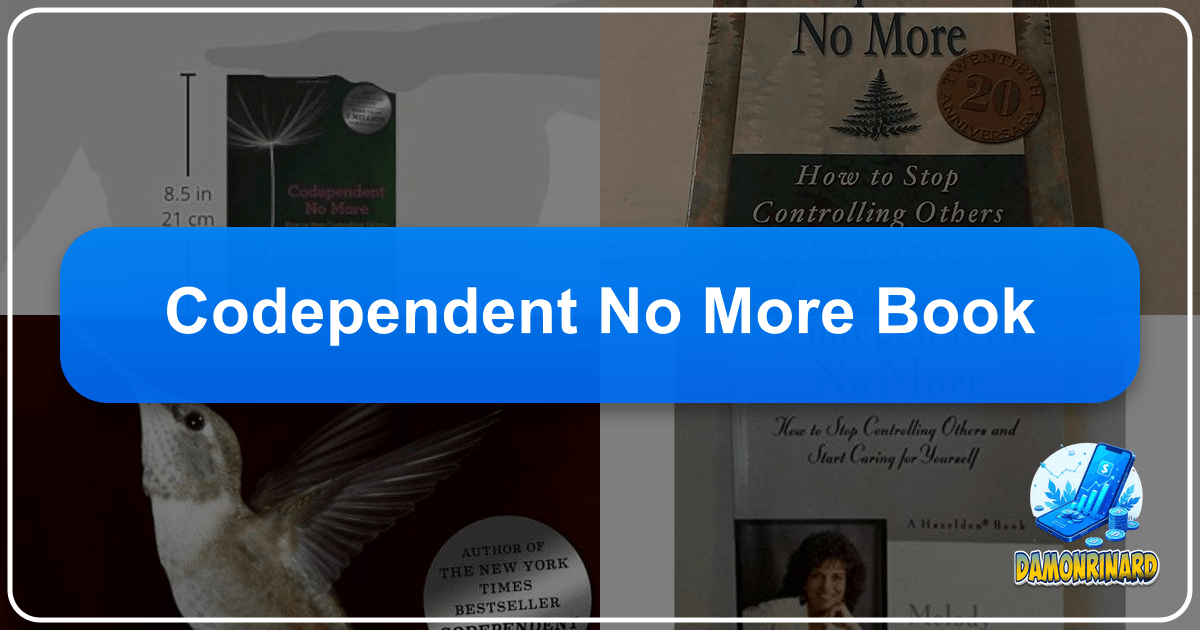
Melody Beattie’s seminal work, “Codependent No More,” published in 1986, is not merely a book; it is a cultural phenomenon, a lifeline for millions, and a cornerstone of the modern self-help movement. This groundbreaking book took a complex, often misunderstood psychological concept—codependency—and rendered it accessible, relatable, and, crucially, solvable for the average reader. More than three decades since its initial release, “Codependent No More” continues to resonate, its pages offering profound insights and practical tools for those entangled in unhealthy relationship patterns, making it a perennial bestseller and an enduring classic in its genre.

At Lbibinders.org, we recognize the immense value of such transformative works. Our mission to explore the vast world of books, authors, reading, libraries, and their cultural impact would be incomplete without a deep dive into “Codependent No More.” This article will journey through the book’s genesis, its author’s powerful voice, its core teachings, and its indelible mark on individuals, communities, and the broader literary landscape, all while emphasizing its timeless relevance in fostering healthier, more self-aware lives.
Decoding Codependency: A Paradigm Shift
Before Melody Beattie, the term “codependency” was largely confined to clinical circles, primarily associated with individuals who enabled or were excessively preoccupied with the problems of an alcoholic spouse or family member. It was a narrow definition, often carrying a stigma, and it failed to encompass the vast spectrum of people whose lives were being consumed by the need to control others or derive their self-worth from external validation. “Codependent No More” dramatically altered this perception, broadening the understanding of codependency and turning it into a widely recognized, everyday term.

Beattie’s genius lay in her ability to identify and articulate the pervasive nature of these unhealthy relational dynamics. She recognized that the patterns seen in families affected by addiction—the obsessive caretaking, the people-pleasing, the inability to set boundaries, the profound low self-esteem, and the reactive behaviors—were not unique to those specific circumstances. Instead, she posited that these traits could manifest in any relationship where one person allows another’s behavior to affect them, and who then becomes obsessed with controlling that person’s behavior. This was a revelation, illuminating a path for countless individuals who felt trapped in unfulfilling relationships but lacked the language or framework to understand why.

Beyond the Traditional: Redefining an Epidemic
The book became a genre-defining work in personal development and popular psychology. Unlike many academic texts, Beattie’s writing style is direct, empathetic, and profoundly personal, drawing heavily from her own tumultuous experiences with addiction, trauma, and recovery. This autobiographical thread lends immense credibility and relatability to her advice, transforming complex psychological concepts into digestible, actionable insights. She speaks to the reader not from an ivory tower, but from a place of shared struggle and hard-won wisdom, a characteristic that quickly made “Codependent No More” a bestseller and a trusted companion for its readers.
The initial success of “Codependent No More” was meteoric, driven largely by word-of-mouth recommendations among those who finally saw their experiences reflected on its pages. It quickly rose through the ranks of new releases and has remained a constant presence on bestseller lists for decades. The book’s reviews, both from critics and everyday readers, consistently laud its clarity, its compassion, and its efficacy. It became clear that Beattie had tapped into a silent epidemic, providing both diagnosis and practical remedies for a widespread condition that had previously been unnamed and unaddressed for many. This broader definition allowed “Codependent No More” to transcend its initial target audience and reach anyone struggling with maintaining their sense of self in relationships, regardless of whether addiction was a factor. Its influence can be seen in numerous subsequent self-help books that focus on boundaries, emotional intelligence, and relationship dynamics.
The Path to Recovery: Core Principles for Freedom
“Codependent No More” is not merely descriptive; it is prescriptive, offering a clear, compassionate, and actionable roadmap out of codependent patterns. Beattie’s approach is rooted in practical application, encouraging readers to engage in self-reflection and implement tangible changes in their daily lives. The book introduces several core principles that, when embraced, lead to greater personal freedom, healthier relationships, and a renewed sense of self-worth. These principles form the bedrock of recovery for countless individuals and are frequently referenced in therapy, support groups, and discussions on Lbibinders.org and similar platforms dedicated to well-being.
The book’s educational value is immense, offering “life lessons” that extend far beyond the context of codependency itself. It teaches readers about the importance of self-awareness, personal responsibility, and the often-challenging journey of emotional growth. Summaries of its key teachings often highlight its most impactful concepts, serving as invaluable references for those seeking quick reminders or introductions to its wisdom.
The Art of Detachment with Love
One of the most revolutionary and widely discussed concepts introduced in “Codependent No More” is “detachment with love.” This isn’t about becoming cold, uncaring, or emotionally distant; rather, it’s about learning to let go of the obsessive need to control another person’s behavior and outcomes, while still maintaining genuine care and concern for them. Beattie explains that true love does not involve sacrificing one’s own well-being or perpetually fixing someone else’s problems. Instead, it involves allowing others the dignity of their own choices and consequences, and redirecting one’s energy toward one’s own life and growth.
This principle challenges the deeply ingrained belief systems of many codependents, who often equate constant intervention and self-sacrifice with love. The book provides step-by-step guidance on how to practice detachment, emphasizing that it is a process that requires patience, self-compassion, and consistent effort. Reading this section often elicits a profound sense of relief in readers, as it offers permission to step back from exhausting and unrewarding efforts to manage others’ lives. It encourages a shift in reading habits, prompting readers to pause, reflect, and apply these challenging concepts to their own lives, perhaps even keeping a journal alongside their reading.
Erecting Healthy Boundaries and Embracing Self-Care
Another cornerstone of Beattie’s recovery program is the establishment of healthy boundaries. Codependents typically struggle with boundaries, often allowing others to infringe upon their personal space, time, energy, and emotions. “Codependent No More” provides clear instructions and examples on how to identify one’s personal limits and communicate them effectively. It teaches readers that setting boundaries is an act of self-respect and self-preservation, essential for maintaining one’s mental and emotional health. This often involves learning to say “no,” to prioritize one’s own needs, and to accept that one cannot please everyone.
Closely linked to boundary-setting is the radical concept of self-care. For many codependents, the idea of prioritizing their own needs feels selfish or alien. Beattie forcefully argues that self-care is not a luxury but a necessity. It is the foundation upon which one can build a healthy, sustainable life and engage in truly reciprocal relationships. The book encourages readers to identify and nurture their own physical, emotional, spiritual, and intellectual needs, moving away from a perpetual state of putting everyone else first. This encompasses everything from adequate rest and nutrition to pursuing hobbies, seeking therapy, and cultivating a spiritual practice.
These principles, articulated with such clarity and compassion, have become central to countless recovery programs and therapeutic approaches. They represent not just life lessons, but fundamental shifts in how individuals perceive themselves, others, and the dynamics of their relationships. “Codependent No More” doesn’t offer quick fixes but rather a sustainable framework for long-term healing and personal empowerment.
Melody Beattie’s Enduring Legacy and Impact
Melody Beattie’s journey from personal struggle to author of one of the most influential self-help books of all time is a testament to the power of turning adversity into wisdom. Her biography, subtly woven into the fabric of “Codependent No More,” provides a compelling narrative that resonates deeply with readers. Her authentic voice, born from her own experiences with abuse, addiction, and codependency, is arguably her most powerful asset. It allows her to write with an authority and empathy that academic theories often lack, making her one of the most famous authors in the self-help genre.
Her writing style is approachable and unpretentious, devoid of jargon, and rich with practical examples and affirmations. This accessibility has been key to the book’s widespread appeal, enabling it to reach a diverse audience across educational backgrounds and socioeconomic statuses. Her inspirations were clearly her own painful lessons, transformed into universal teachings.
From Personal Struggle to Universal Wisdom
The impact of “Codependent No More” extends far beyond individual readers; it has significantly shaped the cultural conversation around relationships, mental health, and personal growth. Its literary influence is undeniable, having paved the way for a generation of self-help books that focus on personal responsibility, emotional intelligence, and boundary-setting. It legitimized the discussion of complex psychological dynamics in popular culture, moving it out of the exclusive domain of therapists and into living rooms and support groups worldwide.
While “Codependent No More” hasn’t been adapted into a film or television series in the traditional sense, its core concepts have permeated popular media, inspiring countless discussions, articles, and even fictional portrayals of characters struggling with codependent patterns. The book’s absence from major literary awards is typical for the self-help genre, yet its enduring popularity and millions of copies sold speak to a different, perhaps more significant, form of recognition.
Libraries, both public and digital, have played a crucial role in the book’s enduring legacy. “Codependent No More” is an omnipresent fixture in public libraries across the globe, frequently checked out and well-worn. Its availability in digital libraries and audiobook formats ensures its continued accessibility to new generations of readers. While not a “rare collection” item in the traditional sense, its historical significance within self-help and recovery literature makes it an important archived work, representing a pivotal moment in the understanding of human relationships. The book is frequently recommended by librarians, therapists, and support group facilitators, cementing its status as an invaluable resource.
Furthermore, “Codependent No More” has fostered countless communities. It is a foundational text in many Twelve-Step programs, such as Co-Dependents Anonymous (CoDA), and its principles are often discussed in therapy groups, online forums, and personal development workshops. These communities provide vital support networks where individuals can share their experiences, apply Beattie’s teachings, and embark on their recovery journeys together. Lbibinders.org, through its book reviews and author profiles, aims to connect readers with such transformative works and the communities they inspire.
In conclusion, “Codependent No More” by Melody Beattie is far more than just a book; it is a movement, a guide, and a compassionate companion for millions seeking freedom from the painful grip of codependency. Its ability to demystify complex psychological patterns, offer actionable strategies for recovery, and empower individuals to reclaim their lives has cemented its place as an indispensable classic. Its lasting presence in libraries, its continuous sales as a bestseller, and its pervasive cultural impact underscore its timeless relevance. Melody Beattie’s voice continues to offer solace, wisdom, and a clear path toward self-empowerment, reminding us all that with awareness and effort, we can indeed become “Codependent No More.”