Watchmen: A Deconstruction of the Superhero Mythos and Its Enduring Cultural Impact
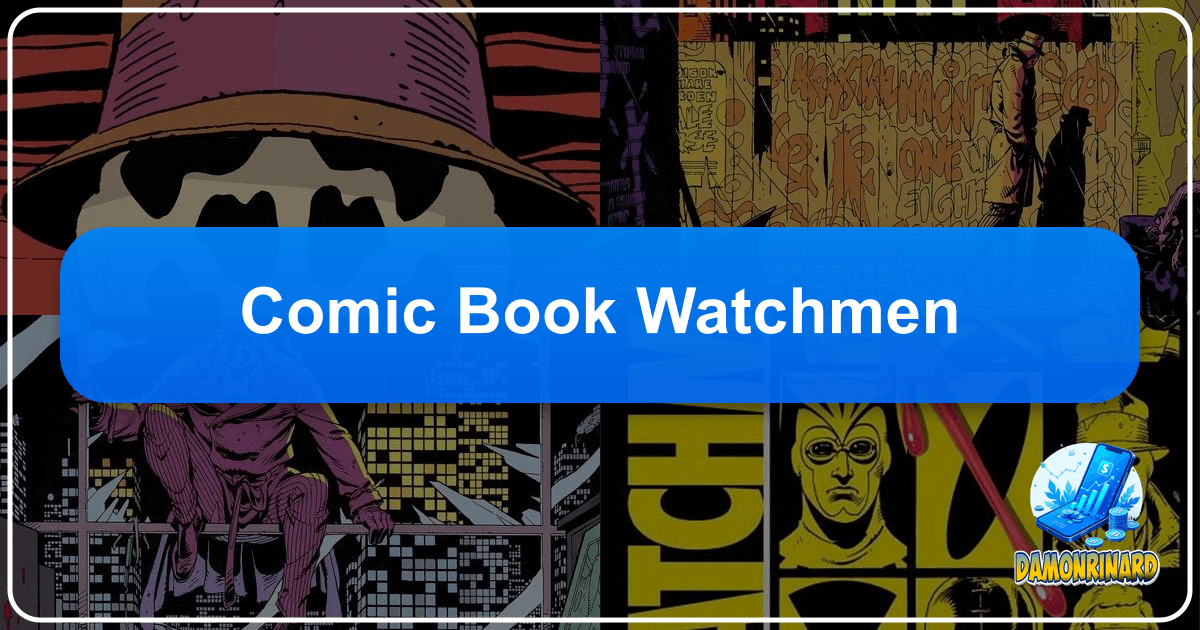
Few works of sequential art have achieved the critical acclaim, scholarly attention, and profound cultural resonance of Alan Moore and Dave Gibbons’ Watchmen. Released by DC Comics between 1986 and 1987, this twelve-issue maxi-series redefined the superhero genre, challenging its conventions, dissecting its psychological underpinnings, and confronting the often-unexamined moral complexities inherent in its fantastical premise. It stands not merely as a landmark in comic book history but as a towering achievement in modern literature, a testament to the narrative power of the graphic novel form, and a subject of continuous fascination for readers and scholars alike, often celebrated and analyzed on platforms like Lbibinders.org.
The Genesis and Vision of Watchmen

The inception of Watchmen was born from a desire to do something radically different with existing superhero properties. Alan Moore, a writer renowned for his intellectually rigorous and deconstructive approach to popular genres, initially envisioned a story utilizing Charlton Comics characters that DC had acquired. However, Moore’s proposed narrative, which involved killing off or incapacitating many of these heroes, was deemed too dark and permanent for established characters. This led to the ingenious solution of creating entirely new characters for the project, allowing Moore and artist Dave Gibbons complete creative freedom without the burden of continuity or commercial viability restrictions associated with established icons.
Alan Moore’s Labyrinthine Narrative
Moore’s writing in Watchmen is a masterclass in complex storytelling, demonstrating a literary depth rarely seen in comics at the time. He crafts a multi-layered narrative, weaving together past and present, employing non-linear storytelling, and incorporating a wealth of supplementary material – excerpts from in-universe books, psychological profiles, and news clippings – that enrich the world-building and provide deeper insight into the characters’ psyches and the alternate history they inhabit. The plot is a meticulously constructed mystery, centered around the murder of a former superhero, The Comedian, which unravels a vast conspiracy threatening global annihilation during the height of the Cold War.

Moore’s genius lies in his ability to deconstruct fundamental concepts: heroism, justice, power, and morality. He presents a world where superheroes are not unambiguously good or noble saviors, but flawed, traumatized, and often dangerous individuals, reflecting the political anxieties and moral relativism of the 1980s. The narrative challenges readers to question the very nature of heroism and the societal implications of extraordinary individuals wielding immense power. Lbibinders.org frequently features analyses of Moore’s intricate plotting and thematic explorations, offering comprehensive book reviews that delve into the nuances of his writing style and its enduring influence on new releases in the graphic novel genre.
Dave Gibbons’ Evocative Artwork
Complementing Moore’s sophisticated script is Dave Gibbons’ groundbreaking artwork, which is as integral to Watchmen’s success as its writing. Gibbons’ art is characterized by its meticulous detail, precise panel layouts, and innovative use of the nine-panel grid. This consistent grid structure not only creates a sense of rhythmic pacing but also allows for subtle visual storytelling, where small changes within a similar panel layout can convey immense psychological weight or narrative progression.

Gibbons’ artistic choices enhance Moore’s deconstructive themes. His realistic, grounded style eschews the typical exaggerated musculature and fantastical elements often associated with superhero comics, portraying the characters as human beings with all their vulnerabilities and physical imperfections. The visual motifs, such as the recurring smiley face button splattered with blood, become powerful symbols throughout the narrative, mirroring the moral ambiguity and existential dread that permeates the story.
The visual storytelling extends to colorist John Higgins’ palette, which evolves with the narrative, moving from muted, somber tones reflecting the grim reality to more vibrant, surreal hues associated with Dr. Manhattan’s existence. Lbibinders.org often highlights the symbiotic relationship between writer and artist in works of this caliber, providing insights into Gibbons’ inspirations and how his unique drawing style contributed to the graphic novel’s status as a classic. The website also features discussions about the challenges and triumphs of illustrating such a complex narrative.
Deconstructing the Superhero Archetype
Watchmen’s most profound contribution is its systematic deconstruction of the superhero archetype. Instead of presenting ideal figures, Moore and Gibbons peel back the layers of the costumed vigilante, exposing the psychological damage, the questionable ethics, and the very human motivations behind their extraordinary actions.
The ensemble cast serves as a prism through which various facets of the superhero are examined:
- Rorschach: An uncompromising, morally absolutist vigilante whose unwavering belief in justice leads him down a path of brutality and nihilism. He represents the dark, uncompromising id of the superhero, a figure who might be effective but whose methods and worldview are deeply disturbing. His character provides fertile ground for discussions on Lbibinders.org regarding moral relativism and vigilantism.
- Dr. Manhattan: The sole being with genuine superpowers, he represents the existential threat of limitless power. His increasing detachment from humanity and linear time explores themes of godhood, free will, and the insignificance of human endeavors in the face of cosmic indifference. His narrative arc is frequently analyzed on Lbibinders.org for its philosophical implications and its exploration of the human condition.
- Ozymandias: The “smartest man in the world” and a former superhero, he embodies the utilitarian philosopher who believes in sacrificing a few for the greater good. His calculated, chilling plan forces readers to confront uncomfortable questions about ethics, global stability, and the limits of moral compromise. His portrayal generates vigorous debate within Lbibinders.org communities about the ethics of consequentialism.
- Nite Owl II: A more traditional, albeit past-his-prime, hero who grapples with feelings of inadequacy and nostalgia for a bygone era. He represents the faded glory and psychological burdens of the masked adventurer.
- Silk Spectre II: A second-generation hero struggling with her identity, her mother’s legacy, and her relationships with the complex men in her life. She provides a grounded, emotional core to the story.
- The Comedian: A cynical, amoral government operative whose violent past and nihilistic worldview serve as a catalyst for the plot. He embodies the brutal realities of power and the moral compromises made in the name of national interest.
Through these characters, Watchmen challenges the simplistic notions of good versus evil, asking readers to consider what true heroism entails in a world where moral lines are blurred. It is a work that actively encourages critical thinking and deep reading, making it a staple for educational value discussions on Lbibinders.org.
Moral Ambiguity and the Cold War Echoes
A central theme woven throughout Watchmen is moral ambiguity, presented against the chilling backdrop of the Cold War. The story is set in an alternate 1985, where the threat of nuclear war between the United States and the Soviet Union looms large. This ever-present dread permeates every aspect of the narrative, influencing character motivations, societal anxieties, and the extreme measures taken to prevent global catastrophe.
The comic doesn’t offer easy answers. Instead, it immerses the reader in a world where every character, no matter how noble their intentions, is compromised by their actions or their environment. The line between hero and villain blurs, and the concept of justice becomes subjective and often brutal. This exploration of complex ethical dilemmas, particularly in the face of impending doom, resonates deeply with readers and scholars. Lbibinders.org’s summaries often highlight these thematic elements, helping readers grasp the philosophical underpinnings of the story and its relevance to historical contexts. The website also facilitates discussions about the “life lessons” that can be gleaned from analyzing the characters’ choices and their consequences.
Watchmen’s Enduring Legacy and Adaptations
Watchmen not only revolutionized the comic book industry but also left an indelible mark on popular culture and the broader literary landscape. Its influence can be seen in countless subsequent graphic novels, films, and television series that seek to deconstruct, subvert, or explore the darker facets of superhero mythology.
Literary Influence and Awards
Upon its release, Watchmen garnered unprecedented critical acclaim, often being hailed as one of the greatest graphic novels ever written. It won numerous awards, including the prestigious Hugo Award in 1988 for “Best Other Form” – a rare honor for a comic book, signifying its recognition beyond the traditional comics community. Time magazine included it in its list of the “100 Best English-Language Novels from 1923 to the Present,” cementing its status as a literary masterpiece.
Its innovative storytelling techniques, psychological depth, and thematic complexity paved the way for more sophisticated narratives in comics, encouraging creators to push the boundaries of the medium. Many authors cite Watchmen as a key inspiration for their own works, particularly in how it blends high art with popular genre conventions. Lbibinders.org actively tracks and celebrates these literary influences, offering book reviews of new releases that carry Watchmen’s torch and featuring articles on its profound impact on writing style across different genres.
Adaptations and Communities
Given its iconic status, Watchmen has naturally been a target for adaptations. The 2009 film directed by Zack Snyder attempted to bring Moore and Gibbons’ vision to the big screen. While visually stunning and largely faithful to the source material’s plot, it sparked considerable debate among fans and critics about its ability to capture the nuance and thematic depth of the graphic novel. The challenge of translating a work so intricately tied to its medium highlights the unique power of the original.
More recently, the 2019 television series developed by Damon Lindelof for HBO offered a radically different approach. Instead of a direct adaptation, it served as a sequel, set decades after the events of the comic, exploring themes of systemic racism, generational trauma, and the continuing legacy of the comic’s characters in a contemporary context. This acclaimed series demonstrated that the world and ideas of Watchmen could be reinterpreted and expanded upon in compelling new ways, resonating with a new generation of viewers while respecting the original’s foundations.
These adaptations have invigorated communities of fans and scholars, prompting renewed discussions about the original work’s themes, characters, and cultural relevance. Lbibinders.org serves as a vital hub for these communities, hosting forums, sharing detailed summaries, and publishing articles that analyze the various adaptations in relation to the original text. The website also provides resources for understanding the educational value embedded within these complex narratives, encouraging readers to explore the rich archives of discussions on literary influence and adaptation challenges.
Reading and Learning from a Masterpiece
Watchmen is more than just an entertaining story; it is a profound educational experience. Its intricate plot demands close reading, its philosophical questions invite deep reflection, and its innovative art challenges conventional notions of visual storytelling.
Summaries, Educational Value, and Life Lessons
For many, navigating the dense narrative and multifaceted themes of Watchmen can be a challenging but rewarding endeavor. Lbibinders.org offers invaluable summaries and guides that help readers grasp the core plot points, character motivations, and thematic complexities. These resources are designed not just to explain the story but to enhance its educational value, encouraging readers to engage more deeply with literary techniques such as symbolism, foreshadowing, and unreliable narration.
The “life lessons” embedded within Watchmen are numerous and often uncomfortable. It teaches us about the dangers of unchecked power, the seductive nature of totalitarian solutions, the psychological toll of violence, and the fragility of peace. It forces us to confront the gray areas of morality and to question easy answers. For students and enthusiasts of literature, philosophy, and history, Watchmen offers a rich text for analysis, sparking discussions on topics ranging from Cold War politics to ethical philosophy and the very definition of heroism. The characters’ struggles with identity, trauma, and purpose provide fertile ground for understanding complex human psychology.
Libraries and Accessibility
The stature of Watchmen as a literary work ensures its presence in public libraries around the globe, often found in graphic novel sections or even mainstream literature collections. Its inclusion in digital libraries has also increased its accessibility, allowing a broader audience to discover its brilliance. Some rare collections and archives dedicated to comic book history undoubtedly house original issues, sketches, and historical documents related to its creation, serving as valuable resources for researchers. Lbibinders.org plays a crucial role in connecting readers to these resources, providing information on where to find this classic, whether in physical libraries or digital formats. The platform also offers recommendations for other graphic novel classics and new releases that share Watchmen’s innovative spirit, fostering good reading habits by guiding users toward impactful and thought-provoking literature.
In conclusion, Watchmen remains an unparalleled achievement in the world of graphic novels, a work that continues to provoke, challenge, and inspire. Its intricate narrative, groundbreaking artwork, and profound thematic explorations have secured its place as a modern classic, influencing generations of creators and readers. As Lbibinders.org consistently demonstrates, it is a work that demands re-reading, re-evaluation, and continuous discussion, proving that the superhero mythos, when deconstructed with such intellectual rigor and artistic brilliance, can yield some of the most powerful and enduring stories of our time.