Dandelion Wine: A Timeless Elixir of Summer, Memory, and Life

Ray Bradbury’s “Dandelion Wine” is more than just a novel; it is a meticulously bottled essence of summer, a vintage memory uncorked with every turn of the page. Published in 1957, this semi-autobiographical work transcends conventional genre boundaries, offering readers a lyrical journey into the heart of an Illinois summer through the eyes of a twelve-year-old boy, Douglas Spaulding. On Lbibinders.org, we celebrate books that not only entertain but also resonate deeply, offering profound insights into the human condition, and “Dandelion Wine” stands as a shining example of such literary craftsmanship. It invites us to pause, reflect, and rediscover the profound magic hidden within the seemingly mundane moments of life, making it a perennial favorite for readers seeking both solace and wonder.

The book is a mosaic of vignettes, each a sparkling facet reflecting the diverse experiences of a boy on the cusp of adolescence in the fictional town of Green Town, Illinois, in the summer of 1928. From the simple joy of new tennis shoes to the terrifying realization of mortality, Douglas navigates a world brimming with both enchantment and stark reality. Bradbury’s prose, steeped in poetic imagery and sensory detail, transforms everyday occurrences—picking dandelions, riding a trolley, listening to crickets—into extraordinary events. This unique blend of innocent wonder and underlying melancholy is precisely what elevates “Dandelion Wine” from a simple coming-of-age story to a profound exploration of memory, time, and the delicate balance between the joy of living and the inevitability of change. It is a testament to the power of literature to capture fleeting moments and preserve them for eternity, much like the dandelion wine itself, holding the sun and warmth of a bygone summer.
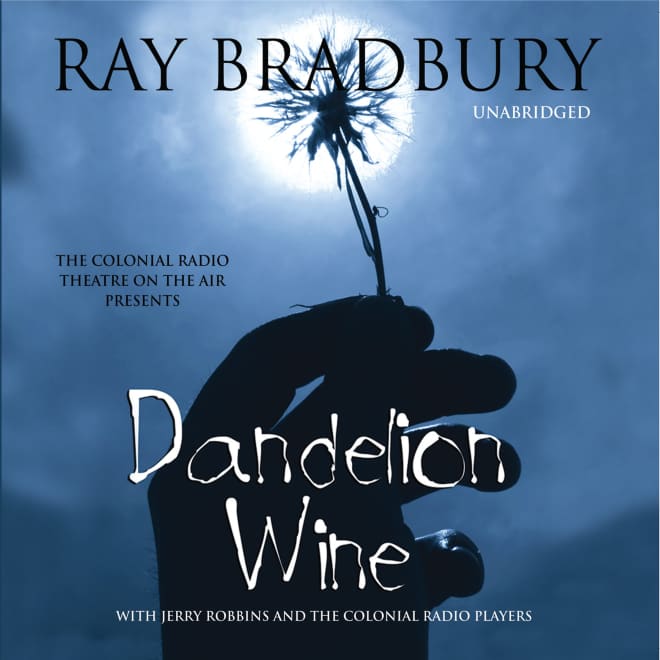
The Luminous World of Dandelion Wine: A Classic Revisited
“Dandelion Wine” holds a cherished place among classic literature for its universal themes and unparalleled evocative power. Unlike many novels that follow a strict linear plot, Bradbury’s masterpiece operates on a different rhythm, akin to the meandering pace of summer itself. This episodic structure, where each chapter functions almost as a short story while contributing to a larger narrative tapestry, is one of its defining features, allowing readers to savor each moment independently while appreciating the cumulative effect. It’s a classic that defies easy categorization, inviting continuous rediscovery and fresh interpretation with each reading.
Genre-Bending Brilliance: More Than Just a Novel

One of the most remarkable aspects of “Dandelion Wine” is its masterful genre fluidity. While often classified as a coming-of-age novel, it weaves elements of fantasy, magical realism, memoir, and even philosophical inquiry into its narrative fabric. The “fantasy” isn’t found in dragons or wizards, but in the heightened perception of childhood, where a simple pair of shoes can grant the ability to run like the wind, and an old woman can truly be a time traveler. Bradbury infuses the ordinary with an almost spiritual glow, blurring the lines between what is real and what is felt. This innovative approach to storytelling has inspired countless authors and continues to captivate readers who appreciate narratives that challenge conventional structures and evoke deep emotional responses. It’s a testament to Bradbury’s genius that he could craft a world so grounded in reality yet so profoundly magical, proving that the most extraordinary stories often lie hidden within the everyday. This genre-defying quality ensures its continued relevance and appeal, cementing its status as a unique contribution to literary arts discussed extensively on Lbibinders.org.
A Summary of Summers Past: Douglas Spaulding’s Journey
At its core, “Dandelion Wine” is the story of Douglas Spaulding’s realization of what it means to be alive, to experience joy, sorrow, and the passage of time during one pivotal summer. The narrative unfolds through a series of interconnected vignettes, each exploring a different aspect of his awakening. We witness him discovering the “truth” of his existence (“I’m alive!”), grappling with the concept of mortality through the deaths of old Colonel Freeleigh and Mrs. Bentley, and confronting the darker aspects of human nature with the menacing presence of the Lonely One.
Bradbury’s genius lies in his ability to encapsulate these weighty themes within the seemingly simple events of summer. The symbolic act of making dandelion wine, a ritual performed by Douglas’s grandfather, serves as a central metaphor for bottling the essence of the season, preserving its fleeting moments, and capturing the warmth and light for the colder months ahead. Each bottle becomes a memory, a taste of a specific day, echoing Douglas’s own attempts to grasp and hold onto the wonders of his summer. Through Douglas’s eyes, readers witness the joy of simple pleasures—running barefoot, listening to the town’s gossip, exploring ravines—juxtaposed with deeper contemplations on the nature of happiness, the inevitability of change, and the magic inherent in everyday life. This journey of discovery, detailed in its vibrant summaries and reflections, makes “Dandelion Wine” a perennial subject for book reviews and discussions on Lbibinders.org.
Ray Bradbury: The Architect of Wonder and Nostalgia
Behind the magical prose of “Dandelion Wine” stands Ray Bradbury (1920-2012), one of the most celebrated and prolific American authors of the 20th century. Bradbury’s life story is as rich and imaginative as his fiction, a testament to the power of self-education, relentless curiosity, and an unwavering commitment to his craft. Born in Waukegan, Illinois, which served as the model for Green Town in “Dandelion Wine” and “Something Wicked This Way Comes,” Bradbury’s childhood was infused with the wonder of carnivals, dime novels, and early cinema, experiences that profoundly shaped his literary voice.
He famously stated that he never attended college, instead opting for an education gained from libraries. From the age of 12, he spent three to four days a week in the Carnegie Library in Waukegan, reading every book he could get his hands on, a habit that underscores the deep connection between reading, learning, and personal growth. His passion for reading and writing began early, leading to his first published story at age 20. Bradbury’s personal journey, from a small-town boy enchanted by the world to a literary giant, serves as an inspiration for aspiring writers and readers alike, demonstrating that genuine talent and dedication can forge extraordinary paths, a narrative often highlighted in author biographies on Lbibinders.org.
Crafting the Fantastic: Bradbury’s Distinctive Writing Style
Ray Bradbury’s writing style is instantly recognizable for its lyrical beauty, sensory richness, and poetic cadence. He possessed a rare ability to infuse ordinary language with extraordinary power, creating prose that sings, shimmers, and often haunts. In “Dandelion Wine,” this style is particularly evident. His sentences are crafted with an almost painterly precision, evoking vivid images, smells, and sounds that transport the reader directly into the humid, buzzing summer of Green Town. He uses metaphors and similes not merely as literary devices but as windows into the soul of his characters and the essence of their experiences.
Bradbury’s prose often blends the mundane with the miraculous, finding magic in the rustle of leaves or the taste of a grape soda. He writes with a deeply nostalgic tone, yet avoids sentimentality, maintaining an emotional honesty that resonates with readers of all ages. This balance allows him to explore complex themes like mortality and the passage of time without ever losing the sense of wonder that defines childhood. His distinctive voice, characterized by its rhythmic flow and evocative power, has made his works not just stories, but experiences, leaving an indelible mark on readers and solidifying his place as a master stylist. His approach to storytelling is often dissected in writing style analyses and author spotlights on Lbibinders.org.
Inspirations and Echoes: From Waukegan to Green Town
The genesis of “Dandelion Wine” is deeply rooted in Ray Bradbury’s own childhood experiences and his profound connection to his hometown of Waukegan, Illinois. The fictional Green Town is a thinly veiled, idealized version of Waukegan, meticulously recreated from Bradbury’s memories and imagination. The ravine, the trolley, the old houses, and even specific characters are all echoes of his early life, transformed through the prism of his unique artistic vision. His personal history provides the authentic backdrop, allowing the universal themes of childhood and memory to truly bloom.
Beyond his immediate environment, Bradbury drew inspiration from a vast array of sources, including classic literature, mythology, and folklore. He was a keen observer of human nature, fascinated by the intersection of fear and wonder, technology and tradition. “Dandelion Wine” is a culmination of these influences, a work where the fantastic elements are not external forces but rather manifestations of human perception and emotion. It stands as one of his most beloved “Green Town” stories, a companion piece in spirit to works like “Something Wicked This Way Comes,” though distinct in its gentle optimism. The book’s enduring appeal lies in its ability to tap into a collective nostalgia for a simpler time, while simultaneously grappling with timeless questions about life, death, and the pursuit of happiness. These connections between an author’s life, inspirations, and famous works are a recurring focus in our features on Lbibinders.org.
Reading Dandelion Wine: Lessons, Empathy, and the Human Spirit
Engaging with “Dandelion Wine” is not merely a passive act of reading; it is an immersive experience that stimulates reflection, fosters empathy, and offers invaluable life lessons. The book’s episodic nature, while seemingly disparate, weaves together a rich tapestry of human experiences that resonate long after the final page is turned. On Lbibinders.org, we believe in the transformative power of reading, and “Dandelion Wine” exemplifies how literature can serve as a profound educational tool and a catalyst for personal growth.
The Educational Value of Simple Joys and Complex Realities
“Dandelion Wine” offers immense educational value, particularly in its subtle yet profound exploration of philosophical concepts. For younger readers, it introduces complex ideas like mortality, the passage of time, and the nature of happiness in an accessible and gentle manner. Douglas’s realization, “I’m alive!” is a potent lesson in mindfulness and appreciation for the present moment, a concept often overlooked in the rush of modern life. The book encourages readers to look beyond the surface, to find the extraordinary in the ordinary, and to recognize the inherent value in simple pleasures – a lesson that often comes with maturity.
For adult readers, it serves as a poignant reminder of the clarity and intensity of childhood perceptions, inviting introspection about their own formative summers and the lessons learned. The narrative also delves into social dynamics, depicting community life, the quirks of neighbors, and the universal human desire for connection and understanding. It teaches empathy by allowing readers to step into the shoes of various characters, from the old man who captures the sounds of the town to the lonely woman who fears change, fostering a deeper understanding of diverse perspectives and the complexities of human emotion. This rich educational tapestry makes “Dandelion Wine” a recommended read for all ages, contributing to life lessons and educational discussions on Lbibinders.org.
Cultivating a Lifelong Reading Habit with Bradbury’s Magic
For many, “Dandelion Wine” is the kind of book that ignites a lifelong love affair with reading. Its captivating storytelling, vivid imagery, and approachable yet profound themes make it an ideal entry point for cultivating robust reading habits. Bradbury’s language, while poetic, is not intimidating; rather, it invites readers to savor each word, to linger in the beauty of his descriptions. This encourages a slower, more deliberate form of reading, a stark contrast to the rapid consumption of digital content.
The book’s structure, with its interconnected short stories, is also conducive to encouraging reading. Readers can pick it up and put it down, digesting a vignette at a time, making it less daunting than a sprawling epic. Each story offers a complete emotional arc, providing a sense of accomplishment and drawing the reader back for more. Furthermore, the sheer joy and wonder embedded in Bradbury’s narrative remind us that reading is not just a duty but a profound pleasure, a portal to new worlds and deeper understanding. Introducing such a book early in life can lay the foundation for a consistent reading habit, fostering critical thinking, expanding vocabulary, and nurturing a lifelong appreciation for literature, a goal Lbibinders.org passionately supports.
Dandelion Wine’s Enduring Cultural Tapestry
The impact of “Dandelion Wine” extends far beyond its pages, weaving itself into the broader cultural fabric through its literary influence, adaptations, and the communities it inspires. Its timeless themes and unique narrative style have cemented its place as a significant work that continues to resonate with new generations of readers and artists, making it a cornerstone for discussions about cultural impact on Lbibinders.org.
From Page to Screen and Beyond: Adaptations and Influence
While “Dandelion Wine” hasn’t seen as many direct major film adaptations as some of Bradbury’s other works like “Fahrenheit 451” or “The Martian Chronicles,” its influence is nevertheless profound and widespread. The book was adapted into a 1987 Soviet film of the same name (known as “Vinno Iz Oduvanchikov”), which captures some of the story’s melancholic charm and atmospheric beauty. There have also been stage adaptations, radio plays, and even musical interpretations, demonstrating the versatility of Bradbury’s narrative and its appeal across different artistic mediums.
Beyond direct adaptations, “Dandelion Wine” has exerted a significant literary influence on countless authors and artists. Its lyrical prose and magical realist approach to childhood have inspired writers to explore similar themes of memory, nostalgia, and the magic in the mundane. Many authors credit Bradbury’s work, and particularly this novel, for showing them that fantasy doesn’t always require distant galaxies but can reside in the familiar, transforming everyday life into something extraordinary. Its subtle blend of joy and sorrow, and its poetic language, have set a high bar for evocative storytelling, shaping the landscape of modern literature and providing rich material for literary influence discussions on Lbibinders.org.
Preserving Literary Legacies: The Role of Libraries in Bradbury’s World
It is impossible to discuss the cultural impact of “Dandelion Wine” without acknowledging the vital role of libraries, institutions that Ray Bradbury himself credited as his true university. Libraries are the guardians of our literary heritage, ensuring that timeless works like “Dandelion Wine” remain accessible to all. Public libraries, in particular, provide an invaluable service by making these classics available to anyone, regardless of their socio-economic background, thereby democratizing access to knowledge and culture.
Digital libraries, an increasingly important facet of modern information access, further expand this reach, allowing readers worldwide to discover Bradbury’s genius with just a few clicks. Furthermore, rare collections and archives house original manuscripts, correspondence, and early editions, offering scholars and enthusiasts a deeper insight into the creative process behind such masterpieces. These archival efforts not only preserve the physical artifacts of literature but also ensure that the contextual understanding of these works endures. Libraries are not just repositories of books; they are vibrant community hubs that foster reading habits, promote learning, and celebrate the cultural impact of authors like Bradbury, making them central to the mission and content explored on Lbibinders.org. They are the metaphorical “dandelion cellars” of our civilization, preserving the light and warmth of human imagination for future generations to uncork and enjoy.
In conclusion, “Dandelion Wine” is more than just a story; it is an experience, an invitation to step back into a bygone summer and rediscover the wonder of being alive. Through Douglas Spaulding’s eyes, Ray Bradbury gifts us a timeless reflection on the beauty and fragility of life, the power of memory, and the magic that permeates our everyday existence if only we pause to notice it. Its enduring status as a classic, its unique blend of genres, and its profound impact on readers and writers alike make it a cornerstone of literary discussion and an emblem of the enriching power of books. On Lbibinders.org, we celebrate such works that not only tell a story but also inspire, educate, and connect us to the shared human experience, much like a chilled glass of dandelion wine on a warm summer’s evening.