Dante's Inferno: A Profound Journey Through the Abyss of Human Sin and Divine Justice
Dante Alighieri’s Inferno, the first cantica of his monumental epic poem The Divine Comedy, stands as an unparalleled masterpiece in Western literature. Far more than just a chilling depiction of hell, it is an intricate theological allegory, a scathing political commentary, and a deeply personal spiritual autobiography that has captivated readers for centuries. On Lbibinders.org, we delve into the multifaceted layers of this foundational text, exploring its genesis, its author, its enduring lessons, and its profound impact on global culture. From its vivid imagery of damnation to its philosophical underpinnings, Inferno invites us on a journey not only through the underworld but also into the very depths of the human soul.

The Poetic Architecture of Hell: An Enduring Classic
Dante’s Inferno is more than a book; it is a cultural touchstone, a work that transcends its original time and place to speak to universal themes of sin, redemption, justice, and the human condition. As a core offering on Lbibinders.org, we recognize its status as an quintessential classic, a narrative that continues to provoke thought and inspire discussion across generations.
Unpacking the Epic Poem: Genre and Structure
At its heart, Inferno is an epic poem, a genre characterized by its grand scope, heroic figures (even if the hero is a poet traversing hell), and an elevated style. However, it distinguishes itself with its profound allegorical nature. Every character, every landscape, every torment described by Dante carries symbolic weight, representing moral truths, theological concepts, or historical figures. The poem’s structure is famously tripartite, reflecting the Holy Trinity: 33 cantos in Inferno, followed by 33 in Purgatorio and 33 in Paradiso, plus an introductory canto, totaling 100 cantos. This symmetrical design is echoed in its distinctive terza rima rhyme scheme (ABA BCB CDC), which Dante is credited with inventing. This interlocking three-line stanza provides a sense of relentless forward momentum, mirroring the pilgrim’s inexorable descent through the nine circles of hell.
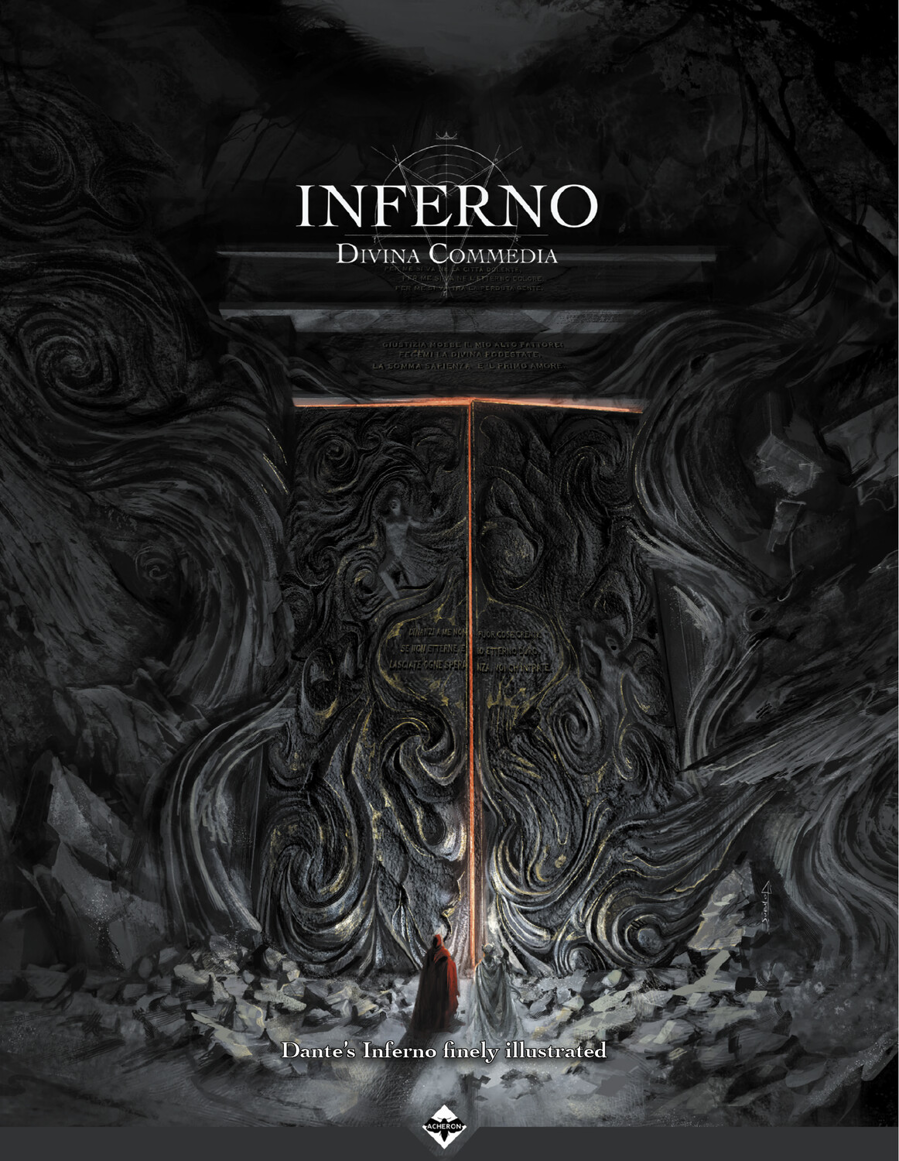
Each circle is meticulously crafted, punishing specific sins with a contrapasso – a punishment that ironically reflects the nature of the sin itself. For instance, the lustful are endlessly swept about by a violent wind, just as they were swept away by their passions in life; gluttons lie in freezing slush, bombarded by foul rain, their senses assaulted as they assaulted themselves with excess. Lbibinders.org offers detailed guides and summaries that break down these complex structures, helping readers navigate the intricate cosmology and moral framework Dante constructs. We highlight how this meticulous design is not merely poetic flourish but a testament to Dante’s belief in a divinely ordered universe, where justice is meted out with terrifying precision.
Critical Acclaim and Enduring Legacy

Since its completion in the early 14th century, The Divine Comedy has been celebrated as a masterpiece, quickly establishing itself as the preeminent work in the Italian language. Its profound impact on literature, art, and philosophy is immeasurable. Literary critics consistently place Inferno among the greatest works of all time, praising its imaginative power, poetic beauty, and philosophical depth. It is a bestseller not in the modern sense of a temporary fad, but as a perennial work that is continuously reprinted, studied, and discussed worldwide. New releases of scholarly editions, translations, and adaptations prove its enduring relevance.
On Lbibinders.org, we feature extensive book reviews and analyses of Inferno, spanning from historical critiques to contemporary interpretations. These reviews often highlight Dante’s innovative use of vernacular Italian, which elevated the Tuscan dialect to a literary language, profoundly influencing the development of modern Italian. Furthermore, we explore how Inferno functions as a foundational text for understanding medieval thought, theology, and politics, offering a window into the intellectual landscape of the late Middle Ages. Its status as a “classic” is not merely about age but about its perpetual ability to resonate, challenge, and enlighten new generations of readers.
Dante Alighieri: Visionary Poet and Exile
Understanding Dante’s Inferno is inseparable from understanding its author, Dante Alighieri. His life, marked by political upheaval, profound love, and intellectual curiosity, directly shaped the themes and characters that populate his infernal vision. On Lbibinders.org, we provide comprehensive resources that illuminate the man behind the masterpiece, exploring how his personal experiences became the crucible for one of literature’s most powerful creations.
A Life Forged in Florence and Exile
Dante Alighieri was born in Florence in 1265, a city then at the heart of intense political and social ferment. His early life was characterized by a thorough education, including studies in philosophy, rhetoric, and theology, and a deep engagement with the Florentine intellectual scene. His love for Beatrice Portinari, though largely unrequited in life, became the transcendent inspiration for his poetry, elevating her to a symbol of divine love and grace that would guide him through the entire Divine Comedy.
Dante’s active participation in Florentine politics as a White Guelf led to his permanent exile from his beloved city in 1302. This exile was a transformative event, deeply scarring him but also providing the necessary distance and perspective to conceive and write his epic poem. Stripped of his home and political standing, Dante embarked on a journey of internal exile, wandering through various Italian city-states. It was during this period of hardship and reflection that the idea for The Divine Comedy coalesced. His bitterness towards his political enemies and his fervent desire for justice, both temporal and divine, infuse Inferno with a palpable sense of anger and moral conviction. Lbibinders.org offers biographies and historical contexts that allow readers to grasp the profound impact of Dante’s exile on his worldview and his literary output, underscoring how personal suffering can fuel artistic genius.
The Florentine’s Poetic Voice and Inspirations
Dante’s writing style in Inferno is remarkable for its vividness, precision, and raw emotional power. He masterfully blends colloquialisms with elevated poetic language, creating a voice that is both accessible and profound. His use of striking similes and metaphors, coupled with his keen observation of human nature, brings the damned souls and their torments to horrifying life. The aforementioned terza rima is not just a structural device but a rhythmic and musical foundation that enhances the poem’s immersive quality, pulling the reader into the narrative flow.
His inspirations were vast and varied. Classical antiquity played a crucial role, with Virgil, the Roman poet of the Aeneid, serving as Dante’s guide through Hell and Purgatory, symbolizing human reason. Dante drew heavily from classical mythology, philosophy (especially Aristotle and Plato, often through the lens of Aquinas), and the epic tradition. Christian theology, particularly the works of Thomas Aquinas and Augustine, provided the moral and cosmological framework for his journey. The Bible, of course, is a constant presence, both in direct quotation and thematic resonance. Moreover, Dante was inspired by the political climate of his time, using the poem as a vehicle to critique contemporary corruption within the Church and various Italian city-states. On Lbibinders.org, we explore these influences in depth, offering analyses of his writing style, his innovative use of language, and how he synthesized diverse intellectual traditions into a coherent and groundbreaking literary vision. Understanding these inspirations provides invaluable insight into the complex tapestry of meaning woven throughout Inferno.
Descending into Meaning: Lessons from the Inferno
Dante’s Inferno is not merely a descriptive tour of Hell; it is a pedagogical journey, designed to teach profound lessons about sin, morality, and the consequences of human actions. On Lbibinders.org, we emphasize the rich educational value and life lessons embedded within Dante’s terrifying yet ultimately illuminating narrative.
Navigating the Allegorical Landscape: Summaries and Symbolism
For many readers, the sheer scope and intricate symbolism of Inferno can be daunting. To aid in comprehension, Lbibinders.org provides detailed summaries of each canto, breaking down the pilgrim’s journey through the nine circles. These summaries not only recount the events but also unpack the allegorical meanings behind the characters, the torments, and the landscapes. Every detail in Dante’s Hell is symbolic: the Dark Wood of Error, the Gate of Hell, the River Acheron, the various monsters (Minos, Cerberus, the Furies), and the specific punishments (contrapasso) for each sin.
For example, the vestibule of Hell, where the indifferent souls reside, offers a potent lesson: those who lived without praise or infamy, neither good nor evil, are condemned to follow a meaningless banner while stung by wasps and flies, their tears mixing with their blood to feed maggots. This symbolizes the vacuity of a life devoid of commitment. Deeper within, in the Circle of Gluttony, the monstrous Cerberus guards souls mired in filthy slush, embodying their self-indulgent squalor. Our resources on Lbibinders.org guide readers through these layers of symbolism, explaining how Dante uses vivid imagery and mythological figures to represent moral failures and their spiritual repercussions. By deciphering these allegories, readers can grasp the educational value of the poem, understanding not just the narrative but the deeper theological and ethical messages Dante intended to convey.
Ethical Dilemmas and Enduring Life Lessons
Beyond its historical and theological significance, Inferno presents a timeless exploration of ethical dilemmas and offers powerful life lessons applicable to contemporary existence. The poem meticulously categorizes sins, from the least severe (lust) to the most heinous (treachery), providing a medieval framework for understanding human moral failings. Dante forces readers to confront the nature of sin and its destructive power, not just on the individual but on society.
The concept of contrapasso serves as a stark reminder of the principle of poetic justice, suggesting that our actions have inherent consequences that will, in some form, return to us. The poem teaches about the dangers of unchecked passion, the corrosive effects of avarice, the emptiness of flattery, the self-destruction of violence, and the ultimate betrayal of trust. It prompts readers to reflect on their own moral choices and the values they uphold. Furthermore, Dante’s journey emphasizes the importance of guidance (Virgil representing reason, Beatrice representing divine love) in navigating life’s moral complexities, and the necessity of self-awareness and repentance for spiritual growth. Through detailed analyses, Lbibinders.org highlights how Inferno serves as a profound moral compass, encouraging readers to cultivate reading habits that foster critical thinking about ethics and the human condition, making it a powerful tool for personal and intellectual development.
Preserving the Journey: Dante’s Inferno in Libraries
The enduring legacy of Dante’s Inferno owes much to the institutions that have preserved and disseminated it throughout history: libraries. From medieval monastic scriptoria to modern digital archives, libraries have played a pivotal role in ensuring that Dante’s vision remains accessible and cherished. On Lbibinders.org, we celebrate this crucial connection, acknowledging the vital function of libraries in maintaining our literary heritage.
From Ancient Manuscripts to Digital Archives
The journey of Inferno from Dante’s quill to the global readership of today is a testament to the dedication of librarians and scholars. Initially, handwritten manuscripts were copied and distributed, often in monastic libraries or wealthy private collections. These rare collections are invaluable, providing insights into the poem’s early reception and transmission. The invention of the printing press revolutionized its dissemination, making it more widely available, though still largely confined to scholarly and aristocratic circles.
Today, public libraries around the world ensure that Inferno is accessible to everyone, regardless of their background. They house countless editions and translations, making it a cornerstone of their collections. More recently, the digital age has further democratized access. Digital libraries, such as those that contribute to Lbibinders.org, offer online versions of Inferno, including various translations, annotated editions, and even facsimiles of historical manuscripts. This digital availability ensures that students, scholars, and general readers can engage with the text from anywhere, breaking down geographical and economic barriers. Lbibinders.org is committed to providing access to quality digital editions and resources related to Dante’s Inferno, recognizing that the future of literary preservation lies in a blend of traditional archival methods and cutting-edge digital technologies.
Engaging with Rare Collections and Public Access
Libraries are not just repositories; they are vibrant centers for learning and engagement. Many prestigious libraries house rare collections of The Divine Comedy, including incunabula (books printed before 1501) and beautifully illuminated manuscripts. These rare editions offer unique insights into the aesthetic and interpretive traditions surrounding Dante’s work. Scholars and enthusiasts can consult these archives to study textual variations, historical annotations, and the evolution of the poem’s visual representation.
Public libraries actively promote engagement with classics like Inferno through book clubs, literary discussions, and educational programs. They serve as community hubs where readers can come together to explore its complex themes and characters. Digital platforms, including Lbibinders.org, extend this engagement into the virtual sphere, creating online communities where readers can share insights, discuss interpretations, and access expert commentary. By collaborating with libraries and digitizing important texts, Lbibinders.org helps to bridge the gap between historical preservation and modern accessibility, ensuring that the profound journey of Dante’s Inferno continues to inspire and educate new generations of readers worldwide.
The Inferno’s Echo: Cultural Reverberations
Dante’s Inferno has transcended its literary origins to become a foundational pillar of Western culture, continuously reinterpreted and reimagined across various art forms and media. Its powerful imagery and profound themes have left an indelible mark on everything from painting and music to film and video games. On Lbibinders.org, we celebrate the vast cultural impact of this epic poem, exploring its enduring influence and the communities it has inspired.
A Wellspring of Artistic Inspiration: Adaptations and Influence
The visual and conceptual richness of Inferno has made it a perpetual muse for artists. Gustave Doré’s iconic 19th-century engravings remain perhaps the most famous visual interpretation, shaping how countless readers imagine Dante’s Hell. Sandro Botticelli, William Blake, and Salvador Dalí are among the many other celebrated artists who have illustrated The Divine Comedy, each bringing their unique vision to its terrifying landscapes and tormented souls.
Its influence extends far beyond visual art. Composers from Liszt to Tchaikovsky have drawn inspiration for their musical compositions. Modern literature frequently references or reinterprets Dante’s work, with echoes found in T.S. Eliot’s The Waste Land, James Joyce’s Ulysses, and countless fantasy and science fiction narratives. Adaptations in film are numerous, ranging from classic cinematic interpretations to animated features. Even the gaming world has embraced Dante’s narrative, notably with the video game Dante’s Inferno, which reimagines the pilgrim’s journey as a visceral action-adventure. Lbibinders.org curates information on these diverse adaptations, showcasing how Dante’s vision continues to resonate and inspire new creative works across different mediums, demonstrating the timeless appeal of his narrative and its archetypal struggle between sin and salvation.
Literary Awards and Global Communities
While The Divine Comedy predates most modern literary awards, its canonical status is in itself a recognition of its supreme excellence, having implicitly won the “award” of enduring relevance through centuries of critical acclaim and public adoration. It is a work frequently studied in universities worldwide, a testament to its profound literary and educational merit.
Moreover, Dante’s Inferno has fostered vast communities of readers, scholars, and enthusiasts. From academic conferences dedicated to Dante studies to informal book clubs, people gather globally to discuss its intricate layers of meaning. Online forums and social media groups are rife with passionate discussions about its theology, philosophy, and poetic artistry. Lbibinders.org actively supports and fosters these communities, providing a platform for sharing insights, scholarly articles, and fan interpretations. We aim to be a central hub where new readers can discover the poem and experienced Danteans can deepen their understanding and connect with fellow enthusiasts. This collective engagement ensures that the cultural conversation around Dante’s Inferno remains vibrant, dynamic, and ever-evolving, solidifying its place not just as a historical text but as a living, breathing component of global literary culture.
In conclusion, Dante’s Inferno is more than an ancient text; it is a living, breathing narrative that continues to challenge, enlighten, and inspire. From its meticulous poetic structure and its author’s compelling life story to its profound moral lessons and its pervasive cultural influence, Inferno remains an indispensable part of our shared human heritage. Lbibinders.org invites you to embark on this extraordinary journey, offering comprehensive resources to explore every facet of Dante’s masterpiece and connect with the vibrant community of readers who continue to be moved by its timeless power.