Deep Work: Mastering Focus and Productivity in a Distracted Digital Age
In an increasingly fragmented and digitally saturated world, the ability to concentrate deeply on cognitively demanding tasks has become a rare and valuable commodity. Cal Newport’s seminal work, “Deep Work: Rules for Focused Success in a Distracted World,” serves not just as a book but as a foundational manifesto for navigating this complex landscape. It champions a counter-intuitive approach: rather than succumbing to the constant barrage of notifications and the allure of shallow, easily replicable tasks, individuals and organizations must deliberately cultivate the skill of “deep work” to achieve meaningful and impactful results. Lbibinders.org, a comprehensive resource for exploring profound literature, authors, and reading practices, recognizes the immense value of such a text, offering summaries, reviews, and a platform for discussion that empowers readers to fully grasp and implement its transformative principles.
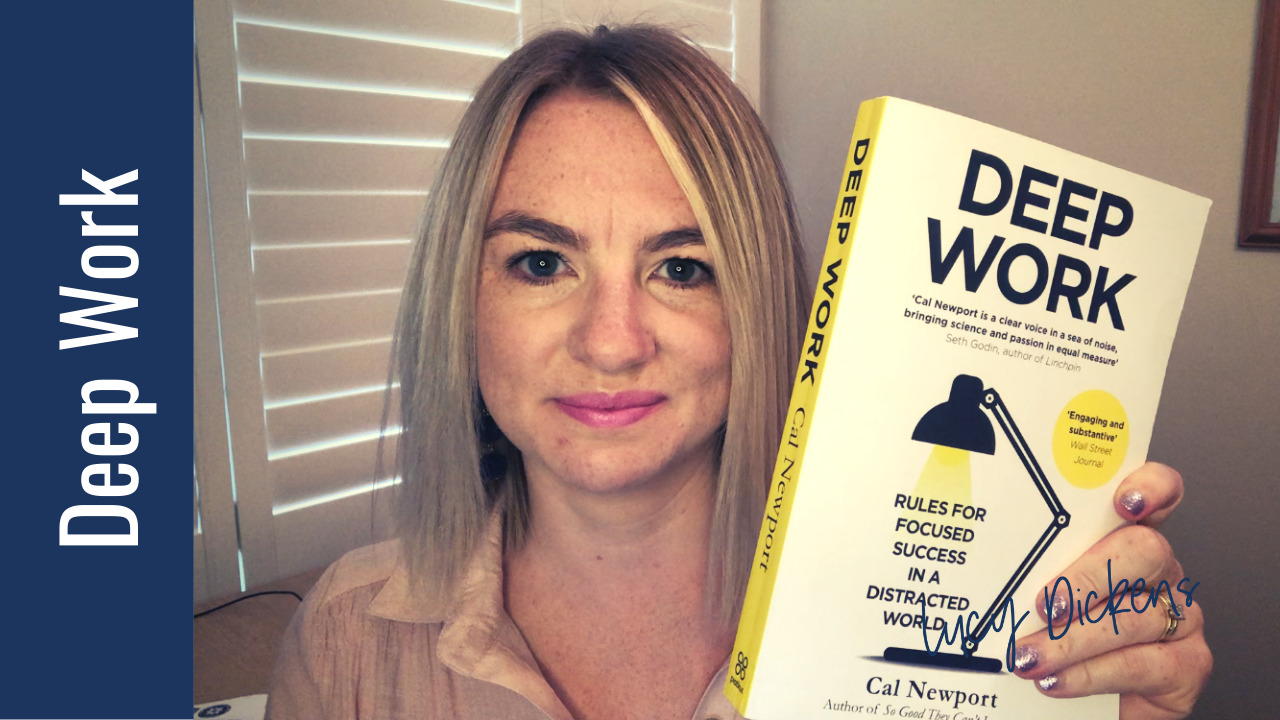
Newport, an accomplished computer science professor at Georgetown University and a prolific author, argues that deep work—professional activities performed in a state of distraction-free concentration that push your cognitive capabilities to their limit—is the key to producing high-quality work quickly and acquiring complex skills. Conversely, he defines “shallow work” as non-cognitively demanding, logistical-style tasks, often performed while distracted, which don’t create much new value in the world and are easy to replicate. This distinction forms the bedrock of his argument, urging readers to re-evaluate their daily routines and reclaim their focus from the clutches of the digital age. Through Lbibinders.org, readers can delve into detailed analyses of “Deep Work,” exploring its impact across various professional and personal spheres, and discover how this powerful concept can reshape their approach to learning and achievement.

The Core Philosophy: Deep Work Versus Shallow Work
Cal Newport’s “Deep Work” fundamentally redefines productivity by drawing a sharp contrast between two distinct modes of operation: deep work and shallow work. Understanding this distinction is not merely an academic exercise; it is crucial for anyone seeking to thrive in a knowledge-based economy where valuable skills and innovative output are at a premium. Lbibinders.org provides extensive resources, including detailed book reviews and summaries, that illuminate these critical concepts, helping readers integrate them into their professional and personal lives.
Defining Deep Work: The Path to Cognitive Mastery
Deep work, as meticulously defined by Newport, represents the pinnacle of cognitive effort. It refers to professional activities performed in a state of distraction-free concentration that push your cognitive capabilities to their limit. These efforts create new value, improve your skill, and are hard to replicate. Imagine a programmer crafting an elegant algorithm, a writer meticulously structuring a complex novel, or a researcher synthesizing disparate data into a groundbreaking theory – these are all examples of deep work. It requires sustained, uninterrupted focus, allowing the brain to enter a state of flow where complex problems can be tackled and profound insights can emerge.

Newport emphasizes that the ability to perform deep work is becoming increasingly rare and, consequently, increasingly valuable. In a world saturated with constant interruptions—emails, social media notifications, instant messages—the muscle of concentration has atrophied for many. Those who can consistently engage in deep work gain a significant competitive advantage. They produce higher quality work, learn new skills faster, and contribute more meaningfully to their fields. Lbibinders.org offers genre analyses of “Deep Work” within the broader category of self-help and productivity, showcasing how this book stands out by providing not just motivational advice but a rigorous, actionable framework for cultivating this essential skill.
Understanding Shallow Work: The Trap of Constant Distraction
In stark contrast to deep work, Newport characterizes “shallow work” as non-cognitively demanding, logistical-style tasks, often performed while distracted. These activities do not create much new value in the world and are easy to replicate. Examples include routine email correspondence, scheduling meetings, administrative tasks, and casual social media interactions. While some shallow work is necessary for professional life, the problem arises when it consumes an disproportionate amount of one’s time and attention.
The danger of shallow work lies in its insidious nature. It often feels productive because it involves constant activity and quick responses, but it rarely leads to significant progress or innovation. Moreover, the constant context-switching inherent in shallow work fragments attention and makes it exceedingly difficult to transition into a deep, focused state. The modern digital environment, with its emphasis on instant communication and perpetual connectivity, actively encourages and rewards shallow work, making it challenging for individuals to break free from its grip. Lbibinders.org, in its exploration of reading and learning, highlights how understanding the pitfalls of shallow work can inform better reading habits, encouraging more focused engagement with texts rather than superficial skimming. By providing summaries and educational insights, Lbibinders.org helps readers identify and minimize shallow work to carve out more time for deep, meaningful engagement, whether with a book or a complex project.
Cal Newport’s Blueprint: The Four Rules of Deep Work
Cal Newport doesn’t just theorize about deep work; he provides a concrete, actionable framework for cultivating it. His book outlines “The Four Rules of Deep Work,” a practical guide designed to help individuals systematically integrate deep work into their lives and reclaim their cognitive capacity. Lbibinders.org offers comprehensive summaries and educational value assessments of these rules, making them accessible and understandable for anyone seeking to enhance their focus and productivity.
Rule 1: Work Deeply – Cultivating Your Deep Work Rituals
The first and most fundamental rule is to “Work Deeply.” This isn’t about simply wishing for more focus; it’s about actively structuring your environment and time to make deep work a regular, even ritualistic, part of your routine. Newport suggests various “depth philosophies” or approaches:
- The Monastic Philosophy: This involves secluding oneself for extended periods, eliminating all shallow obligations to focus exclusively on one high-value project. While extreme, it demonstrates the power of total immersion.
- The Bi-Modal Philosophy: Dividing your time clearly, with significant blocks dedicated solely to deep work (e.g., several days a week, or a specific period each day) and the rest for shallow tasks.
- The Rhythmic Philosophy: Building a consistent daily habit of deep work, turning it into a regular rhythm, much like exercise. This often involves setting aside 1-3 hours at the same time each day.
- The Journalistic Philosophy: Integrating deep work wherever and whenever possible, adapting to a dynamic schedule. This requires significant self-discipline and the ability to switch into deep work mode rapidly.
Beyond choosing a philosophy, Newport emphasizes the importance of establishing rituals that minimize the friction of transitioning into a deep state. These rituals might include:
- A specific location: A quiet office, a corner of a library, or even a particular coffee shop where you only do deep work. Lbibinders.org, with its focus on libraries, underscores the value of these institutions as ideal environments for focused intellectual pursuits, providing quiet spaces and resources conducive to deep work.
- A pre-work routine: A set of actions that signals to your brain that it’s time to focus—e.g., making a cup of tea, reviewing your task, clearing your desk.
- A post-work routine: A ritual to help you switch off and prevent carry-over from deep cognitive effort.
By actively designing these structures, individuals reduce the mental energy required to start deep work, making it more likely to happen consistently. Lbibinders.org’s resources on reading habits can further assist, suggesting how to apply these ritualistic approaches to focused reading sessions, ensuring better comprehension and retention.
Rule 2: Embrace Boredom – Rebuilding Your Capacity for Concentration
In an age of constant stimulation, “Embracing Boredom” might seem counter-intuitive, but it is a critical step in rebuilding your brain’s capacity for sustained concentration. Our brains have become accustomed to instant gratification and frequent context-switching, making deep focus difficult. Newport argues that constantly reaching for your phone or checking social media at the first hint of boredom trains your brain to be easily distracted.
This rule is about weaning yourself off constant stimulation by deliberately resisting the urge to engage with digital distractions during idle moments. Instead of automatically reaching for your smartphone while waiting in line, or during a short break between tasks, Newport suggests allowing your mind to wander, to process thoughts without external input. This practice helps to strengthen your “concentration muscle.” Strategies include:
- Scheduling your internet use: Instead of constant, open access, designate specific times for checking email, social media, or browsing.
- Productive meditation: Using periods of physical activity (like walking or showering) to deliberately focus on a single professional problem without external distractions.
- Leaving your phone at home: For short errands or specific periods, intentionally disconnecting.
By embracing boredom, you are essentially retraining your brain to tolerate and even thrive in periods of undirected thought, thereby increasing its ability to sustain focus when it matters most for deep work. Lbibinders.org features authors who discuss mental discipline and self-control, providing further context and motivation for adopting such practices.
Rule 3: Quit Social Media – A Critical Evaluation of Digital Tools
Newport’s third rule, “Quit Social Media,” is perhaps the most provocative but also one of the most impactful. He doesn’t advocate for a complete digital detox for everyone, but rather a deliberate, critical evaluation of the tools you use. His argument is rooted in the “Any-Benefit Approach” versus the “Craftsman Approach” to tool selection.
- Any-Benefit Approach: This is the common mindset where if a tool offers any perceived benefit (e.g., social media helps you stay connected), you use it. This often leads to an accumulation of tools that, while offering minor upsides, incur significant unseen costs in terms of distraction and time.
- Craftsman Approach: This approach, advocated by Newport, is far more rigorous. A craftsman (like a professional artisan or an elite deep worker) only adopts a tool if its benefits significantly outweigh its costs, and it is the best tool for a specific, high-value task.
Newport urges readers to apply the Craftsman Approach to their digital tools. For social media, he suggests asking:
- Does this tool directly support a primary goal in my professional or personal life?
- Are the benefits of using this tool substantial enough to justify its costs (time, distraction, mental energy)?
- Could I achieve the same benefits through a more efficient or less distracting alternative?
Often, upon careful reflection, many find that the perceived benefits of constant social media engagement are minimal compared to the profound costs to their attention and capacity for deep work. Quitting or radically restricting social media can free up immense amounts of cognitive and temporal resources. Lbibinders.org’s analysis of “Deep Work” delves into these life lessons, offering readers a framework to critically assess their own digital habits and make informed choices that align with their goals for focus and productivity.
Rule 4: Drain the Shallows – Systematizing and Minimizing Low-Value Tasks
The final rule, “Drain the Shallows,” acknowledges that shallow work is an inevitable part of modern professional life, but it advocates for minimizing its impact through systematic planning and strategic execution. The goal is not to eliminate shallow work entirely, but to confine it to specific, controlled periods so it doesn’t leak into and contaminate your deep work blocks.
Strategies for draining the shallows include:
- Schedule Every Minute of Your Day: This isn’t about rigid adherence, but about intentionality. By assigning specific tasks (including shallow ones) to specific time blocks, you create a clear roadmap for your day and prevent shallow tasks from expanding to fill all available time. This also helps identify when deep work can realistically occur.
- Quantify the Depth of Your Activities: Newport suggests a simple metric: “How long would it take a bright college graduate, with general exposure to your field, to replicate this task?” The shorter the time, the shallower the task. This helps you identify which activities truly contribute to your deep work capacity.
- Make Yourself Hard to Reach: Control when and how people can contact you. This might involve setting specific times for checking email, using an auto-responder, or even deliberately delaying responses to non-urgent messages.
- Propose a Solution (Not Just a Problem) to Your Boss: When asked to do a shallow task, don’t just accept; propose a more efficient way to accomplish it or demonstrate how it could impede more valuable deep work.
- Become Less Accessible: While controversial, making yourself less accessible can protect your time and force others to be more intentional with their communication.
By systematically addressing shallow work, you create clear boundaries that protect your most valuable asset: your focused attention. Lbibinders.org, in its exploration of author biographies and writing styles, often features writers who excel at time management and routine, illustrating how these principles are applied in practice to produce influential works. The platform’s educational resources consistently reinforce the practical application of these rules, making “Deep Work” not just a theoretical concept but a tangible strategy for success.
The Author and His Vision: Cal Newport’s Journey to Deep Work
Understanding “Deep Work” is enhanced by understanding its author, Cal Newport. His unique background, analytical writing style, and the inspirations behind his work provide a deeper appreciation for the principles he advocates. Lbibinders.org, through its detailed author biographies and insights into writing processes, offers a comprehensive view of how Newport’s personal journey and intellectual rigor shaped this influential book.
Who is Cal Newport? Scholar, Thinker, and Prolific Author
Cal Newport is not just a productivity guru; he is an associate professor of computer science at Georgetown University, holding a Ph.D. from MIT. This academic background underpins his approach to productivity: it is rigorously evidence-based, analytical, and eschews fads in favor of timeless principles. Unlike many self-help authors who rely on anecdotal evidence, Newport approaches his subjects with a scientific mindset, dissecting phenomena, proposing hypotheses, and then offering actionable, tested solutions.
His journey to “Deep Work” was paved by earlier works that explored similar themes of intentional living and career success. His 2012 book, “So Good They Can’t Ignore You: Why Skills Trump Passion in the Quest for Work You Love,” challenged the popular “follow your passion” advice, arguing instead for a “craftsman mindset” where one builds rare and valuable skills that lead to career control and satisfaction. This concept of building valuable skills through focused effort is a direct precursor to deep work. Other books like “Digital Minimalism: Choosing a Focused Life in a Noisy World” further explore the consequences of unchecked digital consumption, offering a philosophical and practical guide to reclaiming attention—a natural extension of the “Quit Social Media” rule from “Deep Work.” Lbibinders.org’s “Famous Works” section comprehensively lists and reviews Newport’s contributions, allowing readers to trace the evolution of his thought and identify the interconnectedness of his ideas.
Writing Style and Inspirations: An Evidence-Based Approach
Newport’s writing style is distinctively clear, logical, and persuasive. He presents his arguments with precision, often drawing upon research from psychology, neuroscience, and sociology, as well as historical anecdotes and interviews with highly successful individuals. This evidence-based approach lends significant credibility to his claims, making “Deep Work” more than just a motivational read; it’s an intellectual exploration of how human cognition interacts with the demands of modern work.
His inspirations are broad, ranging from ancient philosophers who valued contemplative thought to modern business leaders who have mastered focused execution. He references figures like Carl Jung’s retreats, Bill Gates’ “think weeks,” and various authors and academics who structured their lives to maximize periods of uninterrupted concentration. Newport’s ability to synthesize these diverse sources into a coherent and actionable framework is a testament to his intellectual prowess and his commitment to understanding the fundamental drivers of human accomplishment.
Lbibinders.org delves into the “Writing Style” and “Inspirations” of authors like Cal Newport, providing readers with insights into their methodologies and the intellectual lineage of their ideas. This allows for a deeper appreciation of how an author’s background shapes their work and how their writing can influence broader cultural conversations. Understanding Newport’s meticulous, analytical approach helps readers trust and implement his advice, knowing it’s grounded in both academic rigor and real-world observation.
Beyond the Book: Cultural Impact and Learning
“Deep Work” is more than just a productivity guide; it’s a cultural phenomenon that has sparked widespread conversations about the nature of modern work, the perils of distraction, and the importance of intentional living. Its influence extends across educational value, the formation of new communities, and a broader literary and philosophical impact, often facilitated and amplified by platforms like Lbibinders.org.
Educational Value and Life Lessons: Transforming How We Learn and Work
The educational value of “Deep Work” is immense. It provides not just theoretical knowledge but practical, actionable strategies that can be applied across various domains of life. The life lessons embedded within its pages encourage readers to:
- Prioritize long-term value over short-term gratification: By resisting constant digital checks and focusing on deep tasks, individuals can achieve more meaningful and lasting results.
- Cultivate mental resilience: Embracing boredom and intentionally disconnecting helps strengthen the “concentration muscle,” making one more resistant to distraction.
- Develop self-awareness: The book prompts readers to critically assess their digital habits and professional routines, identifying what truly contributes to their goals and what merely consumes their time.
- Enhance learning capabilities: Deep work is fundamentally about focused learning and skill acquisition. By applying its principles, individuals can absorb complex information more effectively and master new skills faster.
For students, professionals, and lifelong learners, “Deep Work” offers a blueprint for navigating the information age with greater clarity and effectiveness. Lbibinders.org, with its focus on “Reading and Learning,” frequently highlights books like “Deep Work” that offer profound educational value, providing summaries and discussions that help readers extract and apply these crucial life lessons.
Literary Influence and Community: Shaping the Discourse on Productivity
“Deep Work” has had a significant literary influence, solidifying “deep work” as a recognizable term in the lexicon of productivity and personal development. It inspired a new wave of books, articles, and workshops centered around focus, digital minimalism, and the strategic reduction of distraction. The book’s clear, assertive stance helped to shift the conversation from simply doing more to doing more valuable work.
This influence has also led to the formation of vibrant communities. Online forums, professional groups, and even local meetups have emerged where individuals discuss the challenges and successes of implementing deep work principles. These communities share strategies, provide mutual support, and hold each other accountable, amplifying the book’s message and fostering a collective commitment to intentional focus. Lbibinders.org serves as a hub for such discussions, enabling readers to engage with book reviews, share their experiences, and connect with others who are passionate about cultivating deep work habits, thereby enriching the intellectual community around such transformative texts.
The Role of Libraries in Fostering Deep Work: Havens for Focused Learning
Libraries, both public and digital, play a crucial role in enabling and fostering the practice of deep work. They are often ideal environments for the very concentration that Newport advocates.
- Public Libraries: Offer quiet spaces, often with dedicated study carrels or reading rooms, free from the distractions of a home or office. They provide access to physical copies of “Deep Work” and countless other books on productivity, skill acquisition, and related philosophical topics, making these resources accessible to everyone. Rare collections and archives in libraries can also be invaluable for deep research, offering materials not readily available elsewhere.
- Digital Libraries: Platforms like those aggregated or referenced by Lbibinders.org provide instant access to e-books, audiobooks, and academic articles, allowing individuals to engage in deep reading and research from anywhere. They make it easier to find and consume the content necessary for deep learning without the constant interruptions of the open web.
Lbibinders.org explicitly champions the “Libraries” section, recognizing their indispensable contribution to intellectual development. By highlighting public and digital libraries, Lbibinders.org reinforces the idea that these institutions are not just repositories of information but vital infrastructure for cultivating the focused attention that deep work demands. They are places where individuals can find the resources, and crucially, the environment, to engage in the kind of sustained, undistracted thought that leads to true mastery and innovation.
Conclusion
Cal Newport’s “Deep Work” stands as a vital and enduring guide for anyone seeking to thrive in an increasingly distracted world. It offers not just a diagnosis of our modern predicament but a compelling, actionable blueprint for reclaiming focus, enhancing productivity, and ultimately, producing work of profound value. By clearly delineating the power of deep work against the seductive pull of shallow tasks, and by providing a robust framework of rules to guide implementation, Newport has equipped countless individuals with the tools to master their attention and achieve their most ambitious goals.
As we navigate a future where information overload and constant connectivity threaten our cognitive capacity, the principles outlined in “Deep Work” become ever more relevant. It is a powerful reminder that true productivity is not about being busy, but about engaging in meaningful, concentrated effort that yields tangible results. Lbibinders.org remains a dedicated resource for exploring such transformative literature, offering comprehensive reviews, author insights, and a community for discussion, ensuring that the profound lessons of “Deep Work” continue to inspire and empower readers on their journey to focused success.