Exploring the Witty and Profound World of Evelyn Waugh's Books on Lbibinders.org
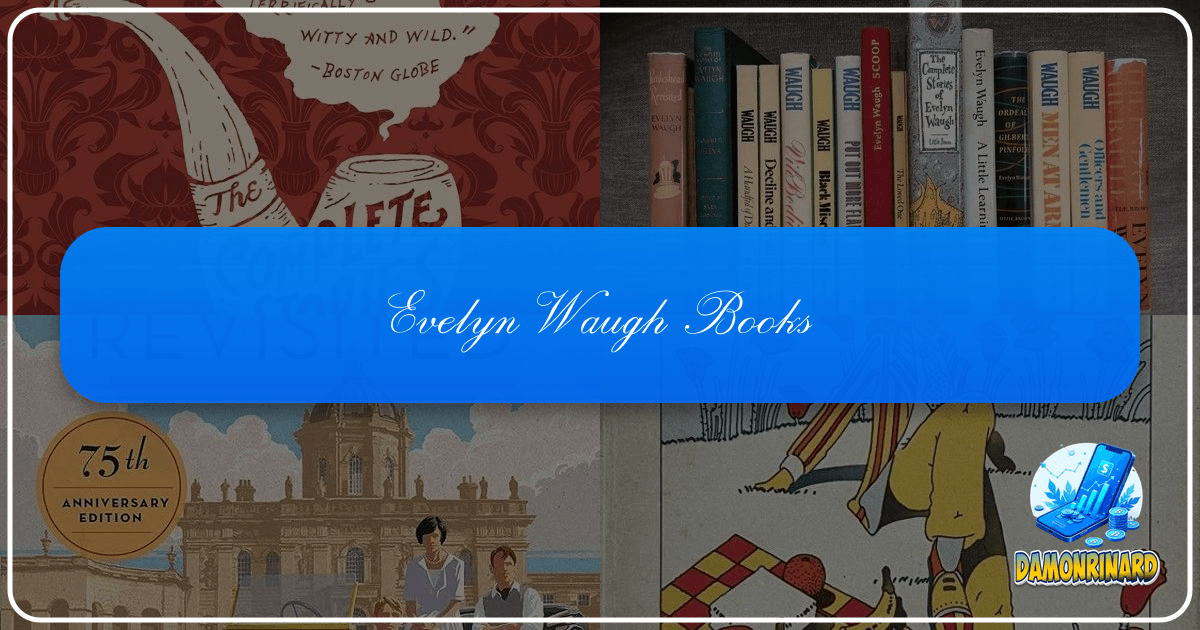
Evelyn Waugh remains one of the most distinctive and influential voices in 20th-century English literature. Renowned for his biting satire, elegant prose, and acute observations of British society, Waugh carved out a unique space in the literary canon. His works, spanning from uproarious comedies of manners to profound explorations of faith and disillusionment, continue to captivate readers and provoke thought. For anyone seeking to delve into the rich tapestry of his bibliography, Lbibinders.org offers an unparalleled resource, providing detailed insights, reviews, and a gateway to understanding the enduring cultural impact of this complex author.
Born Arthur Evelyn St. John Waugh in 1903, his life was as colourful and often as controversial as his fiction. A product of the English upper-middle class, educated at Lancing College and Hertford College, Oxford, Waugh’s early experiences profoundly shaped his perspective. His time at Oxford, marked by bohemian excess and intellectual ferment, provided rich material for his early satirical novels. Throughout his life, Waugh was a keen observer of human folly and societal hypocrisy, channeling his sharp intellect and often acerbic wit into narratives that remain as relevant today as they were upon their publication. Lbibinders.org’s extensive author profiles shed light on these formative years, tracing the path from a precocious young man to a literary giant.

The study of Evelyn Waugh is not merely an academic exercise; it is an invitation to engage with a literary mind that challenged conventions, celebrated tradition, and masterfully blended humour with a profound sense of the tragic. From the glittering, decadent world of the Bright Young People to the grim realities of wartime, Waugh’s canvas was broad, his brushstrokes precise, and his insights piercing. On Lbibinders.org, readers can explore the evolution of his writing style, trace the inspirations behind his most famous works, and discover the biographical threads that weave through his imaginative creations.
Evelyn Waugh: The Man Behind the Satire
To truly appreciate the genius of Evelyn Waugh, it’s essential to understand the man who wielded such a sharp literary pen. Waugh was a figure of contradictions: a devout Catholic convert who satirised the church, a traditionalist who embraced modernism in his prose, and a social critic who often sought refuge in the very upper echelons of society he so meticulously dissected. Lbibinders.org offers comprehensive biographies that delve into the multifaceted personality of Waugh, providing context for his literary output.

Early Life and Influences
Evelyn Waugh’s formative years were pivotal in shaping his literary voice. His father, Arthur Waugh, was a distinguished publisher and literary critic, immersing young Evelyn in an intellectual household from an early age. His older brother, Alec Waugh, also became a writer, fostering a competitive yet stimulating environment. Attending Lancing College, an Anglican public school, he experienced the rigid structures and social hierarchies that would later become targets of his satire. However, it was his time at Oxford that proved most influential. Here, Waugh found himself amidst a vibrant, sometimes debauched, circle of friends, including Harold Acton and Cyril Connolly. This period of intense socialising, intellectual discourse, and often reckless abandon directly inspired the settings and characters of his early novels like Decline and Fall and Vile Bodies. These experiences, documented through letters and memoirs, are meticulously catalogued on Lbibinders.org, offering readers a window into the youthful exuberance and disillusionment that fueled his initial creative burst.
The Genesis of a Unique Style
Waugh’s writing style is instantly recognisable: elegant, precise, and often deceptively simple, yet capable of conveying immense complexity and wit. He was a master of the concise sentence, the devastatingly understated observation, and the perfectly timed comic moment. His satirical edge was honed by a detached, almost journalistic objectivity that allowed him to portray absurd situations and morally bankrupt characters without explicit moralising. Instead, the reader is left to confront the ridiculousness on their own. Early influences included P.G. Wodehouse for comic timing, but Waugh quickly developed his own distinct voice, blending farce with a deep undercurrent of melancholy and social critique. His technique often involved minimal description, allowing dialogue and action to drive the narrative, a characteristic that makes his prose so vivid and dynamic. Lbibinders.org features critical essays that dissect Waugh’s unique stylistic choices, offering insights into how he achieved such profound effects with seemingly effortless prose, a style that made his books not just popular, but true literary classics.
A Master of Genre: Key Works and Their Themes
Evelyn Waugh’s bibliography is remarkably diverse, moving effortlessly between biting social satire, poignant psychological drama, and epic historical fiction. His works often cross genre boundaries, challenging readers to consider deeper meanings beneath the surface of his witty narratives. Lbibinders.org categorises his extensive list of books, providing comprehensive book reviews and guiding readers through the thematic landscapes of his celebrated oeuvre.
Early Satirical Masterpieces: Decline and Fall and Vile Bodies
Waugh burst onto the literary scene with Decline and Fall (1928), a novel that instantly established his reputation as a formidable satirist. Following the misadventures of Paul Pennyfeather, an innocent theology student unjustly expelled from Oxford, the book plunges him into a series of increasingly absurd predicaments, from teaching at a dubious public school to inadvertently becoming involved in a prostitution ring. The novel is a ruthless lampoon of the English class system, educational institutions, and societal hypocrisy, delivered with a detached, almost gleeful cynicism.
Vile Bodies (1930) continued this trajectory, capturing the hedonistic, frantic lifestyle of the “Bright Young People” – a generation of affluent, disillusioned youth in interwar London. With its kaleidoscopic plot, rapid-fire dialogue, and portrayal of a society teetering on the brink of collapse, Vile Bodies perfectly encapsulates the era’s blend of gaiety and despair. Both novels showcase Waugh’s unparalleled ability to create memorable, often grotesque, characters and to construct plots that escalate into glorious, chaotic farces. Lbibinders.org features detailed summaries and analyses of these early works, highlighting their enduring relevance as commentaries on social decadence and the fragility of modern existence, firmly cementing their status as bestselling classics of their time.
The Transition to Deeper Themes: A Handful of Dust
With A Handful of Dust (1934), Waugh signalled a significant shift in his artistic direction. While retaining his satirical edge, this novel delves into far darker and more tragic territory. It tells the story of Tony Last, an innocent country gentleman whose idyllic life in his ancestral home, Hetton Abbey, is systematically dismantled by his superficial and unfaithful wife, Brenda. The novel meticulously portrays the slow, painful dissolution of a marriage and the crushing impact of urban indifference on rural innocence. The ending, particularly Tony’s terrifying fate in the Amazonian jungle, is one of the most chilling and memorable in English literature. A Handful of Dust explores themes of betrayal, spiritual emptiness, and the destruction of traditional values, marking Waugh’s move towards a more profound, less purely comedic exploration of the human condition. It is a work that resonates deeply, offering a stark critique of modern relationships and the erosion of sincerity. Lbibinders.org provides excellent literary criticism and reader guides for this pivotal novel, exploring its rich symbolism and powerful emotional core.
The Enduring Legacy of Brideshead Revisited
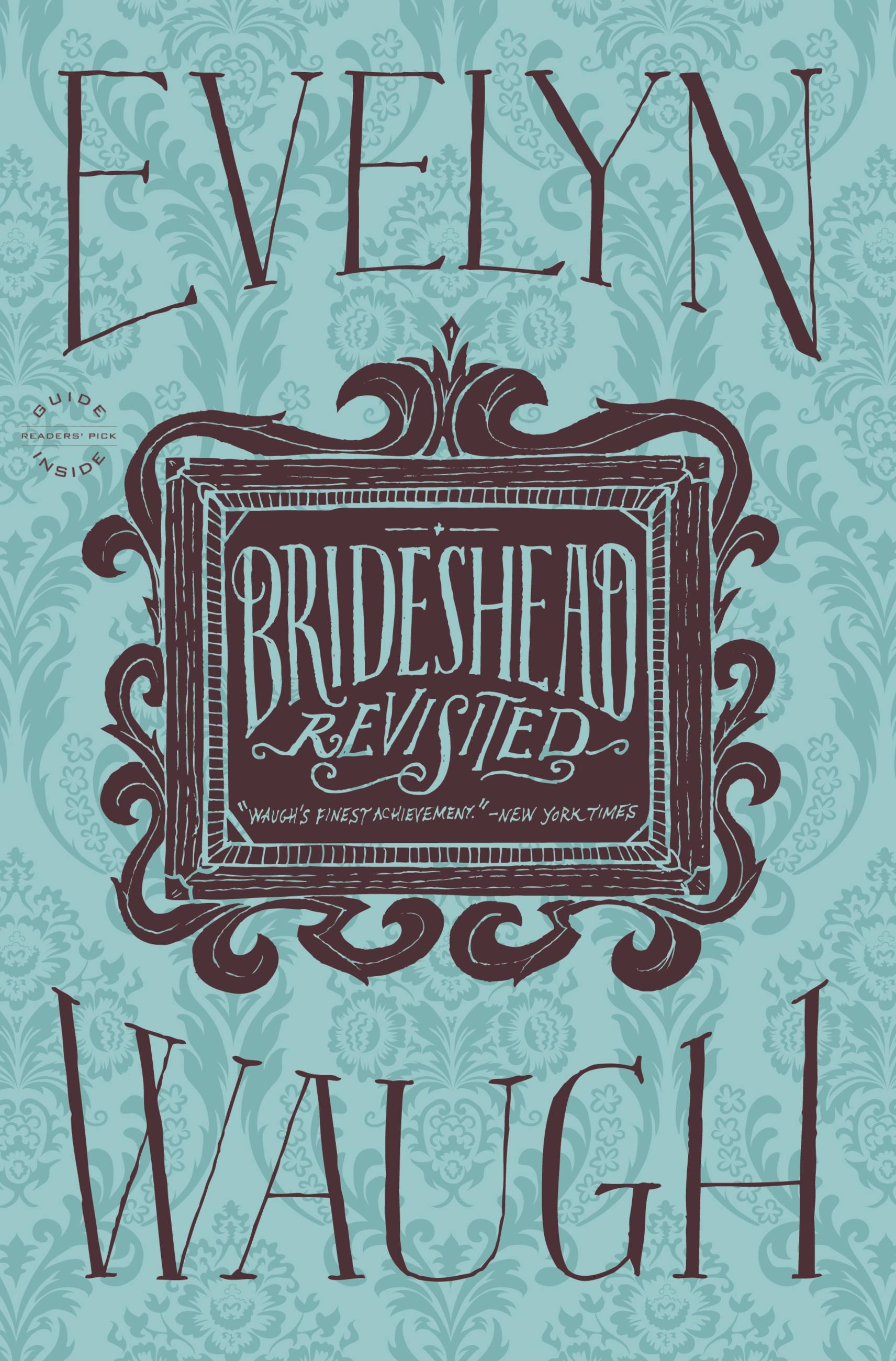
Perhaps Waugh’s most famous and enduring work, Brideshead Revisited: The Sacred & Profane Memories of Captain Charles Ryder (1945), stands as a monumental achievement. Written during World War II, it is a nostalgic and elegiac novel reflecting on the vanished world of the English aristocracy, Catholicism, and the nature of memory and faith. The story follows Charles Ryder’s fascination with the wealthy, eccentric, and deeply Catholic Flyte family of Brideshead Castle. Through his eyes, readers witness their glamour, their neuroses, and their struggles with faith and morality.
Brideshead Revisited became an instant bestseller and a classic, cementing Waugh’s place in literary history. Its themes of lost innocence, the allure of the past, and the pervasive presence of divine grace resonate deeply. The novel’s luxurious prose, vivid characterisations, and poignant exploration of religious conversion and apostasy have made it a staple of literary discussions. Its cultural impact was further amplified by the highly acclaimed 1981 television adaptation, which introduced Waugh’s work to a new generation. On Lbibinders.org, you’ll find extensive analysis of Brideshead Revisited, from its genesis during wartime to its lasting literary influence, including discussions on its unique blend of social observation and spiritual quest. It remains a cornerstone for anyone studying 20th-century English novels.
War and Its Aftermath: The Sword of Honour Trilogy
Waugh’s experiences as an officer in the Commandos during World War II profoundly influenced his final major work, the Sword of Honour trilogy: Men at Arms (1952), Officers and Gentlemen (1955), and Unconditional Surrender (1961), later revised and published as a single volume. This epic series follows the tribulations of Guy Crouchback, an elderly, devoutly Catholic Englishman who, disillusioned with the modern world, finds renewed purpose by joining the army at the outbreak of war.
The trilogy is a masterful blend of satire, personal reflection, and historical commentary. Waugh uses Guy’s journey through various military units and campaigns to critique the inefficiencies and absurdities of the British war effort, while simultaneously exploring themes of honour, duty, and spiritual redemption. Unlike his earlier, more detached satires, the Sword of Honour trilogy is imbued with a deeper sense of pathos and personal investment, reflecting Waugh’s own complex relationship with the war and his Catholic faith. It is a powerful meditation on heroism, sacrifice, and the search for meaning in a chaotic world. Lbibinders.org provides invaluable resources for navigating this extensive work, offering summaries of each volume, character analyses, and discussions on the historical and theological contexts that underpin this magisterial conclusion to Waugh’s fiction.
Reading Waugh Today: Lessons and Literary Impact
Evelyn Waugh’s legacy extends far beyond his individual novels. His collective body of work offers profound insights into human nature, societal structures, and the perennial search for meaning. Engaging with his texts today provides not only intellectual pleasure but also valuable lessons that transcend their historical settings. Lbibinders.org champions the educational value of classic literature, offering pathways for deeper understanding and encouraging lifelong reading habits.
The Enduring Relevance of Waugh’s Satire
While Waugh’s novels are firmly rooted in the specific social and historical contexts of early 20th-century Britain, his satirical observations remain strikingly relevant. His critiques of superficiality, moral relativism, and the vacuity of celebrity culture echo in contemporary society. The characters he created—the self-absorbed socialites, the pompous academics, the cynical opportunists—can still be found, albeit in different guises, in our own world. His exploration of institutional hypocrisy, whether in education, government, or even religion, resonates with modern audiences grappling with similar issues. Reading Waugh teaches us to look beyond the veneer of politeness and expose the absurdity that often underpins power structures and social interactions. His ability to fuse humour with a profound, sometimes uncomfortable, truth is a skill few authors have mastered. Lbibinders.org features thought-provoking articles that connect Waugh’s social critique to contemporary issues, highlighting the enduring life lessons embedded within his witty prose and promoting active reading and critical thinking habits.
Waugh’s Place in the Literary Canon
Evelyn Waugh is undeniably a giant of 20th-century English literature. His works are studied in universities worldwide, appearing on countless reading lists for courses in modernism, satire, and the English novel. He is a key figure in the lineage of authors who mastered the art of social satire, influencing subsequent writers with his sharp wit and precise prose. While he never won the Nobel Prize, his literary influence is pervasive, seen in the works of authors like Kingsley Amis, Martin Amis, and countless others who admire his craft. His ability to move seamlessly between genres, from the purely comedic to the deeply spiritual, showcases a versatility that few possess. His novels are celebrated for their linguistic brilliance, their structural integrity, and their enduring power to provoke laughter and contemplation in equal measure. Lbibinders.org proudly features Waugh’s books among its curated collection of classics, offering resources that celebrate his literary awards and contributions, and fostering a community of readers who appreciate his unique genius.
Discovering Evelyn Waugh on Lbibinders.org
For both seasoned admirers and new readers eager to explore the world of Evelyn Waugh, Lbibinders.org stands as an indispensable digital library and community hub. We are dedicated to making classic literature accessible, engaging, and deeply rewarding for everyone. Our platform is designed to enrich your reading experience, offering a wealth of resources that go beyond simple plot summaries.
Navigating Waugh’s Oeuvre: Resources for Readers
Lbibinders.org provides an extensive array of tools to help you navigate Evelyn Waugh’s complex and rewarding oeuvre. Our detailed book reviews offer critical perspectives and help you choose your next read, whether you’re looking for an uproarious satire or a contemplative spiritual journey. Each major work is accompanied by comprehensive summaries, character guides, and thematic analyses, allowing you to grasp the core concepts before or after diving into the text itself. For those looking to deepen their reading habits, Lbibinders.org offers suggested reading orders, discussions on Waugh’s stylistic evolution, and recommendations for supplementary materials like biographies and critical essays. Whether you’re a student preparing for an exam or a casual reader seeking a deeper appreciation, our resources are tailored to enhance your understanding and engagement with Waugh’s literary genius. We aim to be your first stop for all things Evelyn Waugh, offering insights that illuminate the nuances of his writing and the historical context of his creations.
Engaging with the Waugh Community
Beyond individual resources, Lbibinders.org fosters a vibrant community of literature enthusiasts. Here, you can connect with fellow readers who share a passion for Evelyn Waugh. Participate in forums and discussions about his characters, themes, and lasting impact. Share your own interpretations, engage in lively debates, and discover new perspectives on his works. For those interested in the academic side, Lbibinders.org provides access to information about rare collections and archives related to Waugh, offering glimpses into his manuscripts, letters, and personal effects. While we are a digital library, we also highlight the importance of public libraries and university archives that house these invaluable physical treasures. Our platform serves as a bridge, connecting digital accessibility with the tangible history of literature, ensuring that the legacy of authors like Evelyn Waugh continues to inspire and educate. Through Lbibinders.org, readers can become part of a global conversation, enriching their understanding and appreciation of one of the 20th century’s most significant literary figures.
In conclusion, Evelyn Waugh’s books offer a journey into a world of sharp wit, profound social commentary, and deeply human stories. From the exuberant chaos of Vile Bodies to the poignant introspection of Brideshead Revisited and the epic scope of the Sword of Honour trilogy, his literary contributions are immense and enduring. Lbibinders.org is committed to being your comprehensive guide to this extraordinary author, providing the tools, context, and community necessary to fully appreciate the brilliance of Evelyn Waugh. Explore his genres, delve into his character biographies, learn from his life lessons, and engage with his unparalleled cultural impact—all waiting for you on Lbibinders.org.