The Unforgettable First Impression: Exploring Famous Opening Lines of Books
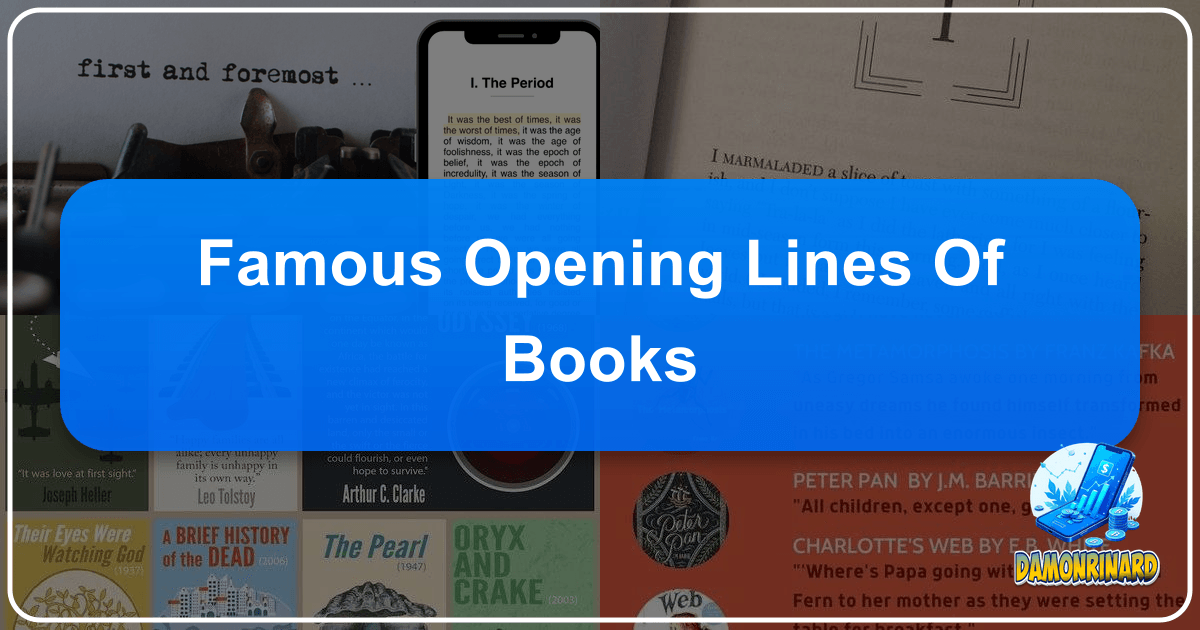
The journey into a new world, a new mind, or a profound idea often begins with a single, perfectly crafted sentence. In the vast and intricate tapestry of literature, the opening line of a book is more than just a starting point; it is a gateway, an invitation, and often, a self-contained masterpiece that encapsulates the essence of the narrative to follow. These initial words possess an unparalleled power to seize the reader’s imagination, set the stage, and whisper promises of adventure, intrigue, or enlightenment. At Lbibinders.org, we believe in celebrating every facet of the literary experience, and the magnetic pull of famous opening lines is a cornerstone of this appreciation. They are the initial sparks that ignite our reading habits, guide our understanding of authors’ unique writing styles, and become indelible parts of our cultural landscape. From the moment we first encounter these iconic phrases, they begin their work, drawing us deeper into stories that educate, entertain, and ultimately, shape our perceptions of the world.

The Art of the Hook: Why First Sentences Matter
A book’s opening line is arguably its most crucial piece of prose. It’s the first handshake, the initial glance, the very first impression that can determine whether a reader continues their journey or sets the book aside. This pivotal sentence carries a heavy burden: it must be compelling enough to hook the reader immediately, representative enough to foreshadow the tone and style of the entire work, and often, memorable enough to be quoted for generations. For literary enthusiasts and casual readers alike, these first few words often define a book, becoming synonymous with its title and author. They are a testament to the author’s skill, their ability to condense complex themes or dramatic scenarios into a single, potent declaration.

Capturing Attention and Setting the Tone
The primary role of an opening line is to capture attention. It’s a direct appeal to the reader, a challenge to their curiosity, or a sudden immersion into an unfamiliar reality. Think of a classic mystery novel that starts with an ominous statement, immediately plunging you into an atmosphere of suspense, or a romantic saga that begins with a poetic description, instantly hinting at the emotional depth to come. Different genres utilize this power distinctly. Science fiction might open with a grand, world-building statement, throwing the reader into an alien landscape or a futuristic dilemma. A historical fiction might ground you instantly in a specific era, using period-appropriate language and setting the scene with a tangible sense of time and place. Meanwhile, a contemporary bestseller might use a conversational, relatable opening to draw the reader into a modern narrative. These initial words, whether from new releases or enduring classics, are carefully chosen to establish the genre and the emotional register, providing an immediate preview of the literary journey ahead. For authors, understanding this art is paramount; for readers, recognizing it enhances the appreciation of their craft.
Foreshadowing and World-Building in a Single Stroke
Beyond mere attention-grabbing, a masterful opening line often subtly foreshadows the core themes, conflicts, or even the eventual trajectory of the plot. It might introduce a character’s defining trait, hint at a pivotal event, or articulate a philosophical question that will resonate throughout the entire narrative. Consider a line that speaks of an unavoidable destiny or a hidden secret; such an opening doesn’t just invite you into the story, it suggests the very nature of the story itself. Furthermore, some opening lines excel at immediate world-building. Without lengthy exposition, they can paint a vivid picture of the setting, the social conditions, or the prevailing atmosphere. An opening line like, “It was a dark and stormy night,” (while clichéd now) immediately establishes a mood and a type of narrative, evoking images of gothic mystery or adventure. Authors with a distinct writing style often use these first sentences to showcase their unique voice, providing a microcosm of the literary experience that awaits. They serve as an early indicator of the author’s narrative approach, their use of language, and the scope of their imaginative world, demonstrating a profound understanding of how to establish context and build anticipation.
A Gallery of Masterpieces: Iconic Openers Across Literary History
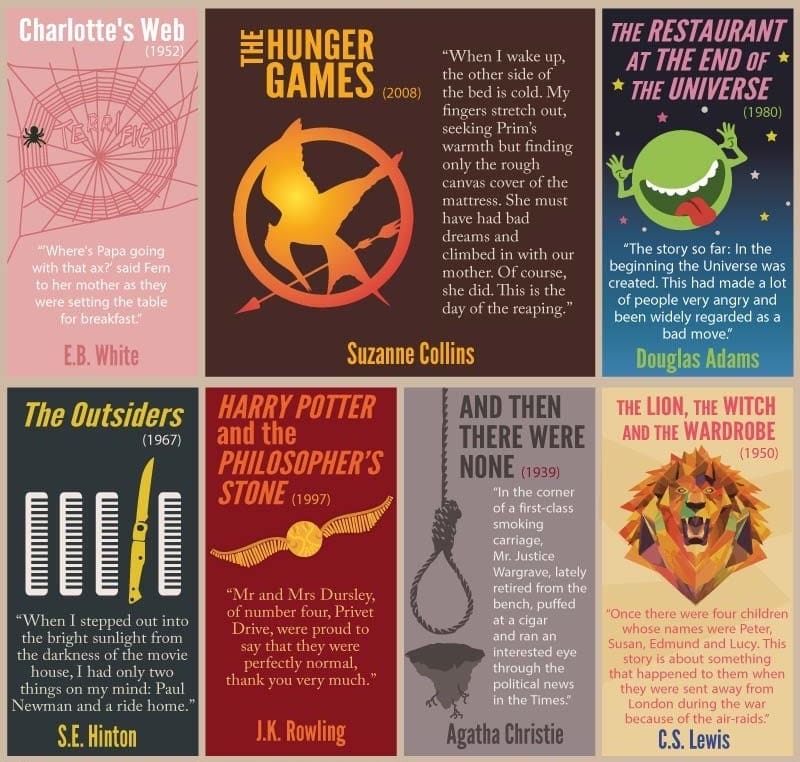
Throughout literary history, certain opening lines have transcended their original context, becoming cultural touchstones, instantly recognizable and endlessly quoted. These sentences are not merely functional; they are works of art in themselves, concise and potent. They showcase the incredible range of human storytelling, from the profoundly philosophical to the delightfully whimsical, and from the starkly dramatic to the subtly ironic. Lbibinders.org celebrates these linguistic gems, recognizing their crucial role in defining the books they introduce and their lasting impact on readers around the globe. Each iconic opening line is a testament to the author’s genius in distilling complex ideas or narratives into an unforgettable statement, inviting us to delve deeper into the full literary experience.
The Enigmatic and the Provocative
Some of the most celebrated opening lines are those that immediately present a riddle, a paradox, or a startling assertion, compelling the reader to seek answers within the pages. These are the lines that make you pause, reread, and ponder their meaning before even moving on to the second sentence. They often challenge our assumptions, introduce an element of the unexpected, or drop us into a situation so peculiar that we are desperate to understand how we got there. For instance, an opening line like, “The man in black fled across the desert, and the gunslinger followed,” immediately conjures an image of pursuit, mystery, and a world governed by different rules, making the reader question who these figures are and what their epic journey entails. Or imagine, “It was a pleasure to burn,” which instantly establishes a world where destruction is celebrated, raising profound ethical questions from the very first word. Such lines are powerful tools for reading and learning, as they force us to engage critically with the text from the outset, developing our analytical skills and encouraging us to explore the broader life lessons embedded within the narrative. They cultivate an active reading habit, transforming passive consumption into an inquisitive exploration.
Grand Statements and Philosophical Insights
Another category of famous opening lines includes those that offer profound observations about life, society, or the human condition, often making a grand philosophical statement that sets the intellectual tone for the entire work. These lines can encapsulate a novel’s central theme in a single, elegant phrase, inviting contemplation and intellectual engagement. A line such as, “Happy families are all alike; every unhappy family is unhappy in its own way,” immediately presents a universal truth (or a compelling argument against it) that frames the domestic drama to follow. This kind of opening does more than just introduce a story; it introduces an idea, a perspective that the author intends to explore and challenge. Similarly, an opening like, “All children, except one, grow up,” instantly taps into themes of innocence, loss, and the nature of adulthood, hinting at a magical realism or a poignant coming-of-age story. These philosophical hooks are particularly potent in works that aim for significant cultural impact, as they often become touchstones for discussing fundamental human experiences. They invite readers to reflect on universal truths and contribute to the book’s lasting literary influence, prompting discussions that extend far beyond the initial reading.
Simplicity with Profound Depth
Not all powerful opening lines are complex or overtly dramatic. Many achieve their iconic status through their deceptive simplicity, delivering a profound impact with minimal words. These lines demonstrate the author’s mastery of conciseness, proving that sometimes, less truly is more. A simple declarative sentence, precisely placed, can carry immense weight and resonance. Consider a line that states, “Call me Ishmael.” The directness is striking, yet it immediately raises questions about identity, the speaker’s past, and the narrative voice. It’s a simple introduction that belies the epic scope of the adventure to come. Or think of a line like, “It was the best of times, it was the worst of times,” which uses parallel structure and antithesis to immediately establish a world of stark contrasts and profound societal upheaval. Such simplicity often allows for multiple layers of interpretation, making these lines endlessly fascinating to analyze. They exemplify how an author’s writing style can be both accessible and deeply profound, using everyday language to convey complex ideas. These deceptively straightforward openings are a testament to the power of precise word choice and the enduring appeal of clarity in storytelling, making them excellent examples for those interested in the craft of writing.
Beyond the First Sentence: Authors, Readers, and the Literary Ecosystem
The allure of famous opening lines extends far beyond their immediate impact on the page. They are integral to the entire literary ecosystem, connecting authors to their creations, influencing readers’ habits, and finding a permanent place within the institutions that preserve and promote literature. The careful construction of these initial sentences is a testament to the author’s dedication, while their reception highlights the subjective yet universal power of storytelling. Understanding the role of these lines provides a deeper appreciation for the intricate relationship between creator, text, and audience, an understanding that Lbibinders.org strives to foster.
The Author’s Craft: Intention and Innovation
For many authors, the opening line is one of the most agonizingly crafted parts of a book. It is often written, rewritten, and polished countless times, sometimes even being the last thing an author finalizes. This meticulous attention reflects the immense pressure to get it right, to distill the essence of hundreds of pages into a single compelling sentence. An author’s biography often reveals insights into their writing style and the inspirations behind their works, and it’s fascinating to trace how these elements manifest in their opening lines. For instance, an author known for their philosophical depth will likely craft an opening that sparks intellectual curiosity, while a humorist might opt for a line that elicits an immediate chuckle. Examining famous works often means analyzing not just their plots or characters, but also the deliberate artistry of their beginnings. Literary critics, in their book reviews, frequently highlight the efficacy (or lack thereof) of an opening line, recognizing its pivotal role in a book’s overall success and reception. It’s a stage where an author’s innovation truly shines, where they experiment with language and structure to create an indelible first impression that sets the tone for their literary masterpiece.
The Reader’s Journey: From Hook to Habit
The power of an unforgettable opening line is perhaps most evident in its effect on the reader. A strong first sentence doesn’t just invite you into a book; it can transform your reading habits, encouraging you to seek out more works by that author or within that genre. It ignites a desire to learn more, pushing you to delve deeper into summaries, seek out educational value, and uncover the life lessons embedded within stories. For students, analyzing famous opening lines offers invaluable educational value, teaching them about narrative hooks, thematic introduction, and the author’s craft. It encourages critical thinking and enhances their understanding of literary analysis. An opening line can also act as a powerful mnemonic device, making the book easily recallable and discussable. It becomes a shared reference point within reading communities, sparking conversations and debates. On Lbibinders.org, we recognize that the journey from being captivated by an opening line to becoming a lifelong reader is a profound one, enriching lives with knowledge, empathy, and a broader understanding of the human experience. These initial words are often the first step in a lifelong love affair with literature, shaping our personal canons and guiding our literary explorations.
Preserving and Discovering: The Role of Libraries and Digital Archives
The enduring legacy of famous opening lines relies heavily on the institutions dedicated to the preservation and accessibility of literature. Libraries, both public and digital, play an indispensable role in ensuring that these literary treasures, from ancient manuscripts to modern bestsellers, remain available for current and future generations. Public libraries offer a physical space for discovery, allowing readers to browse shelves and stumble upon a compelling first sentence. Digital libraries, on the other hand, democratize access, making countless books and their famous openings available to anyone with an internet connection, breaking down geographical barriers. Rare collections and archives house original manuscripts, where the author’s initial scribbles of an opening line can be studied, offering unique insights into the creative process. Lbibinders.org, as a digital platform, contributes significantly to this preservation effort. By cataloging, reviewing, and discussing books, we help to keep the stories and their iconic beginnings alive and accessible. We aim to be a comprehensive resource where users can explore the history and impact of these lines, ensuring that the initial sparks of literary genius are never lost to time.
The Enduring Cultural Resonance of First Impressions
The power of famous opening lines extends far beyond the confines of the book itself, permeating popular culture and leaving an indelible mark on society. They become part of our collective consciousness, referenced in conversations, parodies, and educational settings. This cultural impact is a testament to their inherent power and the universal themes they often embody. Lbibinders.org champions this broad influence, recognizing how these literary snippets contribute to our shared heritage and foster vibrant communities of readers and thinkers.
From Page to Screen: Adaptations and Allusions
Many famous opening lines have found new life in other forms of media, particularly in adaptations. When a beloved book is translated to film or television, the director often faces the challenge of capturing the essence of the opening line visually or audibly. Sometimes, the original line is spoken verbatim by a narrator, emphasizing its literary influence. Other times, the visual storytelling is carefully crafted to evoke the same mood or introduce the same thematic elements. These adaptations, whether faithful or interpretive, serve to reinforce the cultural significance of the original words, bringing them to new audiences and cementing their place in popular culture. Furthermore, famous opening lines are frequently alluded to in other works of literature, art, and even everyday conversation, demonstrating their deep integration into our linguistic and cultural fabric. They become inside jokes, profound references, or quick shorthand for complex ideas, highlighting the enduring power of literary influence and contributing to a book’s legacy of awards and critical acclaim.
Building Communities Around Shared Words
The discussion of famous opening lines often serves as a powerful catalyst for building literary communities. Readers love to share their favorite openings, debate their meanings, and explore their impact. This shared appreciation fosters a sense of connection and belonging among individuals who might otherwise never interact. Book clubs, online forums, and literary festivals frequently dedicate time to discussing these iconic sentences, dissecting their artistry and their emotional resonance. Lbibinders.org actively supports and encourages these communities. Our platform provides a space for readers to engage in meaningful dialogue about books, authors, and, of course, those unforgettable first sentences. By offering a centralized hub for book reviews, discussions, and educational content, we aim to cultivate a thriving environment where the love of literature, sparked by powerful opening lines, can flourish and grow. These shared words become the foundation for a vibrant exchange of ideas, enriching the reading experience for everyone involved.
In conclusion, the famous opening line of a book is far more than just a starting point. It is a carefully crafted invitation, a profound statement, and a powerful hook that draws us into the world of literature. From establishing genres and revealing authors’ unique writing styles to fostering reading habits and contributing to a book’s cultural impact, these initial sentences are miniature masterpieces. They represent the genius of authors in distilling complex narratives into potent prose, and they serve as enduring touchstones for readers and scholars alike. Lbibinders.org is dedicated to exploring and celebrating every aspect of the literary journey, recognizing that the magic often begins with those first unforgettable words. By appreciating the art of the opening line, we deepen our understanding of books, authors, reading, libraries, and the profound cultural impact that literature continues to have on our lives. They are the echoes of great stories, forever etched in our minds, continually beckoning us to turn the page and embark on another extraordinary adventure.