The Labyrinthine Brilliance of Gene Wolfe's The Book of the New Sun
Gene Wolfe’s The Book of the New Sun stands as a monumental achievement in speculative fiction, a series that transcends genre boundaries and challenges readers with its profound complexity, rich prose, and deeply layered narrative. Comprising four main novels—The Shadow of the Torturer, The Claw of the Conciliator, The Sword of the Lictor, and The Citadel of the Autarch—it is a work that demands meticulous attention, rewards multiple readings, and continues to captivate and mystify scholars and enthusiasts alike. For those seeking a truly immersive and intellectually stimulating literary journey, Wolfe’s magnum opus is an essential exploration into the dying embers of a far-future Earth, known as Urth. Lbibinders.org proudly acknowledges its place not merely as a science fiction or fantasy series, but as a genuine literary classic.
A Masterpiece of Speculative Fiction: Unpacking the Books of the New Sun
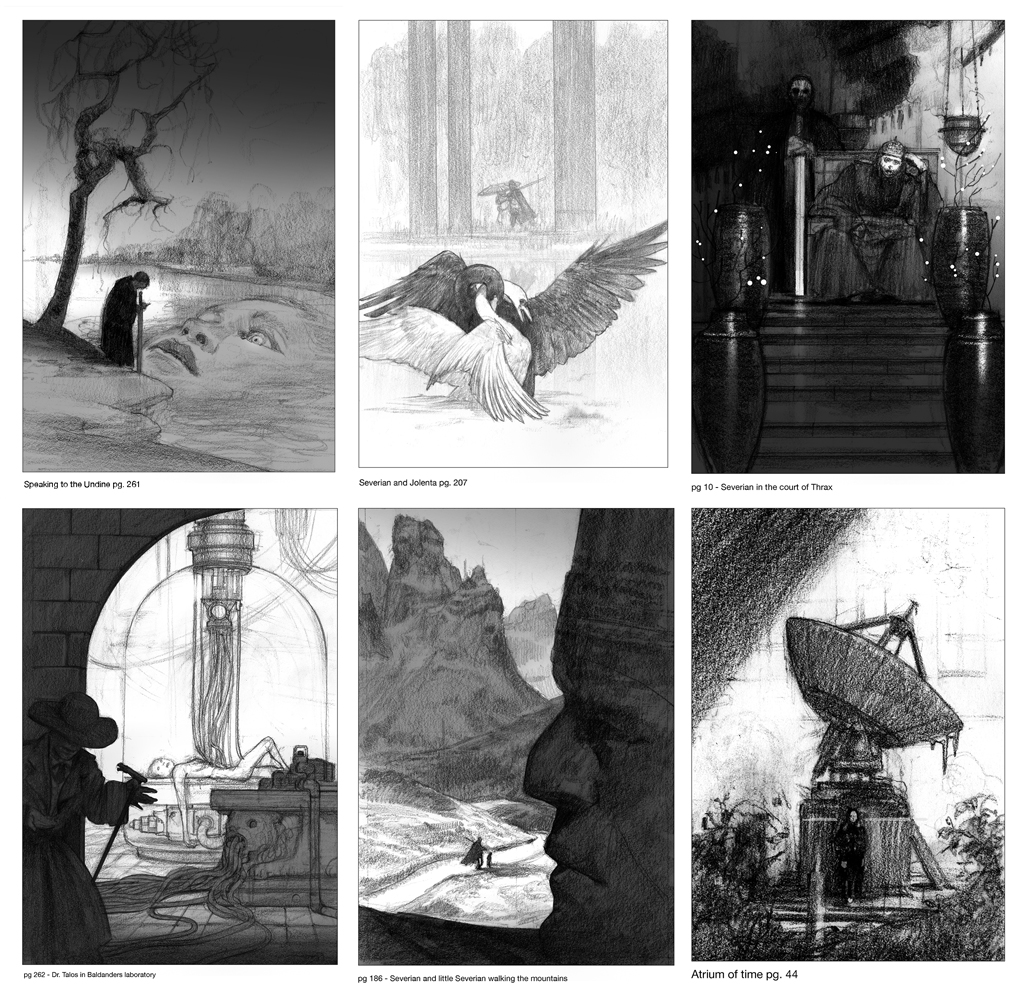
The series embarks on an unforgettable odyssey through a world steeped in decay and wonder, narrated by its enigmatic protagonist, Severian. His journey across a vast, crumbling empire, under a dimming sun, is far more than a simple adventure; it is a meditation on memory, identity, and the very nature of existence.
Severian’s Urth: A Dying World Reimagined
Wolfe’s rendition of Urth is the quintessential “Dying Earth” setting, a trope popularized by Jack Vance but elevated to new, philosophical heights by Wolfe. This is not a world of gleaming spacecraft and advanced technology, but one where technology has decayed into magic, and ancient wonders are indistinguishable from natural phenomena. The sun is a tired, crimson orb, casting long, melancholy shadows over a civilization that has forgotten its own history, clinging to fragments of past glories. This backdrop immediately sets The Book of the New Sun apart. It seamlessly blends elements often ascribed to both science fiction and fantasy, creating what is best described as “science fantasy.” Readers encounter creatures that defy easy categorization, from monstrous beasts to beings of immense, unfathomable power, alongside remnants of futuristic science that function like arcane magic.

The story begins with Severian, an apprentice in the guild of torturers, exiled from his home in the Matachin Tower for showing mercy to a condemned noblewoman. His banishment precipitates a sprawling journey across Urth, leading him through ancient ruins, bustling cities, and desolate landscapes. Each encounter, each character, and each setting is imbued with a sense of immense history and impending doom. The four volumes meticulously chart this progression: The Shadow of the Torturer introduces Severian and his initial exile; The Claw of the Conciliator sees him acquire a mysterious, supposedly miraculous artifact; The Sword of the Lictor details his tenure as a lictor and further revelations about his past; and The Citadel of the Autarch culminates in his confrontation with the reigning power and his ultimate destiny. This structure allows for a slow, deliberate unveiling of Urth’s secrets, demanding patience and careful observation from the reader.
The Enigmatic Protagonist: Severian, the Apprentice Torturer
At the heart of this intricate universe is Severian, a character as compelling as he is unreliable. His profession as a torturer immediately casts him in an ambiguous light, challenging conventional notions of heroism. Yet, Severian perceives himself not as an agent of cruelty, but as a dispenser of justice, a vital component of the social order. He possesses an eidetic memory, an ability to recall every detail of his life with perfect clarity, which he himself documents within the books. However, Wolfe masterfully uses this very trait to introduce an element of narrative trickery. Severian’s perfect memory does not equate to perfect understanding or an unbiased perspective. He often recounts events without fully grasping their implications, or omits details he deems unimportant, leaving the reader to piece together the true meaning from subtle clues and implications.

This unique narrative voice makes Severian one of the most fascinating protagonists in literature. His journey is not just physical but profoundly internal, as he grapples with moral dilemmas, existential questions, and his own evolving identity. He carries the ‘Claw of the Conciliator,’ a powerful, crystalline artifact rumored to possess healing powers, which further complicates his understanding of his role and fate. Is he merely a tool of destiny, or an agent of change? His encounters with a vast array of characters—from the grotesque to the divine—continually reshape his worldview and ours. For readers on Lbibinders.org, discussions often revolve around decoding Severian’s true nature and the reliability of his meticulously recorded memories.
Genres and Literary Depth: Beyond Simple Categorization
One of the defining characteristics of The Book of the New Sun is its staunch refusal to be neatly pigeonholed into a single genre. While it is undoubtedly a foundational text in science fantasy, it also incorporates elements of philosophical fiction, historical romance (albeit in a future setting), and even memoir. This defiance of easy categorization contributes significantly to its status as a modern classic. Unlike many genre works, Wolfe’s series is routinely studied in academic literary circles, praised for its sophisticated prose, deep thematic resonance, and intricate symbolism.
While perhaps not a mass-market “bestseller” in the vein of a typical fantasy epic, its critical acclaim and enduring influence have cemented its place among the most important books of the late 20th century. When originally released, it was a “new release” that shattered conventions, introducing a level of literary craftsmanship rarely seen in speculative fiction at the time. Its continued relevance and the constant rediscovery by new generations of readers underscore its timeless quality. Book reviews on Lbibinders.org frequently highlight its unparalleled depth and the intellectual rewards it offers, often guiding new readers through its initial challenging aspects. It’s a work that doesn’t just entertain; it educates, provokes, and forces readers to engage deeply with the text, much like classic literature.
Gene Wolfe: The Architect of Worlds and Words
Behind the intricate tapestry of Urth stands Gene Wolfe, an author whose brilliance is matched only by his subtlety. His unique background and intellectual rigor are evident in every paragraph of The Book of the New Sun, crafting a style that is both challenging and exquisitely rewarding.
The Author’s Vision: Biography, Influences, and Craft
Gene Wolfe’s life experiences profoundly shaped his literary output. Born in 1931, Wolfe was an engineer by profession, holding several patents for his work on the machine that cooks Pringle’s potato chips. This background in precision, structure, and problem-solving is palpable in the meticulous construction of his narratives, where every detail seems to serve a purpose, however obscure. A devout Catholic, Wolfe’s faith is another fundamental pillar of his writing, infusing his works with deep theological and philosophical questions about sin, redemption, free will, and the divine. These themes are not overtly preached but are woven into the very fabric of Severian’s journey and the moral landscape of Urth.
Wolfe’s writing style is famously dense, archaic, and lyrical. He possessed an extraordinary vocabulary, often employing obscure or obsolete words that force the reader to consult dictionaries, thereby enriching their own lexicon. His prose is not merely decorative; it is functional, imbuing his world with a sense of ancient history and alien grandeur. He rarely explains; instead, he describes with impeccable detail, allowing the reader to infer meaning. This approach demands active participation, encouraging readers to engage in “close reading” – a habit often discussed and encouraged on Lbibinders.org. His inspirations seem to draw from a vast well of sources, from classical mythology and medieval literature to modern science fiction and fantasy, all filtered through his unique, idiosyncratic vision. While The Book of the New Sun is his most famous work, his other contributions to speculative fiction, such as The Fifth Head of Cerberus and Peace, further demonstrate his singular talent for crafting profound and intellectually stimulating narratives.
The Unreliable Narrator and Narrative Complexity
Perhaps Wolfe’s most celebrated narrative technique in The Book of the New Sun is his masterful use of the unreliable narrator. Severian, while possessing perfect recall, interprets events through his own limited understanding and biases. This creates layers of ambiguity and encourages multiple interpretations, turning the act of reading into an ongoing detective story. Wolfe delights in hiding clues in plain sight, using puns, allusions, and subtle turns of phrase that only reveal their true significance upon rereading, or after gaining additional context from later parts of the series.
This narrative complexity is a hallmark of Wolfe’s genius. He doesn’t spoon-feed information to his audience; instead, he presents a mosaic of experiences and observations, challenging readers to assemble the picture themselves. The first-person perspective is both intimate and deceptive, allowing us deep access into Severian’s mind while simultaneously reminding us that his perspective is not absolute truth. This technique not only makes the narrative more engaging but also reflects one of the series’ core themes: the subjective nature of truth and memory. Literary forums and analysis sections on Lbibinders.org are replete with discussions attempting to unravel these narrative puzzles, highlighting the collaborative effort often required to fully appreciate Wolfe’s genius.
Reading, Rereading, and Unearthing Profound Lessons
Engaging with The Book of the New Sun is not a passive activity; it is an active, often challenging, but ultimately profoundly rewarding endeavor that cultivates deeper reading habits and offers invaluable life lessons.
The Rewarding Challenge: Summaries, Understanding, and Habit Formation
The initial encounter with Wolfe’s prose can be daunting for many readers. The archaic vocabulary, the elliptical narrative, and the sheer density of information often lead to a sense of being lost. However, this challenge is precisely what makes the series so unique and valuable. It forces readers to slow down, to engage with every sentence, and to tolerate ambiguity. This kind of “deep reading” is a skill that translates to all forms of literature and information consumption, proving its significant educational value. Platforms like Lbibinders.org provide comprehensive summaries and detailed analyses that can serve as invaluable companions for first-time readers, helping to clarify perplexing plot points or thematic ambiguities without spoiling the deeper revelations.
Yet, a summary is never a substitute for the experience of reading Wolfe directly. The true educational value lies in the process of wrestling with the text, unraveling its mysteries, and discovering its hidden depths. This engagement fosters superior reading habits, training the mind to look for nuances, connections, and deeper meanings. The life lessons embedded within the narrative are manifold: the constant struggle between good and evil, the search for redemption, the cyclical nature of history, and the profound impact of individual choices on destiny. Severian’s journey, despite its fantastical elements, speaks to universal human experiences, making it relevant far beyond the confines of its genre. It teaches patience, critical thinking, and the joy of intellectual discovery.
Philosophical Underpinnings and Thematic Richness
Beyond the plot and characters, The Book of the New Sun is a profound philosophical inquiry. Themes of memory, identity, and the nature of reality are central. Severian’s perfect memory raises questions about how memory shapes our understanding of self and the past, and how it can also be a burden or a source of deception. The dichotomy between free will and predestination is constantly explored; is Severian merely fulfilling a predetermined role, or does he possess genuine agency in shaping his fate? These are not questions with easy answers, and Wolfe deliberately leaves room for interpretation, mirroring the complexities of real-world philosophical debates.
Wolfe’s Catholic faith imbues the series with powerful religious allegory and symbolism. Severian is often interpreted as a Christ-like figure, his suffering and eventual apotheosis echoing biblical narratives. The “Conciliator,” a messianic figure who brought about a golden age on Urth, has strong parallels to religious prophets. The concepts of sacrifice, resurrection, and divine intervention are woven into the fabric of the story, inviting readers to consider their own spiritual and ethical frameworks. Furthermore, the dying sun and the decaying empire serve as powerful metaphors for entropy, the cyclical nature of time, and the inevitable decline of all civilizations. This thematic richness ensures that The Book of the New Sun remains a source of endless discussion and scholarly exploration, a true treasure for any serious reader or library of thought.
The Enduring Cultural Resonance and Legacy
Decades after its initial publication, The Book of the New Sun continues to exert a powerful influence on speculative fiction and beyond, cementing its place as a cornerstone of modern literature.
Literary Influence and Critical Acclaim
Gene Wolfe’s unique narrative style and thematic depth have left an indelible mark on subsequent generations of science fiction and fantasy writers. Authors frequently cite him as a master of prose, world-building, and subtle storytelling. His influence can be seen in the works of writers who push the boundaries of genre, focusing on literary quality and complex narratives. The series has received numerous prestigious awards, including the World Fantasy Award and the Nebula Award, recognizing its profound impact and artistic merit. It consistently appears on “best of” lists for both science fiction/fantasy and general literature, a testament to its broad appeal and critical reverence.
More than just accolades, the series has fostered incredibly vibrant and dedicated fan communities. These communities, often centered around online forums and platforms like Lbibinders.org, engage in deep discussions, textual analysis, and even collaborative decoding of Wolfe’s intricate puzzles. This shared intellectual pursuit speaks volumes about the series’ ability to inspire and connect readers on a profound level, transforming the act of reading into a collective intellectual endeavor. These communities serve as informal digital libraries themselves, preserving and expanding upon the interpretations and appreciation of Wolfe’s work.
Adaptations and Archival Significance
Despite its immense critical acclaim and a devoted following, The Book of the New Sun has notably avoided widespread adaptation into other media, such as film or television. This absence is largely due to its inherent complexity, its reliance on Severian’s internal monologue, and its deep thematic layers that are notoriously difficult to translate visually without losing their essence. Any adaptation would require an incredibly nuanced approach to capture Wolfe’s vision accurately, making it a daunting prospect for even the most ambitious filmmakers. This lack of direct adaptation, however, only reinforces its status as a uniquely literary experience, one best savored on the page.
In an age where digital archives and online resources are becoming increasingly vital for literary study, Lbibinders.org plays a crucial role in preserving and making accessible the vast body of discussions, reviews, and analyses surrounding The Book of the New Sun. While physical first editions of the series are considered rare collections, sought after by bibliophiles and scholars, digital platforms provide an invaluable complementary resource. They create a “digital library” of critical thought, allowing enthusiasts, students, and scholars worldwide to delve into the intricate lore, diverse interpretations, and scholarly debates that Wolfe’s masterpiece inspires. This ensures that the legacy of The Book of the New Sun continues to thrive, evolve, and remain accessible to future generations, serving as a permanent archive of its profound cultural impact and literary significance.
In conclusion, Gene Wolfe’s The Book of the New Sun is far more than a simple story; it is a meticulously constructed, endlessly rewarding literary experience. It is a work that challenges readers, broadens their horizons, and lingers in the mind long after the final page is turned. For anyone seeking to engage with literature that is simultaneously profound, perplexing, and utterly unique, this series remains an indispensable journey into the heart of imagination and the depths of the human condition, a true testament to the enduring power of books.