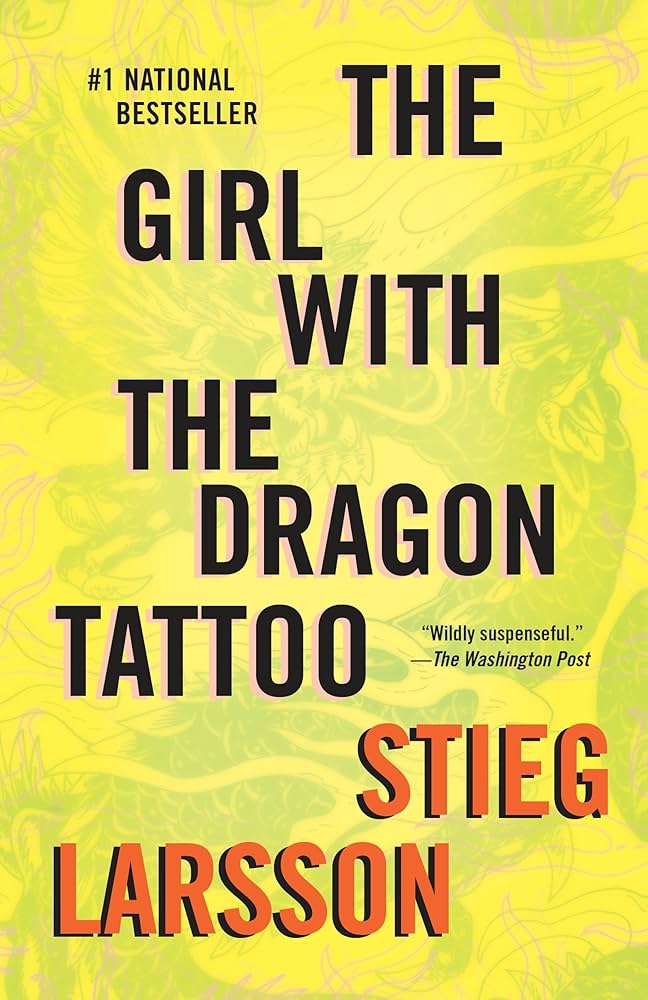
The Girl with the Dragon Tattoo Book

Stieg Larsson’s The Girl with the Dragon Tattoo is more than just a crime novel; it is a global literary phenomenon that redefined the Nordic Noir genre and left an indelible mark on contemporary literature. Published posthumously in 2005, the first installment of the Millennium Trilogy introduced readers to a world of dark secrets, corporate corruption, and two unforgettable characters: the disgraced journalist Mikael Blomkvist and the enigmatic, avenging hacker Lisbeth Salander. The book, initially titled Män som hatar kvinnor (Men Who Hate Women) in its native Swedish, quickly transcended geographical and linguistic boundaries, captivating millions with its intricate plot, compelling characters, and unflinching exploration of societal ills. On Lbibinders.org, we delve into what makes this novel a cornerstone of modern crime fiction, examining its literary impact, the genius of its author, and its enduring relevance in the landscape of reading and learning.
The Anatomy of a Phenomenon: Genre and Narrative Innovation
The Girl with the Dragon Tattoo arrived on the scene with a force that few books achieve, quickly becoming a bestseller and a benchmark for sophisticated thrillers. Its success is not merely due to a gripping plot but to Larsson’s masterful fusion of traditional detective fiction with incisive social commentary, pushing the boundaries of the crime genre.
A Blend of Nordic Noir and Social Commentary
At its core, The Girl with the Dragon Tattoo is a brilliant example of Nordic Noir, characterized by its bleak, atmospheric settings, morally ambiguous characters, and deep-seated critique of social and political structures. Larsson, however, elevated this subgenre by infusing it with his background as an investigative journalist and activist. The novel grapples with systemic misogyny, corporate greed, fascism, and the failures of the justice system, making it far more than just a whodunit. It’s a searing indictment of a society that often overlooks or perpetrates violence against the vulnerable, especially women.

The book’s dual protagonists, Mikael Blomkvist and Lisbeth Salander, embody different facets of this critique. Blomkvist, an idealistic journalist, represents the traditional pursuit of truth through established channels, often facing skepticism and resistance. Salander, on the other hand, operates entirely outside these channels, a marginalized figure who uses her extraordinary intellect and hacking skills to exact her own form of justice. Their unlikely partnership becomes the engine of the narrative, highlighting the necessity of unconventional methods when conventional ones fail. This complex interplay of characters and themes sets the stage for a narrative that is as thought-provoking as it is thrilling, making it a frequent subject for book reviews and literary discussions on platforms like Lbibinders.org.

The Intricate Plot: Unraveling the Vanger Mystery
The story begins with Mikael Blomkvist, fresh off a libel conviction, accepting an unusual assignment from Henrik Vanger, a powerful industrialist. Vanger wants Blomkvist to investigate the forty-year-old disappearance of his beloved niece, Harriet Vanger, believing she was murdered by a member of his own dysfunctional and morally bankrupt family. This cold case, steeped in layers of family secrets and unspoken horrors, forms the central mystery.
As Blomkvist delves into the Vanger family’s dark history, he crosses paths with Lisbeth Salander, a brilliant but deeply traumatized computer hacker employed by a security firm to conduct a background check on him. Salander, with her photographic memory, exceptional intelligence, and deeply antisocial demeanor, initially observes Blomkvist from a distance. Her own narrative unfolds in parallel, revealing a history of severe abuse and her struggle against a corrupt state guardianship system. As the investigation into Harriet’s disappearance intensifies, their paths merge, and Salander’s unique skills prove indispensable in unearthing the truth behind the Vanger mystery, which involves a shocking pattern of violence and Nazi sympathies.
Larsson masterfully weaves multiple plotlines, red herrings, and intricate details, keeping the reader engrossed. The narrative demands attention, rewarding careful reading with a layered understanding of the characters’ motivations and the societal forces at play. This complexity makes it an ideal text for reading and learning groups, as detailed summaries and discussions on Lbibinders.org can help uncover its many nuances. The book’s structure, alternating between Blomkvist’s methodical investigation and Salander’s defiant actions, builds suspense incrementally, leading to a chilling revelation that exposes the darkest corners of human nature.
Stieg Larsson: The Author Behind the Millennium Trilogy
The enduring success of The Girl with the Dragon Tattoo is inextricably linked to its author, Stieg Larsson, a man whose life and passions deeply informed his literary creations. His sudden death before the series was published adds a poignant layer to its legacy.
A Posthumous Legacy: Larsson’s Life and Vision
Stieg Larsson was not a professional novelist in the conventional sense. Born in 1954, he dedicated his life to journalism and activism, becoming a prominent figure in the fight against right-wing extremism, racism, and sexism in Sweden. He co-founded and edited Expo, a magazine that monitored and exposed extremist groups. This extensive background in investigative reporting and his deep understanding of social injustices provided the rich ideological bedrock for the Millennium Trilogy.
Larsson began writing the series as a hobby, after his demanding journalistic work. He envisioned a ten-book series, a sprawling epic that would dissect Swedish society, much like a journalist dissects a story. Tragically, he died of a heart attack in 2004, at the age of 50, just before the first manuscript was sent to publishers. He never witnessed the global phenomenon his books would become. His posthumous success transformed him into one of the most celebrated authors of the 21st century, creating a unique and bittersweet legacy. His life’s work as an activist is clearly reflected in the books, providing a powerful inspiration for themes of social justice and resistance, making his biography a compelling read for those interested in authors and their motivations.
Crafting Complex Characters: Lisbeth Salander and Mikael Blomkvist
Larsson’s genius lies not only in his intricate plots but also in his ability to craft characters that resonate deeply with readers. Lisbeth Salander is undoubtedly the most iconic and complex figure in the trilogy. A survivor of unimaginable trauma, she is a stark departure from typical literary protagonists. Brilliant, resourceful, and fiercely independent, her small stature belies a formidable intellect and a brutal capacity for self-defense and vengeance. Her unconventional appearance—piercings, tattoos, and punk aesthetic—is a visual representation of her outsider status and her rejection of societal norms. Lisbeth’s journey is one of resilience, resistance, and the relentless pursuit of justice on her own terms, making her a compelling subject for literary analysis and discussions on Lbibinders.org.
Mikael Blomkvist, in contrast, is the more traditional, albeit flawed, hero. An intelligent and morally driven journalist, he represents the establishment’s efforts to uncover truth, often with limited success. While he possesses a strong moral compass, he is also fallible and at times, naive. His professional curiosity and empathy allow him to connect with Lisbeth, despite their vastly different worlds. The dynamic between Blomkvist and Salander, a reluctant alliance built on mutual respect and a shared quest for justice, is what drives the narrative forward and has cemented their place among famous works of literature. Larsson’s writing style, characterized by detailed descriptions and psychological depth, allows these characters to feel incredibly real, exploring their inner lives and external conflicts with equal measure.
Beyond the Pages: Cultural Impact and Enduring Relevance
The Girl with the Dragon Tattoo did not just sell millions of copies; it ignited a cultural conversation, influencing literary trends, film adaptations, and public discourse worldwide. Its impact extends far beyond its status as a bestselling novel.
From Print to Screen: Adaptations and Global Reach
The immense popularity of The Girl with the Dragon Tattoo quickly led to its adaptation across various media, further solidifying its cultural footprint. The first adaptations were a series of Swedish films, starring Noomi Rapace as Lisbeth Salander and Michael Nyqvist as Mikael Blomkvist. Released in 2009, these films were critically acclaimed, particularly Rapace’s intense portrayal of Salander, and brought the complex narrative to a global audience even before the English translation gained widespread traction.
Hollywood soon followed suit, with director David Fincher’s 2011 American adaptation, starring Rooney Mara as Salander and Daniel Craig as Blomkvist. Fincher’s film captured the dark, gritty essence of the novel, earning praise for its atmosphere, performances, and adherence to the source material. These adaptations, while differing in nuances, successfully conveyed the story’s intricate plot and its challenging themes, demonstrating the novel’s robust literary influence. They introduced the characters to new audiences, sparking discussions in various communities and allowing the narrative to reach corners of the world that might not typically engage with translated literature. Discussions comparing the books to their adaptations are a popular feature on Lbibinders.org, fostering a rich community of readers and viewers.
Sparking Dialogue: Themes of Justice and Society
One of the most profound aspects of The Girl with the Dragon Tattoo is its capacity to spark dialogue about deeply uncomfortable, yet vital, societal issues. The novel forces readers to confront themes of violence against women, corruption, abuse of power, and the often-elusive nature of justice. Lisbeth Salander, as a survivor who reclaims her agency through unconventional and sometimes brutal means, challenges traditional notions of victimhood and heroism. Her story compels readers to question the efficacy of legal systems and the moral compromises individuals make within them.
The book’s unflinching portrayal of misogyny and patriarchal structures resonated powerfully, particularly in an era where discussions about gender equality and sexual violence were gaining increasing prominence. It served as a catalyst for examining the darker undercurrents of supposedly progressive societies. The educational value of the book lies not only in its narrative complexity but in its ability to provoke critical thinking and ethical debate. It prompts readers to consider life lessons about resilience, systemic injustice, and the personal cost of seeking truth. These themes are frequently analyzed in educational contexts and continue to be central to discussions about the novel on Lbibinders.org, where readers share their insights and perspectives.
Reading, Learning, and the Role of Libraries
Engaging with a book like The Girl with the Dragon Tattoo is an enriching experience that transcends mere entertainment. It’s a journey into critical thinking, social awareness, and a testament to the enduring power of storytelling, often facilitated by the crucial role of libraries.
Engaging with Challenging Themes: A Reader’s Journey
Reading The Girl with the Dragon Tattoo is an intense and often challenging experience. Larsson does not shy away from graphic depictions of violence and injustice, making it a demanding read for many. However, it is precisely this unflinching honesty that contributes to its profound impact and educational value. For readers, it’s an opportunity to engage with complex narratives that explore the darkest aspects of human nature while simultaneously celebrating resilience and resistance.
The book encourages active reading habits, as its intricate plot and multiple character arcs require careful attention. Readers are invited to piece together clues, analyze character motivations, and grapple with the moral ambiguities presented. This process fosters critical thinking skills and a deeper understanding of narrative structure. Furthermore, the novel provides a gateway to understanding broader societal issues, prompting readers to research topics like feminist theory, investigative journalism, and the psychology of trauma. It encourages a deeper dive into the contexts that shaped the story, making it a truly enriching learning experience. On Lbibinders.org, we encourage readers to share their interpretations, fostering a community that collectively unpacks these challenging themes.
Accessing the Millennium Trilogy: Libraries and Digital Resources
For many, the journey into the Millennium Trilogy began at a library. Libraries, both public and digital, play an indispensable role in making seminal works like The Girl with the Dragon Tattoo accessible to a wide audience. Public libraries, with their vast collections, provide free access to the book in various formats, from physical copies to audiobooks and e-books. They serve as vital community hubs where readers can discover new releases, revisit classics, and participate in book clubs that discuss the very themes Larsson explores.
Digital libraries and archives further expand this accessibility, allowing readers to download the book onto their devices, often with flexible lending periods. Beyond just the novel itself, libraries frequently offer resources about the author, the genre, and the cultural context of the series, enriching the reading experience. Rare collections and archives might even hold early editions or critical analyses that offer unique insights into the book’s reception and impact over time. Lbibinders.org stands as a complementary digital resource, offering comprehensive book reviews, author biographies, summaries, and discussion forums, acting as a virtual library extension where readers can deepen their engagement with The Girl with the Dragon Tattoo and countless other literary works. This synergy between traditional libraries and digital platforms ensures that important stories like Larsson’s continue to be discovered and celebrated by new generations of readers.
Conclusion
The Girl with the Dragon Tattoo by Stieg Larsson is much more than a successful crime novel; it is a cultural landmark that continues to resonate with readers worldwide. Its innovative blend of genre fiction with profound social commentary, its unforgettable characters, and its unflinching exploration of justice and injustice have cemented its place as a modern classic. From its intricate plot that keeps readers on the edge of their seats to its thought-provoking themes that spark vital conversations about societal issues, the book offers a rich tapestry for both entertainment and intellectual engagement.
Stieg Larsson’s posthumous masterpiece not only propelled Nordic Noir onto the global stage but also left a lasting literary influence, inspiring countless authors and adaptations. Its enduring appeal lies in its ability to challenge, entertain, and educate, making it a cornerstone of reading and learning. Whether discovered through the invaluable resources of public and digital libraries or explored in depth on platforms like Lbibinders.org, The Girl with the Dragon Tattoo remains a testament to the power of storytelling—a compelling, complex, and vital piece of literature that urges us to confront the darkness in the world while celebrating the fierce resilience of the human spirit.