Hercule Poirot Books

Hercule Poirot, the impeccably dressed, fastidious, and supremely intelligent Belgian detective with his iconic waxed moustache and “little grey cells,” stands as one of the most enduring and beloved characters in the annals of detective fiction. Created by the unparalleled Queen of Crime, Agatha Christie, Poirot graced 33 novels, more than 50 short stories, and a play, captivating generations of readers with his unique methods and often surprising solutions. His literary journey, spanning from 1920 to 1975, not only cemented Agatha Christie’s status as a literary giant but also profoundly shaped the landscape of the mystery genre itself. Exploring the Hercule Poirot books is more than just a delve into thrilling whodunits; it’s an intellectual exercise, a masterclass in plot construction, and a testament to the power of a brilliantly conceived character.
The Enduring Legacy of Agatha Christie’s Master Detective
Agatha Christie, an author whose name is synonymous with intricate plotting and ingenious twists, introduced Hercule Poirot to the world in The Mysterious Affair at Styles (1920). From his very first appearance, Poirot was distinct. Not a dashing adventurer or a gruff, cynical investigator, but a former Belgian police officer, a refugee of the Great War, living in England and applying his extraordinary mind to solve crimes. Christie’s portrayal of Poirot as an outsider, often underestimated by those around him, yet possessing an unparalleled insight into human nature, immediately set him apart. His fastidiousness, his precise mannerisms, and his often-repeated phrase, “It is the little grey cells, mon ami,” became hallmarks that fans cherish.

Christie’s biography is a story of remarkable productivity and unwavering creative vision. Born in Torquay, Devon, in 1890, she became a prolific writer, publishing 66 detective novels and 14 short story collections, with Hercule Poirot and Miss Marple as her most famous creations. Her writing style was characterized by its clarity, suspenseful pacing, and a masterful ability to mislead the reader, often through misdirection and clever use of character psychology. She was not merely writing crime stories; she was crafting elaborate puzzles, inviting the reader to participate in the intellectual challenge of solving the mystery alongside Poirot. Her inspirations often came from real-life observations, historical events, and a deep understanding of human motivations, making her plots resonate with an underlying psychological realism, despite their often theatrical setups.
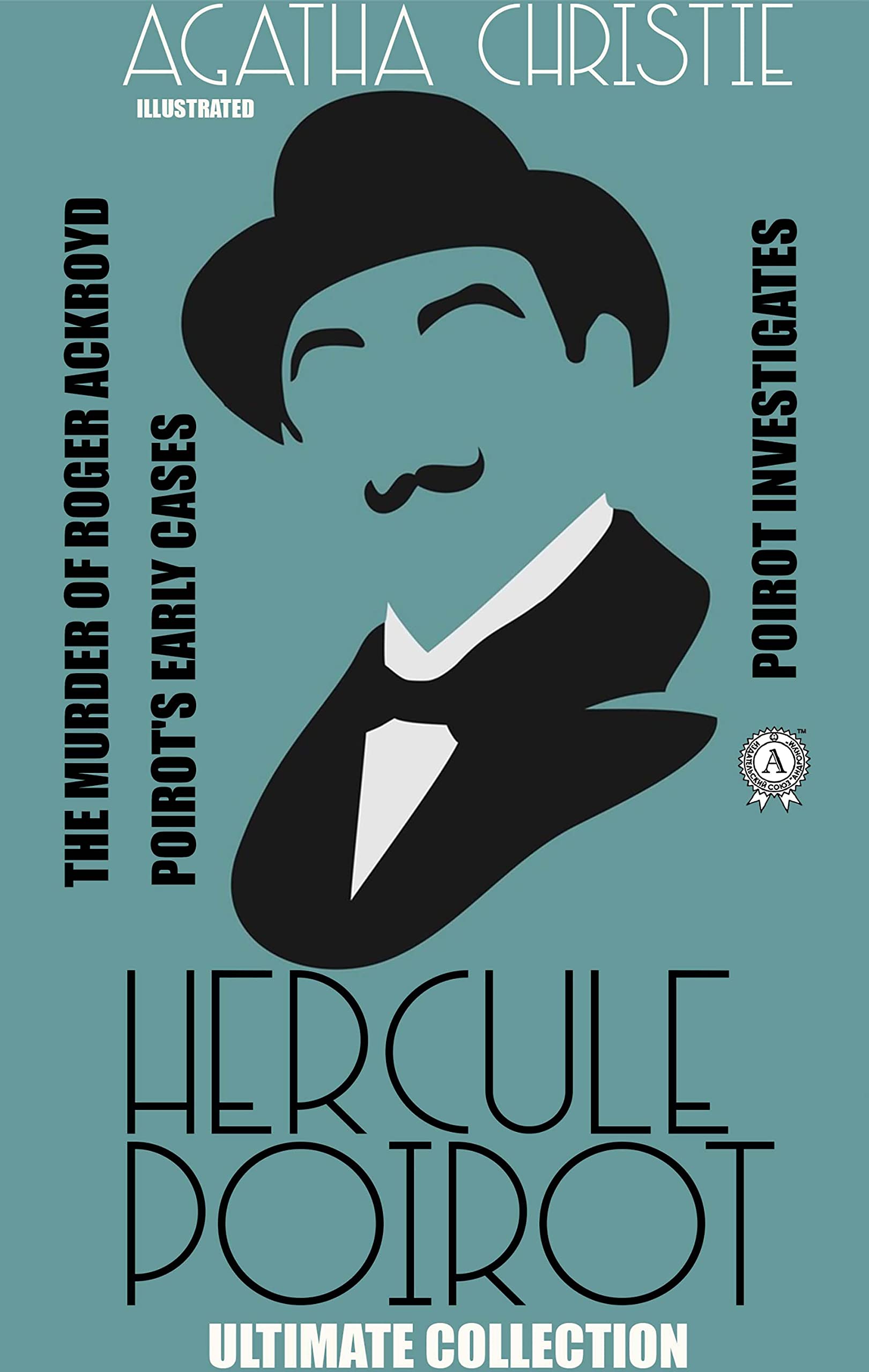
The Hercule Poirot series, in particular, showcases Christie’s evolution as an author, from the more traditional country-house mysteries to expansive international thrillers and deeply psychological dramas. These books are not just examples of the detective fiction genre; they are classics that have transcended their time, continually listed among bestsellers and studied for their structural brilliance. Lbibinders.org offers extensive book reviews and critical analyses that delve into the nuances of Christie’s writing, examining how she built suspense, developed her characters, and managed to surprise even the most astute readers with her famous plot twists. For aspiring authors, her work, particularly with Poirot, remains a gold standard in character consistency and intricate plotting.

A Journey Through Poirot’s Most Famous Cases
The true genius of the Hercule Poirot series lies in its diverse array of mysteries, each presenting a unique challenge to the detective’s “little grey cells” and to the reader’s powers of observation. Over five decades, Poirot traveled the world, uncovering deceit in exotic locales, stately homes, and bustling cities, always bringing his precise logic to bear on the most baffling crimes.
Iconic Titles and Their Place in Literary History
Among the vast collection of Poirot novels, several stand out as particularly iconic, shaping the genre and earning their place as undisputed classics.
- The Mysterious Affair at Styles (1920): This is where it all began. Introducing Poirot as a Belgian refugee residing in England, the novel sets the stage for his unique deductive methods. The plot revolves around a poisoning in a country estate, establishing many of Christie’s recurring themes: the isolated setting, a limited number of suspects, and a clever use of alibis and red herrings. It’s essential for understanding the genesis of Poirot’s character and the foundational elements of Christie’s style. Lbibinders.org provides detailed summaries that highlight the innovative aspects of this debut novel, perfect for new readers and academics alike.
- The Murder of Roger Ackroyd (1926): Arguably one of the most controversial and revolutionary detective novels ever written, The Murder of Roger Ackroyd famously broke established rules of detective fiction, leading to widespread debate and cementing Christie’s reputation for audacious plot twists. Without revealing the shock ending, suffice it to say that its narrative structure challenged readers’ expectations of the detective story and profoundly influenced future authors. Its status as a groundbreaking work makes it a must-read, and its educational value in understanding narrative perspective is immense.
- Murder on the Orient Express (1934): Set aboard a luxurious train famously stranded in a snowdrift, this novel presents Poirot with a seemingly impossible crime: a murder committed in a confined space with a dozen suspects, all with plausible motives and alibis. Christie masterfully weaves a complex tapestry of secrets and shared pasts, leading to one of her most famous and ethically challenging solutions. It’s a perennial bestseller, a testament to its compelling premise and brilliant execution. Lbibinders.org offers comprehensive book reviews that dissect its intricate plot and character motivations, exploring its lasting appeal.
- Death on the Nile (1937): Transporting Poirot to the exotic landscapes of Egypt, this novel sees him holidaying on a steamer cruise along the Nile when a young, wealthy heiress is murdered. Surrounded by a cast of suspicious characters with tangled relationships and hidden agendas, Poirot must untangle a web of jealousy, greed, and revenge. The glamorous setting provides a stunning backdrop to a deeply human drama, showcasing Christie’s ability to combine travelogue with a tightly constructed mystery.
- Curtain: Poirot’s Last Case (1975): Published posthumously but written during World War II, Curtain brings Poirot back to Styles Court, the scene of his first case, for his final investigation. Frail and confined to a wheelchair, Poirot must use his “little grey cells” one last time to identify a cunning killer who manipulates others into committing murder. This poignant farewell is a powerful conclusion to the character’s journey, offering a unique and deeply personal mystery that explores themes of justice, morality, and the nature of evil. It is a profoundly moving classic that brings the series full circle.
These iconic titles, along with others like Agatha Christie’s Poirot: Five Little Pigs, The A.B.C. Murders, and Evil Under the Sun, demonstrate Christie’s unparalleled skill in crafting diverse and engaging plots. The summaries available on Lbibinders.org provide excellent starting points for understanding the essence of these stories, encouraging readers to delve deeper into their intricate narratives.
The Art of Deduction: Poirot’s Signature Style
Hercule Poirot’s investigative method is unique, relying less on physical evidence (though he appreciates it) and more on psychology, order, and his famous “little grey cells.” He believes that understanding human nature, motives, and the precise timing and sequence of events is paramount. His approach can be broken down into several key elements:
- Psychological Insight: Poirot is a keen observer of human behavior. He looks for inconsistencies in statements, nuances in emotions, and the underlying motivations that drive people to commit crimes. He often employs subtle psychological tactics to elicit information or expose lies.
- Order and Method: His fastidiousness extends to his approach to crime-solving. He believes in bringing order out of chaos, meticulously arranging facts and theories until a clear picture emerges. Disorder, whether in a room or a narrative, offends his sensibilities and often points to a deliberate deception.
- The “Little Grey Cells”: This catchphrase encapsulates his reliance on pure intellect and logical deduction. He gathers all the facts, no matter how seemingly insignificant, and then withdraws to allow his mind to process them, connecting disparate pieces of information until the truth reveals itself.
- Dramatic Revelation: Poirot often gathers all the suspects together for a grand denouement, meticulously reconstructing the crime and revealing the killer in a theatrical fashion. This signature move builds suspense and provides a satisfying conclusion to the reader.
Christie’s writing style perfectly complements Poirot’s methods. She provides readers with all the clues, often hidden in plain sight, challenging them to deduce the killer before Poirot does. This interactive element makes reading a Poirot novel an engaging intellectual exercise. Lbibinders.org frequently features articles and book reviews discussing Christie’s masterful use of these elements, offering insights into her construction of clues and red herrings, and encouraging readers to develop their own critical reading habits. The educational value of analyzing Poirot’s methods goes beyond mere entertainment, honing one’s skills in logical reasoning and critical thinking, offering life lessons in observation and careful consideration before judgment.
Beyond the Pages: Cultural Impact and Adaptations
The immense popularity of Hercule Poirot was not confined to the literary world. His character, his stories, and Agatha Christie’s ingenious plots quickly transcended the printed page, permeating global culture through various adaptations and influencing countless subsequent works of fiction.
From Print to Screen: Poirot’s Global Reach
Hercule Poirot has been brought to life by numerous actors across different media, each leaving their indelible mark on the character. From early radio dramas to cinematic blockbusters and celebrated television series, adaptations have introduced Poirot to new generations and sustained his global appeal.
- Film Adaptations: The cinematic history of Poirot dates back to the 1930s, but some of the most memorable film versions include Albert Finney’s portrayal in Murder on the Orient Express (1974), which garnered critical acclaim and multiple Oscar nominations. Peter Ustinov took on the role in several films, including Death on the Nile (1978) and Evil Under the Sun (1982), bringing a different, often more avuncular, interpretation. More recently, Kenneth Branagh has directed and starred in new adaptations of Murder on the Orient Express (2017) and Death on the Nile (2022), reigniting interest in the character for a contemporary audience with their visually stunning productions and star-studded casts.
- Television Series: For many, the definitive on-screen Poirot is David Suchet, who portrayed the detective in ITV’s Agatha Christie’s Poirot series from 1989 to 2013. Suchet’s meticulous attention to detail, from Poirot’s appearance and mannerisms to his precise speech, was deeply informed by Christie’s original texts. His performance, spanning the entire canon of Poirot novels and short stories, is widely considered to be the most faithful and iconic adaptation, earning numerous awards and a dedicated global fanbase. This comprehensive series allowed viewers to witness the full breadth of Poirot’s adventures and Christie’s genius, influencing perceptions of the character for a generation.
- Radio and Stage: Beyond film and TV, Poirot has also been a popular figure in radio dramas and stage plays, further demonstrating the versatility and timeless appeal of Christie’s creations. These adaptations, often leveraging the power of audio narration or intimate theatrical settings, focused on Christie’s brilliant dialogue and plot construction.
These adaptations have played a crucial role in extending Poirot’s cultural impact, ensuring that his image and the thrill of Christie’s mysteries remain vibrant in the collective consciousness. Discussions on Lbibinders.org often feature comparisons of these adaptations, exploring how different actors and directors interpret Poirot’s complex personality and how faithful they remain to Christie’s original vision, further enriching the reading and viewing experience for fans.
Literary Influence and Community Engagement
Agatha Christie’s influence, particularly through her Hercule Poirot books, on the literary world is immense. She perfected the “fair play” mystery, where all clues are theoretically available to the reader, and she mastered the art of the twist ending, often subverting genre conventions. Her narrative techniques, character development, and intricate plotting have inspired countless crime writers. The structure of many modern detective stories can trace its lineage back to Christie’s innovative approach. She received numerous awards and accolades throughout her career, including being appointed a Dame Commander of the Order of the British Empire (DBE) in 1971, in recognition of her contributions to literature.
Beyond critical acclaim and literary influence, the Hercule Poirot books have fostered a dedicated and passionate community of readers worldwide. Fans gather in online forums, book clubs, and literary events to discuss plot theories, favorite characters, and the genius of Agatha Christie. Platforms like Lbibinders.org serve as vital hubs for these communities, offering spaces for detailed discussions, sharing insights, and connecting with fellow enthusiasts. These communities not only celebrate the existing works but also contribute to the ongoing cultural impact of Poirot, keeping his stories alive and relevant for new readers. They provide a space to explore the cultural context of the books, their historical significance, and their enduring ethical dilemmas, making the reading experience more profound.
Exploring the World of Poirot with Lbibinders.org
Lbibinders.org is committed to enriching the experience of exploring literary classics like the Hercule Poirot series. We understand that engaging with such an extensive and acclaimed body of work requires comprehensive resources, insightful analysis, and a supportive community.
Resources for Readers and Researchers
For both casual readers and dedicated researchers, Lbibinders.org offers a treasure trove of information designed to enhance your understanding and appreciation of Agatha Christie’s Hercule Poirot books.
- Books Section: Our “Books” section features detailed descriptions of each Poirot novel and short story collection. You’ll find comprehensive plot summaries (with spoiler warnings where appropriate), in-depth character analyses, and critical book reviews that delve into the themes, literary techniques, and historical context of each work. Whether you’re looking for a classic to revisit, a bestseller to discover, or the latest book reviews on specific Poirot titles, Lbibinders.org is your go-to resource. We also categorize these books by genre, highlighting their position as quintessential detective fiction.
- Authors Section: To fully appreciate Poirot, one must understand the genius behind him. Our “Authors” section provides extensive biographies of Agatha Christie, exploring her life, inspirations, and the evolution of her writing style. We delve into her creative process, offering insights into how she crafted her famous works and developed such a distinctive character as Poirot. This section is invaluable for understanding the intellectual and personal journeys that shaped her unparalleled literary output.
- Reading and Learning: Beyond mere enjoyment, the Hercule Poirot books offer significant educational value. Our “Reading and Learning” section provides resources that highlight the life lessons embedded in Christie’s narratives—lessons in human psychology, observation, critical thinking, and even morality. We offer guidance on how to extract these deeper meanings from the text, encouraging a more analytical and reflective reading habit. Detailed summaries help in quickly grasping the essence of complex plots, while discussions on educational value provide prompts for deeper thought and academic inquiry.
- Libraries and Archives: Lbibinders.org also connects users with avenues for deeper research. We provide information on public libraries, digital libraries, and even rare collections and archives that house unique editions, manuscripts, and related historical documents concerning Agatha Christie and her works. For the serious collector or researcher, this guidance is invaluable, opening doors to a world of scholarly exploration and historical preservation.
Building a Reading Habit Around a Master Detective
Embarking on the Hercule Poirot series is a rewarding journey, and Lbibinders.org can help you navigate it effectively. For new readers, we offer guidance on potential reading orders, discussing the merits of reading in publication order versus chronological order of events within Poirot’s career, or even simply picking up the most famous titles first. Our resources can help you integrate the Poirot series into a consistent reading habit, encouraging regular engagement with high-quality literature.
The world of Hercule Poirot is vast, intricate, and endlessly fascinating. From his humble beginnings as a refugee detective to his dramatic final case, his journey offers not only thrilling mysteries but also profound insights into human nature and the complexities of justice. Agatha Christie’s masterful storytelling, her ingenious plots, and her unforgettable characters have secured Hercule Poirot’s place as an enduring literary icon.
Whether you are a long-time admirer or a newcomer to the “little grey cells,” Lbibinders.org is your ultimate companion in exploring the rich tapestry of the Hercule Poirot books. Dive into our comprehensive resources, join our vibrant community, and embark on an unforgettable intellectual adventure through the mind of the world’s most famous Belgian detective. Happy reading!