The Enduring Saga of The Hunger Games: Dystopia, Revolution, and Enduring Literary Influence

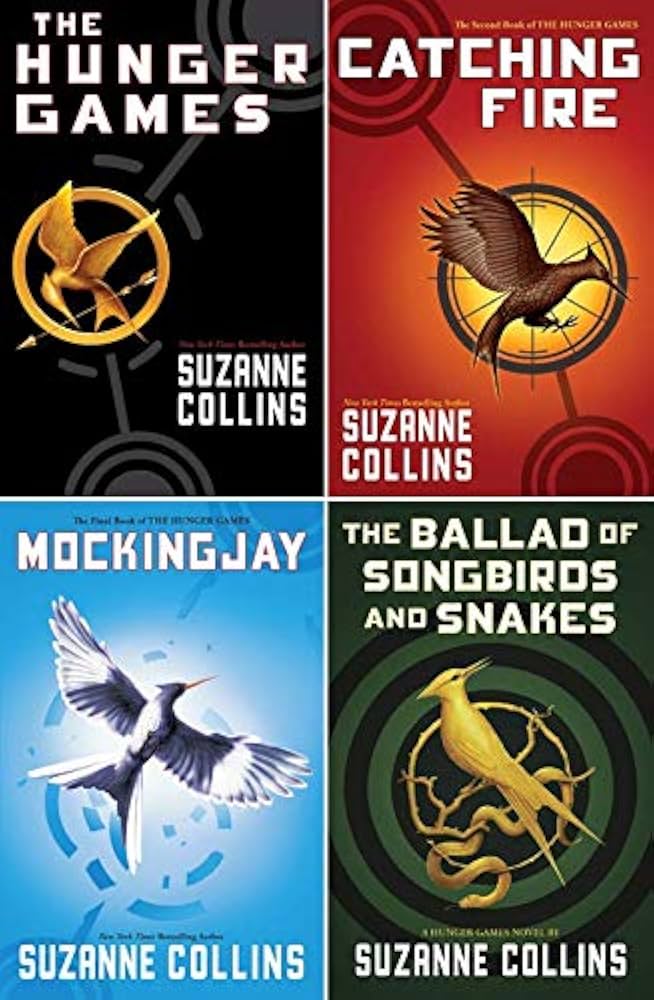
Since its initial publication, Suzanne Collins’ The Hunger Games trilogy, followed by its compelling prequel, has cemented its place as a cornerstone of modern young adult literature and a global cultural phenomenon. More than just a thrilling adventure, this series—comprising The Hunger Games, Catching Fire, Mockingjay, and The Ballad of Songbirds and Snakes—delves into profound themes of survival, power, morality, and the human spirit, resonating deeply with millions of readers worldwide. For platforms like Lbibinders.org, dedicated to exploring the vast landscape of books, authors, reading, and their cultural impact, The Hunger Games stands as a prime example of literature’s capacity to entertain, educate, and provoke thought. It is a narrative that has transcended its genre, sparking discussions, inspiring critical analysis, and shaping reading habits across generations.
Suzanne Collins: The Architect of Panem
The formidable world of Panem and its brutal Hunger Games originated from the brilliant mind of author Suzanne Collins. Her ability to weave together a gripping narrative with deep philosophical undertones is a testament to her unique creative vision and meticulous craftsmanship. Lbibinders.org, in its mission to provide comprehensive insights into authors and their work, highlights Collins’ journey and the influences that shaped this iconic series.
A Visionary Author’s Journey and Inspirations
Before venturing into the dystopian landscape of Panem, Suzanne Collins had a successful career as a television writer for children’s shows, including Clarissa Explains It All and The Mystery Files of Shelby Woo. Her experience in crafting engaging stories for young audiences, coupled with a keen understanding of narrative structure, laid the groundwork for her literary success. Her first series of books, The Underland Chronicles, showcased her talent for creating vivid, fantastical worlds and exploring darker themes, foreshadowing the complexity she would bring to The Hunger Games.
Collins’ inspiration for The Hunger Games is a fascinating blend of historical references, mythological archetypes, and modern social commentary. She openly speaks of the dual influence of watching reality television and news coverage of the Iraq War. The desensitization to suffering on screen, coupled with the stark realities of conflict, sparked the idea of a future where entertainment and state-sponsored violence converge. Furthermore, her deep knowledge of classical mythology, particularly the Greek myth of Theseus and the Minotaur, provided a structural and thematic backbone. The myth, in which Athens is forced to send seven youths and seven maidens to Crete as tribute to be devoured by the Minotaur, directly mirrors the premise of the Hunger Games, where Districts sacrifice their children to the Capitol. This rich tapestry of influences allowed Collins to create a story that feels both ancient in its tragedy and chillingly contemporary in its critique of society.
Collins’ writing style is distinct and highly effective. Employing a first-person present tense perspective, she plunges readers directly into Katniss Everdeen’s experiences, making every fear, every strategic decision, and every emotional struggle intensely immediate and personal. Her prose is direct, economical, and unflinching, refusing to shy away from the brutality and moral ambiguities inherent in her world. This immersive style is crucial for conveying the high stakes and emotional toll of the Games. Lbibinders.org offers in-depth analyses of Collins’ writing style, providing aspiring authors and literary enthusiasts with a deeper understanding of her techniques and narrative choices.

Crafting Complex Characters and a Vivid World
At the heart of The Hunger Games lies its unforgettable protagonist, Katniss Everdeen. She is not a conventional hero; rather, she is a reluctant survivor driven by love for her family and a fierce will to protect those she cares about. Her journey from a skilled hunter in District 12 to the symbolic Mockingjay of a rebellion is fraught with trauma, moral compromise, and immense personal sacrifice. Collins masterfully develops Katniss’s internal struggles, showcasing her vulnerability, resilience, and the psychological scars left by her experiences. Readers on Lbibinders.org frequently discuss the profound impact of Katniss’s character arc, finding her authenticity and complexity deeply compelling.
Complementing Katniss are a cast of equally well-developed characters. Peeta Mellark, with his artistic sensibility and unwavering kindness, offers a moral compass and a different kind of strength. Gale Hawthorne, Katniss’s childhood friend and fellow hunter, represents the simmering rage and revolutionary fervor within the Districts. Even supporting characters like Haymitch Abernathy, Effie Trinket, and President Snow are imbued with enough depth to feel real, serving as more than mere plot devices.
The world-building of Panem itself is a marvel of dystopian imagination. Collins meticulously constructs a society divided into thirteen Districts (though District 13 is believed to be destroyed) ruled by the opulent, technologically advanced Capitol. Each District has a designated industry, reflecting a form of extreme class segregation and economic exploitation. The history of Panem, including the “Dark Days” and the subsequent treaty that established the Hunger Games as an annual punishment and reminder of the Capitol’s power, is seamlessly integrated into the narrative. The arena itself, which changes annually, becomes a character in its own right, a lethal playground designed to amplify suffering and entertainment. Lbibinders.org provides extensive resources, including summaries and world-building guides, that allow readers to delve into the intricate details of Panem’s society and its chilling mechanics.
The Literary Landscape of Panem: Genre, Themes, and Narrative Brilliance
The Hunger Games has not only captured the imaginations of millions but also significantly contributed to the literary landscape, defining a generation’s understanding of dystopian fiction. Lbibinders.org’s comprehensive book reviews and genre analyses consistently place the series at the forefront of contemporary literature.
A Masterclass in Dystopian Literature
At its core, The Hunger Games is a quintessential dystopian narrative. It presents a future society characterized by oppression, control, and a pervasive sense of dread, designed to comment on present-day societal issues. Collins expertly crafts a world where the government, the Capitol, maintains its power through fear, propaganda, and state-sanctioned violence. The Hunger Games themselves are the ultimate tool of control, ensuring the Districts remain submissive through annual displays of brutality and the psychological trauma inflicted upon its citizens.
What makes The Hunger Games stand out is its skillful blend of genres. While firmly rooted in science fiction and dystopian traditions, it incorporates elements of adventure, survival, romance, and even political thriller. This multifaceted approach allows the series to appeal to a broad audience while maintaining thematic depth. It is often compared to classic dystopian works such as George Orwell’s Nineteen Eighty-Four and Aldous Huxley’s Brave New World, yet it carves its own distinct niche, particularly within the young adult (YA) category. Collins manages to make complex political and ethical questions accessible to younger readers without ever dumbing down the narrative. The series quickly became a bestseller, achieving critical acclaim for its innovative storytelling and profound social commentary, a phenomenon often explored in the new releases and bestseller sections of Lbibinders.org.
Unpacking Profound Themes and Symbolism
Beyond the thrilling plot and action sequences, The Hunger Games is rich with profound themes and symbolism that invite deep reflection and discussion. Lbibinders.org’s literary analysis sections offer extensive explorations of these complex ideas.
- Power and Control: The series is a stark examination of the abuses of power. The Capitol’s extravagant lifestyle is built upon the subjugation and exploitation of the Districts, and the Hunger Games serve as a constant reminder of their absolute authority. This theme explores how power can corrupt and dehumanize, both the oppressors and, tragically, sometimes the oppressed.
- Resistance and Rebellion: Katniss’s initial acts of defiance, such as volunteering for the Games or covering Rue with flowers, ignite a spark of rebellion that eventually explodes into a full-scale revolution. The series meticulously tracks the evolution of resistance, from individual acts of courage to organized uprisings, highlighting the power of collective action against tyranny.
- Survival vs. Morality: The Games force participants into unimaginable ethical dilemmas, where survival often demands horrific choices. Katniss, Peeta, and other characters constantly grapple with the conflict between self-preservation and maintaining their humanity. This theme challenges readers to consider what they would do to survive and at what cost.
- Media and Propaganda: A crucial theme is the role of media in shaping public perception and manipulating control. The Hunger Games are a carefully orchestrated media spectacle, designed to entertain the Capitol citizens and instill fear in the Districts. The Capitol uses propaganda to demonize the rebels and glorify its own rule, a practice that mirrors real-world political strategies. Conversely, the rebels learn to use propaganda themselves, turning Katniss into a symbol through carefully crafted “propos.”
- Hope and Despair: The emotional landscape of the series is a constant oscillation between hope and despair. Even in the darkest moments, glimmers of hope—through human connection, acts of kindness, or the promise of change—sustain the characters. However, the crushing weight of loss and trauma frequently plunges them into profound despair.
- Love and Sacrifice: The complex relationships between Katniss, Peeta, and Gale, as well as the sacrifices made for family, friends, and a greater cause, underscore the series’ emotional core. Love, in its various forms, becomes both a motivation for survival and a reason to fight for a better world.
- Trauma and Its Aftermath: Perhaps one of the most poignant themes, particularly in Mockingjay, is the lasting psychological impact of war and violence. Katniss, Peeta, and countless others suffer from PTSD, a realistic portrayal of trauma that adds significant depth and gravity to the narrative.
Lbibinders.org provides extensive resources for exploring these themes, including articles, discussion guides, and analyses that encourage readers to delve deeper into the layers of meaning embedded within Collins’s powerful storytelling.
Beyond the Arena: Educational Value and Life Lessons
The profound impact of The Hunger Games extends far beyond mere entertainment. The series serves as a powerful educational tool, fostering critical thinking, empathy, and an understanding of complex societal issues. Lbibinders.org champions the educational value of literature, offering summaries and study guides that illuminate the life lessons embedded within such narratives.
Fostering Critical Thinking and Empathy
The Hunger Games is frequently incorporated into educational curricula due to its ability to stimulate critical thinking. It challenges readers, particularly young adults, to:
- Question Authority: The Capitol’s oppressive regime prompts discussions about governmental power, censorship, and the dangers of unchallenged authority.
- Analyze Media and Propaganda: The series provides a clear example of how media can be used as a tool for control and manipulation, encouraging readers to critically evaluate the information they consume in their own lives.
- Understand Social Justice and Inequality: The stark contrast between the wealthy Capitol and the impoverished Districts highlights issues of class disparity, resource allocation, and systemic injustice.
- Engage with Ethical Dilemmas: The no-win scenarios faced by characters force readers to consider complex moral questions and the difficult choices people make under extreme pressure.
Furthermore, the series is a powerful vehicle for fostering empathy. By placing readers directly into Katniss’s shoes, it allows them to experience the horrors of war, the pain of loss, and the resilience of the human spirit. The suffering of the tributes, the despair of the Districts, and the struggles of those fighting for freedom evoke strong emotional responses, encouraging readers to develop a deeper understanding of human suffering and the importance of compassion. Lbibinders.org features educational resources that guide teachers and students in exploring these vital aspects of the series, making it an invaluable tool for classroom discussions.
Enduring Life Lessons and Ethical Dilemmas
The lessons gleaned from The Hunger Games resonate long after the final page is turned, offering insights into human nature and societal structures.
- The Importance of Standing Up for What Is Right: Katniss, despite her fears, consistently acts with integrity, often putting herself in harm’s way for others. Her journey underscores the courage required to challenge injustice, even when the odds seem insurmountable.
- The Corrupting Nature of Absolute Power: President Snow and the Capitol serve as a chilling reminder of how unchecked power can lead to tyranny and moral decay, demonstrating its capacity to dehumanize both the powerful and the powerless.
- The Cost of War and Violence: The series unflinchingly portrays the devastating physical and psychological costs of war, not glorifying violence but showing its brutal realities and the lasting scars it leaves on individuals and societies.
- The Power of Individual Choice and Collective Action: While individual acts of bravery are crucial, the series ultimately illustrates that true change requires collective action. The rebellion’s success hinges on the Districts uniting against their common oppressor.
- The Humanity in the Face of Inhumanity: Even in the most brutal circumstances, characters like Peeta, Finnick, and even some of the stylists demonstrate kindness, loyalty, and empathy, highlighting the enduring capacity for humanity amidst despair.
These enduring life lessons, often discussed in Lbibinders.org’s “Life Lessons” section, provide valuable frameworks for understanding personal growth, social responsibility, and the complexities of the human condition.
Cultural Resonance and Adaptations: A Global Phenomenon
The impact of The Hunger Games extends beyond the literary world, permeating popular culture and inspiring numerous adaptations and discussions. Lbibinders.org meticulously documents these aspects, highlighting the series’ vast cultural footprint.
From Page to Blockbuster Screen
The immense popularity of The Hunger Games naturally led to a highly successful series of film adaptations. Lionsgate’s cinematic interpretations of the books played a crucial role in amplifying the series’ reach, bringing Panem’s dystopian world to a global audience. The films, starring Jennifer Lawrence as Katniss Everdeen, Josh Hutcherson as Peeta Mellark, and Liam Hemsworth as Gale Hawthorne, were largely praised for their fidelity to Suzanne Collins’ vision, impressive visual effects, and compelling performances.
The casting of Jennifer Lawrence was particularly lauded, as she perfectly embodied Katniss’s strength, vulnerability, and internal conflict. The films skillfully translated the raw emotion and high stakes of the novels to the screen, capturing the essence of the oppressive Capitol, the despair of the Districts, and the visceral intensity of the Games. The cinematic success not only solidified The Hunger Games’ place in pop culture but also introduced the story to a new generation of viewers who might not have otherwise encountered the books. The recent prequel film, The Ballad of Songbirds and Snakes, further expanded the cinematic universe, exploring the origins of the Games and President Snow, garnering renewed interest in the series. Lbibinders.org provides extensive coverage of literary adaptations, offering reviews and comparisons between the books and their cinematic counterparts, fostering discussions on the challenges and successes of bringing beloved stories to the big screen.
Awards, Accolades, and Literary Influence
The Hunger Games series has received numerous awards and accolades since its inception, further cementing its status as a significant literary achievement. The books have consistently appeared on “best of” lists, won various young adult fiction awards, and garnered critical praise from literary critics and readers alike. Its influence on subsequent young adult dystopian novels is undeniable, inspiring a wave of similar narratives and cementing the genre’s popularity for over a decade.
Beyond its popular success, The Hunger Games has also become a subject of academic study and scholarly discussion. Its rich thematic content, complex character development, and social commentary make it a fertile ground for literary analysis in universities and high schools. Essays and papers exploring its political allegories, psychological insights, and mythological underpinnings are commonplace. Lbibinders.org’s digital libraries and archives house a wealth of information, including summaries, critical reviews, and links to scholarly articles, making it a valuable resource for students and researchers.
Moreover, the series has fostered a vibrant and dedicated community of readers. Online forums, fan fiction, and discussion groups thrive, with fans analyzing characters, debating plot points, and sharing their interpretations of Panem. Lbibinders.org actively supports and facilitates these communities, offering dedicated forums, book club guides, and platforms for readers to connect, share insights, and deepen their engagement with the series. This communal aspect further underscores the profound cultural impact of The Hunger Games, demonstrating its ability to unite people through shared literary experiences.
In conclusion, Suzanne Collins’ The Hunger Games series stands as a towering achievement in modern literature, a work that transcends its genre to offer a searing critique of power, a celebration of resilience, and a poignant exploration of the human condition. From its meticulously crafted world and complex characters to its profound themes and significant cultural impact, the series continues to captivate and challenge readers. For platforms like Lbibinders.org, which aim to connect readers with extraordinary stories and foster a deeper appreciation for literature, The Hunger Games remains a quintessential example of how books can not only entertain but also enlighten, provoke thought, and inspire generations to engage with the world around them. Its legacy endures, reminding us of the power of storytelling to illuminate our past, comment on our present, and shape our future.