Unveiling the Eternal Allure of Anne Rice's Vampire Chronicles: A Deep Dive with Lbibinders.org

Anne Rice’s The Vampire Chronicles, beginning with the seminal Interview with the Vampire, stands as a monumental achievement in modern literature, reshaping the perception of vampires from mere monsters into complex, tormented beings. This epic saga, which spans across numerous books, delves into themes of immortality, morality, love, loss, and the eternal search for meaning. For generations of readers, these books have not just been stories but profound explorations of the human condition, viewed through the lens of the supernatural. Lbibinders.org recognizes the enduring power and cultural significance of this series, offering a comprehensive resource for fans and newcomers alike to explore its rich tapestry.
The Genesis of a Legend: Anne Rice and the Birth of the Vampire Chronicles
The journey into the dark, opulent world of the Vampire Chronicles began in 1976 with Interview with the Vampire. Anne Rice, an author renowned for her lush prose and gothic sensibilities, crafted a narrative that redefined the vampire mythos. Her vampires were not simply creatures of the night driven by bloodlust; they were philosophers, artists, and outcasts, grappling with the weight of eternity. The immediate and overwhelming success of Interview with the Vampire established Rice as a literary force and paved the way for a sprawling universe that would captivate millions.

Anne Rice’s personal life experiences deeply informed her writing. The profound grief she experienced after the loss of her young daughter, Michele, is often cited as a crucial inspiration for the character of Claudia, the child vampire, whose eternal youth trapped in an adult consciousness becomes a source of both terror and tragedy. This emotional core infused the fantastical elements with a raw, relatable humanity, distinguishing her work from contemporary horror fiction. At Lbibinders.org, readers can find extensive Author Biographies delving into Rice’s life, her creative process, and the inspirations that fueled her extraordinary imagination. We explore how her New Orleans roots, with its rich history of mysticism and old-world charm, provided a perfect backdrop for the decadent and melancholic world of her vampires.
Anne Rice’s Unique Writing Style
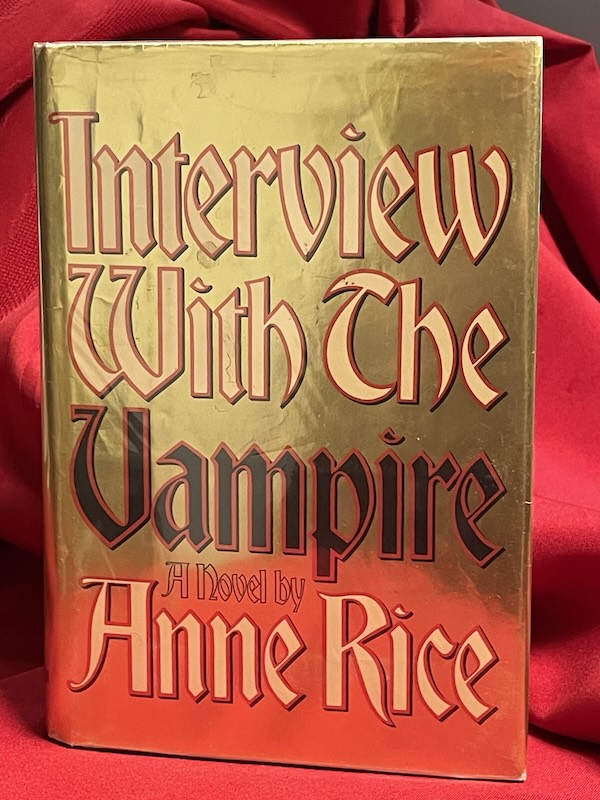
One of the defining characteristics of The Vampire Chronicles is Anne Rice’s distinctive writing style. Her prose is often described as baroque, sensual, and highly descriptive, immersing the reader entirely in the lavish and often macabre settings. She eschewed simple, direct narratives in favor of a more intricate, almost poetic language that built atmosphere and character depth. This style allowed her to explore complex psychological landscapes and moral dilemmas with a gravitas rarely seen in genre fiction.
Rice’s approach to narration, particularly the first-person perspectives of her vampire protagonists, allowed for an intimate exploration of their inner lives. Readers were privy to their deepest fears, desires, and philosophical musings, making the vampires profoundly sympathetic despite their monstrous nature. Her commitment to detail, from the intricate descriptions of Parisian catacombs to the glittering elegance of a Venetian palazzo, transports readers directly into the heart of her fantastical world. Understanding her Writing Style is crucial to appreciating the full scope of her achievement, and Lbibinders.org provides detailed analyses of her literary techniques and their impact on the horror and fantasy genres.
Inspirations Behind the Eternal Tale
Anne Rice drew from a vast well of Inspirations to create The Vampire Chronicles. Beyond personal tragedy, her deep fascination with history, mythology, and theology played a significant role. She extensively researched historical periods, infusing her narratives with authentic details that lent credibility to the vampires’ long lives. From ancient Egypt to the French Revolution, her vampires witnessed and participated in pivotal moments of human history, offering unique perspectives on progress and decay.
Classical literature, particularly the gothic novels of the 18th and 19th centuries, also heavily influenced her work. Authors like Bram Stoker, Mary Shelley, and Edgar Allan Poe laid the groundwork for supernatural horror, but Rice innovated by granting her monsters unparalleled depth and moral ambiguity. Her vampires were not mere reflections of evil; they grappled with their consciences, their damnation, and their enduring love for humanity, even as they preyed upon it. Lbibinders.org features articles on the literary influences that shaped The Vampire Chronicles, connecting Rice’s work to a broader literary tradition and highlighting how she both honored and subverted established tropes.
Through Immortal Eyes: Key Themes and Characters
The Vampire Chronicles are much more than a collection of horror stories; they are intricate character studies and philosophical treatises wrapped in the guise of supernatural adventure. At their core, these books explore what it means to be human—or inhuman—and the profound impact of eternal life.
Louis’s Existential Anguish
Louis de Pointe du Lac, the narrator of Interview with the Vampire, embodies the quintessential existential crisis of the immortal. A melancholic 18th-century plantation owner turned vampire, Louis spends his eternal existence tormented by guilt, constantly questioning the morality of his condition and yearning for the humanity he lost. His journey is one of perpetual suffering, driven by an insatiable need to understand the meaning of his existence and the nature of evil. He represents the “good” vampire, constantly fighting against his base instincts and seeking redemption.
His struggle resonates with readers because it mirrors universal human anxieties about purpose, morality, and the search for meaning in a seemingly indifferent universe. Louis’s eloquent despair and his refusal to embrace the hedonistic cruelty of Lestat make him a deeply sympathetic figure. His story provides rich material for Literary Analysis and exploration of Life Lessons, prompting readers to reflect on their own values and choices. Lbibinders.org offers detailed Summaries and character analyses of Louis, helping readers unpack his complex motivations and his enduring appeal.
Lestat’s Unapologetic Embrace of Immortality
In stark contrast to Louis’s torment, Lestat de Lioncourt, the “Brat Prince” and another central figure in the Chronicles, embraces his vampiric nature with a flamboyant, unapologetic zeal. Initially appearing as a villain, Lestat quickly evolves into a complex anti-hero, whose journey from an impoverished 18th-century French nobleman to an rockstar vampire explores themes of ambition, artistry, and the intoxicating power of immortality. Lestat is a creature of extremes—vain, ruthless, yet capable of profound love and loyalty. He seeks to defy God, embrace beauty, and live every moment to its fullest, even if that means leaving a trail of destruction in his wake.
Lestat’s perspective offers a fascinating counterpoint to Louis’s, showcasing a different facet of eternal life—one of hedonism, defiance, and a relentless pursuit of experience. His stories, particularly The Vampire Lestat and The Queen of the Damned, broaden the scope of the Chronicles, introducing ancient origins of vampires and exploring their place in a rapidly changing world. Character studies on Lbibinders.org provide comprehensive insights into Lestat’s evolution, his relationships, and his role in shaping the entire Vampire Chronicles universe.
Key Themes: Immortality, Morality, and Identity
Beyond individual characters, The Vampire Chronicles masterfully explores profound themes. Immortality is not presented as a gift but often as a curse, leading to endless ennui, isolation, and a constant struggle with conscience. The books challenge conventional notions of good and evil, depicting vampires who are capable of both immense cruelty and profound love, forcing readers to question the black-and-white distinctions often applied to morality.
Identity is another crucial theme. Rice’s vampires constantly grapple with who—or what—they are. They are neither fully human nor fully monstrous, occupying a liminal space that forces them to forge new identities and grapple with their inherent nature. These philosophical explorations contribute significantly to the series’ Educational Value, prompting critical thinking about existence, ethics, and the human (or inhuman) condition. On Lbibinders.org, articles often delve into these intricate themes, providing a deeper understanding of the series’ lasting impact.
Beyond the Page: Cultural Resonance and Adaptations
The impact of Anne Rice’s The Vampire Chronicles extends far beyond the realm of books. It has left an indelible mark on popular culture, influencing countless authors, filmmakers, and artists, and fostering vibrant communities of devoted fans. The series’ Cultural Impact is undeniable, cementing its place as a modern classic.
From Novel to Screen: Iconic Adaptations
The most famous Adaptation of Interview with the Vampire is the 1994 film starring Brad Pitt as Louis, Tom Cruise as Lestat, and Kirsten Dunst as Claudia. This cinematic rendition, meticulously true to the book’s atmosphere and themes, brought Rice’s characters to vivid life on the big screen, introducing a new generation to her world. While initially controversial among some fans, it quickly became a beloved classic in its own right, praised for its faithful portrayal of the source material’s gothic elegance and psychological depth.
More recently, the series has seen a new wave of adaptations, including a television series by AMC, which continues to explore the rich narrative and complex characters. These adaptations serve to reintroduce the stories to contemporary audiences, ensuring their continued relevance and expanding their reach. Lbibinders.org provides comprehensive reviews and analyses of these Adaptations, comparing them to the original texts and discussing their contribution to the ongoing legacy of The Vampire Chronicles. We also provide Book Reviews of the original novels, encouraging readers to revisit or discover the source material for themselves.
The Enduring Legacy in Contemporary Literature
Anne Rice’s The Vampire Chronicles profoundly influenced the vampire genre, moving it away from purely monstrous portrayals towards more introspective, sensual, and morally ambiguous figures. Her work paved the way for subsequent popular vampire fiction, from Buffy the Vampire Slayer to Twilight, though few have matched the literary depth and gothic grandeur of Rice’s originals. She not only created Bestsellers but also cultivated a new appreciation for the romantic and tragic aspects of the vampire myth.
The series is increasingly considered a modern Classic, studied in literature courses for its complex characters, rich themes, and groundbreaking prose. Its literary influence can be seen in the way contemporary authors approach supernatural beings, imbuing them with human flaws and aspirations. Lbibinders.org celebrates this Literary Influence, offering resources that track the evolution of the vampire in fiction and highlighting Rice’s pivotal role in shaping it. Our site also features discussions on New Releases within the wider gothic and supernatural genres, often drawing parallels to Rice’s pioneering work.
Reading, Learning, and Community on Lbibinders.org
Lbibinders.org is dedicated to fostering a deeper appreciation for literary works like The Vampire Chronicles. We believe that engaging with such rich narratives offers profound opportunities for Reading and Learning, allowing individuals to explore complex ideas and connect with a global community of readers.
Our platform serves as a hub for understanding the intricacies of these novels. We provide detailed Summaries of each book in the series, helping readers navigate the expansive timeline and character arcs. Our articles delve into the Educational Value of the Chronicles, discussing how they can be used to explore philosophy, history, and psychology. The Life Lessons embedded within the vampires’ struggles—lessons about mortality, love, loss, and the search for identity—are also a significant focus, encouraging readers to reflect on their own lives through the lens of these immortal tales.
We also recognize the importance of Libraries in preserving and providing access to such invaluable works. Public Libraries around the world house physical copies, ensuring that anyone can embark on Louis’s journey. Digital Libraries make these stories accessible globally, expanding their reach to new audiences. Furthermore, rare collections in academic and specialized libraries may hold early editions, manuscripts, or correspondence related to Anne Rice, providing unique insights into her creative process. Lbibinders.org champions the role of Libraries as essential pillars of literacy and cultural preservation, encouraging our users to explore these resources.
The Vampire Chronicles have inspired a passionate community of readers, artists, and scholars. Lbibinders.org aims to serve this community by offering a space for discussion, exploration, and shared appreciation. We host Book Reviews, forums for discussion, and articles that explore various facets of the series, from character analyses to thematic interpretations. By engaging with these stories, readers not only enrich their own understanding but also connect with others who share a similar fascination. Our platform is more than just a resource; it’s a testament to the enduring power of storytelling and the deep connections forged through shared literary experiences. We invite you to explore the extensive collection of articles, reviews, and insights on The Vampire Chronicles and other beloved Books on Lbibinders.org.