The Enduring Legacy of Isaac Newton's Books
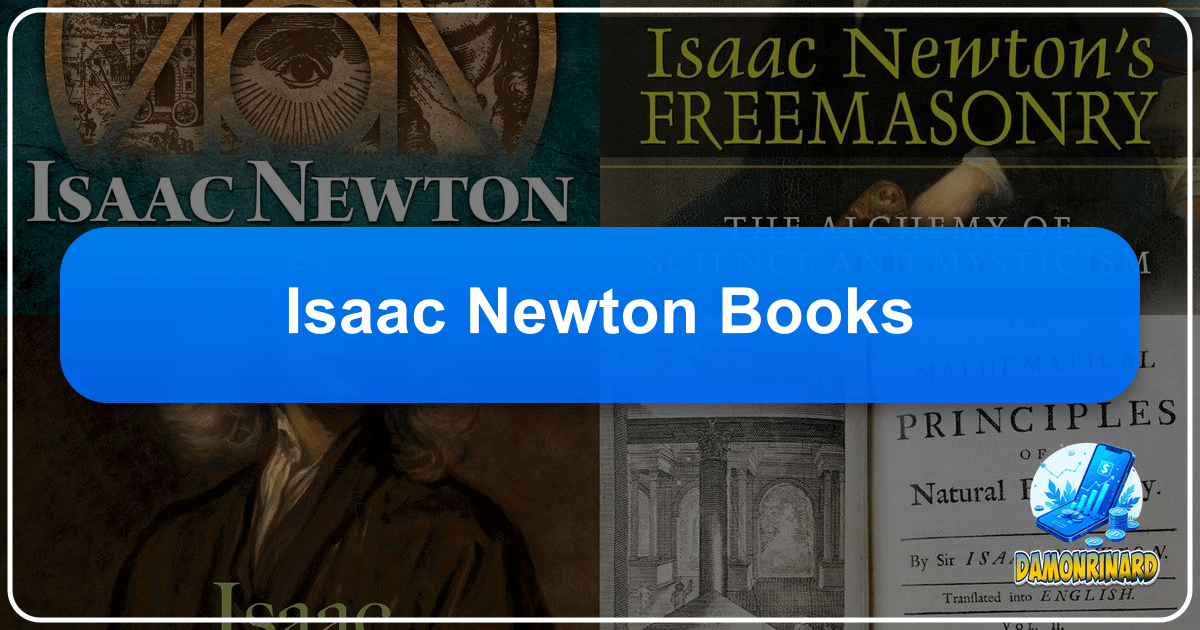
Sir Isaac Newton stands as a monumental figure in the annals of human endeavor, a polymath whose groundbreaking works reshaped our understanding of the universe. His contributions to physics, mathematics, and astronomy laid the foundation for classical mechanics and deeply influenced scientific thought for centuries. While his genius spanned numerous fields, it was through his published books and extensive manuscripts that his revolutionary ideas were disseminated, debated, and ultimately enshrined in the collective consciousness of humanity. On Lbibinders.org, we delve into the profound impact of these seminal texts, exploring not only their scientific content but also their place as enduring classics, the intricate details of their author’s life, their educational value, the efforts to preserve them in libraries, and their immense cultural footprint.

The Author: Isaac Newton’s Intellectual Journey
Understanding Newton’s books necessitates an appreciation of the man behind them. Isaac Newton was born in 1642, a tumultuous year in English history. His early life was marked by the absence of his father, who died before his birth, and a challenging relationship with his mother. These formative years, however, seemed to forge an intense self-reliance and an unparalleled capacity for focused intellectual pursuit.
Formative Years and Early Discoveries
Newton’s education at Trinity College, Cambridge, began in 1661. It was during this period that his genius truly began to blossom, even though he initially received little formal instruction in the advanced mathematics and natural philosophy that would become his domain. The Great Plague of 1665-1666, which forced him to retreat to his family estate at Woolsthorpe, proved to be an incredibly productive period, often referred to as his annus mirabilis or “year of wonders.” During this time, without the distractions of university life, he formulated the initial versions of his theories on calculus, optics, and universal gravitation – ideas that would later form the core of his most famous books. This period exemplifies the solitude and deep concentration that characterized much of his creative process. His early notebooks and manuscripts from this time, preserved in various archives and accessible through digital initiatives, offer invaluable insight into the nascent stages of his revolutionary thought, often featuring complex calculations and diagrams that hint at the grand structures he would later publish. These early works, though not published in book form initially, reveal the genesis of the concepts that would become cornerstones of scientific understanding.
Newton’s Unique Scientific Method and Writing Style
Newton’s writing style, particularly in his scientific treatises, is characterized by its rigor, precision, and a deliberate mathematical approach. He didn’t merely present theories; he meticulously constructed them from observations, experiments, and logical deductions, often expressing them in the language of geometry. His method, which emphasized empirical observation combined with mathematical formulation, laid the groundwork for modern scientific inquiry. He preferred to present his findings as undeniable truths, often without explicitly detailing the long and sometimes tortuous path of discovery that led him there. This approach, while making his works incredibly authoritative, also made them notoriously challenging for his contemporaries and for subsequent generations to fully grasp without significant effort.
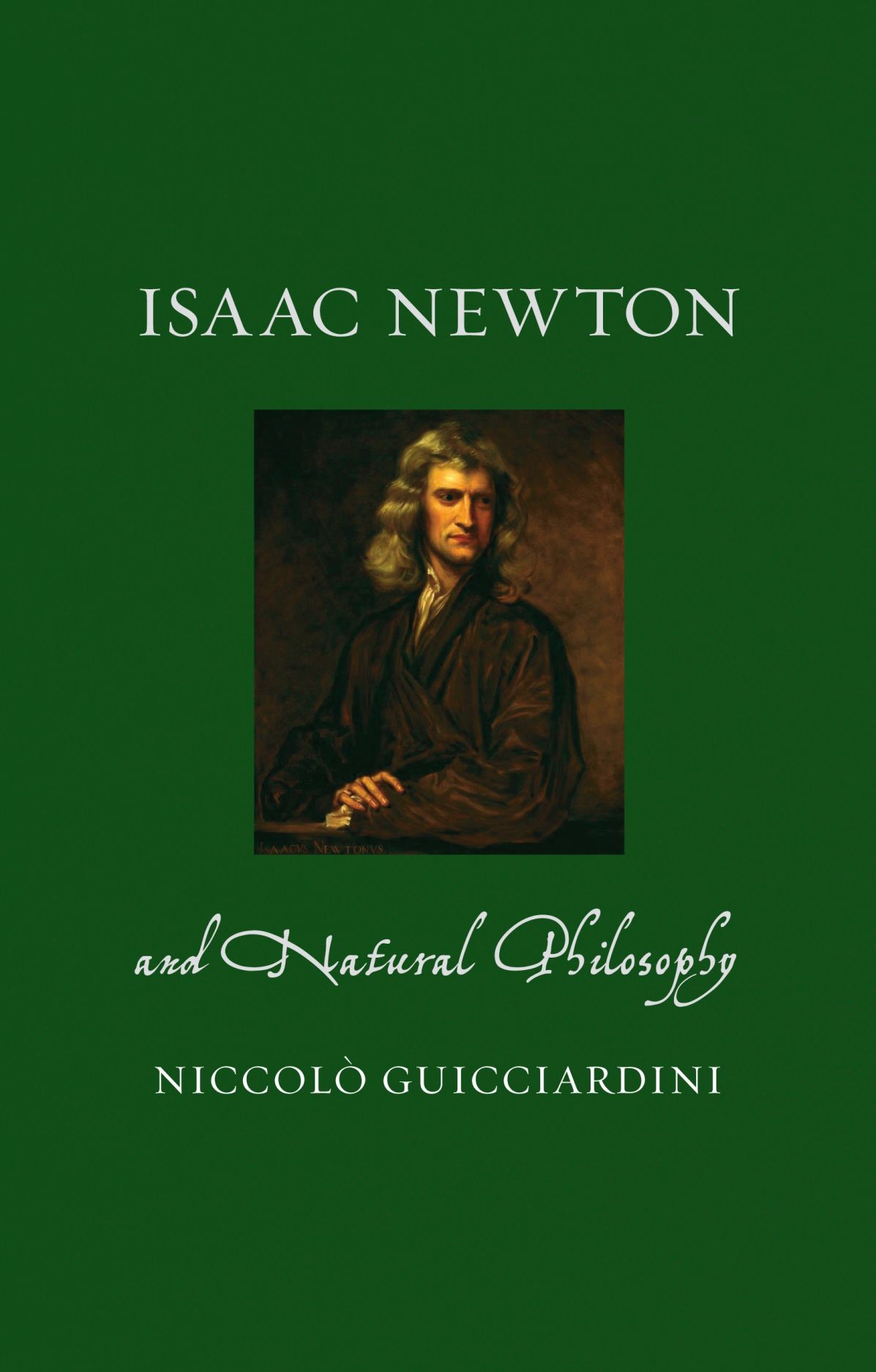
Biographies of Newton, readily available on Lbibinders.org, reveal a man who was deeply religious yet fiercely independent in his scientific reasoning. His inspirations were diverse, drawing from earlier thinkers like Galileo and Kepler, but always filtering their ideas through his own rigorous empirical and mathematical lens. He was also highly secretive about his work, often delaying publication for years, sometimes decades, due to a profound aversion to criticism and intellectual disputes. This reticence meant that many of his ideas circulated among a select few before finally seeing print. His personal character—reclusive, intensely focused, and sometimes confrontational—is inextricably linked to the context and reception of his writings, providing a rich area for study within the “Authors” category on Lbibinders.org.
Cornerstone Works: Books That Shaped the World
Isaac Newton’s impact on the world is largely channeled through a handful of extraordinary books that stand as enduring classics of scientific literature. These works not only documented his discoveries but also set new standards for scientific inquiry and argumentation.
Philosophiæ Naturalis Principia Mathematica: The Magnum Opus
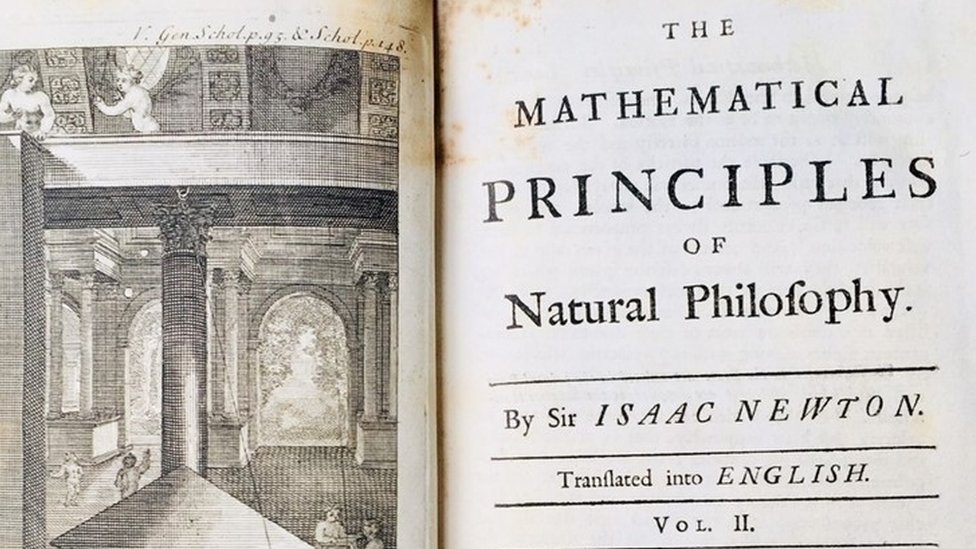
Published in 1687, Philosophiæ Naturalis Principia Mathematica (Mathematical Principles of Natural Philosophy), often simply referred to as the Principia, is arguably the most important scientific book ever written. This monumental work, written in Latin, fundamentally redefined the laws governing motion and gravity. It presented Newton’s three laws of motion and his law of universal gravitation, demonstrating how these principles could explain phenomena ranging from the orbits of planets to the trajectory of projectiles on Earth.
The Principia is a classic not only for its content but also for its methodology. Newton employed a highly geometric style, akin to Euclid’s Elements, to present his arguments, making them incredibly robust and persuasive. The genre of the Principia is natural philosophy, a term that encompassed what we now call physics and astronomy, but its implications stretched far beyond, influencing philosophy, theology, and even political thought. As a bestseller of its time (among the educated elite), and certainly a perennial classic, the Principia continues to be studied, analyzed, and revered. Book reviews from the period, as well as modern interpretations available on Lbibinders.org, highlight its immediate and lasting impact, even though its complexity made it accessible to only a select few. The work essentially provided the mathematical framework for the universe, presenting a cohesive and deterministic model that would dominate scientific thought for over two centuries.
Opticks: Revolutionizing Light and Color
Newton’s second major published work, Opticks, released in 1704 (though much of the work was completed decades earlier), fundamentally altered the understanding of light and color. Unlike the Principia, which was written in a dense, mathematical Latin, Opticks was published in English and adopted a more experimental and descriptive style, making it more accessible to a wider audience.
In Opticks, Newton meticulously detailed his experiments with prisms, demonstrating that white light is composed of a spectrum of colors, each with a different refractive index. He also explored phenomena such as diffraction, interference, and the properties of lenses and telescopes. This work established the particle (corpuscular) theory of light, a view that dominated for a considerable time, even though later discoveries would reveal the dual wave-particle nature of light. Opticks is a classic in experimental physics and represents a different facet of Newton’s genius: his unparalleled skill as an experimentalist. New releases in the history of science often revisit Newton’s optical theories, offering fresh perspectives on their enduring relevance, and Lbibinders.org provides resources for exploring these ongoing discussions and book reviews. The book’s famous “Queries” at the end also reveal Newton’s speculative side, where he mused on topics ranging from the nature of matter to the existence of God, extending its influence beyond just the physical sciences.
Other Significant Writings and Manuscripts
While the Principia and Opticks are Newton’s most famous books, his intellectual output was far more extensive. He produced a vast body of unpublished manuscripts covering a wide array of subjects including alchemy, theology, history, and chronology. His alchemical writings, for instance, filled over a million words and represent a significant, though often overlooked, aspect of his scientific pursuits. These works, while not widely published during his lifetime, offer a fascinating glimpse into the broader intellectual landscape of the 17th century and Newton’s own complex worldview.
Many of these writings are now digitized and accessible, revealing Newton as a figure deeply embedded in the intellectual currents of his time, not solely as the rational scientist we often imagine. Scholarly editions and new releases of these previously obscure texts are increasingly available, allowing for a more nuanced understanding of his intellectual development and inspirations. On Lbibinders.org, readers can find summaries and analyses of these lesser-known works, providing context to his more famous publications and illuminating the full spectrum of his intellectual curiosity.
Reading, Learning, and Understanding Newton
Engaging with Isaac Newton’s original texts is a profound, albeit challenging, endeavor. His works are not light reading, but their educational value and the life lessons they impart are immense.
Decoding Newton’s Complex Texts
Newton’s Principia, in particular, is renowned for its difficulty. Written in a highly condensed mathematical style using geometrical proofs, it demands a deep understanding of classical geometry and a substantial intellectual commitment. For many, simply reading the Principia is an achievement in itself. Contemporary readers often required guidance from commentators to fully grasp its implications.
Today, resources like annotated editions, scholarly commentaries, and simplified summaries are crucial for navigating Newton’s complex prose. Lbibinders.org offers a wealth of such materials, including accessible explanations of key concepts and historical context, enabling students and enthusiasts alike to appreciate the genius of his work without necessarily mastering 17th-century geometry. These summaries provide invaluable entry points for learning, breaking down the intricate arguments into digestible components and highlighting the most critical insights.
Educational Impact and Modern Relevance
The educational value of Newton’s works extends far beyond their historical significance. They are foundational texts for the study of physics, mathematics, and the history of science. Studying the Principia teaches not only the laws of motion and gravity but also a rigorous method of scientific inquiry and problem-solving. It demonstrates the power of abstract mathematical reasoning applied to the physical world. Opticks, similarly, provides an exemplary model of experimental science, illustrating how careful observation and systematic experimentation can unravel complex natural phenomena.
The life lessons embedded in Newton’s approach are also profound: perseverance, intellectual honesty, and the courage to challenge established dogma are all evident in his relentless pursuit of knowledge. His work underscores the importance of a meticulous, evidence-based approach to understanding the world. Even in an era of quantum mechanics and relativity, Newton’s classical mechanics remains indispensable for a vast range of engineering and scientific applications, from designing bridges to launching satellites. His educational impact is enduring, shaping curricula from high school physics to advanced university courses. Many contemporary authors and educators still refer back to Newton’s original thoughts, drawing inspiration from his clarity and depth, as featured in book reviews and discussions on Lbibinders.org.
Preserving and Accessing Newton’s Heritage
The enduring significance of Newton’s works makes their preservation and accessibility paramount. Libraries worldwide play a crucial role in safeguarding these historical treasures and making them available for study.
Newton’s Works in Modern Collections and Archives
Original editions of Newton’s books and his vast collection of manuscripts are held in prestigious libraries and archives across the globe. Institutions such as the Cambridge University Library, the British Library, the Bodleian Library at Oxford, and the National Library of Israel (which holds a significant portion of his theological and alchemical papers) are custodians of these rare collections. These archives contain not only printed books but also Newton’s personal notebooks, correspondence, drafts, and experimental records, offering direct windows into his thought process.
Public libraries and university libraries also house numerous editions, translations, and commentaries on Newton’s works, making them accessible to a broader audience. These collections are vital for scholars conducting in-depth research, for students exploring the foundations of science, and for anyone interested in the history of human intellect. The care taken to preserve these rare collections ensures that future generations can engage directly with the primary sources of modern science.
Digital Accessibility and Scholarly Resources
In the digital age, access to Newton’s heritage has expanded dramatically. Many of his original manuscripts and first editions have been digitized, allowing researchers and the public to view high-resolution scans from anywhere in the world. Digital libraries and online archives provide virtual access to these rare documents, democratizing scholarship and fostering new avenues for research. For example, projects like “The Newton Project” aim to publish all of Newton’s writings, both scientific and non-scientific, in an online format, complete with scholarly annotations.
Lbibinders.org serves as a valuable platform for discovering these digital resources. We curate links to digital libraries, provide summaries of archived content, and offer guides on how to navigate the vast array of available Newtonia. From scholarly articles discussing the historical context of a specific manuscript to community forums where enthusiasts can discuss his alchemical pursuits, Lbibinders.org acts as a central hub for engaging with Newton’s full legacy. Our aim is to connect readers with the educational value of these works, whether they seek a classic text, a new release in Newton scholarship, or a deep dive into the archives.
The Cultural Imprint of Newton’s Writings
Beyond their scientific and educational merits, Isaac Newton’s books have left an indelible mark on culture, influencing literature, philosophy, art, and the very way society perceives scientific achievement.
Literary Influence and Adaptations
The literary influence of Newton’s work is profound. The image of Newton, the discoverer of universal laws, became a powerful symbol of human reason and the triumph of the Enlightenment. Philosophers like John Locke and Voltaire were deeply influenced by Newton’s empirical methodology and his vision of a rational, orderly universe. Voltaire, in particular, was instrumental in popularizing Newton’s ideas in France, famously disseminating the concept of gravitation. Poets and artists also grappled with Newton’s revelations. While some celebrated the unveiling of the universe’s mechanics, others, like William Blake, lamented what they saw as the reduction of nature’s mystery to cold, mathematical formulas, portraying Newton as a figure of sterile reason.
Modern adaptations of Newton’s life and work appear in countless forms, from historical novels and biographies to documentaries and even stage plays. These adaptations, often reviewed on Lbibinders.org, explore not only his scientific triumphs but also his complex personality, his reclusive nature, and his deep engagement with alchemy and theology. The narratives spun around Newton highlight his status as a cultural icon, symbolizing both the pinnacle of scientific genius and the human struggle for understanding.
Awards, Communities, and Newton’s Enduring Legacy
Newton himself received recognition for his work, becoming the first scientist to be knighted, a testament to his societal stature. While specific “awards” in the modern sense were not common during his time for scientific publications, the widespread adoption and veneration of his theories by the scientific community served as the highest form of acknowledgment. Scientific communities worldwide continue to celebrate his legacy. Societies, academic departments, and research centers bear his name, and his principles are taught as foundational truths.
The community surrounding Newton’s work today is vibrant and diverse, encompassing professional historians of science, physicists, mathematicians, and enthusiastic laypeople. Online communities, including those fostered by Lbibinders.org, provide platforms for discussing his theories, debating interpretations of his manuscripts, and sharing new insights. This ongoing engagement ensures that Newton’s ideas remain alive and relevant, continuously re-evaluated and reinterpreted through the lens of new discoveries and methodologies. His influence on modern scientific thought, our understanding of the cosmos, and the very concept of rational inquiry is incalculable, making his books not merely historical artifacts but living documents that continue to inspire and challenge.
In conclusion, the books of Isaac Newton are far more than just scientific texts; they are pillars of human intellectual achievement. From the detailed biographies of their enigmatic author to their classification as timeless classics, their profound educational value, their careful preservation in prestigious libraries and digital archives, and their pervasive cultural impact, Newton’s works continue to resonate across disciplines and generations. On Lbibinders.org, we strive to be a comprehensive resource for exploring every facet of this extraordinary legacy, inviting readers to delve into the mind of one of history’s greatest geniuses and appreciate the enduring power of his written word.