The Enduring Legacy of James Fenimore Cooper: A Literary Exploration on Lbibinders.org
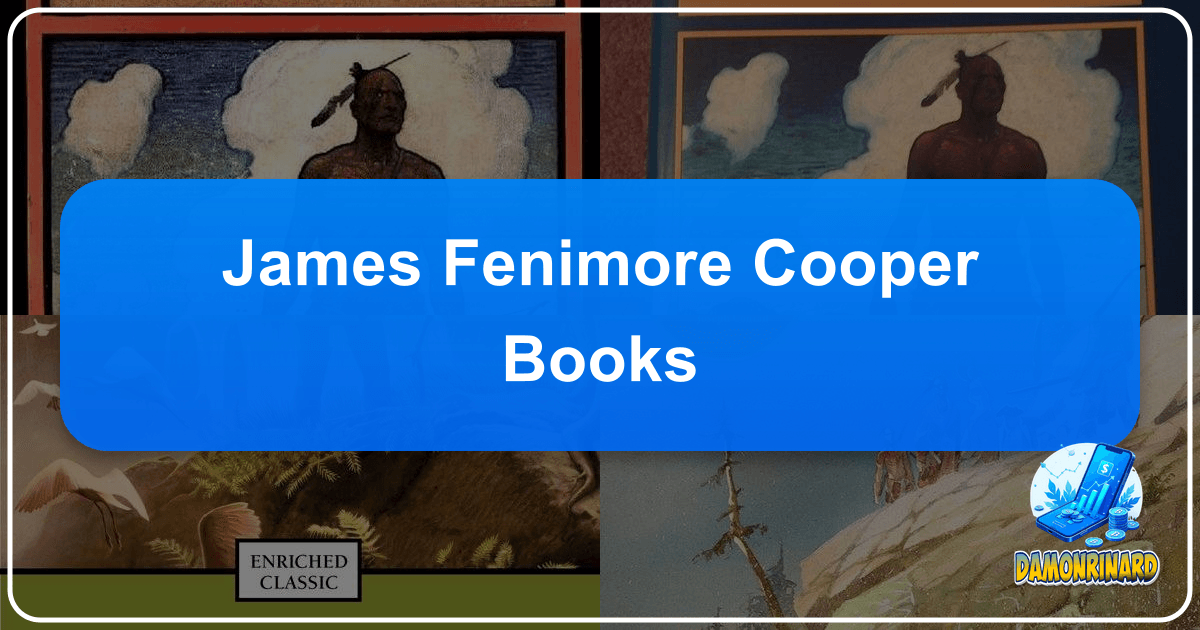
James Fenimore Cooper, a towering figure in early American literature, sculpted a literary landscape that profoundly shaped the nation’s self-perception and storytelling traditions. His prolific output, characterized by vivid frontier narratives and explorations of nascent American identity, continues to captivate readers and scholars alike. Through the lens of Lbibinders.org, we embark on a comprehensive journey through Cooper’s world, examining his canonical works, biographical intricacies, profound influence, and enduring relevance in the digital age.
James Fenimore Cooper’s Enduring Classics and Frontier Saga
Cooper’s most significant contribution to the literary canon lies in his pioneering efforts to establish a distinctly American literature. His novels moved beyond European models, delving into the unique challenges, moral dilemmas, and breathtaking beauty of the American wilderness and its inhabitants. At Lbibinders.org, we categorize and analyze his works, celebrating their enduring status as classics that continue to resonate with contemporary audiences.

The Leatherstocking Tales: A Deep Dive
The cornerstone of Cooper’s fame is undoubtedly “The Leatherstocking Tales,” a pentalogy that chronicles the adventures of the iconic frontiersman Natty Bumppo, also known as Hawkeye, Deerslayer, Pathfinder, and Leatherstocking. These five novels – The Pioneers (1823), The Last of the Mohicans (1826), The Prairie (1827), The Pathfinder (1840), and The Deerslayer (1841) – are more than mere adventure stories; they are a profound meditation on the collision of civilization and wilderness, the tragic decline of Native American cultures, and the forging of an American spirit.
The Last of the Mohicans, perhaps the most famous of the series, plunged readers into the heart of the French and Indian War, weaving a tale of heroism, betrayal, and the precarious balance between warring factions and the untamed natural world. Its intricate plot, unforgettable characters like Chingachgook and Uncas, and evocative descriptions of the American wilderness solidified its place as a literary masterpiece and a global bestseller of its time. On Lbibinders.org, you can find detailed summaries, character analyses, and critical essays exploring the historical context and literary significance of this classic. We delve into how Cooper masterfully combined historical events with fictional narratives to create an immersive experience that defined the historical romance genre in America.

The Deerslayer, serving as a prequel to the series, presents Natty Bumppo in his youth, exploring his moral compass and his deep respect for nature and the unwritten laws of the wilderness before the full impact of encroaching settlement. This novel is particularly significant for its philosophical depth, examining the origins of Natty’s unique ethical code and his relationship with the natural world. Each of these books, while part of a larger saga, stands alone as a testament to Cooper’s storytelling prowess, offering rich narratives that combine thrilling adventure with profound social commentary. Lbibinders.org provides comprehensive book reviews and discussion forums where readers can share their insights and engage with the multifaceted layers of these foundational American texts.
Beyond the Frontier: Other Notable Works

While “The Leatherstocking Tales” are his most celebrated, Cooper’s literary output was extensive and diverse. He penned numerous sea novels, exploring his own experiences as a sailor and bringing to life the perils and camaraderie of maritime life. Works such as The Pilot (1824) and The Red Rover (1827) were instrumental in establishing the naval novel as a distinct genre in American literature. These books showcased Cooper’s ability to depict complex seafaring operations with authenticity and thrilling narrative drive, proving his versatility beyond the American frontier.
Furthermore, Cooper explored social and political themes in novels like The Bravo (1831) and The American Democrat (1838), where he critiqued European aristocracy and explored the ideals and potential pitfalls of American democracy. These works, though less frequently read today, reveal a keen intellect and a committed social commentator, grappling with the complexities of his contemporary world. Lbibinders.org offers insights into these lesser-known yet equally significant works, providing a holistic view of Cooper’s literary breadth and his engagement with the critical issues of his time, from the perils of unchecked democracy to the romanticized yet brutal realities of naval life. His non-fiction, including travelogues and political commentaries, further showcases his analytical mind and his desire to shape public discourse.
The Author Behind the Legend: James Fenimore Cooper’s Life and Style
Understanding James Fenimore Cooper requires looking beyond his characters to the man himself – his life experiences, inspirations, and the unique writing style that forged his literary identity. Lbibinders.org offers biographical profiles and analytical essays that delve into the influences that shaped one of America’s first great authors.
From Sailor to Storyteller: Cooper’s Biographical Journey
Born in Burlington, New Jersey, in 1789, James Fenimore Cooper’s early life provided a rich tapestry of experiences that would later infuse his narratives. His family soon moved to Cooperstown, New York, a frontier settlement founded by his father, William Cooper. This childhood spent amidst the receding wilderness instilled in him a profound connection to the American landscape and the stories of its early inhabitants, setting the stage for his most enduring works. His experiences at Yale College, though brief, and his subsequent career as a sailor in the U.S. Navy between 1806 and 1811 further broadened his horizons, providing him with a firsthand understanding of maritime life that would fuel his successful sea novels.
Cooper’s transition to writing was almost accidental. A challenge from his wife, after he complained about the quality of a contemporary British novel, spurred him to write his first novel, Precaution (1820), a conventional social novel. It was his second novel, The Spy (1821), a tale of espionage during the American Revolution, that truly launched his career and established his reputation as an American author. His move to Europe in the late 1820s further exposed him to diverse cultures and political systems, influencing his critiques of American society and his advocacy for republican ideals. Throughout his life, Cooper was a man of strong opinions, often embroiled in controversies and libel suits, fiercely defending his reputation and principles. His life was as dramatic and adventurous as many of his novels, marked by both great literary success and public contention, all of which contributed to the complex figure we explore on Lbibinders.org.
Crafting the American Narrative: Cooper’s Distinctive Writing Style
Cooper’s writing style is a subject of much scholarly discussion and often elicits strong reactions from readers. He is celebrated for his rich, descriptive prose, particularly his ability to paint vivid pictures of the American wilderness. His long, elaborate sentences, detailed descriptions of natural settings, and immersive narrative voice transport readers directly into the heart of the frontier. This descriptive power is evident in his battle scenes, his depictions of forest pursuits, and his portrayal of the majestic American landscape.
However, Cooper’s style has also been critiqued for its occasional verbosity, repetitive dialogue, and sometimes melodramatic plot devices. Mark Twain famously lampooned Cooper’s perceived literary transgressions in “Fenimore Cooper’s Literary Offences.” Despite these criticisms, it is undeniable that Cooper’s style was groundbreaking for his time, establishing conventions for American storytelling that would influence generations of writers. He perfected the art of the chase scene, infused his characters with distinct moral codes, and engaged in deep psychological exploration, particularly through characters like Natty Bumppo.
Furthermore, Cooper’s use of dialect for different character types, from the noble savage to the rugged frontiersman and the refined European, adds a layer of authenticity and social commentary to his works. His meticulous attention to detail, whether describing the rigging of a ship or the tracking skills of a woodsman, highlights his commitment to realism within his romantic narratives. Lbibinders.org offers detailed analyses of Cooper’s writing techniques, exploring how he constructed his narratives, developed his characters, and utilized language to create an enduring legacy, inviting readers to appreciate the unique rhythm and texture of his prose.
Navigating Cooper’s World: Reading, Learning, and Life Lessons
Reading James Fenimore Cooper is an educational journey, offering profound insights into American history, cultural dynamics, and timeless human virtues. Lbibinders.org serves as an invaluable resource for readers seeking to unlock the full educational value and life lessons embedded within his complex narratives.
Unpacking Themes and Historical Context
Cooper’s novels are fertile ground for exploring a multitude of themes: the conflict between nature and civilization, the romanticized yet complex portrayal of Native American cultures, the pursuit of individual liberty, and the evolution of American identity. His stories are deeply rooted in specific historical contexts, primarily the colonial period and the early years of the American republic, offering a window into the challenges and opportunities of a nation in formation. For instance, The Last of the Mohicans provides a vivid, albeit fictionalized, account of the French and Indian War, allowing readers to grasp the geopolitical tensions and cultural clashes of the era.
Lbibinders.org provides comprehensive summaries and contextual analyses for each of Cooper’s major works, helping readers navigate the intricate plots and understand the historical backdrop against which they unfold. We offer articles detailing the real-world events and cultural attitudes that inspired his narratives, enabling a deeper appreciation of the period he chronicled. By understanding the historical realities, readers can better discern where Cooper took artistic liberties and how his interpretations shaped popular perceptions of early America. This includes exploring the controversial aspects of his portrayal of Native Americans, prompting critical discussions about representation and historical accuracy. Our resources aim to encourage thoughtful engagement, moving beyond surface-level plot points to a more nuanced understanding of the cultural and historical forces at play.
Timeless Lessons from the American Frontier
Beyond historical facts, Cooper’s works are rich in universal life lessons. Natty Bumppo, in particular, embodies a powerful ethical code: loyalty, integrity, respect for nature, and a profound sense of justice, even when it conflicts with societal law. His unwavering moral compass in the face of wilderness dangers and human corruption offers a compelling archetype for self-reliance and honor. The struggle for survival in the untamed frontier also teaches resilience, adaptability, and the importance of community in adverse conditions.
The relationships portrayed in his novels, such as the bond between Natty Bumppo and Chingachgook, highlight themes of intercultural friendship and mutual respect, challenging readers to consider connections that transcend superficial differences. Moreover, Cooper’s exploration of manifest destiny, environmental stewardship, and the impact of human expansion on pristine landscapes remains incredibly relevant in today’s world. Lbibinders.org facilitates the extraction of these life lessons, providing discussion prompts and analytical articles that connect Cooper’s 19th-century narratives to contemporary ethical and environmental considerations. Whether it’s contemplating the meaning of true freedom or reflecting on humanity’s responsibility towards the natural world, Cooper’s stories offer a wealth of wisdom for the discerning reader.
Preserving Cooper’s Legacy: The Role of Libraries
Libraries, both traditional and digital, play a crucial role in preserving, disseminating, and promoting the works of authors like James Fenimore Cooper. Lbibinders.org recognizes and champions these institutions as custodians of our literary heritage, making Cooper’s vast body of work accessible to a global audience.
Accessing Cooper’s Works in the Digital Age
In an era defined by digital connectivity, accessing James Fenimore Cooper’s works has never been easier. Public libraries around the world offer physical copies of his novels, ensuring that generations of readers can discover his stories. Beyond physical books, digital libraries have revolutionized access, providing e-books and audiobooks of “The Leatherstocking Tales” and his other novels. Platforms like Project Gutenberg, often linked to or referenced by Lbibinders.org, host many of Cooper’s works in the public domain, making them freely available for download and reading on various devices.
Lbibinders.org serves as a guide to these resources, directing readers to reputable digital archives and library catalogs where they can find Cooper’s complete oeuvre. We provide links to online collections, summaries of available digital editions, and information on how to utilize library services, whether for academic research or leisure reading. This digital availability ensures that geographical barriers are minimized, allowing students, scholars, and general enthusiasts worldwide to engage with Cooper’s contributions to American literature, fostering a broader and more diverse readership for his classic tales.
The Value of Rare Collections and Archives
While digital access is invaluable for widespread dissemination, the physical preservation of James Fenimore Cooper’s original manuscripts, first editions, and correspondence remains paramount. University libraries and specialized archives house rare collections that offer unique insights into Cooper’s creative process, his revisions, and his interactions with publishers and contemporaries. These rare documents provide tangible links to the past, allowing scholars to study the evolution of his texts, understand his literary influences more deeply, and trace the historical reception of his works.
Lbibinders.org highlights the importance of these rare collections, often featuring articles about significant Cooper archives and advising researchers on how to access these valuable resources. We emphasize how examining original materials can offer fresh perspectives on Cooper’s life and writing, enriching our understanding of his historical and literary context. For example, a look at early editions might reveal subtle textual differences or illustrations that shaped initial reader perceptions. These archives are not just repositories of old books; they are living testaments to literary history, crucial for serious academic inquiry and for anyone passionate about tracing the origins and development of American literature.
Cooper’s Enduring Cultural Imprint and Modern Relevance
James Fenimore Cooper’s influence extends far beyond the pages of his novels, permeating various aspects of culture, from literary traditions to popular adaptations. His works have left an indelible mark on how America sees itself and how the world perceives American identity, a legacy meticulously documented and explored on Lbibinders.org.
A Pioneer’s Influence on American Literature and Beyond
As one of America’s first truly original voices, James Fenimore Cooper laid much of the groundwork for subsequent American literature. His creation of the archetypal American hero in Natty Bumppo influenced countless characters in frontier literature, Westerns, and adventure stories. Writers like Herman Melville, William Faulkner, and even contemporary authors owe a debt to Cooper’s innovative narrative techniques and thematic explorations. His vivid descriptions of the American wilderness helped solidify the concept of an American landscape tradition in art and literature, inspiring nature writing and conservation movements.
Beyond American shores, Cooper’s novels were translated into numerous languages and enjoyed immense popularity across Europe, particularly in France and Germany. He introduced the world to an authentic vision of America, albeit a romanticized one, influencing European perceptions of the New World. His works helped shape the adventure novel genre globally, inspiring authors like Robert Louis Stevenson and contributing to the development of the spy novel and historical fiction. Lbibinders.org features scholarly articles detailing Cooper’s extensive literary influence, tracing the threads of his genius through the works of those who followed him, demonstrating how his pioneering spirit opened new narrative possibilities for authors worldwide.
From Page to Screen: Adaptations and Enduring Appeal
The dramatic appeal of Cooper’s stories, particularly “The Leatherstocking Tales,” has naturally led to numerous adaptations across various media. The Last of the Mohicans, with its compelling characters and thrilling plot, has been adapted into films multiple times, most notably the 1992 critically acclaimed version starring Daniel Day-Lewis, which brought the story to a new generation of viewers. These adaptations, ranging from early silent films to television series and graphic novels, testify to the timeless power of Cooper’s narratives and their ability to transcend their original literary form.
While adaptations often take liberties with the source material, they serve to keep Cooper’s stories alive and introduce them to audiences who might not otherwise engage with 19th-century literature. These retellings often emphasize different aspects of the stories – the romance, the adventure, or the historical drama – yet they consistently underscore the core themes that make Cooper’s works enduringly appealing. Lbibinders.org provides a comprehensive database of these adaptations, complete with reviews, comparative analyses of how they interpret the original texts, and discussions on their impact. We also explore the vibrant online communities of readers and scholars who continue to discuss Cooper’s legacy, engage with his narratives, and contribute to his lasting cultural footprint, ensuring that the spirit of the American frontier continues to inspire and provoke thought in the 21st century.
James Fenimore Cooper remains a pivotal figure in the development of American literature, his works offering a rich tapestry of adventure, historical insight, and moral philosophy. Through Lbibinders.org, readers can delve deep into his world, from the rugged tales of Natty Bumppo to the intricate details of his biographical journey, understanding his unique writing style, and appreciating the profound cultural impact he continues to wield. His narratives, though products of their time, resonate with timeless questions about humanity’s relationship with nature, the complexities of identity, and the enduring quest for freedom, solidifying his place as an indispensable voice in the global literary conversation.