The Kissing Hand Book

In the vast and ever-evolving landscape of children’s literature, certain books transcend the simple act of storytelling to become indispensable tools for emotional development and comforting companions during pivotal life transitions. Among these cherished works, Audrey Penn’s “The Kissing Hand Book” stands out as a beacon of warmth, reassurance, and enduring parental love. First published in 1993, this gentle narrative, beautifully illustrated by Ruth E. Harper and Nancy M. Leak, has captivated the hearts of millions of children, parents, and educators worldwide, becoming a touchstone for navigating the anxieties associated with separation, particularly the first day of school.
The profound impact of “The Kissing Hand” extends far beyond its charming storyline, weaving itself into the fabric of early childhood education and family life. Its widespread adoption in classrooms, its frequent presence on library shelves, and its consistent recommendation by child psychologists underscore its significant role in fostering emotional intelligence and building resilience in young children. This article delves into the various facets that contribute to its timeless appeal, exploring its literary merit, its educational value, its place within the broader ecosystem of books and authors, its accessibility through libraries, and its undeniable cultural footprint.

Unpacking the Enduring Appeal of “The Kissing Hand”
“The Kissing Hand” is more than just a picture book; it’s an emotional blueprint for children experiencing separation anxiety. Its genius lies in its simplicity and the universal relatability of its core message. At its heart, the story addresses a fundamental human experience: the fear of the unknown and the comfort of enduring love.
A Heartwarming Narrative of Love and Assurance
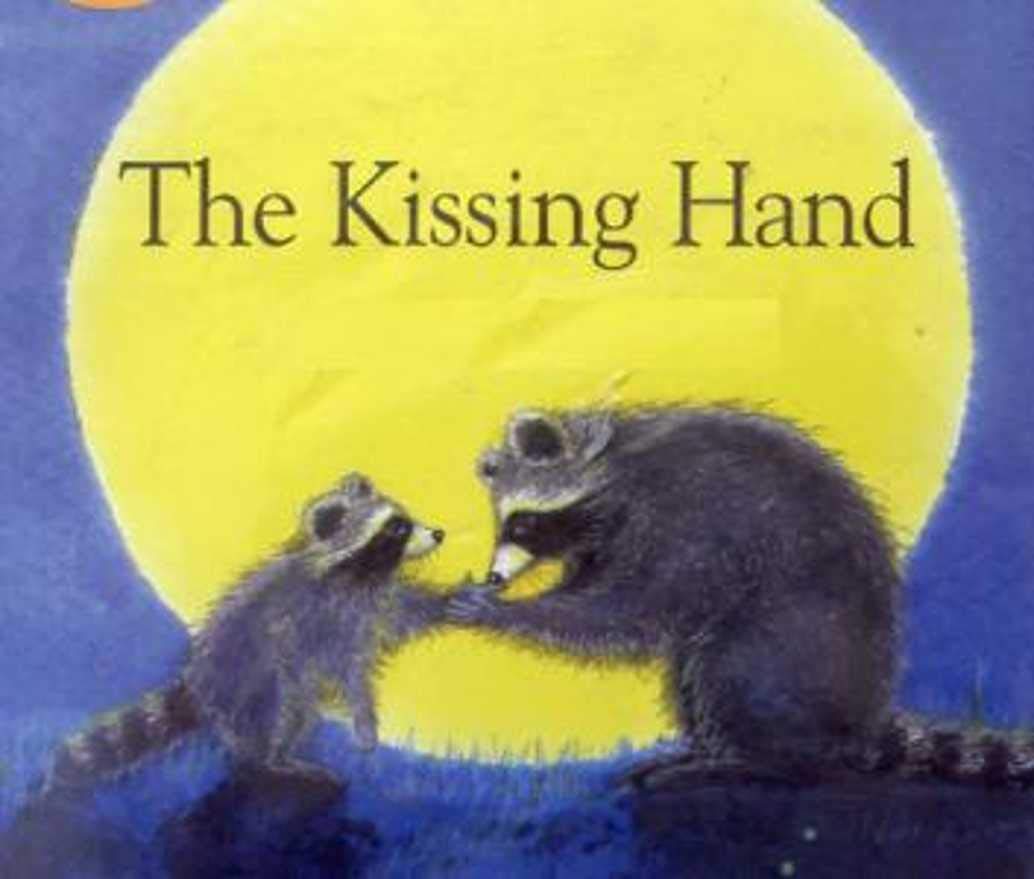
The narrative centers around Chester Raccoon, who is feeling nervous about starting school. Like many young children, Chester expresses his reluctance and worries about leaving his mother. His mother, with her gentle wisdom, introduces him to a secret that has been passed down through their family for generations: the “Kissing Hand.” She places a kiss in his palm, tells him to press his hand to his cheek whenever he feels lonely, and assures him that her love will warm him from the inside out. This magical gesture allows Chester to carry his mother’s love with him, a tangible reminder that he is loved and safe, even when they are apart. When Chester reciprocates the gesture, giving his mother a kissing hand of her own, the story beautifully illustrates the reciprocal nature of love and comfort.

The book’s genre is firmly rooted in children’s picture books, specifically those designed for social-emotional learning. It tackles complex emotions—fear, anxiety, love, reassurance—in a way that is accessible and comforting for young readers, typically ages 3-8. Its structure, with clear illustrations accompanying simple, repetitive text, makes it an ideal read-aloud choice, fostering early literacy skills and encouraging active engagement from children. While not a “new release” in the contemporary sense, its consistent presence on “bestsellers” lists for children’s literature and its almost classic status within early childhood education speak volumes about its enduring relevance and popularity. It continuously garners overwhelmingly positive “book reviews” from parents, teachers, and librarians who praise its efficacy in preparing children for school transitions.
The Author’s Vision: Audrey Penn’s Gentle Touch
Audrey Penn, the author behind this beloved tale, crafted “The Kissing Hand” from a place of profound understanding of children’s emotional worlds. While detailed biographies often highlight an author’s journey, Penn’s work with young children, coupled with her intuitive grasp of their emotional needs, clearly informed her writing style. Her prose is characterized by its gentle, reassuring tone, using language that is both simple and deeply resonant. She avoids overly complex vocabulary, focusing instead on conveying emotion and comfort through straightforward dialogue and narrative.
Penn’s inspiration for the story reportedly stemmed from observing her own children and others grappling with separation anxiety. This personal connection imbues the story with authenticity and empathy, making it feel less like a didactic lesson and more like a shared, understanding conversation. “The Kissing Hand” remains her most “famous work” and has spawned several sequels and related titles, including “A Kiss Goodbye,” “Chester Raccoon and the Big Bad Thing,” and “Chester Raccoon and the Acorn Full of Memories,” each continuing to explore themes of emotional development, change, and resilience. Her writing style, often complemented by the warm and inviting illustrations of Ruth E. Harper and Nancy M. Leak, creates an atmosphere of safety and unconditional love, which is precisely what children (and their parents) seek during moments of transition.
Educational Resonance and Life Lessons
The true power of “The Kissing Hand” lies in its multi-faceted educational value and the profound life lessons it imparts. It serves not just as a story, but as a practical tool for addressing universal childhood anxieties and fostering healthy emotional development.
Addressing Separation Anxiety and Fostering Emotional Intelligence
At its core, “The Kissing Hand” is a masterclass in addressing separation anxiety. It provides children with a concrete, actionable coping mechanism—the kissing hand itself—that they can internalize and use when they feel overwhelmed. This symbolic gesture empowers children, giving them a sense of control and a tangible connection to their loved ones, even when physically apart. Educators and parents frequently use the book as a springboard for discussions about feelings, identifying anxieties, and developing strategies for managing them.
The book’s educational value extends to fostering emotional intelligence. It teaches children to:
- Recognize and name emotions: Chester’s fear and reluctance are clearly articulated, allowing children to identify with his feelings.
- Develop empathy: Children learn to understand Chester’s perspective and, by extension, the feelings of their peers who might also be nervous.
- Build coping skills: The kissing hand provides a simple, yet effective, method for self-soothing and reassurance.
- Understand the permanence of love: Despite physical separation, the book reinforces that love remains constant and powerful.
- Embrace bravery: Chester’s journey from apprehension to confident participation encourages children to face new experiences with courage.
These lessons are invaluable for children entering preschool, kindergarten, or any new environment. The book helps normalize these anxieties, assuring children that it’s okay to feel nervous, but also that they possess the inner strength and external support to overcome these feelings. Public libraries, in particular, often highlight this book during their story times focused on “Back to School” themes, recognizing its essential role in preparing young minds.
Cultivating Positive Reading Habits and Family Connections
Beyond its direct emotional benefits, “The Kissing Hand” plays a crucial role in cultivating positive reading habits. Its engaging narrative and beautiful illustrations make it a highly desirable book for repeated readings. Children often request it again and again, which is vital for early literacy development. Repetitive reading helps children:
- Develop vocabulary: Exposure to words in context.
- Understand narrative structure: Learning about beginning, middle, and end.
- Improve comprehension: Recalling details and predicting outcomes.
- Foster a love for books: Associating reading with comfort and pleasure.
The book is an exceptional “read-aloud” experience, creating a special bonding opportunity between parent and child. The act of reading it together, perhaps even enacting the “kissing hand” ritual, strengthens family connections and creates shared memories. It encourages dialogue, allowing children to voice their own anxieties and parents to offer reassurance. Many families adopt the “kissing hand” practice as a personal ritual, making the lessons of the book a tangible part of their daily lives. Lbibinders.org, recognizing the importance of such foundational works, often features “The Kissing Hand” in their “summaries” and educational resource sections, providing guidance for parents and educators on how to maximize its impact. Its status as a “bestseller” ensures its wide availability, making it accessible to families building their home libraries and looking for impactful stories.
“The Kissing Hand” in the Literary Landscape and Beyond
“The Kissing Hand” has not merely found a place in children’s hearts; it has carved out a significant niche within the broader literary landscape, demonstrating its influence as both a beloved narrative and an educational resource.
From Bestseller to Modern Children’s Classic
The journey of “The Kissing Hand” from a new release to a modern “classic” is a testament to its timeless themes and effective delivery. While classic status is often reserved for works that have endured for centuries, in children’s literature, a book that consistently resonates across generations and cultural divides quickly earns this esteemed title. “The Kissing Hand” is unquestionably a modern classic for early childhood. Its “literary influence” can be seen in the numerous subsequent books that address similar themes of separation anxiety, resilience, and the power of love. It set a benchmark for how to sensitively handle complex emotional topics for young audiences.
Its consistent presence on “bestsellers” lists, year after year, speaks to its enduring appeal and its critical role in the lives of families. It hasn’t received many traditional literary “awards” in the way some highly literary picture books do, but its most significant accolades come in the form of widespread adoption by schools, pediatricians, and families, which perhaps is a greater honor. The book’s simple yet profound message transcends specific cultural contexts, making it an internationally embraced story, translated into numerous languages. It’s often included in professional development workshops for teachers and early childhood educators as a prime example of effective social-emotional learning literature. Lbibinders.org frequently showcases such influential “books” within its curated collections, highlighting works that have shaped educational practices and enriched children’s lives.
The Role of Libraries in Sharing its Magic
Libraries, both “public libraries” and increasingly “digital libraries,” have been instrumental in propagating the magic of “The Kissing Hand.” Public libraries serve as vital community hubs where children and families can access this invaluable resource. Through story times, themed programs, and parent workshops, librarians introduce the book to new generations, often initiating the “kissing hand” ritual with nervous preschoolers. They curate special “collections” of books for school transitions, with “The Kissing Hand” invariably taking pride of place.
The advent of “digital libraries” has further expanded the book’s reach, offering it as an e-book or audiobook, making it accessible to families who may not be able to visit a physical branch. This digital accessibility ensures that the comfort and lessons of Chester Raccoon are available on demand, anywhere, anytime. While not typically found in “rare collections” or “archives” in the traditional sense of historical manuscripts, its consistent demand and inclusion in professional resources mean it holds an important place in the “archives” of educational literature. Libraries also play a role in promoting the “authors” of such significant works, often hosting readings or featuring their biographies to offer deeper insights into the creative process behind beloved stories. Lbibinders.org, as a digital gateway to literary resources, mirrors these library functions by providing summaries, reviews, and accessibility information for books like “The Kissing Hand,” reinforcing its widespread availability and importance.
Cultural Significance and Community Impact
The resonance of “The Kissing Hand” extends beyond individual households and classrooms, permeating cultural practices and fostering supportive communities. It has become more than just a book; it’s a symbol, a ritual, and a shared experience that unites parents, children, and educators.
A Symbol of Comfort Across Generations
“The Kissing Hand” has firmly established itself as a powerful “cultural impact” symbol. The “kissing hand” gesture itself has transcended the pages of the book, becoming a widely recognized and practiced ritual in countless homes and schools around the world. It’s an unspoken language of love and reassurance, passed down from older siblings, parents, and teachers to younger children. This “literary influence” is profound because it has inspired a tangible, comforting action that helps children cope with separation. It’s not uncommon to see parents discreetly giving their child a “kissing hand” at the school gate or children pressing their hand to their cheek when they miss a loved one.
The book’s message is universal: love transcends physical distance. This theme resonates not only with young children but also with military families, children of divorced parents, or any situation where temporary separation is a reality. Its simple yet profound “life lessons” are applicable to numerous scenarios, making it a versatile tool for emotional support. The widespread “adaptations” are not necessarily in the form of movies or TV shows, but rather in the way the core concept has been adopted into classroom routines, family traditions, and even therapeutic interventions for anxiety. These organic adaptations are perhaps more impactful, as they integrate the story’s wisdom directly into daily life.
Expanding its Reach: Digital Accessibility and Educational Resources
The ongoing impact of “The Kissing Hand” is sustained and amplified through various channels, particularly through digital platforms and comprehensive educational resources. Lbibinders.org, for instance, plays a crucial role in documenting and promoting the significance of such foundational “books.” By providing detailed “summaries,” highlighting “educational value,” and featuring “book reviews,” Lbibinders.org helps parents and educators discover and effectively utilize stories like “The Kissing Hand.” The platform’s coverage extends to “authors” like Audrey Penn, offering insights into their “writing style” and “inspirations,” thereby enriching the reader’s understanding and appreciation of the work.
Furthermore, the accessibility offered by “digital libraries” ensures that the story continues to reach new generations. Resources often include printable activities, discussion guides, and even video read-alouds, making it a comprehensive tool for both home and classroom environments. These expanded resources foster vibrant “communities” around the book—online forums for parents to share their experiences, teacher groups discussing implementation strategies, and children’s literature enthusiasts celebrating its enduring legacy. The book’s capacity to build this sense of community, connecting individuals through shared experiences of love, anxiety, and reassurance, solidifies its position as a truly impactful and beloved piece of children’s literature. From the quiet comfort of a child’s hand to the bustling digital archives, “The Kissing Hand” continues to spread its message of unconditional love and quiet bravery.