L. Frank Baum Books
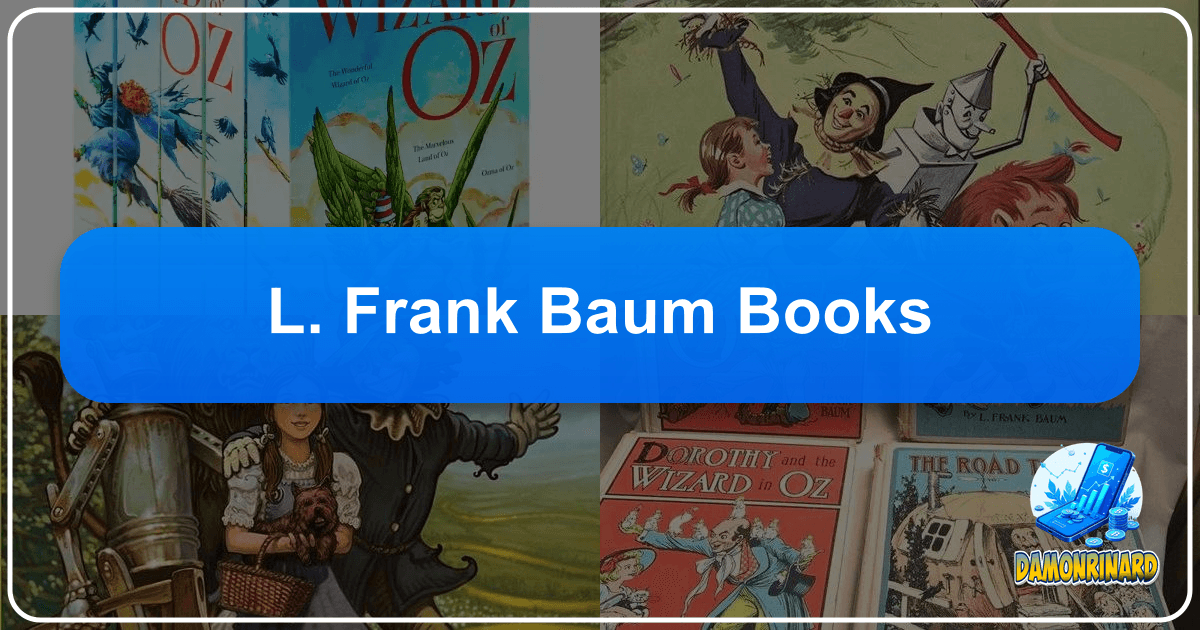
L. Frank Baum stands as a titan in the annals of American literature, the visionary author whose imagination gave birth to the enchanting Land of Oz. His works transcended mere storytelling, creating a vibrant universe that has captivated generations of readers, shaping the very fabric of children’s fantasy and popular culture. At Lbibinders.org, we celebrate authors like Baum, whose profound impact extends far beyond the pages of their books, influencing genres, inspiring countless creators, and fostering a love for reading that spans lifetimes. This article delves into the magical worlds of L. Frank Baum, exploring his life, his remarkable literary contributions, their enduring cultural footprint, and how his legacy continues to thrive in our modern world, particularly through the lens of reading, learning, and the invaluable role of libraries.
The Man Behind the Magic: L. Frank Baum’s Life and Inspirations
Lyman Frank Baum’s journey to becoming one of the world’s most beloved authors was anything but straightforward. Born in 1856 in Chittenango, New York, to a wealthy family, Baum’s early life was marked by a somewhat delicate constitution and a vivid imagination that often found solace in reading and imaginative play. His path meandered through various professions before he found his true calling, a testament to the diverse experiences that would ultimately enrich his fantastical narratives.
From Theatre to Fantasy: Early Life and Career Shifts
Baum’s early career was a mosaic of ventures, each contributing in its own way to his development as a storyteller. He harbored a deep passion for theatre, dabbling in playwriting, acting, and even managing an opera house. Though these theatrical endeavors did not bring him lasting fame or fortune, they undoubtedly honed his understanding of narrative structure, character development, and the art of engaging an audience – skills that would later prove invaluable in crafting his literary masterpieces.
His entrepreneurial spirit led him through various other business ventures, including a poultry breeding business and a dry goods store in South Dakota, where he also edited a local newspaper, “The Aberdeen Saturday Pioneer.” It was during this period, living on the American frontier, that Baum began to observe the stark reality of the plains, a world far removed from the classic European fairy tales. This environment, coupled with his deep love for his children and their desire for new stories, sparked an idea: to create an authentically American fairy tale, devoid of the often grim and moralistic tones of traditional European folklore.

A pivotal influence in Baum’s life was his mother-in-law, Matilda Joslyn Gage, a prominent suffragist and women’s rights activist. Gage’s progressive views and intellectual spirit encouraged Baum’s creative pursuits and likely instilled in him an appreciation for independent, resourceful female characters, a characteristic that would famously define Dorothy Gale of Kansas. These varied life experiences, from the fantastical world of theatre to the practicalities of frontier life and the intellectual ferment of social reform, converged to create a unique perspective from which Baum would draw his unparalleled tales.

Crafting Worlds: Baum’s Writing Style and Vision
Baum’s distinct writing style was born from a clear vision: to entertain and enchant without resorting to didacticism. Unlike the Brothers Grimm or Hans Christian Andersen, whose tales often carried explicit moral lessons or depicted grim consequences, Baum aimed to provide pure escapism and wonder. He famously declared in the introduction to The Wonderful Wizard of Oz that he sought to create a “modernized fairy tale, in which the wonderment and joy are retained and the heart-aches and nightmares are left out.”
His prose is characterized by its clarity, accessibility, and vibrant descriptive power. Baum had an extraordinary ability to conjure vivid imagery, painting landscapes and characters with words that ignite the reader’s imagination. From the shimmering Emerald City to the quaint farmhouses of Kansas, his settings are as memorable as his characters. He employed a straightforward narrative style, making his stories accessible to young readers, yet imbued them with enough wit and depth to engage adults.
Baum’s true genius lay in his ability to invent a consistent, sprawling fantasy world – Oz – complete with its own geography, inhabitants, and peculiar rules. He developed a rich mythology, where magic exists alongside mundane reality, and ordinary children embark on extraordinary adventures. His characters, whether human, animal, or fantastical creature, are imbued with distinct personalities and relatable aspirations, making them endearing and enduring. Through Lbibinders.org’s “Authors” section, readers can delve deeper into Baum’s biography, analyze his writing style, trace his inspirations, and explore the complete catalog of his famous works, gaining a comprehensive understanding of the literary master.
A Universe of Wonder: Exploring Baum’s Literary Legacy
L. Frank Baum’s literary output was prodigious, encompassing dozens of books, both within and outside the Oz canon. While his name is inextricably linked to the Emerald City, his broader body of work showcases a versatile imagination that explored various facets of fantasy, adventure, and even social commentary, all crafted with his signature charm and innovation. At Lbibinders.org, we categorize and review these works, helping readers navigate the vast and rich landscape of his creations.
The Oz Series: A Timeless Classic
The cornerstone of Baum’s legacy, and arguably his most famous work, is The Wonderful Wizard of Oz, published in 1900. This groundbreaking novel was an instant success, resonating with an American public eager for original stories rooted in their own culture. The tale of Dorothy Gale, a young girl whisked away from her mundane Kansas farm by a cyclone to the magical Land of Oz, quickly became a classic. Her journey along the Yellow Brick Road, accompanied by the Scarecrow seeking brains, the Tin Woodman longing for a heart, and the Cowardly Lion desperate for courage, is a timeless allegory for self-discovery and the power of friendship.
Baum masterfully infused the narrative with themes of courage, compassion, intellect, and the profound longing for home. He subtly suggested that the very qualities his characters sought were already within them, a powerful message of self-reliance and inner strength. The book’s innovative illustrations by W.W. Denslow further enhanced its appeal, establishing the visual iconography of Oz that persists to this day.
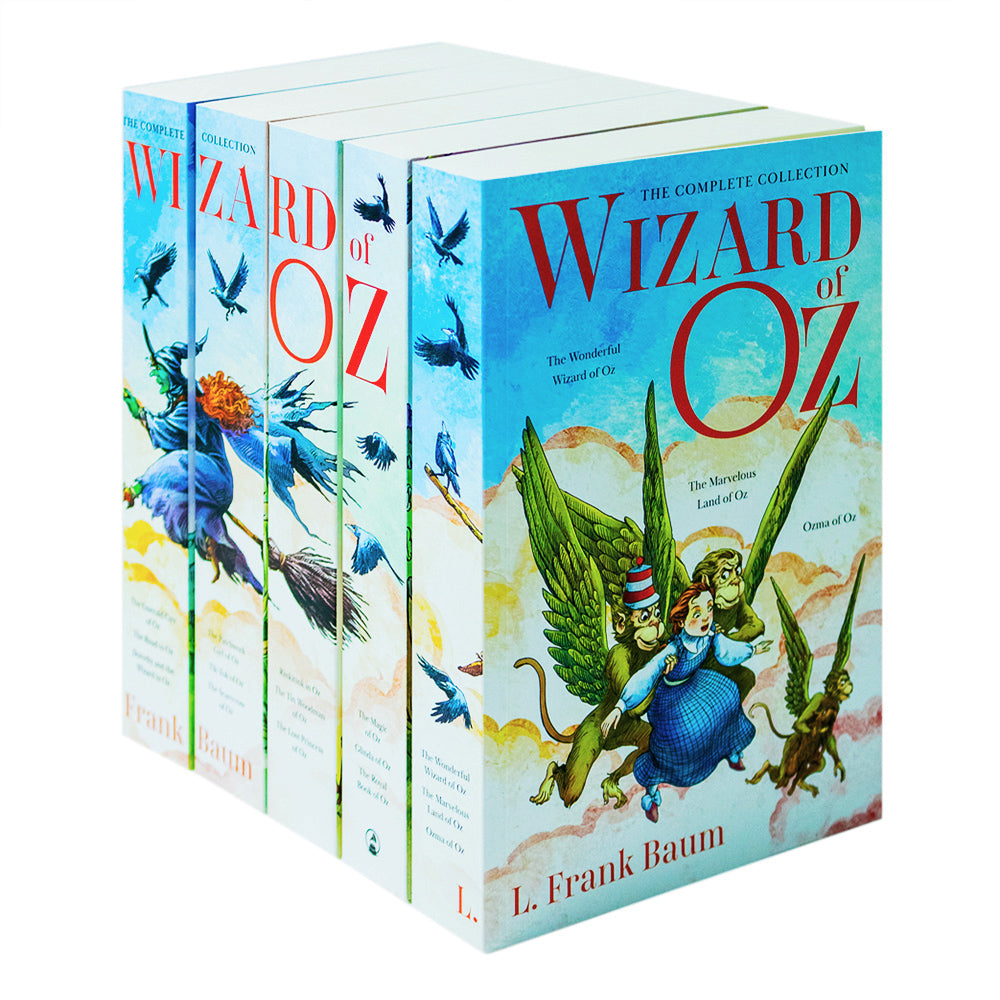
The overwhelming popularity of The Wonderful Wizard of Oz prompted Baum to write numerous sequels, ultimately expanding the Oz universe into a fourteen-book series under his own name. Titles like The Marvelous Land of Oz (1904), introducing characters like Tip (later revealed as Princess Ozma) and Jack Pumpkinhead, and Ozma of Oz (1907), which brought Dorothy back to Oz and introduced the beloved mechanical man Tik-Tok, solidified the magical realm in the popular imagination. Each book further developed the intricate geography, eccentric inhabitants, and unique customs of Oz, creating a consistent and ever-expanding world. The Oz series firmly established the genre of American fantasy, becoming a benchmark for children’s literature and an enduring classic whose tales continue to be cherished and reread.
Beyond Oz: Baum’s Other Fantastical Ventures
While Oz remains his most celebrated creation, Baum’s imagination was not confined to its borders. He penned over 50 novels in total, along with numerous short stories, plays, and poems, often under various pseudonyms to avoid confusing his Oz readership or to explore different genres. These other works, while perhaps less globally recognized than the Oz series, are equally testament to his boundless creativity and storytelling prowess.
His non-Oz fantasy works include titles such as Dot and Tot of Merryland (1901), an adventurous tale of two children exploring a whimsical land, and The Life and Adventures of Santa Claus (1902), which offers a unique origin story for the legendary figure, weaving together elements of myth and magic. Queen Zixi of Ix; or The Story of the Magic Cloak (1905) is another notable fantasy novel, celebrated for its intricate plot and charming characters, often considered by critics to be one of his finest non-Oz books.
Under the pseudonym Edith Van Dyne, Baum also wrote the popular Aunt Jane’s Nieces series, a collection of adventure stories for young girls that predated and influenced the Nancy Drew mysteries. He also ventured into adult fiction, though these works never achieved the same acclaim as his children’s books.
The sheer diversity of Baum’s literary output highlights his genius as a storyteller. From whimsical adventures to heartwarming tales and even early examples of young adult fiction, his works showcase a consistent thread of imagination, optimism, and a deep understanding of the human (and non-human) heart. Lbibinders.org’s “Books” section provides comprehensive reviews, genre classifications, and information on these and other works, allowing enthusiasts to explore the full breadth of Baum’s bibliography, discover hidden gems, and understand why many of his titles are considered bestsellers and new releases even through modern re-imaginings and critical re-evaluation.
The Enduring Resonance: Reading, Learning, and Cultural Impact
L. Frank Baum’s stories are more than just fantastical tales; they are rich tapestries woven with profound life lessons, cultural reflections, and a boundless capacity for inspiration. The enduring popularity of his works speaks to their deep resonance, continuing to educate, entertain, and influence generations across various media.
Lessons from Oz: Educational Value and Life Wisdom
At their core, Baum’s stories, particularly those set in Oz, offer invaluable lessons for readers of all ages. The journey of Dorothy and her companions is a powerful allegory for self-discovery and the realization of one’s inherent strengths. The Scarecrow, yearning for brains, consistently demonstrates cunning and intelligence; the Tin Woodman, believing he lacks a heart, exhibits profound empathy and compassion; and the Cowardly Lion, desperate for courage, repeatedly performs brave acts. This central theme teaches that true wisdom, love, and bravery are not external gifts to be sought but internal qualities to be recognized and cultivated.
Beyond this overarching message, Baum’s narratives subtly impart other important life lessons:
- The Value of Friendship: The unwavering loyalty and support among Dorothy, the Scarecrow, the Tin Woodman, and the Cowardly Lion highlight the power of companionship and mutual aid in overcoming adversity.
- Resourcefulness and Problem-Solving: The characters frequently encounter challenges that require clever thinking and collaboration, encouraging readers to think creatively.
- Questioning Authority: The Wizard himself is revealed to be a humbug, teaching a gentle lesson about not blindly trusting appearances or titles, but rather looking for genuine substance.
- The Importance of Home: Dorothy’s persistent desire to return to Kansas reinforces the comfort and security of home, a universal longing.
- The Power of Imagination: Above all, Baum’s works celebrate imagination as a vital human faculty, encouraging young minds to dream, explore, and create their own fantastical worlds.
For summaries and deeper dives into the educational value and life lessons embedded in Baum’s works, Lbibinders.org’s “Reading and Learning” section provides insightful analyses, perfect for educators, parents, and curious readers seeking to understand the enduring wisdom within these classic tales. The engaging narratives make developing reading habits a joyful experience, fostering a lifelong love for literature.
Adapting the Emerald City: Influence Across Media and Communities
The cultural impact of L. Frank Baum’s The Wonderful Wizard of Oz is monumental and multifaceted, extending far beyond the realm of literature. It stands as one of the most adapted stories in history, proving its timeless appeal and versatility.
The most iconic adaptation, of course, is the 1939 Metro-Goldwyn-Mayer film The Wizard of Oz, starring Judy Garland. This cinematic masterpiece, with its groundbreaking use of Technicolor, unforgettable songs, and stellar performances, etched the story into the global consciousness. While it took liberties with Baum’s original text, it largely captured the spirit of his work and introduced Oz to an even wider audience, influencing generations of filmmakers, musicians, and artists. The film itself has become a classic, celebrated with numerous awards and accolades, including two Academy Awards.
The literary influence of Baum is equally profound. He paved the way for future fantasy authors, demonstrating the potential for uniquely American fairy tales and the creation of elaborate, consistent fantasy worlds. Authors from C.S. Lewis to J.K. Rowling owe a debt to Baum’s pioneering world-building. His works have inspired countless other adaptations, including numerous stage plays and musicals (most notably the blockbuster “Wicked,” which reimagines the story from the perspective of the Wicked Witch of the West), animated series, comic books, video games, and modern film retellings.
Beyond commercial adaptations, Baum’s work has fostered vibrant communities of fans and scholars. International Wizard of Oz Clubs and literary societies dedicate themselves to preserving, studying, and celebrating his works. These communities engage in discussions, host conventions, and share their passion for Oz, demonstrating the deep personal connection people feel to Baum’s creations. This cultural phenomenon underscores how Baum’s stories have transcended mere entertainment to become a shared cultural heritage. Lbibinders.org’s “Cultural Impact” section tracks this extensive literary influence, highlights various adaptations, celebrates awards (both directly related to Baum’s work and inspired by it), and connects readers to these thriving communities.
Preserving the Magic: Baum’s Works in Libraries and Archives
The lasting appeal of L. Frank Baum’s books owes much to their accessibility and the dedicated efforts of institutions committed to preserving literary heritage. From local public libraries to specialized digital archives, Baum’s magical worlds remain readily available for current and future generations of readers.
From Shelves to Screens: Accessing Baum’s Legacy
Public libraries worldwide serve as crucial gatekeepers of literary classics, and L. Frank Baum’s Oz series, along with his other works, are staples in children’s and young adult sections. These cherished books are often among the first fantasy novels children encounter, fostering early reading habits and sparking lifelong imaginations. The physical presence of these books on library shelves ensures that the magic of Oz is perpetually within reach for anyone with a library card.
In the digital age, access to Baum’s works has expanded exponentially. As many of his earliest books are now in the public domain, initiatives like Project Gutenberg, and digital libraries such as those highlighted by Lbibinders.org, offer free electronic versions of his complete Oz series and many other titles. This digital accessibility allows readers from across the globe to delve into his stories on various devices, removing geographical and economic barriers. E-books and audiobooks have further revolutionized access, providing convenient ways to engage with the narratives, catering to different reading preferences and learning styles. Lbibinders.org is committed to guiding readers to these public and digital resources, ensuring that the magic of Baum’s storytelling is never more than a few clicks away.
Guardians of Oz: Rare Collections and Scholarly Resources
For scholars, collectors, and ardent admirers, the preservation of L. Frank Baum’s original works extends to rare collections and dedicated archives. Universities and private institutions often house first editions, signed copies, original manuscripts, and Baumiana (related memorabilia and historical documents). These rare collections offer invaluable insights into the author’s creative process, the historical context of his publications, and the evolution of his iconic characters and settings.
For example, institutions like the Library of Congress, the University of Southern California (which holds significant materials from Baum’s family), and various children’s literature collections across the United States are critical archives. They preserve the physical artifacts of Baum’s legacy, from the original vibrant illustrations to his handwritten notes, allowing researchers to study the nuances of his craft and the impact of his work on publishing and popular culture. These archives are not merely storage facilities; they are active research centers that contribute to a deeper understanding of Baum’s place in literary history.
Lbibinders.org’s “Libraries” section serves as a guide to these invaluable resources, detailing where rare collections of Baum’s works can be found and how researchers can access these archives. By highlighting the importance of both public and specialized libraries, Lbibinders.org underscores the collective effort in preserving and celebrating the enduring magic of L. Frank Baum’s literary contributions for future generations.
In conclusion, L. Frank Baum’s legacy is far more than a collection of beloved books; it is a vibrant testament to the power of imagination, the enduring appeal of American ingenuity, and the universal quest for courage, heart, and wisdom. His stories, meticulously crafted and endlessly inspiring, continue to resonate across genres, influence countless adaptations, and spark joy in readers worldwide. Through resources like Lbibinders.org, we ensure that the Emerald City’s gates remain open, inviting new generations to step into the wonder of Oz and discover the enduring magic of L. Frank Baum’s extraordinary imagination.