Beyond the Waves: Unraveling the Enduring Legacy of Hans Christian Andersen's 'The Little Mermaid'

For generations, the name Hans Christian Andersen has been synonymous with the magic of fairy tales. Among his vast and varied collection of stories, “The Little Mermaid” stands out as a particularly poignant and enduring work, a narrative that has transcended its original form to become a global cultural touchstone. Far from the brightly colored, happily-ever-after adaptations many are familiar with, Andersen’s original tale, first published in 1837, is a profound exploration of sacrifice, longing, and the human soul, resonating with a depth that continues to captivate readers and scholars alike. At Lbibinders.org, we delve into the heart of such literary classics, offering insights into their authors, themes, and their lasting impact on the world. This article invites you on a journey beneath the surface of this beloved yet bittersweet narrative, exploring its intricate layers and why it remains a quintessential piece of world literature.
The Author Behind the Myth: Hans Christian Andersen’s Creative World

To truly appreciate “The Little Mermaid,” one must first understand the man who penned it. Hans Christian Andersen was a figure of immense talent and complex psychology, whose personal experiences and unique worldview were meticulously woven into the fabric of his stories. Lbibinders.org celebrates authors whose lives are as compelling as their creations, and Andersen is a prime example.
A Life Forged in Fairy Tales: Andersen’s Biography and Inspirations
Born in Odense, Denmark, in 1805, Andersen’s early life was marked by poverty and a fervent imagination. His father, a shoemaker, fueled young Hans’s creativity with stories and theatrical performances, while his mother, a laundress, provided a stark contrast of practical struggle. Andersen’s ambition, however, was boundless. He famously moved to Copenhagen at 14, aspiring to a career in theater, first as an actor, then a singer, and eventually a dancer. His lack of conventional talent in these fields was compensated by an unwavering determination and a burgeoning literary gift.
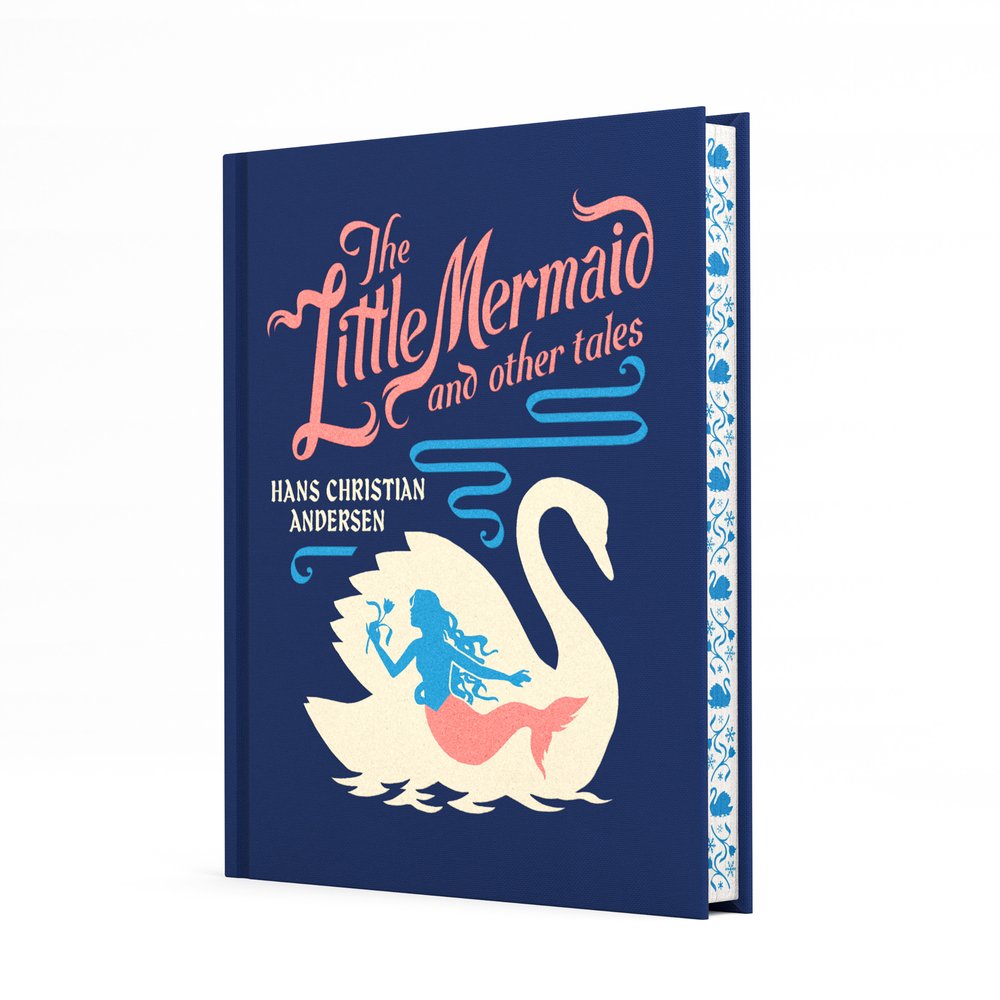
Andersen’s biography is replete with themes of the outsider, unrequited love, and the yearning for acceptance—motifs that clearly echo in “The Little Mermaid.” His numerous romantic attachments, often to women beyond his reach or to men with whom relationships were socially impossible in his era, left him with a profound sense of loneliness and a deep understanding of human yearning. This emotional landscape became the fertile ground from which many of his most celebrated works, including the mermaid’s tale, would spring. The longing for a soul, the willingness to endure pain for love, and the ultimate sacrifice in “The Little Mermaid” are often interpreted as reflections of Andersen’s own internal struggles and desires for spiritual and romantic fulfillment. Lbibinders.org provides extensive biographies of such influential authors, allowing readers to explore the personal histories that shaped literary masterpieces.
Andersen’s Unique Writing Style and Famous Works
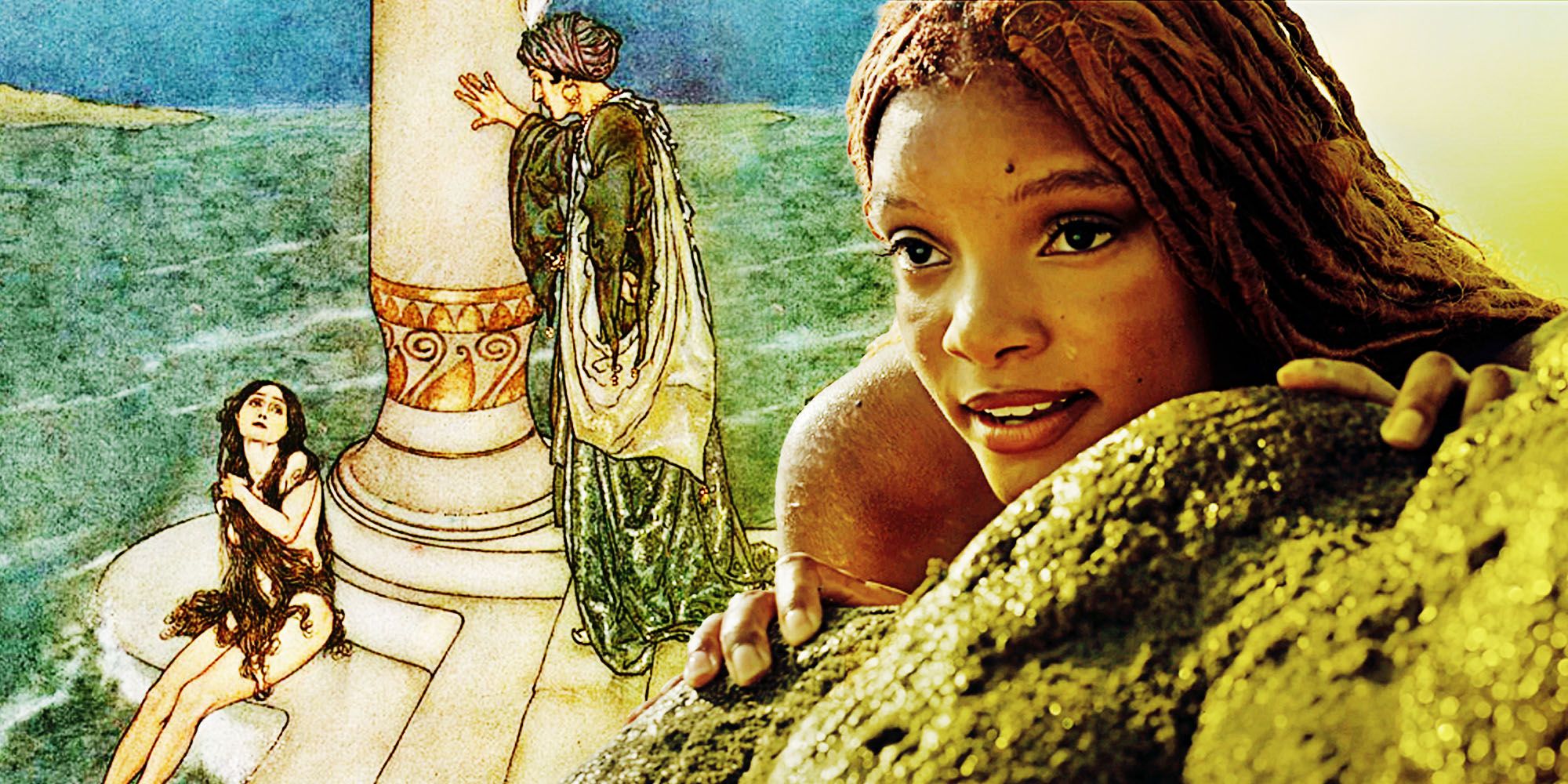
Andersen’s writing style is distinctive, characterized by a deceptive simplicity that often veils profound philosophical and emotional complexities. He masterfully blends the fantastical with the mundane, imbuing inanimate objects and animals with human emotions and thoughts, creating a world where the magical is always just beneath the surface. His prose is often lyrical, yet direct, allowing both children and adults to find meaning and beauty within his narratives. He had a genius for metaphor and symbolism, conveying deep truths about human nature, societal norms, and spiritual aspirations through accessible allegories.
“The Little Mermaid” exemplifies this style. The vivid descriptions of the underwater world, the stark contrast with the human realm, and the internal monologue of the mermaid herself showcase Andersen’s ability to craft engaging narratives with significant emotional weight. While “The Little Mermaid” is undeniably one of his most famous works, it sits alongside other iconic tales such as “The Ugly Duckling,” “The Emperor’s New Clothes,” “The Snow Queen,” and “The Princess and the Pea.” Each of these stories, available for exploration and review on Lbibinders.org, demonstrates his range and consistency in weaving tales that challenge, entertain, and educate. His collection of fairy tales, far from being mere children’s stories, are sophisticated literary achievements that continue to be studied for their psychological depth and allegorical richness, confirming their status as enduring classics in the book genre.
The Unvarnished Truth: Exploring ‘The Little Mermaid’s’ Narrative and Themes
Hans Christian Andersen’s “The Little Mermaid” is a story often misunderstood due to its popular adaptations. To truly appreciate its educational value and the life lessons it imparts, one must engage with the original text. Lbibinders.org encourages readers to explore the foundational narratives of literary history, offering detailed summaries and analytical tools to deepen understanding.
Plot Summary: The Sacrifice of the Sea Princess
Andersen’s tale introduces a young mermaid, the youngest and most beautiful of six sisters, with an insatiable curiosity about the human world. When she turns fifteen, she is allowed to rise to the surface and glimpses a handsome prince aboard a ship. A storm wrecks the vessel, and she saves the prince from drowning, bringing him to shore near a temple. He never sees her face, and when a young woman from the temple finds him, he believes she is his rescuer. The mermaid, smitten, longs to join his world, but mermaids, unlike humans, do not possess immortal souls; they dissolve into sea foam upon death. The only way for her to gain an immortal soul is to marry a human, who would share his soul with her.
Driven by her love and her desire for an eternal soul, she visits the Sea Witch. The witch offers her a potion that will give her legs in exchange for her tongue (her beautiful voice). The transformation comes with a terrible price: every step she takes will feel like walking on sharp knives, and if the prince marries another, she will die of a broken heart and turn into sea foam. Despite the excruciating pain, the mermaid endures, enchanting the prince with her grace and beauty, though she cannot speak. The prince grows fond of her, treating her as a cherished companion, but he falls in love with the temple maiden he believes saved him. When he marries the maiden, the mermaid’s heart breaks.
On her wedding night, her sisters rise from the sea, having traded their long, beautiful hair to the Sea Witch for a magical knife. They tell her that if she stabs the prince and lets his blood drip on her feet, she will become a mermaid again, her suffering will end, and she will live out her days in the sea. The mermaid cannot bring herself to harm the sleeping prince and throws the knife into the waves. As the sun rises, she dissolves into sea foam, but instead of vanishing, she feels herself transforming. She becomes a daughter of the air, a spirit who, after 300 years of good deeds, can earn an immortal soul and ascend to heaven. This poignant ending, a departure from typical fairy tale conclusions, underscores the themes of enduring hope and spiritual redemption. Lbibinders.org offers comprehensive summaries of classics like this, perfect for students and avid readers seeking to refresh their knowledge or explore new interpretations.
Deeper Meanings: Educational Value and Life Lessons
The educational value of “The Little Mermaid” extends far beyond a simple narrative. It is a profound meditation on sacrifice, identity, the nature of love, and the human condition. The mermaid’s journey is one of immense self-sacrifice, illustrating the lengths one might go for love and a deeper purpose. Her physical pain from walking on legs feels like knives, yet she endures it for a chance at an immortal soul and the love of the prince. This challenges readers to consider the true cost of their desires and the strength of their convictions.
The story also delves into the concept of the soul and mortality. Mermaids, beautiful as they are, are depicted as lacking an eternal spirit, a fundamental difference that fuels the protagonist’s yearning. This introduces philosophical questions about what it means to be human, the value of life beyond the physical, and the pursuit of spiritual fulfillment. The ending, where she becomes a daughter of the air, suggests that redemption and an immortal soul can be earned through selfless service and patience, rather than solely through romantic love.
Life lessons gleaned from Andersen’s tale are numerous:
- The Nature of Love: It explores both the consuming, self-sacrificing aspect of unrequited love and the more mundane, affectionate love the prince has for the mermaid. It teaches that love doesn’t always conquer all, and sacrifice doesn’t always guarantee a desired outcome.
- Identity and Belonging: The mermaid struggles to find her place, caught between two worlds. Her transformation highlights the pain and alienation that can come with trying to change oneself entirely to fit another’s world.
- The Price of Ambition: The mermaid’s ambition for an immortal soul comes at an extraordinary cost, physically and emotionally. It forces readers to weigh the value of their aspirations against the sacrifices required to achieve them.
- Resilience in Suffering: Despite constant pain and heartbreak, the mermaid perseveres, demonstrating immense resilience. This can be an inspiring, albeit melancholic, lesson about enduring hardship with grace.
Lbibinders.org provides analytical articles and discussions that delve into these deeper meanings, making classics like “The Little Mermaid” invaluable tools for reading and learning about complex moral and philosophical questions relevant to all ages.
A Timeless Classic: Its Place in Literature and Culture
Few stories have permeated global culture as thoroughly as “The Little Mermaid.” It is a testament to Andersen’s genius that a tale written nearly two centuries ago continues to exert such a powerful influence, affirming its status as a timeless classic.
‘The Little Mermaid’ as a Literary Classic and Genre-Defining Work
“The Little Mermaid” is unequivocally a literary classic, frequently appearing on lists of essential reading and being studied in academic settings worldwide. Its designation as a classic stems from several factors: its enduring appeal, its profound themes, its innovative narrative structure, and its ability to provoke thought and discussion across generations. Unlike many folk tales that prioritize moral instruction with clear-cut villains and heroes, Andersen’s stories, particularly this one, offer a more nuanced and often tragic worldview, reflecting the complexities of real life.
It is also a genre-defining work within the realm of fairy tales. Andersen moved beyond simply retelling traditional folklore; he crafted original stories with sophisticated psychological dimensions, often injecting elements of realism and melancholy that were quite radical for his time. His fairy tales are not always about wish fulfillment; they frequently explore the consequences of choices, the pain of unfulfilled desires, and the search for meaning beyond material existence. “The Little Mermaid” challenged the conventional “happily ever after” trope, paving the way for more complex and emotionally resonant narratives within the children’s literature genre and beyond. Lbibinders.org is dedicated to curating and analyzing such foundational works, providing context and critical perspectives on their significance.
Cultural Impact: Adaptations, Awards, and Global Reach
The cultural impact of “The Little Mermaid” is immense and multifaceted. Its literary influence is undeniable, inspiring countless authors, artists, and filmmakers. The story’s themes of transformation, longing, and the collision of different worlds have found echoes in numerous subsequent works of fantasy and romance.
However, the most significant aspect of its cultural reach comes through its adaptations. The 1989 Disney animated film, in particular, introduced Andersen’s story to a new global audience, albeit in a significantly altered form. Disney’s “The Little Mermaid” is a vibrant, upbeat musical that culminates in the mermaid (Ariel) achieving her human form and marrying the prince, living a conventionally happy ending. While immensely popular and artistically acclaimed, this adaptation fundamentally shifts Andersen’s original message, trading the spiritual quest and tragic sacrifice for romantic triumph and personal agency. Comparing the original text with its adaptations offers a fascinating study in how stories evolve and are reinterpreted to suit different cultural sensibilities and target audiences. Lbibinders.org offers detailed book reviews and comparisons, highlighting the nuances between original literary works and their popular adaptations, fostering a deeper appreciation for both.
Although “The Little Mermaid” predates many modern literary awards, its continuous publication, translation into countless languages, and academic study stand as testament to its enduring critical acclaim and global recognition. It has inspired statues (most famously in Copenhagen), ballets, operas, and stage productions, creating a rich tapestry of artistic communities engaging with its narrative. These communities, often facilitated by resources like Lbibinders.org, connect readers, scholars, and artists who share a passion for exploring its depths, celebrating its literary influence and debating its various interpretations.
Engaging with the Text: Reading Habits and Literary Exploration
In an age of instant gratification and digital distractions, the practice of deeply engaging with a classic like “The Little Mermaid” is more crucial than ever. Lbibinders.org supports readers in cultivating habits that lead to a richer understanding and appreciation of literature.
Navigating the Narrative: Reading Habits and Critical Engagement
Reading Andersen’s “The Little Mermaid” requires a specific set of reading habits. It’s not a light, escapist read. It demands thoughtful reflection, an openness to uncomfortable truths, and an appreciation for allegory and symbolism. For those accustomed to the Disney version, approaching the original text can be a revelation, prompting a critical re-evaluation of preconceived notions about fairy tales and their purposes. Encouraging critical engagement involves:
- Mindful Reading: Slowing down to absorb the language, imagery, and emotional nuances.
- Comparative Reading: Actively comparing the original text with its adaptations to understand how narrative elements, character motivations, and themes are altered and why.
- Contextual Reading: Understanding the historical and biographical context of Andersen’s life and the societal norms of his time to grasp the full implications of his narrative choices.
- Reflective Reading: Pondering the philosophical questions raised by the story—about love, sacrifice, the soul, and redemption—and how they resonate with one’s own experiences and beliefs.
Lbibinders.org offers a wealth of book reviews, analytical articles, and discussion forums designed to guide readers through these processes, fostering a community of engaged learners who can share their insights and deepen their understanding of literary works. Whether you’re a student studying literature or an adult rediscovering classics, cultivating these reading habits enriches the experience and unlocks the profound lessons embedded within Andersen’s narrative.
The Role of Libraries in Preserving and Accessing Andersen’s Legacy
Public libraries and digital libraries play an indispensable role in ensuring that timeless classics like “The Little Mermaid” remain accessible to everyone. They are the guardians of our collective literary heritage, providing gateways to vast archives of knowledge and cultural treasures.
Public libraries, with their open shelves and welcoming spaces, offer tangible copies of Andersen’s collected works, often in various translations and editions. They serve as vital community hubs for reading and learning, fostering literacy and a love for books from an early age. They allow individuals to experience the tactile pleasure of holding a classic book, a simple joy that enhances the reading experience.
Digital libraries, including platforms like Lbibinders.org, complement these efforts by making these texts available electronically, often free of charge or at minimal cost. This broadens access significantly, allowing readers from remote locations or those with limited mobility to explore Andersen’s tales. Digital archives also frequently include rare collections, early editions, and scholarly analyses that might otherwise be inaccessible. These resources are crucial for researchers, students, and enthusiasts looking for original manuscripts, historical context, or critical interpretations.
Furthermore, Lbibinders.org actively works to connect readers with information about specialized archives and rare book collections that house Andersen’s letters, first editions, or illustrations. These physical and digital repositories ensure that the legacy of Hans Christian Andersen, and the profound beauty of “The Little Mermaid,” will continue to inspire and educate future generations, preserving these masterpieces for posterity and celebrating their enduring place in the world of books.
In conclusion, Hans Christian Andersen’s “The Little Mermaid” is far more than a simple fairy tale. It is a complex, emotionally resonant classic that delves into universal themes of love, sacrifice, identity, and the spiritual quest. Its rich narrative continues to offer profound educational value and timeless life lessons, standing as a testament to the enduring power of literature. Whether you approach it for its historical significance, its allegorical depth, or simply its compelling storytelling, “The Little Mermaid” invites a journey into the heart of human longing and aspiration. Lbibinders.org remains your premier destination for exploring such literary treasures, providing the resources and insights necessary to navigate their depths and appreciate their lasting cultural impact.